Action · New game
BOARDBLAST
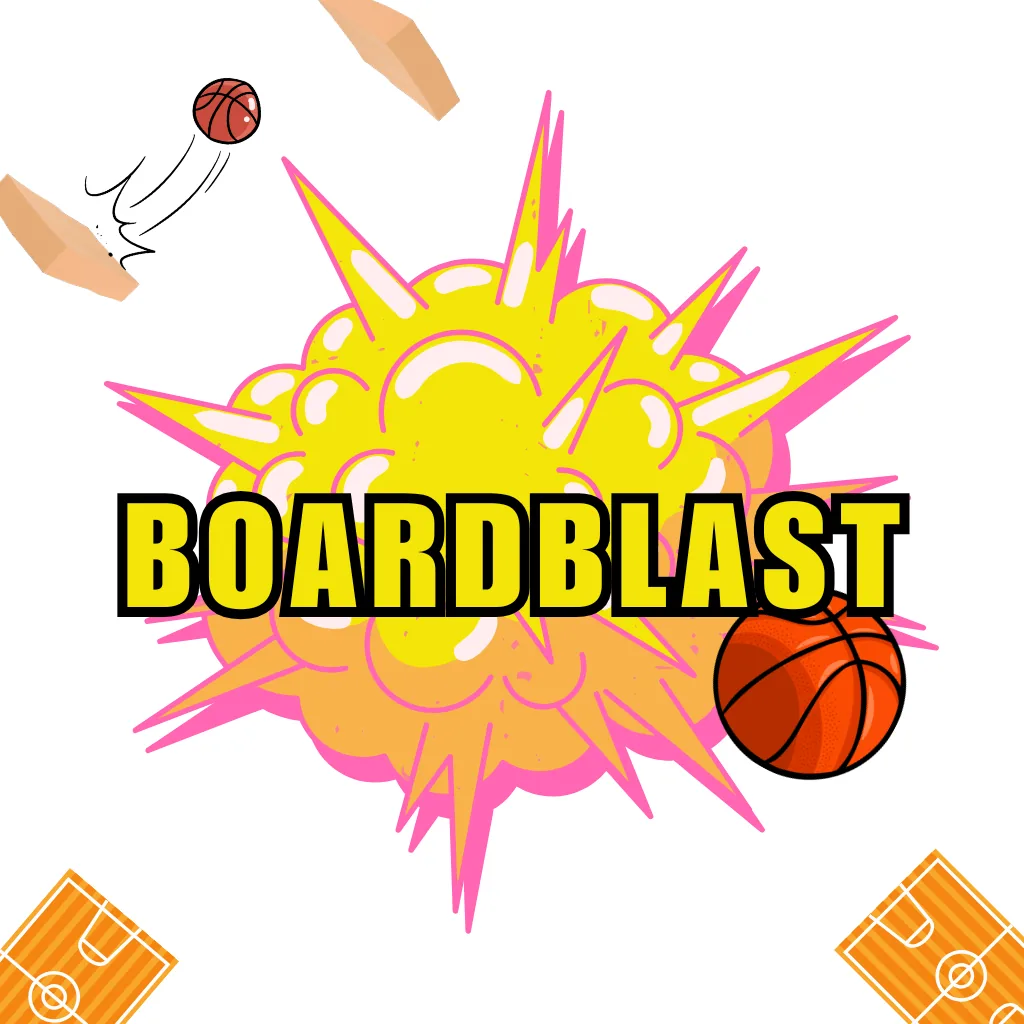
BoardBlast turns block-breaker instincts into a head-to-head court duel, with a moving board, a speeding ball, unlockable hitting areas, powerups, and ranked divisions.
#5 this week
The game runs in this tab. No install, no account.
The short answer
BoardBlast is a free browser-based 1v1 arcade game played on a 3D court. Each player moves a board to block and return a ball that accelerates during rallies. Victories earn coins for wider boards and feed a five-division ranking system, while powerups such as Paddle Boost and Ghost Ball can swing a match.
What is BoardBlast?
BoardBlast is a competitive 1v1 arcade game that borrows the shape of block breaker but removes the blocks. Two players meet at opposite ends of a 3D court, each guarding a board. The aim is to send the ball past the opponent's board while keeping it from passing your own. Scoring is simple: the first player to reach three points wins the match. The game is free and runs as an HTML5 title in a browser.
The twist is that every return is shaped by where the ball meets the board. Court walls keep the ball in play, so a shot can ricochet back into a rally from an unexpected angle. Early exchanges move at a normal pace, but the ball gathers speed as a rally continues. That turns a simple catch-and-return loop into a duel of positioning, timing, and nerve. BoardBlast sits in the action and sports aisle, but its structure is quick arcade competition rather than a simulation.
How to play
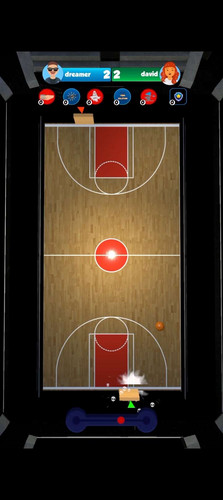
Each player controls a board at their end of the court. The board is the entire defense: it blocks incoming shots and sends the ball back toward the opponent. Moving it early enough to meet the ball is the core skill, but contact alone is not enough. The point on the board where the ball lands changes the direction of its next bounce, so the return is partly an aiming decision as well as a block.
Court walls are active parts of the rally. A ball can carom off them before or after it reaches a board, which means a safe-looking shot can turn into a difficult return. Every rally begins at normal speed and accelerates the longer it lasts. A single misjudged position can therefore cost a point even after a long exchange. The scoring target is short and clear: reach three points before the opponent.
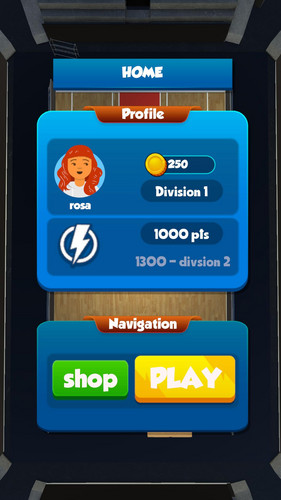
The rank layer sits outside the immediate point. Winning matches earns rank points and coins; losing can remove rank points and eventually cause a demotion. Coins feed board upgrades, while rank points move a player through five divisions. The result is a match structure that rewards both the current rally and the longer-term account.
Controls
The control scheme centers on an on-screen slider. Moving that slider shifts the player's board along their end of the court. The board's job is to meet the incoming ball, block it from passing, and redirect it back toward the opponent. Because the slider moves the board rather than aiming a separate shot, every return comes from the contact between ball and board.
That makes control feel positional. A player is not choosing a shot type after the ball arrives; the shot emerges from where the board is placed and which part of the board takes the hit. A slight shift can change the angle of the return, while a late shift can leave the board out of reach. The same slider handles defense and attack, so the two responsibilities compete for the same movement.
The ball's rising speed raises the cost of every adjustment. Early in a rally, there is more room to line up a return. As the ball accelerates, the slider has to be moved sooner and more precisely. Wall bounces add another read, because the ball's path can change before it reaches the board. The control is simple to describe, but the positioning and timing behind it carry the match.
| Input | Action |
|---|---|
| On-screen slider | Move the board at the player's end of the court to block and return the ball |
Tips for your first run
First matches are easiest to learn when the board is treated as a moving wall rather than a bat. The ball already has a speed ramp, and court walls add extra angles, so surviving a rally is mostly about being in the right place before contact. The first player to three points wins, which keeps the target close and makes each point valuable. Use these priorities to settle into the rhythm.
- Track the ball's line before it reaches the board, and move the slider early enough to avoid a late stretch.
- Aim with the board's contact point: the spot where the ball lands changes the return angle, so use placement to send it away from the opponent.
- Expect wall bounces. Court walls keep the ball live, so a return that looks safe can come back at a sharper angle.
- Do not relax in a long rally. The ball speeds up as the exchange continues, so position matters more than a flashy return.
- Save powerups for a point that is slipping away. A board boost, shrink effect, ghost ball, time dilation, piercing shot, or guardian shield can change the rally, but the opponent can answer.
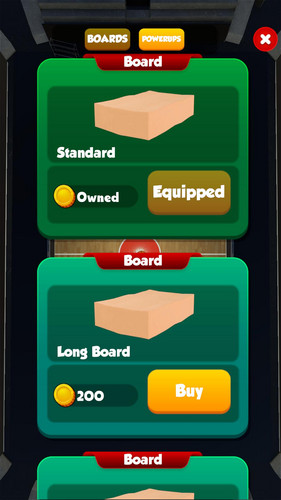
- Spend coins on wider boards. A larger hitting area makes the same slider movement cover more of the court.
Content and replayability
BoardBlast is built around repeatable 1v1 matches rather than a single run. Real-time head-to-head play gives every rally a human opponent, and the first-to-three scoring keeps sessions compact. The ranking system adds a second layer: wins earn rank points, losses take them away, and a player can be demoted if their rank falls too low. Five divisions provide the climb.
Victories also produce coins. Those coins go toward unlocking and upgrading boards, with wider hitting areas as the progression reward. Powerups add match-to-match variety. A board boost or guardian shield can protect a player's side, while a shrink ray, ghost ball, time dilation, or piercing shot can disrupt the opponent's read. The choice and timing of these abilities matter because both players can use them.
Account progression ties the loop together. An email sign-in preserves the player name, coin balance, rank, unlocked boards, and powerups from device to device. That makes the unlock path portable rather than tied to one browser session. The combination of short matches, five divisions, board upgrades, powerups, and persistent progression gives BoardBlast a clear reason to return after the first win.
Presentation and performance
BoardBlast presents its duels on a 3D arcade court. The court is not a neutral backdrop; it is the space where wall bounces and board contact decide the next angle. Ball physics drive the rally, while particle effects give hits and saves a visible punctuation. Camera shake and sound effects add weight to the moments when the ball changes direction or a point ends.
The speed ramp shapes what the presentation has to communicate. As a rally lengthens, players have less time to read the ball's path, so the court, board, and ball need to stay legible. The 3D setting adds depth to that read without changing the basic rule: meet the ball with the board and send it back. Particle effects, camera shake, and sound effects give the rally its arcade rhythm, while the board remains the fixed reference point at each end.
Who should play it
BoardBlast suits players who like arcade duels with a short scoring target and a clear defensive job. The block-breaker reference is only a starting point: there are no blocks to clear, and the opponent is the obstacle. Anyone who enjoys reading angles, protecting a side of a court, and adjusting to a ball that gets faster during a rally will find the core loop familiar.
Competitive players have a five-division ladder, rank points that can be lost, and demotion risk. Players who prefer progression alongside their competition can chase coins, unlock wider boards, and use powerups that change how a rally plays. The email sign-in keeps that progress tied to an account across devices.
The free HTML5 format makes the entry point low-friction for a browser player. Matches are 1v1 and end at three points, so the commitment is short. BoardBlast is aimed at someone who wants a fast head-to-head contest with positioning, timing, and a little powerup chaos.
Screenshots
How we tested it
The build was loaded from games.debutplay.com in a headless Chromium session on ; the canvas started and no request was blocked. The guide was last checked on .
From the developer
BoardBlast A head-to-head take on Block Breaker! What happens when you take the classic block breaker formula, remove the blocks, and replace them with another player? You get BoardBlast! BoardBlast is a competitive 1v1 multiplayer arcade game where two players face off on opposite ends of a 3D court. Instead of breaking blocks, your goal is to get the ball past your opponent's board while making sure it doesn't get past yours. Sounds simple, right? Just wait until the ball starts speeding up! How to Play Each player controls a board at their end of the court. Use the on-screen slider to move your board, block incoming shots, and send the ball flying back towards your opponent. The ball bounces off the court walls, and where it hits your board determines the direction of its next bounce. So positioning and timing are everything. Every rally starts at a normal speed, but the longer it lasts, the faster the ball gets. One wrong move…
Frequently asked questions
Is BoardBlast free to play?
Yes. BoardBlast is free and runs as an HTML5 game in a browser.
How many players are in a match?
Matches are 1v1, with two players on opposite ends of the 3D court.
How do you win a match?
Send the ball past the opponent's board while protecting your own. The first player to score three points wins.
What makes rallies harder over time?
The ball starts at normal speed and accelerates as a rally continues. Court-wall bounces and board contact angles add to the difficulty.
How does ranking work?
Wins earn rank points across five divisions. Losses remove points, and a rank that drops too low can lead to demotion.
Do boards and powerups carry between devices?
An email sign-in preserves the player name, coin balance, rank, unlocked boards, and powerups from one device to another.
What games are similar to BOARDBLAST?
The closest matches on DebutPlay are Cat abdutor, Farmer Survivors, BONEFOLD. They share the same genre, so the controls and the pace carry over.
Something wrong or missing? Tell us. How we test games.