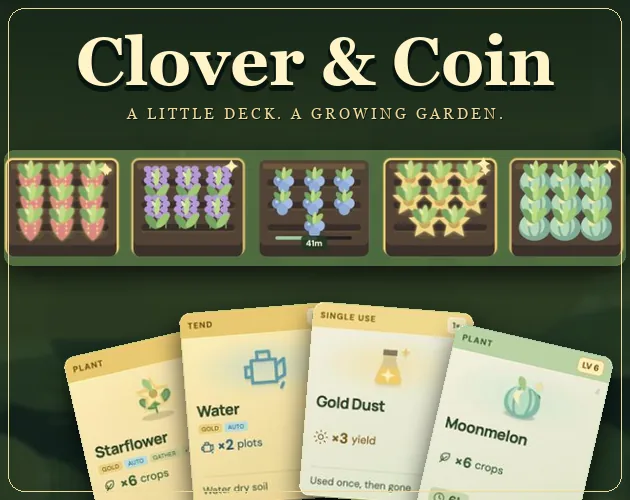
Card game · New game
Clover & Coin
A cozy browser card garden where four-card hands, eight crops, and gradual automation turn planting, watering, and harvesting into a deck-building routine.
#14 this weekAI-assisted: Code, Graphics, Text
The game runs in this tab. No install, no account.
The short answer
Clover & Coin is a free HTML5 card game about turning a few soil patches and a four-card hand into a self-running garden. Start with simple planting, meet crops from turnips to moonmelons, and work toward automation while shaping cards through the Store, Forge, and Void.
What is Clover & Coin?
Clover & Coin is a cozy incremental card game built around a garden that grows from a modest patch of soil into a broader plot. The opening hand is small, the starting space is limited, and the first goal is simple: put seeds into empty ground, give dry crops water, and collect what becomes ripe. Coins from those harvests feed the larger project of expansion.
The deck functions as the gardening toolkit. Only four cards sit in hand at a time, so each choice about what to plant, when to water, and which card merits a lasting slot carries weight. New cards do not flood in; they arrive slowly, making a timely play matter. The crop range stretches from turnips to moonmelons, with eight crops in total and growth timers that run from a few minutes to several hours.
Eight garden chapters introduce fresh crops and tools, and the long-term goal is an automated garden. Progress continues while the game is open and visible, pauses when the player switches away or closes it, and saves automatically in the browser.
How to play Clover & Coin
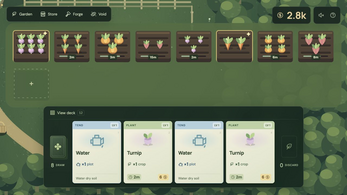
Begin by looking at the plots and the four-card hand. A card is dragged onto a plot, or selected first and then given a target. Empty soil accepts seeds. Dry crops need water before they can continue growing. Ripe crops are clicked to harvest, and cards recycle automatically as play continues.
The early loop is deliberately hands-on: plant, water, harvest, then decide how the next hand should be used. Because only four cards are available at once, and because new cards arrive slowly, timing matters more than rapid clicking. Coins support the garden's growth, while the deck itself is shaped outside the plots.
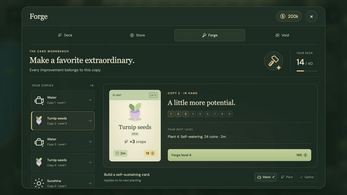
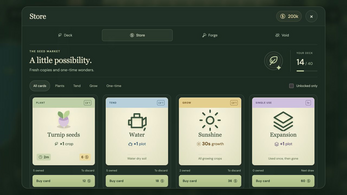
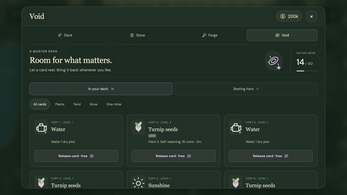
The Store sells cards, the Forge improves individual copies, and the Void removes unwanted cards; a paid undo can reverse a Void choice. Mystery Seeds add discovery to the routine by producing new cards, after which the reward can be kept or released. Later tools include one-time cards that create golden harvests, accelerate growth, and add garden magic, plus automation cards that can act on their own, irrigate their seeds, and gather ripe crops. The path runs through eight chapters toward a garden that needs less manual care.
Controls
Clover & Coin uses a pointer-led control scheme built around the card hand and the garden plots. Drag a card from the hand onto a plot to act directly, or select a card first and then tap its target. Empty soil is the destination for planting. Dry crops are the destination for watering. Ripe crops are clicked to harvest.
The same actions are described through both drag and select-then-target interactions, so the player can choose the method that feels natural. Cards recycle automatically during play, which keeps attention on the next decision rather than on retrieving spent cards.
The four-card hand is the central constraint: every drag, selection, and target choice comes from that small set. Because new cards arrive slowly, the control layer stays simple while the decisions stay meaningful. A well-timed play can matter more than a fast sequence of inputs. The interaction model does not ask for complex command chains; it asks the player to match the right card to the right plot at the right moment, whether that plot needs a seed, water, or a harvest.
| Input | Action |
|---|---|
| Drag | Move a card from hand onto a plot |
| Select and tap | Choose a card, then pick its target |
| Click or tap | Plant seeds in empty soil, water dry crops, or harvest ripe crops |
Tips for your first run
Treat the first plots as a lesson in rhythm rather than a race. The garden starts with only a few patches of soil and a handful of cards, so the quickest way to understand the loop is to plant seeds in empty ground, water dry crops, and harvest ripe ones as soon as they are ready. Keep an eye on the four-card hand: if a card is not earning a place, the Forge and Void become relevant later. New cards arrive slowly, so do not expect a constant stream of replacements.
Coins are the long-term fuel for growth, and the Store is where new cards enter the deck. Mystery Seeds are worth trying because they reveal new cards and then ask whether to keep or release the reward. Upgrades are another route to stronger harvests: plant cards can reach nine crops per plot, and permanent traits can improve growth speed, harvest value, and golden plants. Expansion goes as far as sixteen plots, while one-time cards provide golden harvests, growth boosts, and garden magic. Automation should be treated as a goal, not a starting assumption.
- Plant first, then water: empty soil takes seeds, and dry crops need water before they can continue.
- Use the four-card hand deliberately; new cards arrive slowly, so timing beats frantic play.
- Check the Store for cards, the Forge for individual upgrades, and the Void for removal, remembering the paid undo.
- Try Mystery Seeds when the deck feels stale, then decide whether the revealed card stays.
- Work toward automation cards that perform actions themselves, water their own plantings, and collect mature crops.
Content and replayability
The content ladder is built around eight crops, beginning with turnips and reaching moonmelons. Their growing times span a few minutes to several hours, which gives the garden both quick checks and longer-term planning. Eight garden chapters add new crops and tools as the player moves toward automation.
The plot count can expand to sixteen, and plant cards can be upgraded to grow as many as nine crops per plot. Permanent traits add further variation through faster growth, richer harvests, and golden plants. Deck shaping supplies another layer: cards are bought in the Store, individual copies are improved at the Forge, and unwanted cards go to the Void with a paid undo available.
Mystery Seeds introduce discovery by revealing new cards, with a choice to keep or let go. One-time cards cover golden harvests, growth boosts, and garden magic. The result is a game that starts hands-on and gradually becomes a slower exercise in planning, upgrading, and finding combinations. Because the garden advances only while the game is open and visible, and because the browser saves automatically, returning to the same garden is part of the structure. The game is in development, which signals an early version.
Presentation and performance
Clover & Coin presents its garden through a card-game frame: a hand of four cards, plots of soil, crops that move from seed to ripe, and a deck that can be altered between planting decisions. The crop range gives the garden a visible arc from turnips to moonmelons.
The game runs as an HTML5 browser build, and its session behavior is unusually important for planning. Growth continues while the game is open and visible. Switching away or closing the game pauses that growth. The garden saves automatically in the browser, so a session can be resumed without a manual save step. That combination makes short visits safe but also means a long crop timer is not a background process; it belongs to visible play.
The four-card hand keeps the action layer compact, while later automation shifts attention from repeated plays to setup and combination planning. Because the garden can expand to sixteen plots, the board's scope grows alongside the deck. The game is in development, so the current presentation and performance should be read as an early version rather than a final statement.
Who should play it
Clover & Coin is aimed at players who want a cozy, casual, singleplayer card game with farming and gardening themes, plus idle and incremental pacing. The appeal is not a large opening hand or a rush of new cards. It is the slow work of tending a few plots, learning when to plant and water, and deciding which cards deserve a permanent place in a four-card deck.
Players who enjoy deckbuilders will find the Store, Forge, and Void familiar in spirit, though the garden setting keeps the focus on crops and timers rather than combat. Players who like automation will have a clear target: cards that act automatically, irrigate their plantings, and gather mature crops. The eight crops, eight chapters, and sixteen-plot expansion give the long game a visible structure.
Mystery Seeds add a discovery hook for anyone who likes small surprises and deck changes. The free HTML5 format and browser saving make it easy to try, while the in-development status signals an early version. It is best suited to patient players who enjoy planning around growth times from a few minutes to several hours and who do not need constant action.
Screenshots
How we tested it
The build was loaded from games.debutplay.com in a headless Chromium session on ; the canvas started and no request was blocked. The guide was last checked on .
From the developer
A cozy incremental card garden. Plant a little. Grow your deck. Build a garden that tends itself. Start with a few patches of soil and a handful of cards. Plant your seeds, bring the rain, and collect your first harvest. Every coin helps your little garden grow into something more. Your deck is your gardening toolkit. With only four cards in hand, decide what to plant, when to water, and which cards deserve a permanent place in your deck. New cards arrive slowly, so a well-timed play can make a big difference. Grow from turnips to moonmelons. Discover eight crops, with growing times ranging from a few minutes to several hours.Make each card your own. Upgrade plant cards to grow up to nine crops per plot. Add permanent traits for faster growth, richer harvests, and golden plants.Earn your automation. Build toward cards that play themselves, water their own seeds, and harvest their crops.Shape your deck. Buy cards in the Store, improve…
Frequently asked questions
Is Clover & Coin free?
Yes. It is free and runs as an HTML5 browser game.
What platform is Clover & Coin on?
It runs on HTML5 in a browser.
Does the garden keep growing when the tab is closed?
No. Growth continues while the game is open and visible; switching away or closing pauses it.
How does saving work?
The garden saves automatically in the browser.
Is Clover & Coin multiplayer?
The game is singleplayer.
When was Clover & Coin published?
The published date is 22 October 2026.
Something wrong or missing? Tell us. How we test games.