Browser games · New game
Pixel Descent
A free pixel-art dungeon crawler that runs in the browser, built around seven classes, socketed skill gems and an Atlas that trades danger for richer rewards.
#1 this weekAI-assisted: Code, Sound
The game runs in this tab. No install, no account.
The short answer
Pixel Descent is a free browser dungeon crawler that pairs hack-and-slash combat with ARPG build-crafting: pick one of seven heroes, socket skill gems, spend passive points and chase unique gear through an endless randomly generated dungeon. Every five floors a pinnacle boss unlocks the Atlas, where choosing a modifier decides how much risk the next stretch carries.
What is Pixel Descent?
Pixel Descent is a pixel-art dungeon crawler that runs in a browser, and its hook is depth: the descent is endless and procedurally generated, so layouts, fights and rewards shift from run to run. Combat is fast hack-and-slash, but the systems underneath are firmly action RPG — seven playable heroes with four skills apiece, skill gems to socket, a passive tree to spend points into, and gear that rolls random affixes.
The structure shapes the pacing. Ordinary floors are about cutting through packs of the undead and looting whatever fits in your pack; every fifth floor raises a pinnacle boss that must fall before the Atlas opens. The Atlas is the game's decision point, offering a modifier for the floors ahead so danger can be weighed against payout instead of simply walking forward.
It costs nothing to start and needs no installation, which makes a first descent a low-commitment experiment rather than a purchase decision.
How to play
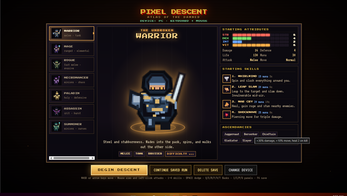
A run begins with a hero choice, and that choice is really a playstyle choice. The Warrior, the Unbroken, is a melee bruiser who spins, leaps and shouts through packs. The Mage, the Arcanist, trades durability for fireball, frost nova, chain lightning and meteor. The Rogue, the Shadow Blade, dodges with shadow dashes and works in poison daggers. The Necromancer, the Grave Caller, raises skeletons, detonates corpses and drains souls to stay upright. The Paladin, the Radiant Bulwark, smites at range, heals through Consecration and charges in behind a shield. The Assassin, the Deathmarker, marks a target and flickers behind it. The Summoner, the Wraithmaster, commands wraiths and a stone golem and curses everything nearby. Each class later takes an Ascendancy choice for deeper specialization.
From there the loop is descend, fight, level, reinvest. Level-ups feed skill gems that strengthen abilities, passive points shape the build, and drops carry random affixes, with uniques such as Emberwake, Frostbound Aegis and Crown of the Damned as the long chase. Flasks, shrines, chests and a shop restock a run between fights, and progress can be saved and continued.
Controls
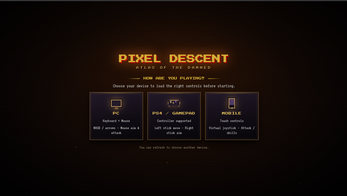
Pixel Descent runs in the browser and adapts its resolution to hold the framerate steady, so there is nothing to install before the first floor. Three input setups are supported: keyboard and mouse on PC, touch controls on mobile, and a gamepad. The interface carries a minimap and an XP bar, and combat feedback arrives through hit-stop and screen shake, which keeps impacts legible while the dungeon scrolls past.
The class you pick shapes what you are actually asking of your hands. The Shadow Blade fights through shadow dashes and poison daggers, and the Deathmarker marks a target before flickering behind it, so both reward quick, clean inputs. The Radiant Bulwark plays slower, smiting from afar and charging in behind a shield. The Wraithmaster barely fights alone at all, sending wraiths and a stone golem ahead while curses do the rest.
Because the game lives in a browser tab, a descent can start from wherever you already are, and a run in progress can be saved and continued rather than lost between sessions.
| Input | Action |
|---|---|
| Keyboard and mouse | Play on PC |
| Touch controls | Play on mobile |
| Gamepad | Play with a controller |
Tips for your first run
The class pick is the biggest decision of a first run, since seven heroes with four skills each play genuinely differently and the Ascendancy choice narrows the build further down the line. A few habits make the early floors less punishing.
- Choose the hero by the fights you enjoy: The Unbroken for melee brawling, The Arcanist for ranged burst at the cost of durability, The Shadow Blade for evasion and poison.
- Commit skill gems and passive points to the two or three abilities that actually clear packs instead of spreading both across the whole kit.
- Read the Atlas offer before accepting it. Molten Depths makes monsters hit harder for better loot, Frozen Hollow makes them tougher for more experience and rarer drops, Overgrown Ruin speeds them up for bigger rewards, and Abyssal Depths adds rare monsters and bonus packs.
- Keep kill streaks alive; combos climb from COMBO toward GODLIKE and hand out small rewards along the way.
- Spend the supplies. Flasks, shrines, chests and a shop exist to keep a run stocked between fights, not to be hoarded.
- Save and continue when a run is going well rather than pushing it into a modifier it cannot survive.
Content and replayability
Replayability here is structural rather than bolted on. The dungeon is endless and randomly generated, so layout and encounters shift every descent, and random floor modifiers such as Swarming Horde and Cursed Ground stop individual floors from settling into a pattern.
The class roster does the heavy lifting. Seven heroes with four skills apiece and an Ascendancy pick each cover a wide spread of playstyles before gear is even factored in. A build leaning on wraiths, a stone golem and curses plays nothing like one built on fireball, frost nova, chain lightning and meteor, and the passive tree gives both room to drift toward a specialization.
Gear supplies the long chase. Affixes roll randomly, so most drops are stepping stones, while uniques such as Emberwake, Frostbound Aegis and Crown of the Damned give a run something to aim at. The Atlas layers variance on top, letting the risk dial be turned up floor by floor for richer payouts.
Bosses anchor it all: Osgar, the Grave Colossus; Vexara, Weaver of Ruin; Grok, the Skullcrusher; Malgoroth, Lord of the Pit; and The Atlas Herald, the Herald of the Endless Descent, each with multi-phase attack patterns and health bars.
Presentation and performance
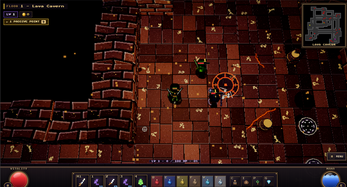
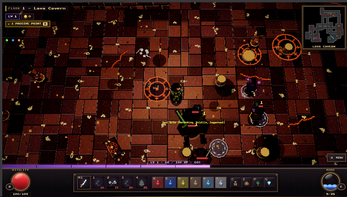
The look is hand-drawn pixel-art sprites placed inside a lit 3D world with bloom effects, a combination that keeps character detail crisp while light and glow carry the atmosphere.
Feedback is treated as a feature rather than an afterthought. Hits land with hit-stop and screen shake, kill streaks climb from COMBO up to GODLIKE with small rewards handed out along the way, and the HUD keeps a minimap and an XP bar in view so a descent reads at a glance.
Performance is handled in the browser: resolution adapts to keep the framerate smooth, which matters once swarming packs and multi-phase bosses fill the screen. Nothing needs installing, so the first floor is one click away rather than a download.
Expect a stylistic split rather than photorealism. The lighting and bloom sit behind sprite-based characters, so the identity leans on pixel art and glow, a look that suits the ARPG frame and keeps the action readable when the screen fills with undead and effects.
Who should play it
Pixel Descent sits between two appetites: the quick thrill of a hack-and-slash and the slower pleasure of shaping a build. Players who want to be fighting within a minute of loading a page get an endless descent, packs of the undead and a combo counter climbing toward GODLIKE. Players who want depth in the menus get seven classes with four skills each, an Ascendancy decision, socketed skill gems, a passive tree and randomly affixed gear.
Loot chasers have something concrete to hunt in uniques such as Emberwake, Frostbound Aegis and Crown of the Damned. Risk-takers get the Atlas, which asks every five floors whether the next stretch should be harder and richer. Boss-hunters get multi-phase fights against named adversaries with their own attack patterns and health bars.
It also suits players who move between devices, since the same game runs in a browser with keyboard and mouse, touch controls or a gamepad. What it does not suit is anyone after a fixed, hand-authored campaign: the dungeon is generated, the descent is endless, and the run is the unit of play, saved and continued as it goes.
Screenshots
How we tested it
The build was loaded from games.debutplay.com in a headless Chromium session on ; the canvas started and no request was blocked. The guide was last checked on .
From the developer
PIXEL DESCENT: Atlas of the Damned A pixel-art dungeon crawler where every floor takes you deeper and every choice has a price. Descend through an endless, randomly generated dungeon. Fight packs of the undead, face towering bosses and loot everything you can carry. Pixel Descent mixes the fast action of a hack-and-slash with the deep build-crafting of an ARPG. Every run plays differently. Choose Your Class Seven heroes, each with four skills and a distinct playstyle: Warrior, The Unbroken: A melee bruiser who spins, leaps and shouts his way through the pack.Mage, The Arcanist: A glass cannon with fireball, frost nova, chain lightning and meteor.Rogue, The Shadow Blade: A fast, evasive fighter with shadow dashes and poison daggers.Necromancer, The Grave Caller: Raises skeletons, detonates corpses and drains souls to stay alive.Paladin, The Radiant Bulwark: Smites from afar, heals through Consecration and charges in behind a…
Frequently asked questions
Is Pixel Descent free to play?
Yes. It costs nothing to start, runs in a browser with no installation, and asks only for the time a descent takes.
What platforms does it run on?
It is a browser-based HTML5 game. It plays on PC with keyboard and mouse, on mobile with touch controls, and with a gamepad.
How many classes are there?
Seven, each with four skills and a distinct playstyle, plus an Ascendancy choice that pushes a class further into specialization.
What is the Atlas?
Every five floors a pinnacle boss blocks the way. Beating it opens the Atlas, where a modifier is picked for the next floor and risk is weighed against reward.
Does run progress save?
Yes. A run can be saved and continued, so a descent does not have to be finished in a single sitting.
Are the floors the same every run?
No. The dungeon is endless and randomly generated, and random floor modifiers such as Swarming Horde and Cursed Ground keep individual levels unpredictable.
Something wrong or missing? Tell us. How we test games.