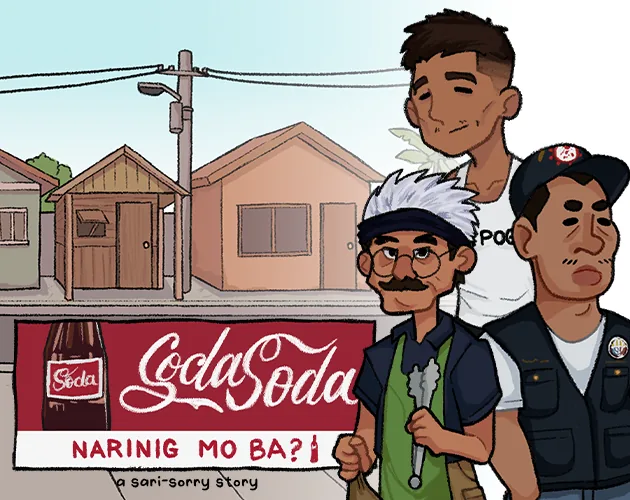
Visual novel · New game
Narinig Mo Ba?
A neighborhood sari-sari store, a chatty cast of regulars, and a whispered tragedy underneath: what to expect before clicking play.
#3 this week
The game runs in this tab. No install, no account.
The short answer
Narinig Mo Ba? hides a psychological horror story inside a cozy sari-sari store simulator. The loop is conversation: chat with regulars, trade gossip, and let small details accumulate until a tragic truth about the neighborhood comes into focus. It runs in a browser and supports touchscreen devices as of September 17, 2026.
What is Narinig Mo Ba?
Narinig Mo Ba? is a 2D visual novel that presents itself as a working sari-sari store simulator and turns out to be psychological horror. The player takes the role of the shop owner in a neighborhood where everyday small talk carries the plot, and where the community's preferred way of handling the past is to whisper about it rather than say it plainly.
The premise does double duty. Running the store gives the story a warm, mundane surface, full of regulars and the rhythm of a corner shop, while the secrets underneath give it teeth. A desperate act of survival has already set off a chain reaction before the player arrives, so the shopkeeper is walking into an argument that started long before the first customer.
Structurally this is a conversation game. Chat with the regulars, collect the gossip, and assemble a tragic, whispered truth out of fragments. It is built as a compact experience rather than a sprawling one, runs as an HTML5 build in the browser, and supports touchscreen devices as of September 17, 2026.
How to play
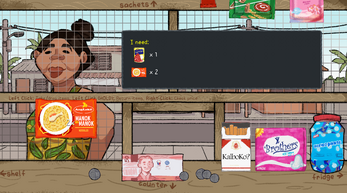
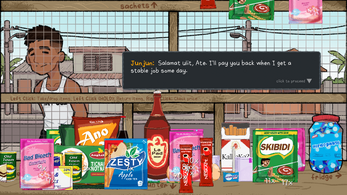
Play begins with the shop. The player owns it, works it, and gets to know the people who keep coming back. Those regulars are the real content: each conversation adds neighborhood context, and each scrap of gossip is a possible thread in a larger story.
The stated goal is to piece together a tragic, whispered truth. That means the story is assembled rather than handed over. The player is expected to hold onto names, grudges, and half-finished sentences, then notice when they line up with something said earlier.
The horror frame sits on top of that loop. A desperate act of survival has already triggered a chain reaction inside the community, and the shop owner is the newcomer who hears about it secondhand. The tension is psychological, drawn from what the neighborhood is hiding and who is willing to talk about it in public.
Everything happens in the browser. The build is HTML5, so a session starts from a page, and touchscreen play works as of September 17, 2026, which puts the game within reach of devices that never see a desktop storefront.
Controls
The game runs as an HTML5 build, which sets the practical baseline: a player opens the page and the story runs inside the browser window. Touchscreen devices became playable on September 17, 2026, so a tablet or phone browser is a realistic way to sit down with it.
The interaction model follows the genre rather than an action game. The work is conversational, built around chatting with regulars, gathering gossip, and pushing the story forward one exchange at a time. That keeps the physical demand low and puts the emphasis on reading and following the thread.
Because it is a visual novel at heart, most of a session is spent reading: the regulars' chatter, the news they bring, and the accumulating account of what the neighborhood would rather leave alone. Players who want twitch input should look elsewhere; players who want to read carefully will feel at home.
The game page does not list its controls. Check the in-game tutorial or pause menu for the current scheme.
Tips for your first run
Treat the cozy opening as setup rather than filler. The store simulator surface exists to make the horror land, so the mundane chatter early on is where the useful details are planted. The scares, such as they are, arrive as a consequence of the neighborhood being built up first.
Track the gossip deliberately. The stated goal is to connect whispers into one tragic truth, so the payoff comes from noticing which regular keeps circling the same subject and which one goes quiet when a name comes up.
- Read the regulars' lines for names, places, and repetitions, because the story is assembled from fragments rather than delivered whole.
- Keep the shop running while listening. The store is the reason people keep coming back and talking.
- Expect a compact experience and give it an uninterrupted sitting so the threads stay fresh.
- Play with the audio on, since the build uses CC0 audio assets alongside the in-house art.
- Use a touchscreen device if that is more comfortable; touchscreen play works as of September 17, 2026.
Content and replayability
The content here is story. The tone is psychological horror rather than action, and the emotional core is a tragedy the neighborhood has quietly agreed not to discuss, plus the chain reaction set off by one desperate act of survival.
It is a short piece with a single driven narrative. The shop simulator frame is the vehicle for the story rather than a separate management game layered on top, so time spent behind the counter feeds directly into what the regulars are willing to say.
Replay value in a game like this sits in a second pass. Once the truth is known, the early gossip reads differently, and lines that sounded like background noise on the first run tend to look like setup. A short runtime makes that second look cheap to afford.
Anyone replaying should expect the same story with sharper eyes rather than a different game. The appeal is the neighborhood, not a mode menu.
Presentation and performance
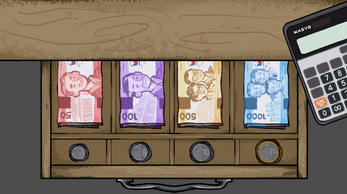
Narinig Mo Ba? is a 2D game, and all of its art was made in-house. The visual register is friendly on the surface, with a storefront and a cast of regulars presented in a warm, appealing style, which is exactly the contrast the horror is built to exploit.
The audio uses CC0 assets, and it sits underneath a game whose tension comes from conversation, so the mix is doing atmosphere work rather than punctuating action beats.
On the technical side, the delivery format is the important part. The game is an HTML5 build that plays in the browser, and touchscreen support arrived on September 17, 2026, widening the range of devices that can run it without any special setup.
As a compact, browser-based visual novel, it keeps its demands modest: reading, listening, and following a conversation trail. That makes it a low-friction way to try a horror story on hardware that is already in the room.
Who should play it
This one is for players who like their horror quiet. The draw is psychological dread built out of gossip and community secrets, not a combat loop or a monster roster, and the game is honest about being a story first.
Visual novel readers are the natural audience. The game is conversation-first, and the store owner role is a frame for talking to people and collecting what they let slip, so readers who enjoy dialogue-driven pacing will settle in quickly.
Players drawn to Southeast Asian neighborhood settings will find the sari-sari store premise specific and familiar. The title and the opening hail are Tagalog, and the shop is the kind of corner store where regulars trade news and where a stranger behind the counter gets noticed.
Short-session players should also consider it. The game is compact, browser-based, and touchscreen-ready as of September 17, 2026, so it does not demand a long commitment or a dedicated machine to reach the ending.
Screenshots
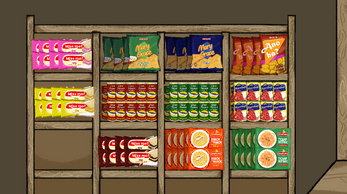
How we tested it
The build was loaded from games.debutplay.com in a headless Chromium session on ; the canvas started and no request was blocked. The guide was last checked on .
From the developer
"Huy, Mare! Narinig mo ba?" Narinig Mo Ba? is a story-driven psychological horror game disguised as a cozy sari-sari store simulator. Explore what it’s like being a store owner, and uncover the secrets the neighborhood has to hide. Chat with your regulars, gather the latest gossip, and piece together a tragic, whispered truth. In a community with more than just ambiguous secrets, a desperate act of survival has set off a chain reaction. And unfortunately for you, the store’s been left open both ways. Entry for game jam competition CC0 audio assets were used, all art was made in-house Contributors Faye Saulon / @krarneas Charles Espiloy / @oreocapybara Anthony James / @doppie Alex:D / @alasdiel / @karinasaurus Rex Uriel Villaflores / @yuriellll Ed Ian Baguio / @csr_eio Disclaimer:We noticed that there have been websites impersonating our game, please be informed that we are NOT affiliated with said websites. These websites may contain…
Frequently asked questions
What kind of game is Narinig Mo Ba?
It is a 2D visual novel that disguises itself as a sari-sari store simulator and delivers psychological horror through conversation with the shop's regulars.
Can it be played on a phone or tablet?
Touchscreen devices are supported as of September 17, 2026, and the game runs as an HTML5 build in the browser, so a modern mobile browser is the relevant requirement.
Do players need to install anything?
The game is delivered as an HTML5 build that runs in the browser window, so playing starts from a page rather than from an installable client.
Is it a cozy shop sim or a horror game?
Both, in sequence. The cozy store simulator is the surface, and the psychological horror is the story that regulars gradually let slip while chatting.
What do players actually do?
They run the shop, chat with regulars, gather the neighborhood gossip, and piece together a tragic, whispered truth about a community keeping secrets.
Where does the story take place?
In a neighborhood sari-sari store, a corner shop where regulars trade news and where a desperate act of survival has already set a chain reaction in motion.
What games are similar to Narinig Mo Ba??
The closest matches on DebutPlay are Dating Killmulator, The Freak Circus, Hora dorada. They share the same genre, so the controls and the pace carry over.
Something wrong or missing? Tell us. How we test games.