Adventure · New game
The Oasis
A fuel-less rig, three mouthfuls of water and a journal full of maybe-lies: surviving the wasteland stretches that lead to the Oasis takes careful bookkeeping.
#11 this weekAI-assisted: Code, Graphics
The game runs in this tab. No install, no account.
The short answer
The Oasis is a short top-down pixel-art adventure set in a post-apocalyptic wasteland, played free in a browser. Faith drives it: leads fill a journal, agreeing reports confirm one another, and contradictions may be lies. Water is health, currency and toll. Expect 45 to 60 minutes for a first journey, with a squad of up to three Wasteland Legends.
What is The Oasis?
The Oasis is a top-down pixel-art adventure from developer Jgesq, released on 22 October 2026 and playable in an HTML5 browser window. The premise arrives as a rumour: old men tell the story of the Oasis, and nothing is said to live past the Dry Town. A player starts with a rig that has run dry, three mouthfuls of water, a knife and a scrap pistol, plus one thing that cannot be taken away — the insistence that it has to be real.
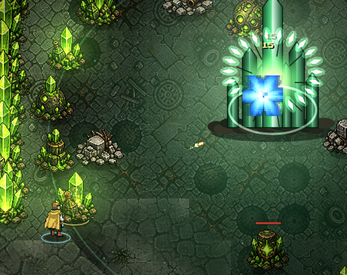
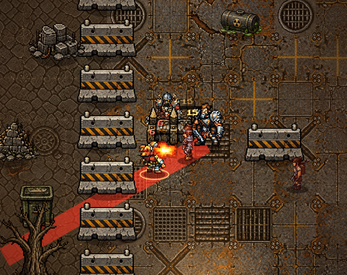
The route runs through four wasteland stretches. The Dry Town opens with a first ally cornered in the ruins and a fuel cell in the hands of the Road King. The Pumping Station brings water at last, along with the question of who owns it and a confrontation with the Tapman. Then the road forks: Glass Valley's poisoned crystal country on one side, Gridlock's freeway pile-up held by a biker gang on the other, with one of the two routes a lie. The Citadel is the final gate, walled off by a Wasteland Emperor who found the Oasis first.
Between those landmarks the game is mostly voices — survivors, radio broadcasts, scrawled notes, a dead man's map — each pointing at a road. Some are truthful. Working out which is which is the core of play, and the journal is the only memory that carries.
How to play
Faith functions as the engine. Leads are written into the journal; when two of them agree they confirm each other, and a source that contradicts an established pair might be lying. The true answers are shuffled for each run, so experience does not transfer and only the journal does.
Water carries three jobs. It is health between legs of the journey, the currency used to buy leads and allies, and the toll charged at the gate. Spending it on information or on a recruit draws from the same pool that keeps a traveller standing, so every purchase is a wager on reaching the next stop.
A squad has to be earned. The run starts solo, and up to three Wasteland Legends can be added by rescue, by duel or by payment; some of them will betray the group later. Squadmates can be stationed on a valve, a winch or a jack while the main character pushes ahead, and control can jump to whoever comes under fire. A fallen ally is revived by standing over them, which turns a bad exchange into a rescue rather than a loss.
Controls
Movement is on WASD or the arrow keys. Space or J attacks, and the attack aims itself, so lining up shots is not part of the job; a skill fires on E or K. Swapping between squadmates uses Q or Tab, with the 1, 2 and 3 keys picking a specific member, while H or F handles holding position and regrouping.
The journal opens with N. Pause is P or Esc, and M pressed from the pause screen returns to the title. Music toggles on M as well.
Touch input is supported: dragging moves the character and on-screen buttons cover everything else, so the whole set is reachable without a keyboard. The control scheme is small enough to learn in the first stretch of wasteland, which matters when a run is measured in under an hour.
| Input | Action |
|---|---|
| WASD or arrow keys | Move |
| Space or J | Attack (auto-aims) |
| E or K | Skill |
| Q or Tab | Swap squadmate |
| 1, 2, 3 | Pick a specific squadmate |
| H or F | Hold position or regroup |
| N | Open the journal |
| P or Esc | Pause |
| M | Toggle music; from the pause screen, return to the title |
| Touch drag | Move |
| On-screen buttons | Everything else |
Tips for your first run
The journal is the only durable advantage, and water is the only thing that keeps a journey alive. Everything below follows from those two facts.
- Record agreeing reports. Two matching sources confirm each other; a lone contradictory voice is a suspect, not a truth.
- Spend water as if it were health, because it is. A lead bought or an ally paid for comes out of the same reserve used to cross the stretches between stops.
- Recruit toward the cap of three, but price the loyalty. Legends join through rescue, a duel or payment, and some will turn later.
- Park a squadmate on a valve, winch or jack when the fighting is elsewhere, then swap to them the instant they are shot at and stand over anyone who drops.
- Plan the closing message. What is written at the Oasis, honest or false, is read by the next traveller on the road.
Content and replayability
A first journey is measured at roughly 45 to 60 minutes. The variance sits in the branching: Glass Valley and Gridlock are separate maps, the Citadel offers three ways in, and the road to the Oasis ends three different ways.
Because every lead is reshuffled, a second run cannot lean on memorised truths; the journal does the work again, and a route that felt settled the first time can turn out to be built on a lie. Progress saves in the browser, and any chapter can be continued or replayed straight from the title screen, so the fork can be revisited without re-walking the Dry Town.
The messages left at the Oasis are the persistent thread between runs. A note planted in one journey, truthful or not, waits on the road in the next — which makes the ending of one playthrough the opening condition of another.
Presentation and performance
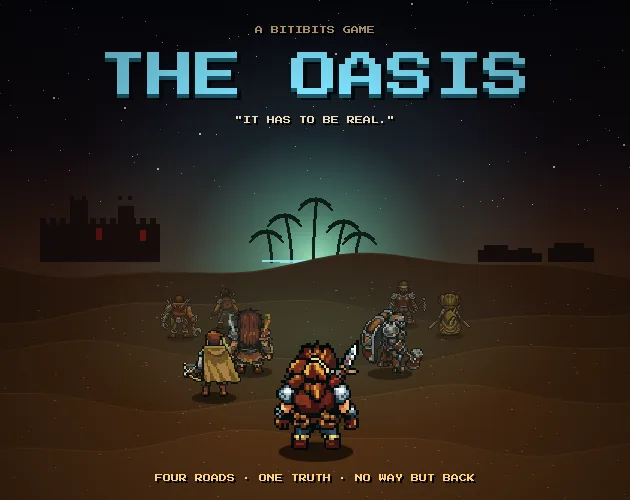
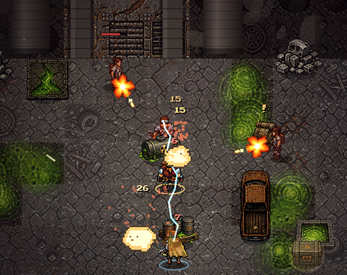
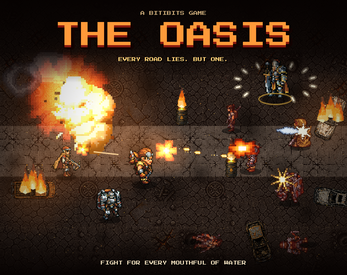
The look is top-down pixel art across a wasteland of dry settlements, crystal country, a blocked freeway and a walled Citadel, with the Wasteland Legends supplied by SakPix's character art and the environment built from the same artist's wasteland set.
Audio is an original chiptune score synthesized in the browser, which suits a game that runs entirely in a browser frame and leans on mood rather than orchestration.
Effects work comes from Pixel VFX Essentials, PixelBlastFX Vol. 1 and heyheythere's Explosion FX Free pack, so gunfire and collapses carry some weight. Delivery is an HTML5 browser frame, saves live in browser storage, and touch controls cover keyboard-free play.
Who should play it
This suits players who like a compact, story-rich wasteland with a mechanic that rewards note-taking over reflexes. The journal loop — collect leads, cross-check them, distrust the outlier — is the draw, and a 45 to 60 minute length makes it a single-sitting game.
It also fits anyone who wants a squad without other people: Wasteland Legends join mid-run, hold positions and can be swapped into when they come under fire. Chiptune and pixel-art enthusiasts get both in one browser tab.
Anyone after a multi-hour campaign or a competitive mode will not find it here; the scope is one short, choice-driven journey with a fork, three ways into the Citadel and several endings rather than a long grind.
Screenshots
How we tested it
The build was loaded from games.debutplay.com in a headless Chromium session on ; the canvas started and no request was blocked. The guide was last checked on .
From the developer
THE OASIS A BITIBITS game by Julian Grant They say the Oasis is a story old men tell. They say nothing lives past the Dry Town. You have a rig with no fuel, three mouthfuls of water, and one thing nobody can take from you: It has to be real. Cross four stretches of wasteland with nothing but a knife, a scrap pistol and whatever you can believe. Every survivor, radio broadcast, scrawled note and dead man's map tells you which road to take. Some of them are telling the truth. The road I. The Dry Town. Alone. Find your first ally, cornered in the ruins, and take the fuel cell from the Road King.II. The Pumping Station. Water at last, and someone owns it. Split your squad across the valves, decide who to trust, and face the Tapman.III. Glass Valley or Gridlock. The road forks, and the fork is a lead. One way is poisoned crystal country. The other is a freeway pile-up held by a biker gang. One of them is a lie.IV. The Citadel. The…
Frequently asked questions
How long is a first run?
About 45 to 60 minutes. Later journeys vary because Glass Valley and Gridlock are separate maps, the Citadel has three ways in, and the road to the Oasis ends three different ways.
Is The Oasis free to play?
Yes. It costs nothing, and it runs in an HTML5 browser frame.
Does it work on phones and tablets?
Touch input is supported: drag to move, with on-screen buttons for everything else. The game is delivered through an HTML5 browser frame.
Is progress saved between sessions?
Yes. Progress saves in the browser, and the title screen offers continue or replay for any chapter already reached.
Can two people play together?
No. It is a single-player game; the squad is made of recruited Wasteland Legends under the player's control rather than other people.
Do decisions carry over to a new journey?
Messages written at the Oasis appear on the road in the next run, honest or otherwise. The leads themselves are reshuffled, so the truths change each time.
What games are similar to The Oasis?
The closest matches on DebutPlay are TORCH, TORCH!, OSSELWICK: The House That Listens, Woodland Awakening. They share the same genre, so the controls and the pace carry over.
Something wrong or missing? Tell us. How we test games.