Adventure · New game
OSSELWICK: The House That Listens
A flashlight, a tired battery, and a house that hears every step frame this top-down 8-bit horror puzzle adventure about finding Pim before the Stillkeeper does.
Play on itch.io
Play OSSELWICK: The House That Listens
OSSELWICK: The House That Listens is a top-down 8-bit horror puzzle adventure that runs in a browser. You search five areas for Pim, the player's little brother, manage a flashlight battery, solve light-based puzzles, and avoid a tall,…
Play on itch.io ↗itch.io blocks third-party embeds, so the game opens on the developer's page. No install, no account.
The short answer
OSSELWICK: The House That Listens is a top-down 8-bit horror puzzle adventure that runs in a browser. You search five areas for Pim, the player's little brother, manage a flashlight battery, solve light-based puzzles, and avoid a tall, pale stalker that hunts by noise and light. Two endings and a rank screen give the run a sharp finish.
What is OSSELWICK: The House That Listens?
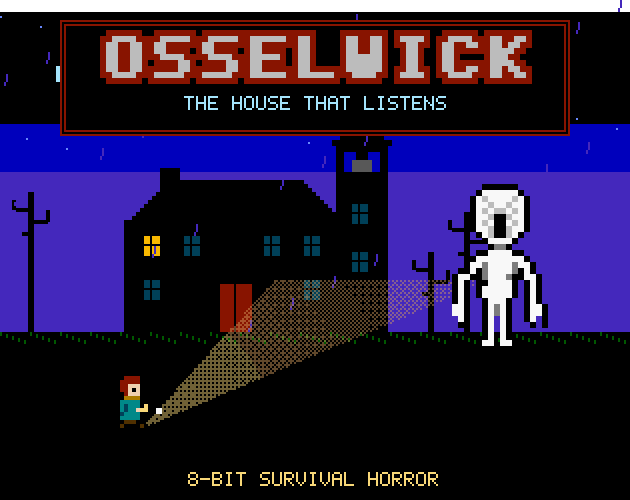
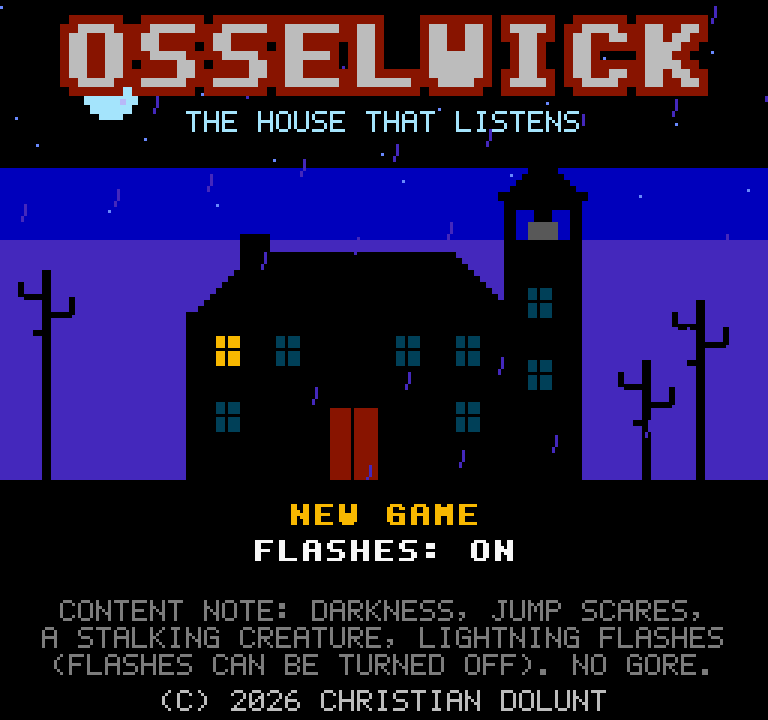
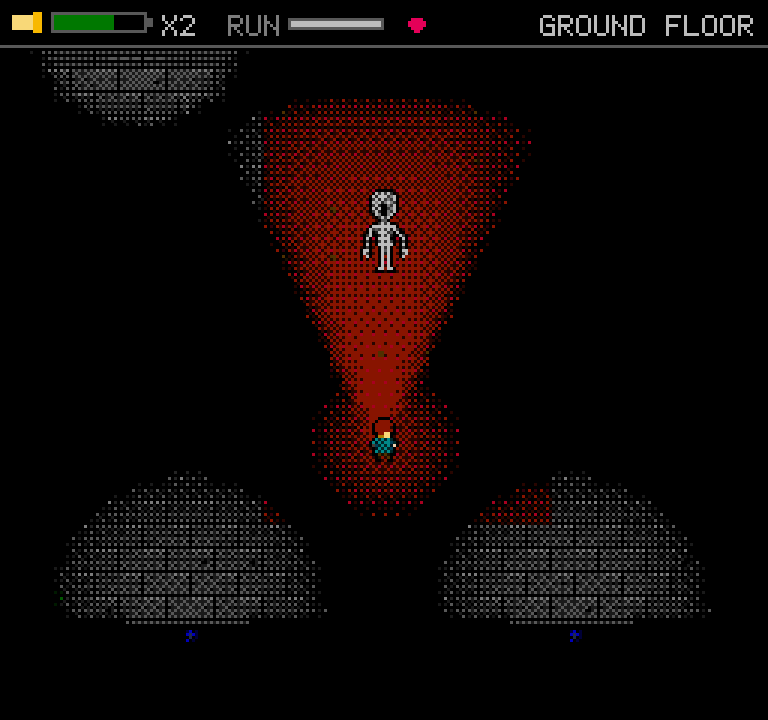
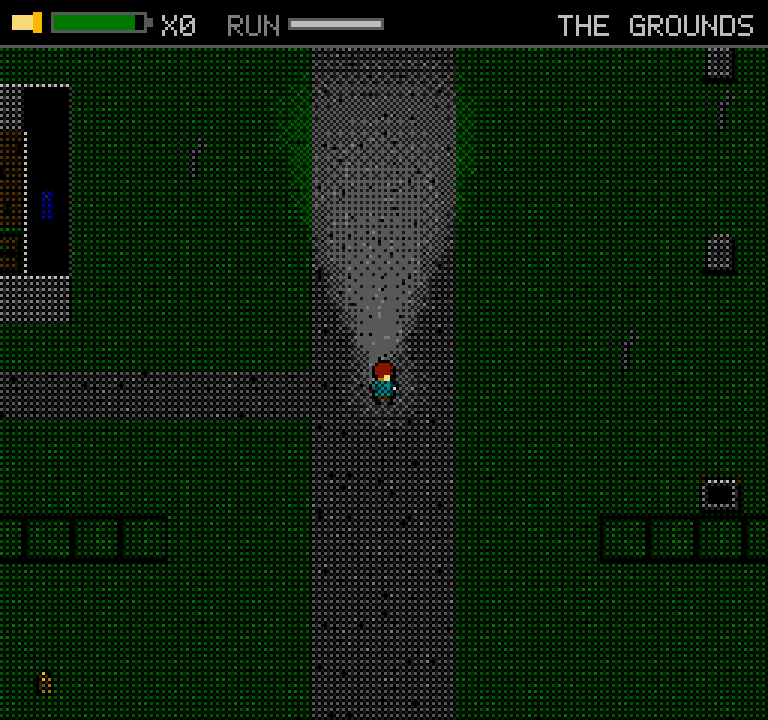
OSSELWICK: The House That Listens begins after midnight on a night of rain and lightning. Pim, the player's little brother, rode a bike up the hill to Osselwick House on a dare and never came back. The search is top-down and styled after 8-bit home consoles, with a flashlight that has a tired battery and a house full of old rooms. The Stillkeeper is tall, pale and silent, and its vision is poor. It listens instead: running steps, creaking doors and swings of the flashlight beam all draw attention. The game has five areas to cross, from rain-soaked grounds and two house floors to a flooded cellar and a belfry. There are 14 readable notes about the family, the housekeeper and the bell. The aim is to find Pim, learn why the tower bell fell silent, and choose an exit or a climb. The game is free and runs in a browser as an HTML5 title.
How to play
Play is built around quiet exploration. The flashlight shows the way, but the beam also reveals the player to the creature, so every press of the light has a cost. A limited light radius sits inside real dithered darkness, and battery management is part of the route. Lit lamps, candles and moonlit windows give places to rest the eyes. Sound is a second map: running, doors and machinery carry noise, and carpet muffles steps better than stone. Wardrobes, cupboards and chests offer hiding spots, but a climb into cover seen by the Stillkeeper gives away the position. A quickening heartbeat warns when the creature is near. Progress comes from reading notes, solving puzzles by candle and moonlight, and learning the house's old routines. Puzzle work involves ordering candles on a portrait, steering moonbeams with mirrors, reading ink that only the beam reveals, turning a safe dial and using a generator crank. The route ends with a tower decision.
Controls
Keyboard play uses the arrow keys or WASD to move. Z, Space or E handles interaction and confirmation. X or Q switches the flashlight, and Shift or C runs with a noisy penalty. Tab opens items and notes. Esc or P pauses, and Enter starts from the title screen. The game also supports gamepad and touch controls, so the same exploration can be handled without a keyboard. Fullscreen and a mute setting are available, and the mute choice is remembered. The control scheme matters because movement noise and light use feed the Stillkeeper's hunting logic; a sprint across stone is not the same as a careful walk over carpet. The flashlight key is not just a view toggle, since the beam can expose the player while it lights the path. The pause key gives a clean way to stop during a tense room, and the item screen keeps notes close at hand.
| Input | Action |
|---|---|
| Arrow keys / WASD | Move |
| Z / Space / E | Interact or confirm |
| X / Q | Flashlight |
| Shift / C | Run, which is noisy |
| Tab | Items and notes |
| Esc / P | Pause |
| Enter | Start from the title screen |
Tips for your first run
First runs go better when the house is treated as a sound problem as much as a light problem. The Stillkeeper cannot see well, but it hears running steps, doors and machinery, so a slow route across carpet is safer than a sprint over stone. Keep the flashlight off when the path is already readable, and use lit lamps, candles and moonlit windows as safe points to stop and listen. A quickening heartbeat signals that the creature is near; break line of sight and change the approach. Hiding works only when the climb is unseen, so duck into a wardrobe, cupboard or chest before the creature watches the move. Puzzles reward observation: check the candle order on the portrait, the mirror-set moonbeams, beam-revealed ink, the safe dial and the generator crank. Save lamps and automatic checkpoints are worth noting before a risky push.
- Walk on carpet where possible; stone makes steps louder.
- Use the flashlight in short checks, then switch it off to move.
- Rest near lit lamps, candles or moonlit windows while planning.
- Enter a wardrobe, cupboard or chest only when unseen.
- Read the 14 notes for puzzle context and bell story.
- Try the quiet escape first, then return for the true ending.
Content and replayability
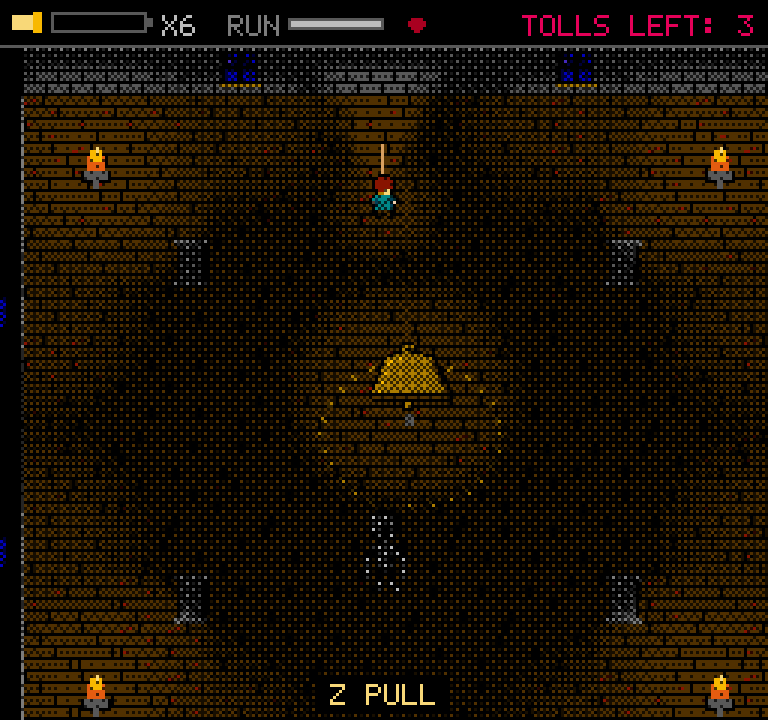
Content is built for a complete run rather than a single room. Five areas move from rain-soaked grounds and two house floors to a flooded cellar and a belfry. There are 14 readable notes about the family, the housekeeper and the bell, and those notes sit alongside puzzle work tied to light. Puzzle types range from candle ordering on a portrait and mirror work with moonbeams to ink that appears only under the beam, a safe dial and a generator crank. A chase sequence runs through the cellar, and the finale is a three-toll event in the bell tower. Two endings split the finish between a quiet escape and the true ending. An end-of-run stats screen shows a rank. Automatic checkpoints and save lamps support longer sessions, and Continue is saved in the browser. The mix of notes, ranked stats, two endings and a five-area route gives the free browser game a compact replay loop.
Presentation and performance
Presentation follows the 8-bit home-console style across graphics, font, music and sound. The visuals use pixel art and dithered darkness, with a flashlight radius that carves a small readable space out of the black. The audio is an original chiptune soundtrack with synthesized effects for footsteps, heartbeat, storm wind, thunder and the bell. Lightning flashes add a harsh light cue, and they can be turned off when the effect is too much. The whole package is generated in code and runs in the browser as an HTML5 game. That design keeps the focus on the house's soundscape: a creaking door, a running step and a swung beam all have weight. The Stillkeeper is tall, pale and silent, and the 8-bit style carries that presence through sound and limited sight. The result is a retro horror look that matches the top-down exploration and the puzzle work.
Who should play it
OSSELWICK: The House That Listens suits players who want a top-down exploration horror game with puzzle work and a stalker that reacts to noise and light. Fans of 8-bit presentation, chiptune sound and browser play get a complete run with five areas, 14 notes and two endings. The flashlight battery and hiding spots add resource and stealth pressure. Players who prefer clear goals will find them in Pim, the silent bell and the tower decision. Those who dislike jump scares can note that lightning flashes can be turned off, though the Stillkeeper, jump scares and stingers remain part of the design. The keyboard, gamepad and touch controls make the free browser game approachable, and the save lamps and checkpoints reduce repetition. The best fit is a player who enjoys reading notes, solving light puzzles and moving carefully through a house that listens.
Screenshots
From the developer
Your little brother Pim rode his bike up the hill to Osselwick House on a dare, and he never came back down. It is past midnight now. The rain won't stop and the lightning shows you broken windows. All you have is a flashlight with a tired battery. Somewhere in the dark rooms is Pim. Somewhere in the dark rooms is the Stillkeeper. The Stillkeeper is tall, pale and silent, and it cannot see well. It hears every running step, every creaking door and every swing of your flashlight beam. Read the notes the house's last keepers left behind. Solve their old puzzles by candle and moonlight. Learn why the bell in the tower fell silent. Then decide whether to walk out the front gate, or climb the tower and make it ring. OSSELWICK is a top-down exploration horror game in the style of the 8-bit home consoles. Everything (graphics, font, music and sound) is generated in code and runs right in your browser. It has two endings. FEATURES - A limited…
Read the full description on itch.io →Frequently asked questions
What is OSSELWICK: The House That Listens?
A top-down 8-bit horror puzzle adventure about searching Osselwick House for Pim while avoiding the Stillkeeper.
Is the game free?
Yes. OSSELWICK: The House That Listens is free and runs as an HTML5 browser game.
How many areas are there?
Five: rain-soaked grounds, two separate house floors, a flooded cellar and a belfry.
How many endings are there?
Two: a quiet escape and the true ending. An end-of-run stats screen also shows a rank.
Does it support gamepad and touch controls?
Yes. Keyboard, gamepad and touch controls are supported, along with fullscreen and a remembered mute setting.
How does the Stillkeeper hunt?
It cannot see well. It hears running steps, creaking doors, machinery and flashlight swings, so noise and light draw it.
Something wrong or missing? Tell us.