Simulation · New game
Pixel Days
A free browser life sim that drops a newcomer into Pixel City with a rented studio, a thin wallet and three cities to grow into.
Play on itch.io
Play Pixel Days
Pixel Days is a free pixel-art life simulator playable in the browser. A character starts in Pixel City with a rented studio apartment and minimal cash, then builds a life through study, work, banking, investing, business ownership,…
Play on itch.io ↗itch.io blocks third-party embeds, so the game opens on the developer's page. No install, no account.
The short answer
Pixel Days is a free pixel-art life simulator playable in the browser. A character starts in Pixel City with a rented studio apartment and minimal cash, then builds a life through study, work, banking, investing, business ownership, property and travel to Puerto Sol and Metropolis. It is worth playing now for the breadth of systems running at once.
What is Pixel Days?
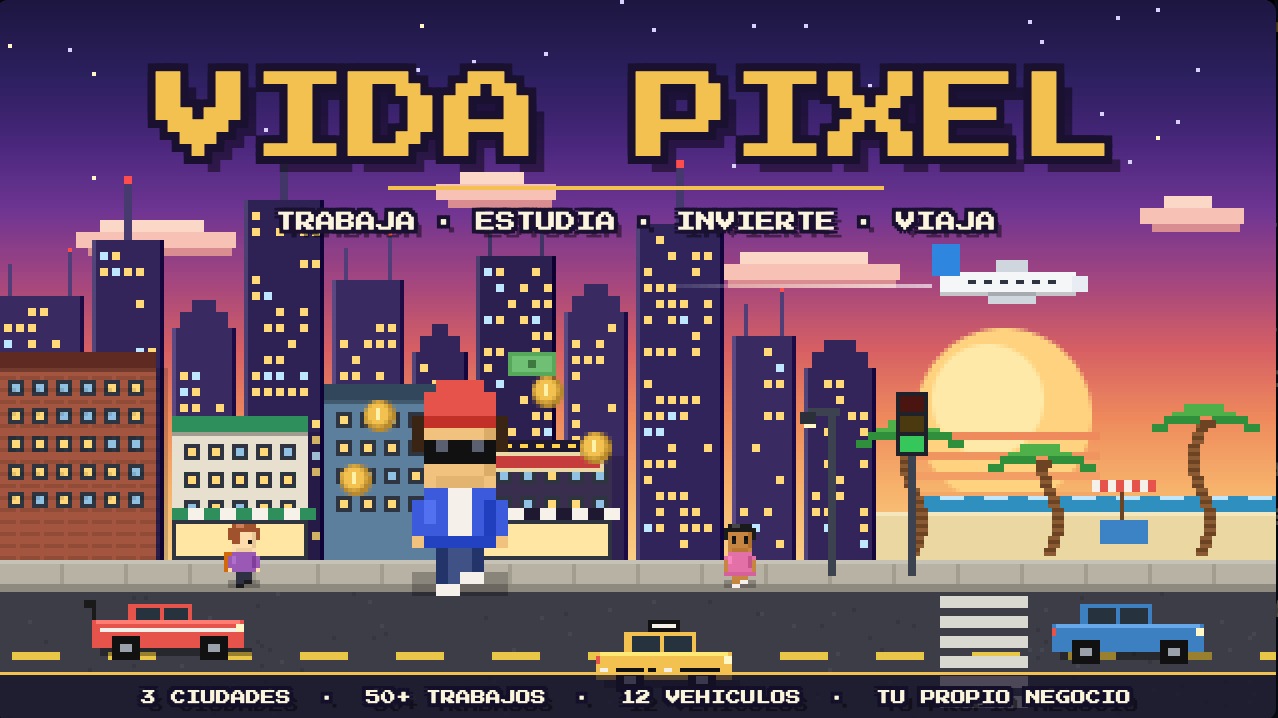
Pixel Days is an open-world life simulator rendered in pixel art and built to run inside a browser. A new character begins in Pixel City with almost nothing beyond a small rented studio apartment and very little money. From that point the game stops steering and starts responding, because study, employment, saving, investing, self-employment, property, vehicles and air travel are all available as routes to build a life.
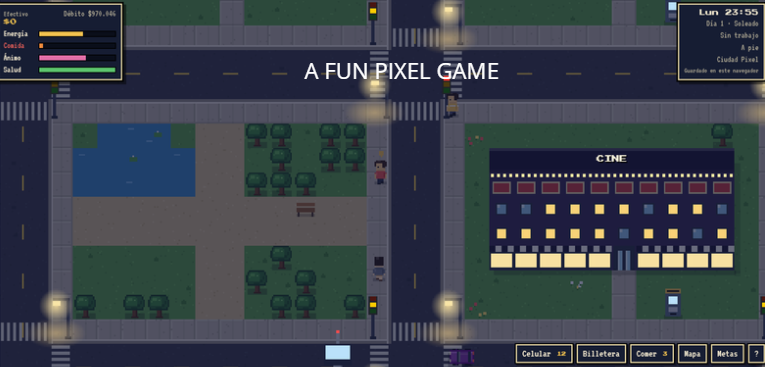
Three cities carry that life. Pixel City is the starting point and holds a university, a factory, a car dealership, a stadium, a cinema, a shopping mall and a public parking lot. Puerto Sol is the coastal option, with palm trees, sea water for swimming and surfing, a cargo port, the Hotel Sol and a technology company called TecnoNube. Metropolis is the capital, spread across 36 city blocks and stacked with glass skyscrapers, a subway system, a Financial Tower, a Courthouse, police and fire stations, a TV studio, a museum and its own stadium.
It is a single-player experience with a pixel-art look, it costs nothing to open in a browser, and it is currently in development.
How to play
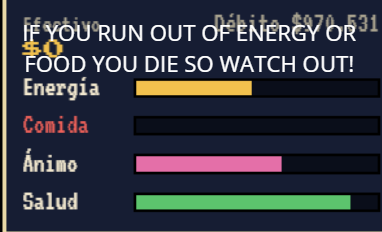
The first task is staying upright. Energy, hunger, mood and health all need managing while the clock runs through day and night and the weather shifts between sun, cloud and rain. Let the character's condition slide far enough and a hospital bed is where the next morning begins.
Income comes from work, and work is gated by qualifications. More than 50 career paths are open, running from cashier and dockworker up to pilot, judge, doctor and investment manager. Twelve university degree programs award technical, professional and master's-level qualifications, and the strongest positions expect the matching degree. One small lever matters early: a dress shirt or a suit worn in an office environment adds 10 percent to pay.
Money is handled with more detail than most life sims bother with. The wallet holds cash alongside debit cards in Classic, Gold and Platinum tiers, plus credit cards that arrive with spending limits, monthly statements and interest rates, all feeding a credit score. ATMs, a transaction history and certificates of deposit sit at the bank. PixelBolsa covers dividend-paying stocks, cryptocurrencies and business ventures, where a stake can go bust or multiply. Renting a space opens self-employment through a café, bakery, hair salon, clothing store or mobile phone shop, staffed with hires and measured by daily earnings.
Controls
Movement through the city is the spine of everything else: walk the streets, cross at the crosswalks once traffic has stopped, and step through doors into buildings rather than past them. Vehicles obey traffic lights and come to genuine stops, pedestrians head toward their destinations, and stepping into the road without looking can put the character under a car. Interiors are fully accessible, with staff to interact with and furniture that functions.
The phone is the second surface. Apps on it cover banking, messaging, weather, scheduling, stock trading and business management, which puts most of the money and planning work one screen away from wherever the character happens to be standing.
Place-specific actions fill in the rest: weighing luggage on the scale and collecting bags from the carousel at the airport, using a fitting room with a preview option before buying one of the 20 clothing items, and test-driving any of the 12 vehicles before committing to a purchase.
The game page does not list its controls. Check the in-game tutorial or pause menu for the current scheme.
Tips for your first run
The opening stretch sets the tone for everything after, and a few habits stop a run from stalling. Treat the needs bars as a schedule rather than an afterthought, since health, energy, hunger and mood all drain while the clock moves through weather and darkness.
Then stack the multipliers. A qualification unlocks better-paying roles, formal dress adds 10 percent in offices, and a staffed business earns every day without a shift being worked.
- Check the crosswalk before stepping off the pavement, because traffic genuinely stops and starts.
- Enrol in one of the 12 degree programs before chasing pilot, judge, doctor or investment manager work.
- Wear a suit or dress shirt for office shifts to collect the 10 percent pay bonus.
- Read the credit card terms: limits, statements and interest rates feed directly into the credit score.
- Test-drive before buying, since the 12 vehicles range from bicycles to supercars with spoilers.
- Scratch-off lottery tickets carry a top prize of $500,000 for players willing to gamble a little.
Content and replayability
Nineteen goals give the run its spine, starting at a first job and finishing at a first million in savings. Getting there is deliberately non-linear: a character can grind shifts, take a degree and climb, or borrow, trade stocks and gamble on a venture instead. Each approach touches different systems, so a second run rarely looks like the first.
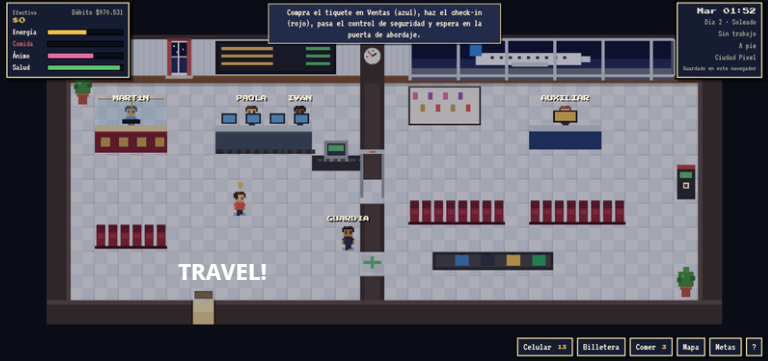
Downtime is not empty. The cinema shows six animated films, the stadium hosts sports matches, the Pixel Millionaire TV game show takes contestants, scratch-off tickets are on sale, and a gym, a museum and a beach round out the leisure options. The airport adds a full travel routine, with tickets, luggage weighed on a scale, security checks, boarding and a baggage carousel on arrival.
Property and possessions are the long game. Homes range across studio apartments, modern houses, beach cabins, colonial-style homes, beachfront villas, lofts and penthouses, each with its own design and garage, and interiors can hold unmade beds, city-view windows, fireplaces, jacuzzis, swimming pools, home theaters and installed appliances. Add 12 vehicles and 20 clothing items in multiple colors, and the collection side of the game is substantial.
Presentation and performance
The visual identity is pixel art, applied to a city that keeps moving. Day turns to night, weather cycles through sun, cloud and rain, traffic signals govern real stops and pedestrians navigate toward destinations using crosswalks. Puerto Sol leans on palms and open sea, while Metropolis leans on glass skyscrapers and a subway, so the three locations read as distinct places rather than recolors.
Because it ships as an HTML5 build, it plays inside a browser window instead of through a launcher. Interiors are just as detailed as the streets: doors open, furniture works and staff stand ready to talk, which keeps the camera close to the simulation rather than at a distance.
The phone interface ties the presentation together, putting banking, messaging, weather, scheduling, stock trading and business management into apps that sit on one device rather than scattered menus.
Who should play it
This is a game for people who enjoy systems more than reflexes. The interesting decisions involve which degree to fund, whether a credit card makes sense before payday, how much of a portfolio belongs in dividend stocks versus cryptocurrencies, and whether a rented storefront will outearn a salaried job.
Goal-chasers get a clear ladder in the 19 objectives, from landing a first job to banking a first million, and completionists get homes, vehicles and clothing to accumulate along the way. Anyone who likes the rags-to-riches arc of starting with almost nothing and ending with a penthouse and a garage will find plenty to do.
It also suits players who want something that opens instantly in a browser and rewards short sessions as readily as long ones, provided they are comfortable with a build that is still in development and therefore still changing.
Screenshots

From the developer
Vida Pixel is an open-world life simulator featuring pixel art. You arrive in Pixel City with very little money and a rented studio apartment—from there, your story is yours to shape. You can study, work, save, invest, start your own business, purchase homes and vehicles, and even travel by plane to other cities. Three Cities Pixel City: Where you begin. It features a university, a factory, a car dealership, a stadium, a cinema, a shopping mall, and a public parking lot. Puerto Sol: A beach city complete with palm trees, a sea for swimming and surfing, a cargo port, the Hotel Sol, and the tech company TecnoNube. Metropolis: The grand capital, spanning 36 city blocks and featuring glass skyscrapers, a subway system, a Financial Tower, a Courthouse, police and fire stations, a TV studio, a museum, and a stadium. A Life That Feels Real Needs: Manage your energy, hunger, mood, and health. Time passes, bringing day, night, and changing…
Read the full description on itch.io →Frequently asked questions
Is Pixel Days free?
Yes. No price is attached to it, and it runs as a browser build, so opening it costs nothing.
Where can it be played?
It is an HTML5 game that plays in a web browser. It is also a single-player experience rather than a shared online world.
Do the best jobs require a degree?
They do. Twelve degree programs award technical, professional and master's-level qualifications, and roles such as pilot, judge, doctor and investment manager expect the matching one.
Can a character start a business?
Yes. Renting a space allows a café, bakery, hair salon, clothing store or mobile phone shop, with staff to hire and daily earnings that grow from there.
How many cities are there?
Three: Pixel City, Puerto Sol and Metropolis. Flights connect them, with tickets, luggage weighed on a scale, security checks, boarding and a baggage carousel forming the airport routine.
How many goals are there?
Nineteen, beginning with landing a first job and running up to saving a first million.
Something wrong or missing? Tell us.