Action · New game
Seams of Sorrow
A free roguelite action adventure set in a haunted toy factory, Seams of Sorrow casts players as a stuffed animal whose trapped human soul is the weapon.
#13 this weekAI-assisted: Code
The game runs in this tab. No install, no account.
The short answer
Seams of Sorrow is a free action-adventure roguelite for HTML5 and Windows, released on 29 October 2026. Players wake as a stuffed animal in the Old Toy Factory and use a trapped human soul as a blade, weaving spectral energy against failed prototypes while collecting thread to mend cotton wounds. Its low-poly 3D horror setting and permanent upgrades make a first run worth starting now.
What is Seams of Sorrow?
Seams of Sorrow is a released action-adventure roguelite from TitangamabuntaGames, available for HTML5 and Windows and priced as a free game. Its setting is the Old Toy Factory, once the workshop of master artisan Lucho, who believed hand-sewn objects made with genuine love could protect a human spirit. After losing his daughter, Lucho sought a vessel to bring her back and made a dark pact with a collector demon ruling an underworld of lost toys. The demon used him to weave cursed vessels, then trapped Lucho inside PELUCHOTE. Players wake as a stuffed animal haunted by a human soul, and that trapped spirit is the only weapon against the factory's horrors.
Every run is a survival attempt through a place shaped by its history. The game combines 3D low-poly visuals with roguelike progression, action combat, and survival-horror tension. The central loop is to use spectral energy offensively, repair a fabric body with thread, and manipulate heavy objects to find hidden rooms, secret upgrades, and forgotten lore. Permanent stat growth and unlockable skills are part of the longer climb toward the factory's deeper layers. The demon's goal is to collect souls for the Tapestry of Souls, while the player tries to defeat him and reclaim freedom.
How to play
A run begins with the player as a stuffed animal inside the Old Toy Factory. Spectral energy is the offensive tool: it can be thrown and woven to strike enemies. The body is fabric, so damage causes cotton to bleed; thread found across rooms is used to patch wounds and continue. Soul energy also pushes, pulls, and moves heavy objects, opening routes to hidden rooms, secret upgrades, and forgotten lore. Enemies include hordes of failed prototypes called Rejects, built from grubby fabric, failing stitches, and unsettled minds. Mini-bosses called Key Pieces hold concentrated emotional souls; defeating them lets the player absorb that power and learn more about the haunted factory.
Progression is roguelite rather than a single fixed campaign. Absorbing spiritual power unlocks skills that change play, while permanent stat enhancements carry into later attempts. The goal is to survive deeper layers and eventually confront the collector demon. Each run is a fight through a place haunted by its own history, with the demon gathering souls for the Tapestry of Souls. The player's choices center on when to attack with spirit, when to repair with thread, and when to spend soul energy on the environment rather than combat.
Controls
Control in Seams of Sorrow is built around spectral energy. The soul can be thrown and woven into attacks, making it the primary way to strike down enemies in the factory. That same energy is channeled to push, pull, and move heavy objects, which is how hidden rooms, secret upgrades, and forgotten lore are uncovered. Repair is tied to thread collected from rooms; when the fabric body takes damage and bleeds cotton, thread is used to patch the wounds.
The practical control rhythm is a choice between offense, environment manipulation, and self-repair. Striking a failed prototype with spectral energy addresses a threat; moving a heavy object can open a route or reveal a secret; patching cotton damage keeps the run alive. Absorbing spiritual power adds unlocked skills and permanent stat enhancements to that rhythm. Browser play is available through the HTML5 frame, and a Windows version is listed alongside it.
The game page does not list its controls. Check the in-game tutorial or pause menu for the current scheme.
Tips for your first run
Thread is the first resource to respect. The body is fabric, damage causes cotton to bleed, and thread scattered through rooms is the only listed repair material. A first run should treat every patch as a decision about whether to press into another room or stabilize.
Spectral energy has two jobs. Throwing and weaving it strikes enemies; pushing and pulling with it moves heavy objects and can reveal hidden rooms, secret upgrades, and forgotten lore. Spending soul energy only on attacks leaves those discoveries untouched.
Key Pieces are mini-boss encounters that carry concentrated emotional souls. Defeating them absorbs power and uncovers more of the factory's truth, so they are milestones rather than optional noise.
- Thread comes from rooms, so route clearing and repair planning are linked.
- Heavy objects are not only obstacles; moving them can expose hidden rooms and upgrades.
- A Key Piece win is a power gain and a lore beat at once.
- Permanent stats make failed runs less wasted, so experiment with unlocked skills.
Content and replayability
Seams of Sorrow is structured for repeated attempts. Each run through the Old Toy Factory is a fight to survive a place haunted by its own history, and the broader climb continues through roguelite growth. Absorbing spiritual power unlocks game-changing skills and permanently enhances stats, giving later runs different tools for the deepest layers. Hidden rooms, secret upgrades, and forgotten lore are placed behind soul-energy manipulation, so exploration adds another reason to replay rooms and test heavy objects.
The enemy set supports that loop. Rejects appear as hordes of failed prototypes made from grubby fabric, failing stitches, and unsettled minds. Key Pieces are mini-bosses holding concentrated emotional souls; beating them grants power and reveals more about the factory. The collector demon's Tapestry of Souls gives the conflict a collection theme: souls are being gathered, and the player is trying not to become another haunted thread.
Because progression is roguelite, the content is not just a single pass through a story. Skills, stats, and knowledge of hidden routes accumulate. The game's 3D low-poly style and survival-horror tags shape the mood around that repeatable structure.
Presentation and performance
Seams of Sorrow uses a 3D low-poly look to present the Old Toy Factory, a setting built from Lucho's history, PELUCHOTE, and the collector demon's underworld of lost toys. The art direction, visual design, and 3D and 2D art are credited to Dashakness; the game is made with Unity. That combination gives the factory a handmade, stitched-together identity that fits Rejects built from grubby fabric and failing stitching.
The horror tone comes from the premise: a stuffed animal animated by a trapped human soul, cotton bleeding from fabric damage, and a demon weaving a Tapestry of Souls. Key Pieces carry concentrated emotional souls, which gives mini-boss encounters a place in the visual and story language. The spectral energy used for attacks and object manipulation is central to play.
Platform presentation is straightforward: HTML5 and Windows are supported, and a playable HTML5 frame is available for browser play. The game is built with Unity, with programming and technical development credited to Moises.
Who should play it
Seams of Sorrow suits players who want a free action-adventure roguelite with a survival-horror mood and a low-poly 3D look. The appeal is not only combat: thread repair, soul-energy object manipulation, hidden rooms, secret upgrades, and forgotten lore give each run exploration and resource decisions. Players who enjoy permanent stat growth and unlockable skills have a clear reason to return after a run ends.
The factory premise adds character. Lucho's tragedy, PELUCHOTE, the collector demon, and the Tapestry of Souls give the conflict a story frame beyond clearing rooms. Rejects provide horde encounters, while Key Pieces offer mini-boss fights with concentrated emotional souls. The ability to throw and weave spectral energy as the primary weapon makes the protagonist unusual: a stuffed animal whose human soul is the blade.
The game is available for HTML5 and Windows, with browser play through an HTML5 frame. It is a fit for players who like roguelite structure, fabric-and-thread survival rules, and a haunted toy factory setting.
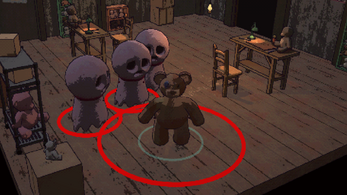
Screenshots
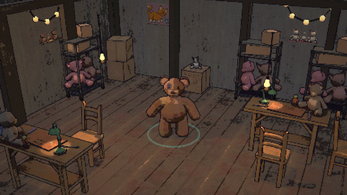
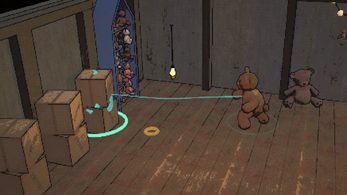
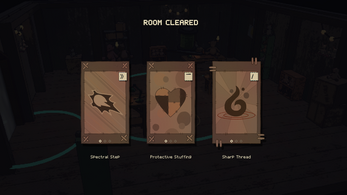
How we tested it
The build was loaded from games.debutplay.com in a headless Chromium session on ; the canvas started and no request was blocked. The guide was last checked on .
From the developer
A roguelite action game about trapped souls, haunting seamwork, and using your own spirit as a weapon. DON'T LET THEM HAUNT YOUR SOUL. The Old Toy Factory wasn’t always a place of shadows. Decades ago, the master artisan Lucho crafted unique, hand-sewn pieces bound by a conviction: objects poured with genuine love can protect a human spirit forever. Then, tragedy struck. After losing his daughter, Lucho tried to forge a vessel that could bring her back. Desperate, he made a dark pact with a collector demon who rules an underworld of lost toys. The demon tricked him, using his hands to weave a cursed web of vessels until Lucho himself ended up trapped inside his own masterpiece: PELUCHOTE. Now, you wake up as a stuffed animal haunted by your own human soul. And that trapped spirit is your only weapon against the horrors waiting in the dark. WEAVE YOUR SURVIVAL. Every run through the factory is a fight to survive a place literally…
Frequently asked questions
Is Seams of Sorrow free?
Yes. It is free, with no purchase cost. It is a released action-adventure roguelite from TitangamabuntaGames.
Which platforms are supported?
HTML5 and Windows are supported. A playable HTML5 frame is available, so browser play is part of the launch.
When did it come out?
It was published on 29 October 2026 at 15:46 UTC and is marked as released.
What is the main weapon?
The trapped human soul is the weapon. Spectral energy can be thrown and woven into attacks, and soul energy can push, pull, and move heavy objects.
How does repair work?
Damage makes the fabric body bleed cotton. Thread collected through the rooms is used to patch wounds and survive another room.
Is progression permanent?
Yes. Absorbing spiritual power unlocks skills and permanently enhances stats for deeper layers of the factory, which is the roguelite progression.
What games are similar to Seams of Sorrow?
The closest matches on DebutPlay are Starport Express, Furious Street, Procrastinando Run. They share the same genre, so the controls and the pace carry over.
Something wrong or missing? Tell us. How we test games.