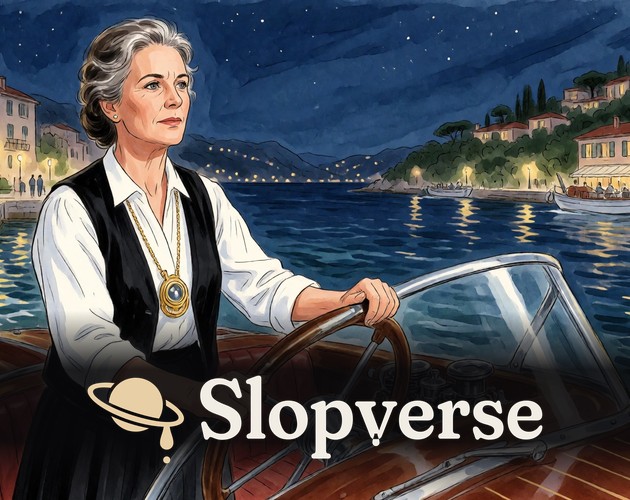
Interactive fiction · New game
Slopverse
Slopverse turns a typed action into a painted, narrated scene with music, and a free browser demo lets you steer one of those scenes before committing to a world.
Play on itch.io
Play Slopverse
Slopverse is an interactive fiction game built for browsers, where you play the lead and an AI writer runs everyone else. Each turn returns as a scene with painted images, distinct character voices, a narrator, captions and mood-matched…
Play on itch.io ↗itch.io blocks third-party embeds, so the game opens on the developer's page. No install, no account.
The short answer
Slopverse is an interactive fiction game built for browsers, where you play the lead and an AI writer runs everyone else. Each turn returns as a scene with painted images, distinct character voices, a narrator, captions and mood-matched music. A free demo needs no card, and 301 ready-made worlds plus any premise you can describe in a line are waiting.
What is Slopverse?
Slopverse is an interactive fiction and role-playing game that runs in a browser, with nothing to install and a design built for a computer first, though phones work too. You take the lead in a story while an AI writer handles everyone else and the world around you, so the cast reacts to whatever you decide rather than following a fixed script.
The basic unit is a turn: one move you send, which comes back as a scene. Each scene is assembled from pictures painted for what just happened, a voice for every character, a narrator linking them, captions on screen, and music that follows the mood.
The project is dated 21 October 2026 and marked in development. It is built by one developer, Jonathan Larson, working with AI coding agents, and the story text, images, voices and music are all generated by AI models while play is underway.
How to play
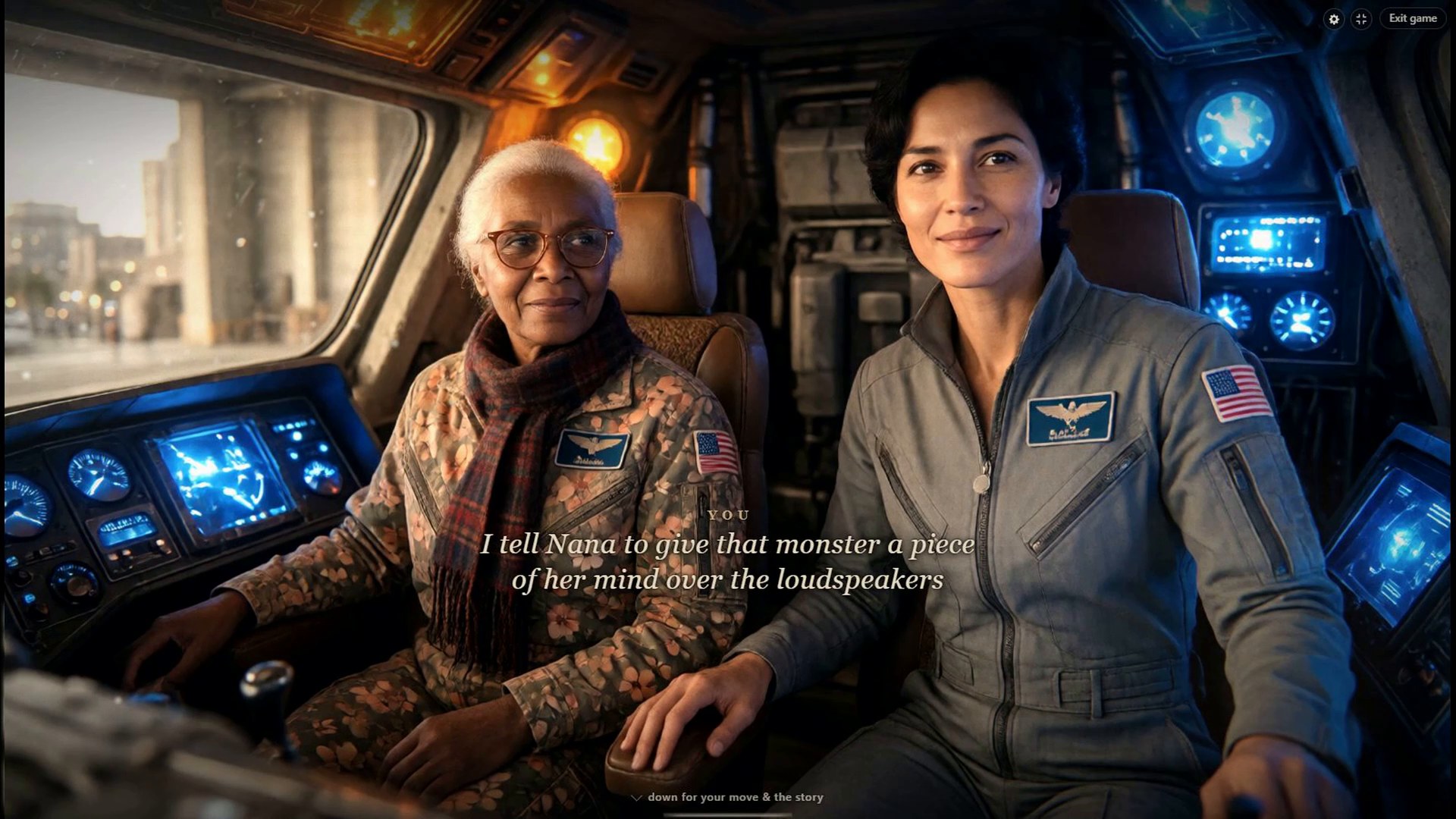
The demo drops you into a single scene and asks you to choose what happens next. When you pick, the scene returns fully produced, painted and voiced, with music. Every branch used in it was played once in the real game, so the images, voices and music are the exact output that playthrough produced.
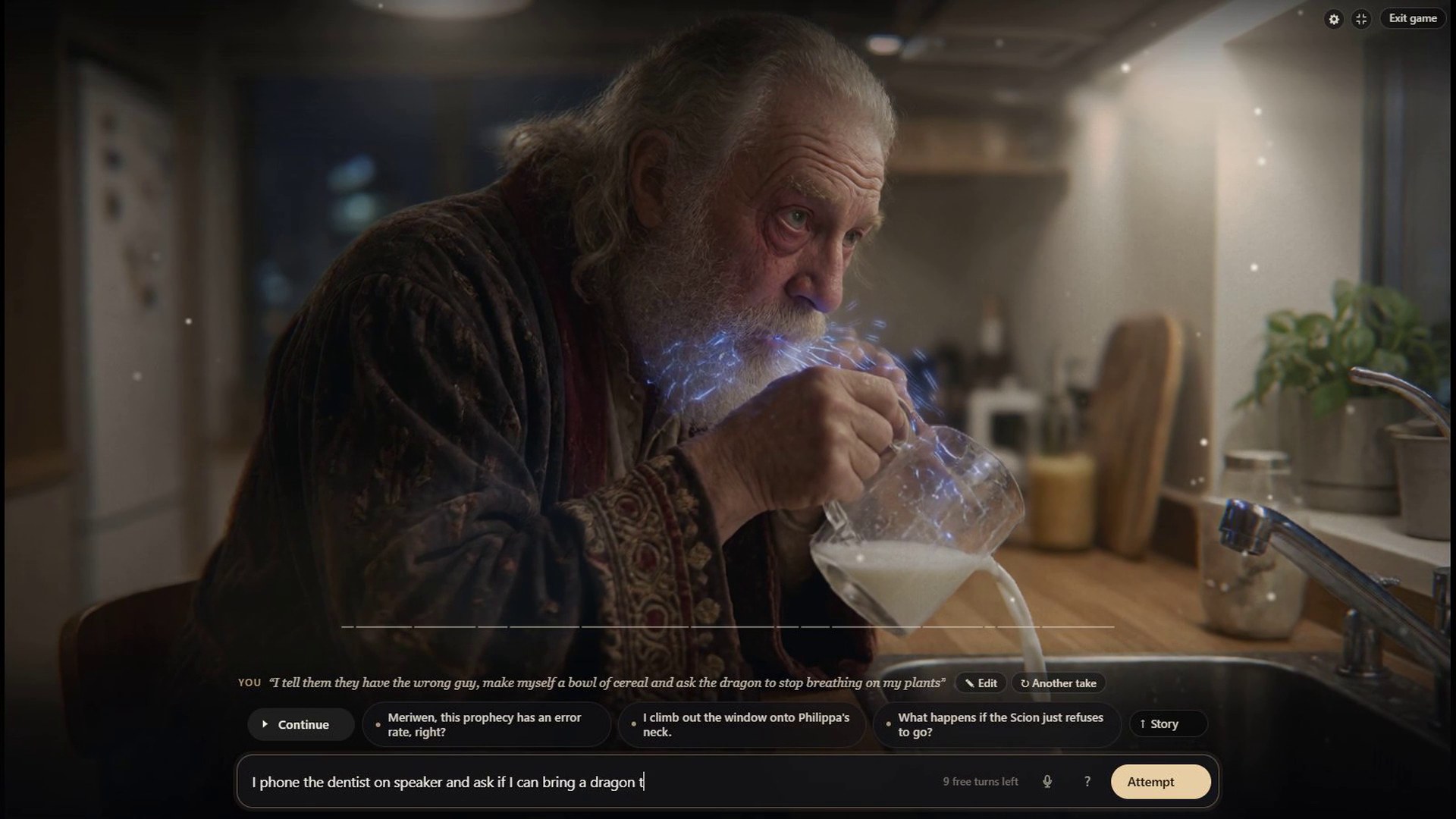
The full game opens up the input. You choose one of 301 ready-made premises or describe a world in a line, then play the lead and type whatever you want to attempt. The AI writer responds as every other character and as the world around them.
Turns are the currency of play, and a turn is one move you send. Twenty free scenes come without a card, roughly 20 minutes of film. Beyond that, plans run from $10 a month for 100 turns, $20 for 225 turns, and $50 for 600 turns. Top-ups of 50 turns cost $6 and never expire.
Controls
Input stays narrow. The demo asks you to pick what happens next from the choices presented, so a scene advances one decision at a time. The full game widens that to free text: you type anything you want the lead to attempt, and the typed move becomes a turn.
Everything else plays out for you. Characters speak in their own voices, a narrator connects them, captions run on screen, and the music follows the mood of the moment. Reading and watching carry equal weight, which suits a story-first design rather than an action one.
Because the game runs on HTML5 in a browser, there is no installation step. It is built for a computer first, and phones work as well.
| Input | Action |
|---|---|
| Choice prompts | Pick what happens next in the demo scene |
| Text entry | Type anything the lead should attempt and send it as a turn |
Tips for your first run
The demo is the cheapest way to judge whether the format clicks, since it shows a finished scene without a card. Once you move into the full game, the setting you choose shapes far more than the first prompt suggests.
- Give each turn one clear action. A turn is a single move you send, so a specific instruction gives the AI writer a concrete beat to stage.
- Act rather than narrate. The lead is yours to steer; the rest of the cast and the surrounding world belong to the writer.
- Pick a premise in a genre you already enjoy, or write your own in one line if the 301 ready-made worlds feel close but not exact.
- Treat the free allowance as a tone test: scenes move quickly, so a handful of turns shows whether a world's mood holds your attention.
Content and replayability
Replay value sits in the premise rather than a level list. There are 301 ready-made worlds to start from, and any setting you can describe in one line becomes playable too. Fantasy and science fiction both appear among the options, and because an AI writer runs the cast and the world, the same premise can land differently depending on the moves you send.
Content splits in two. The demo is safe for work, so the scene on this page is fine to try in company. The full game is written for adults, with stories that can go dark, violent or romantic at roughly the level of an R-rated film, and generated pictures that never show nudity. Knowing that line matters before a younger player takes a turn.
The format is a story game, not a companion chat: there is a lead, a cast and a narrator, and the point is the scene rather than open-ended small talk.
Presentation and performance
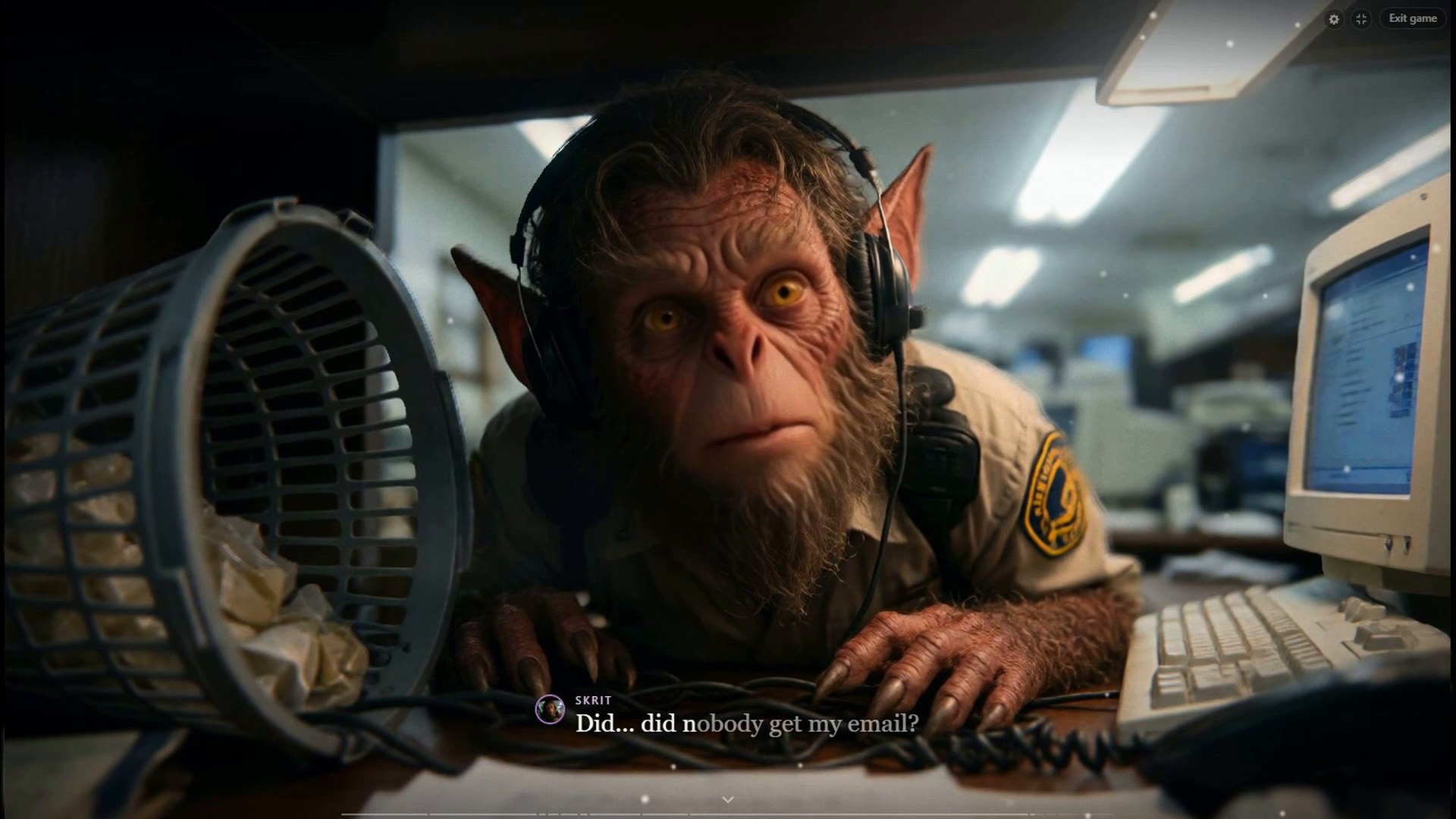
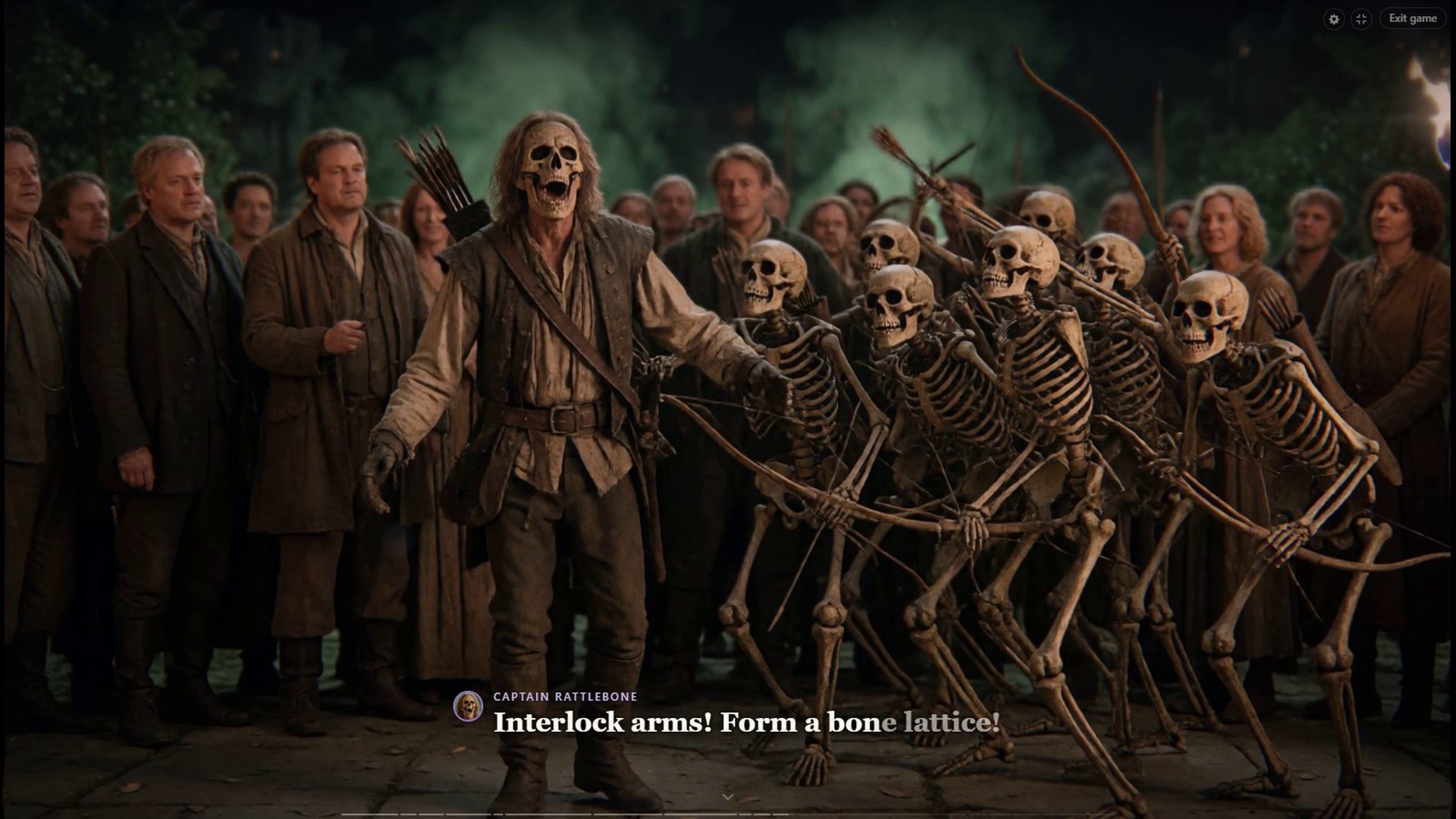
Presentation is the headline feature. Every turn returns as a finished scene: pictures painted for what just happened, a separate voice for each character, a narrator between them, captions on screen, and a score that changes with the mood. The demo's images, voices and music are exactly what one real playthrough produced, which is the clearest signal of how the full game sounds and looks.
All of it is generated by AI models during play, from story text to pictures, voices and music. That shapes expectations: output is produced live for the moment it depicts rather than pulled from a fixed art pack.
Delivery is browser-based HTML5. Nothing installs, the design targets a computer first, and phones work too, so the gap between clicking play and watching a scene return is short.
Who should play it
Readers who like text-based narrative with a strong spoken component are the core audience. The voice acting tag is earned: every character gets a distinct voice and a narrator sits between them, so scenes are listenable as well as readable. Fantasy and science fiction fans have plenty of starting points among the 301 premises, and anyone who has wanted to describe a setting rather than pick one from a menu gets that option.
Solo players suit it best, since the loop is one person making moves for the lead while the rest of the cast is handled elsewhere. Adults should note the full game's R-rated range for violence, darkness and romance, even though the demo is safe for work.
Players hoping for a companion chatbot will find something more structured here: a lead role, a written cast, a narrator and a scene that resolves. Anyone who wants twitch reflexes or direct combat control should look elsewhere, because typing and choosing carry the play.
Screenshots
From the developer
Play a scene right here: pick what happens next, and watch it come back painted and voiced, with music. Every move in this demo was played once in the real game, and the pictures, voices and music are exactly what it made. The full game is at slopverse.ai. There you type anything: you pick a world, or describe one in a line, and play the lead. An AI writer plays everyone else and the world around you, and each turn comes back as a scene, with pictures painted for what just happened, every character speaking in a voice of their own with a narrator between them, captions on screen, and music that follows the mood. It is a story game, not a companion chat. Cost: 20 free scenes, about 20 minutes of film. No card. Plans from $10 a month: Starter $10 (100 turns), Plus $20 (225 turns), Director $50 (600 turns). Top-up: 50 turns for $6, never expire. A turn is one move you send. Worlds: 301 ready-made premises to start from, or any world you…
Read the full description on itch.io →Frequently asked questions
Is Slopverse free?
The browser demo is free and needs no card, and new players receive 20 free scenes, about 20 minutes of film. The full game runs on paid plans from $10 a month, with 100 turns on Starter, 225 on Plus at $20 and 600 on Director at $50.
What platforms does it run on?
It runs on HTML5 in a browser, so nothing needs installing. The design targets a computer first, and phones work too.
Do players have to type to play?
In the full game, yes: you describe what the lead attempts and send it as a turn. The demo is narrower, asking you to pick what happens next from the options offered.
Is the content suitable for younger players?
The demo is safe for work. The full game is aimed at adults, with stories that can be dark, violent or romantic at around the level of an R-rated film, though the generated pictures never show nudity.
How many worlds can be played?
There are 301 ready-made premises to start from, covering genres such as fantasy and science fiction, and any world you can summarise in a single line can be played as well.
What counts as a turn?
A turn is one move you send. Plans bundle them in tiers, and separate top-ups of 50 turns cost $6 and never expire.
Something wrong or missing? Tell us.