Puzzle · New game
After Hours: The Ashgrove Museum
A free HTML5 puzzle game built around three connected museum rooms, linked puzzles, and a complete ending that can be reached in one sitting.
#31 this weekAI-assisted: Code, Graphics, Sound, Text
The game runs in this tab. No install, no account.
The short answer
After Hours: The Ashgrove Museum is a free browser puzzle game about working through three connected rooms in a museum. Its linked puzzles build toward a finished ending, and the full run takes roughly 30 to 40 minutes. Unlimited retries make it easy to start now and work through the chain at your own pace.
What is After Hours: The Ashgrove Museum?
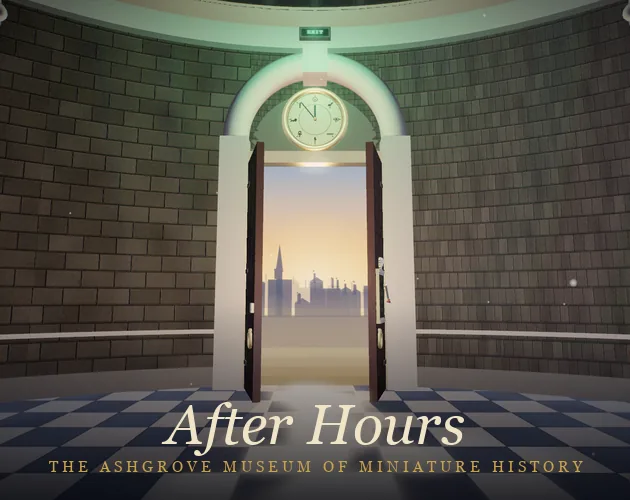
After Hours: The Ashgrove Museum is a free puzzle game that runs in an HTML5 browser. The setting is a museum split into three connected rooms, and the central task is to work through a chain of linked puzzles rather than a set of unrelated challenges. Progress leads toward a complete ending, so the experience is built as a finite run rather than an endless score chase.
A full playthrough is expected to take roughly 30 to 40 minutes. The game is playable from start to finish, and repeated attempts are allowed without a stated limit, which makes it possible to keep working on a stubborn puzzle instead of restarting the whole session. The project is still in development, with ongoing changes to puzzle depth and the sound mix, but the current build is a real game with a beginning, a middle, and an ending.
The museum concept matters because the rooms are connected and the puzzles are linked. That structure suggests that a detail in one room can relate to another part of the route, and the ending is meant to feel earned rather than arbitrary. For a first visit, the useful expectation is a compact browser puzzle session with a clear finish line.
How to play
Play begins in the browser build, with the museum laid out as three connected rooms. The task is to solve the linked puzzles across that route and reach the ending. The game is not a collection of isolated mini-games; the chain is the point, so progress in one room feeds the next part of the museum. A complete run is intended to last about 30 to 40 minutes.
The HUD and menus are part of the current build, and they have been revised during development. Use them as the orientation layer for the session and check them after each solved step. The puzzle chain is the through-line, so the practical approach is to stay aware of what changes as progress is made.
There is no stated penalty for a failed attempt, and the game allows repeated tries. That makes persistence the main skill: keep testing the puzzle chain, revisit the connected rooms, and use the fact that the whole game can be completed in one sitting. The ending is part of the build, so the goal is not just to poke at a demo but to finish the museum run.
Controls
After Hours: The Ashgrove Museum is an HTML5 browser game, so the session is launched from the playable frame rather than from a separate client. The museum is organized into three connected rooms, and the linked puzzle chain is the main route through them. The HUD and menus are part of the current build and were revised during development, so they are worth checking as part of the interface rather than treating them as decoration.
Because the build is still in development, the sound mix and puzzle depth are the areas named for further work. That does not change the basic shape of a run: enter the browser game, work through the museum's linked puzzles, and aim for the complete ending. The full session is expected to last about 30 to 40 minutes, and repeated attempts are allowed.
For a first launch, keep the interface simple: start the game, stay oriented with the HUD and menus, and focus on the three-room structure. The museum setting is the frame for the puzzle chain, not a separate mode. The playable frame is the whole entry point.
The game page does not list its controls. Check the in-game tutorial or pause menu for the current scheme.
Tips for your first run
The first run is best treated as a single 30 to 40 minute session. The museum has three connected rooms and a chain of linked puzzles, so the important habit is to connect what happens in one space with what changes elsewhere. Do not rush the ending; the game is built to be completed, and repeated attempts are allowed.
Start with orientation. Check the HUD and menus before assuming a puzzle is broken, and use the connected-room structure to decide where to return after a step. Because the puzzles are linked, a solution in one room can matter to the next part of the route. The game is still in development, so small changes to puzzle depth and sound are part of the current state, but the playable path runs start to finish.
- Set aside 30 to 40 minutes for a full run.
- Treat the three rooms as one connected puzzle chain.
- Use the HUD and menus for orientation.
- Retry freely; repeated attempts are allowed.
- Aim for the complete ending rather than a partial tour.
- Revisit earlier rooms after progress if a link feels unclear.
Content and replayability
The content is a finite museum puzzle run: three connected rooms, a linked puzzle chain, and an ending. A complete playthrough is expected to take about 30 to 40 minutes. That makes it a one-sitting game rather than a long campaign. The current build can be played from start to finish, and repeated attempts are allowed, so a failed puzzle does not end the session.
Replay value comes from the chain itself. Because the rooms are connected and the puzzles are linked, a second attempt can be about cleaning up a route, revisiting an earlier space with a clearer idea, or finishing without getting stuck. The game is still in development, with puzzle depth and the sound mix named as areas for further work. The build has also been audited for accidental spoilers, including a stray letter that could have given away the final answer.
The appeal is the compact structure: a museum, a puzzle chain, and a clear finish line. For players who like to solve at their own pace, unlimited retries matter more than a scoring system. The ending is the main reward, and the 30 to 40 minute length keeps the commitment contained.
Presentation and performance
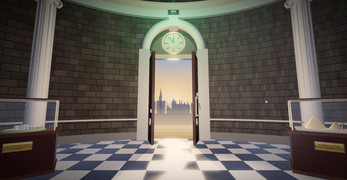
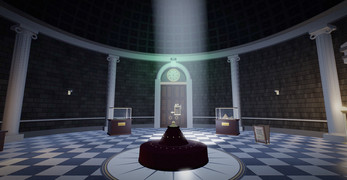
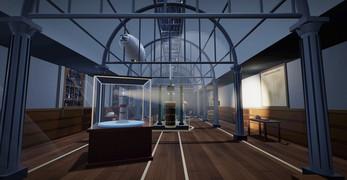
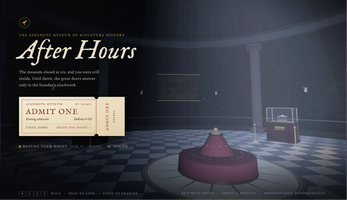
After Hours: The Ashgrove Museum is built for HTML5 and runs in a browser frame. The rooms are 3D, and the HUD and menus were revised during development. The visual and audio layer includes textures and sound, with the sound mix still being adjusted. Those details give the museum a more produced feel than a bare puzzle prototype, even though the project remains in development.
The production process is unusual: the code, textures, sound, and some of the museum text were produced with AI, while the concept and repeated playtesting came from a human creator. A later audit caught several issues, including a stray letter that could have revealed the final answer. That matters for players because the current build has been checked for accidental spoilers and functional problems, not just assembled once and left alone.
The delivery method is clear: a playable browser build with three connected rooms, a linked puzzle chain, and a complete ending. The game is still being tweaked, so presentation details may change, but the core museum structure and the 30 to 40 minute run are the stable points.
Who should play it
This game suits players who want a short puzzle session with a definite finish. The run is expected to take about 30 to 40 minutes, the museum is split into three connected rooms, and the puzzles form a linked chain. That makes it a good fit for someone who likes to hold a route in mind and return to earlier spaces with a new idea.
It is also a reasonable choice for players who prefer browser games that launch from a playable frame. The HTML5 build is playable in the frame, and it is free. The experience is finite and complete, so it is not aimed at players looking for an endless progression loop or a long campaign. The current status is in development, which means puzzle depth and sound are still being adjusted.
Players who dislike retrying may find the linked structure demanding, but repeated attempts are allowed. The compact length keeps that friction contained. Anyone curious about a small museum puzzle game with an ending should be able to judge it in one sitting: start the browser build, work through the three rooms, and see whether the chain clicks.
Screenshots
How we tested it
The build was loaded from games.debutplay.com in a headless Chromium session on ; the canvas started and no request was blocked. The guide was last checked on .
From the developer
My dad passed away many years ago and in 1990, he was programming a video game. I only remember that it had pumpkins, but we had NES and Sega Genesis and after he passed, playing those consoles was my way of staying connected to him. I’ve always loved the idea of making a game, but that was just not how it worked out for me. But now I actually can help craft a game -- so I decided I would. I’m not a programmer, and I want to be upfront about that: AI wrote the code for After Hours. Every line of it, plus the textures, the sound, and some of the words you’ll read throughout the museum. What I brought was the vision and the persistence to keep improving it: I wrote the brief that explained the theme and what I wanted. Asked for three connected rooms, all the linked puzzles, and an ending that would feel like it was earned. Then I played it, over and over, and told AI exactly what wasn’t working because the first version was off and…
Frequently asked questions
Is After Hours: The Ashgrove Museum free?
Yes. The game is free to play.
What platform does it run on?
It is an HTML5 browser game with a playable frame.
How long does a run take?
A complete playthrough is expected to take about 30 to 40 minutes.
How many rooms are in the museum?
The museum has three connected rooms.
Can the game be finished?
Yes. The current build can be played from start to finish and has a complete ending.
Is the game still in development?
Yes. Puzzle depth and the sound mix are still being adjusted, but the playable path runs start to finish.
What games are similar to After Hours: The Ashgrove Museum?
The closest matches on DebutPlay are Galileo Base: Forces & Motion in 3D, Bubble Tea Sort: Drink Puzzle, LESSON ZERO. They share the same genre, so the controls and the pace carry over.
Something wrong or missing? Tell us. How we test games.