Browser games · New game
EraTrail
A short-expedition history quiz that asks for two answers on every story: where it happened on a modern world map, and roughly when.
#27 this weekAI-assisted: Code, Graphics, Text
The game runs in this tab. No install, no account.
The short answer
EraTrail is a free browser demo built around 50 historical stories, each answered in two steps: pin the place on a world map, then choose a date, century or period. Five clues make a standard run, shorter sets appear when a filter narrows the pool, and every answer opens background notes, timelines and reference links. It runs in English or Japanese.
What is EraTrail?
EraTrail is an in-development browser game from individual developer gonspartanz, published as a playable Web demo on 22 October 2026. It is a history quiz with a geographical twist: each expedition hands over a clue, then asks the player to mark where the event happened on a world map and to pick roughly when it happened from date, century or period options.
The demo holds 50 historical stories reaching from antiquity to the twentieth century and spread across six broad world regions. Nothing about the map pretends to be period-accurate: it presents modern reference geography rather than historical borders. Where a single year would mislead, the answer options use wider ranges instead.
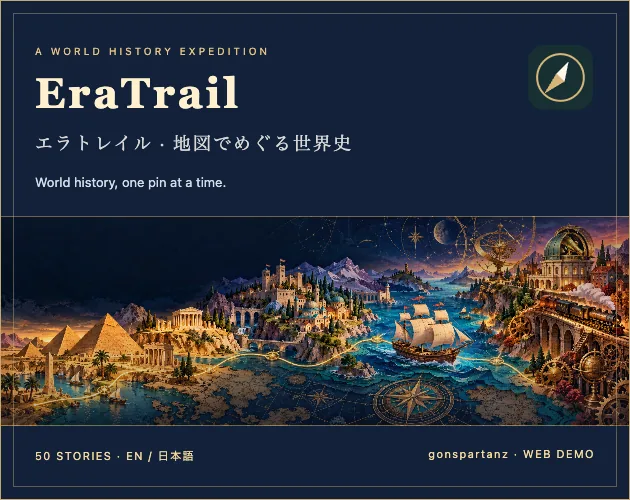
Everything on screen is available in English or Japanese, and the switch can be flipped at any point rather than locked at the start. The colourful illustrations that accompany stories are decorative, not reconstructions or historical sources, so the learning sits in the pin placement, the timing choices and the written background rather than in the artwork.
How to play
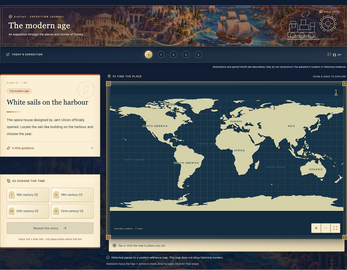
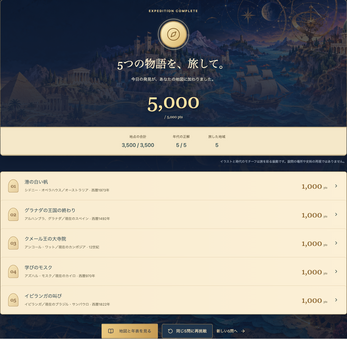
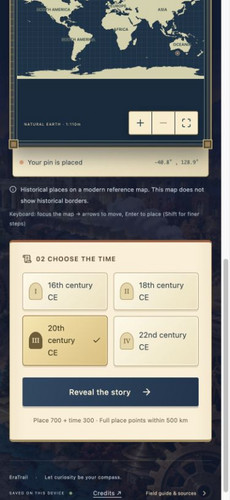
Every expedition opens with a clue. The player puts a pin on the map, selects a time option, and then reveals the story. A standard run is five clues long, and when a filter matches fewer stories the route simply runs shorter at that smaller count.
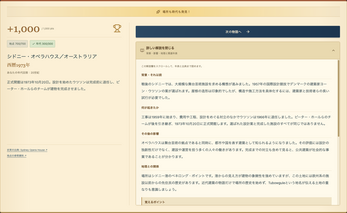
Revealing brings up the fuller account: the background, the event itself, the aftermath, the geographical link, and one takeaway worth holding on to. Short timelines and source links sit alongside, so a curious player can keep reading on external sites after the round ends.
The pin is not a guess that vanishes. The game shows the historical reference point so the two can be compared, and answered stories stay available from a personal map and timeline. Practice can be narrowed by period or by region, and mistakes are kept in view for another attempt rather than buried.
Nothing here needs an account. Progress is stored in the browser on the site itself, and there are no advertisements, analytics or in-game purchases anywhere in the loop.
Controls
On a desktop or a touchscreen the core gesture is the same: click or tap the map where the event belongs, then choose a time option and reveal the answer. The plus and minus buttons handle zoom, dragging moves the view once zoomed in, and a reset button pulls back out to the whole world.
Keyboard play is fully mapped. Tab moves focus to the map, the arrow keys shift the pin around, holding Shift with an arrow gives smaller steps, and Enter drops the pin. That matters because the map is the answer mechanism rather than decoration, so it has to be reachable without a pointer.
Once an answer is revealed, the Explore the story control opens the full notes, and Next story moves on to the following clue. A fullscreen button appears when the browser and the page embedding the game permit it; the normal embedded view stays playable when they do not.
Reduced-motion preferences are respected, so players who have asked their system to limit animation get a calmer version of the same experience.
| Input | Action |
|---|---|
| Mouse | Click the map to place the pin on the location of the event |
| Touch | Tap the map to place the pin instead of clicking |
| Keyboard | Tab to the map, move with the arrow keys, hold Shift with the arrows for smaller steps, and press Enter to place the pin |
| Zoom and pan | Use the plus and minus buttons to zoom, drag to move around while zoomed, and press reset to see the whole map again |
| Explore the story | Open the detailed notes for the event just answered |
| Next story | Continue to the following clue in the expedition |
Tips for your first run
The demo rewards a two-step habit: read the clue properly, settle on a rough era, then fine-tune the pin. A few practical routines make the first few expeditions smoother.
- Use a period or region filter when confidence is low; a filter matching fewer stories produces a shorter run, which is a gentler entry point than a full five-clue set.
- Commit to the century before hunting for the exact spot; the map is modern geography, so trade routes, coastlines and city names are the useful anchors.
- Open the reference point after every answer and look at the distance between the two pins; that gap is the actual lesson of the round.
- Read the aftermath notes and the point to remember, since those are the parts most likely to stay with a player after the tab closes.
- Return to missed stories instead of pushing forward; the personal map and timeline keep answered events within reach for another attempt.
Content and replayability
Fifty stories is a modest library, but the structure stretches it. Each story is a self-contained expedition with its own clue, map answer, timing answer and written follow-up, and the filter system means the same pool can be played by period, by region, or as a mixed set.
Replay comes from three directions. Mistakes can be revisited until the geography and the era stick. Answered stories can be reopened from the personal map and the timeline, so the collection becomes a browsable record rather than a score. And the shorter routes created when a filter matches only a handful of stories mean a quick session is always possible.
The written material is where the depth sits: background, the event, what followed, the geographical connection, a memory point, short timelines and links out to sources. None of this is a substitute for a formal course, and the demo does not claim to cover all of world history or to have been checked by an independent expert.
Because answers sometimes use broad ranges rather than a single year, a near-miss on timing is less wrong than it feels. Treat the century as the target and the exact year as a bonus.
Presentation and performance
The look leans on a decorative panorama created with OpenAI image generation, and the illustrations throughout are ornamental rather than reconstructions of how places looked. Generative AI assistance was also used in development, writing and translation, but no generative AI runs while a player is actually playing.
Testing has been honest about its own limits. Desktop Chrome and emulated narrow, touch-friendly screens were checked, and a player reported that normal use worked on an iPhone, though that was not an automated device test. Systematic iPhone checks and Android testing remain outstanding.
Live checks on the hosting platform covered switching between English and Japanese, answering with map and date selections, reading the detailed explanations, completing a five-question run, and seeing saved progress survive a reload. Those checks are described as useful but not comprehensive.
The browser is the only platform involved, and the fullscreen option depends on the browser and the embedding page agreeing to it. The game keeps working in the ordinary embedded frame when fullscreen is refused.
Who should play it
EraTrail suits players who like map quizzes more than multiple-choice trivia, and who enjoy being asked for two connected answers instead of one. It also fits anyone learning English or Japanese who wants short, readable passages with a clear task attached to each one.
It is a good fit for a curious adult with ten minutes to spare, and a poor fit for anyone wanting an exhaustive survey of world history or a curriculum signed off by subject specialists. The demo is explicit that it is neither. Players who want every answer to be a tidy single year should also expect some deliberately broad ranges.
The current build is a free Web demo, and the longer-term pricing model has not been settled, so the arrangement now is not a promise about later versions. With no account, no advertising and no purchases, clicking Play costs nothing but a browser tab.
Screenshots
How we tested it
The build was loaded from games.debutplay.com in a headless Chromium session on ; the canvas started and no request was blocked. The guide was last checked on .
From the developer
Publisher / 公開者: gonspartanz(個人 / individual) English Where did it happen? When did the world change? Follow a historical clue, place your pin on a world map, and choose the date, century or period. Each short expedition connects an event with its setting and the people and changes around it. This English/Japanese Web demo includes 50 historical stories, from antiquity to the twentieth century, across six broad world regions. After answering, explore the background, what happened, what followed, the geographical connection, and a point to remember. Short timelines and reference links help you continue learning. Five clues per standard expedition, with shorter routes when a filter matches fewer stories.Practice by period or region, and revisit mistakes.Compare your pin with the historical reference point.Revisit answered stories in your personal map and timeline.Change between English and Japanese at any time.Mouse, keyboard and touch…
Frequently asked questions
Is EraTrail free to play?
It is a free Web demo in a release candidate state. The long-term pricing model is still undecided, so nothing guarantees that later versions follow the same arrangement.
How much history does the demo cover?
Fifty stories running from antiquity to the twentieth century, spread across six broad world regions. The game is clear that it does not cover all of world history.
How long is a single expedition?
A standard expedition is five clues. When a practice filter matches fewer stories, the run shortens to however many are available at that count.
Does it work on a phone?
Touch controls are part of the design, and narrow touch layouts have been emulated. One player reported normal iPhone use, but systematic iPhone and Android device testing is still outstanding.
Is progress saved?
Progress stays in the browser and on the site, with no account involved. Private browsing, blocked embedded storage or cleared browser data can stop saving, and progress from a local copy does not transfer to the hosted demo automatically.
Which languages are available?
English and Japanese, switchable at any point during play rather than fixed at the start. AI assistance was used in the writing and the translation of the demo material.
What games are similar to EraTrail?
The closest matches on DebutPlay are Pixel Descent. They share the same genre, so the controls and the pace carry over.
Something wrong or missing? Tell us. How we test games.