Browser games · New game
Fear Feast: Rot n' Roll
A free browser dice game where zombies harvest a crowd of people, three shotguns end a turn, and thirteen brains trigger the final round.
#33 this weekAI-assisted: Code, Text
The game runs in this tab. No install, no account.
The short answer
Fear Feast: Rot n' Roll turns a crowd of people into dice. Roll three at a time, bank the brains, and stop before three shotguns wipe the turn. One to six players share a device, robots fill empty seats, and six monsters each bring their own table and jokes. It loads in a browser, works offline, and costs nothing.
What is Fear Feast: Rot n' Roll?
Fear Feast: Rot n' Roll is a push-your-luck dice game that runs in a browser window. The premise is a zombie's buffet: the dice are people pulled out of a crowd, and every roll decides whether the meal stays put, runs off, or fights back. Three people are grabbed at a time, so each roll is a small negotiation between appetite and risk.
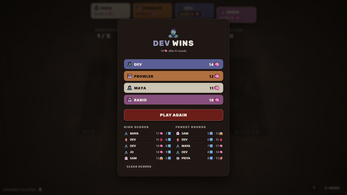
A turn can end two ways. A player can bank the brains collected so far, or lose the lot by rolling three shotguns. Reaching 13 brains starts the last round, which gives the rest of the table a final chance to close the gap.
Six monsters are playable, and each arrives with its own table, its own dice and its own running jokes. A vampire, for example, gets turned away at the door and repelled by garlic. The rules do not change between characters, so the cast can be swapped in the middle of a game without starting over.
How to play
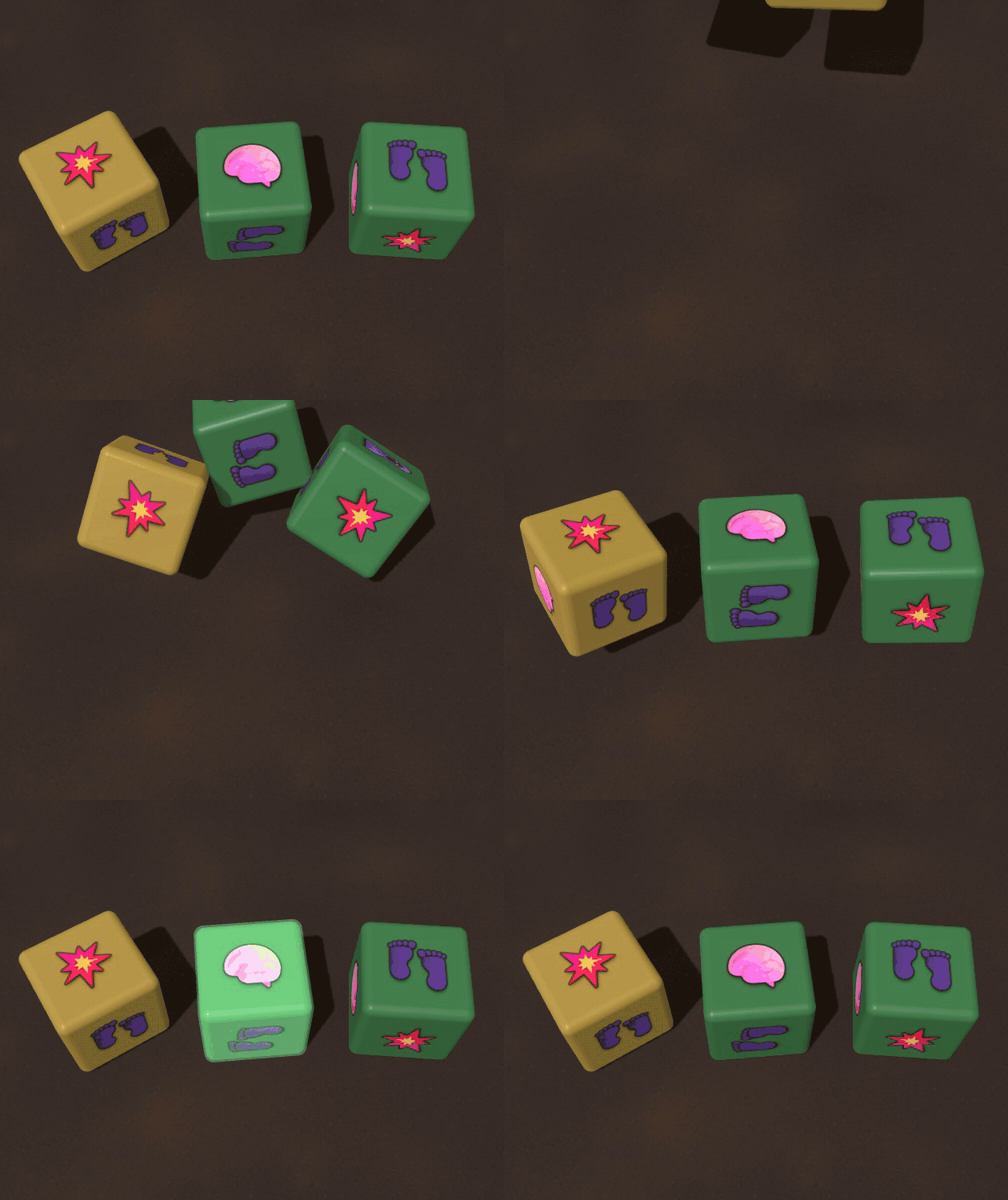
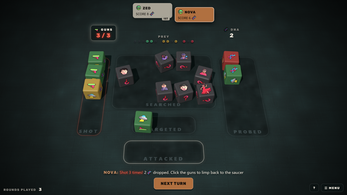
The whole game is one decision repeated: roll again or take what has already been caught. Each roll begins by pulling three people from the crowd. A brain is caught and kept. Footprints mean the person ran, and those runners stay in line for a later roll. A shotgun means the person fought back.
Brains only count once they are banked, so a player has to judge when to stop. Three shotguns in a single turn wipe out every brain gathered during that turn, which is the tension the game is built on. Banking is the safe exit.
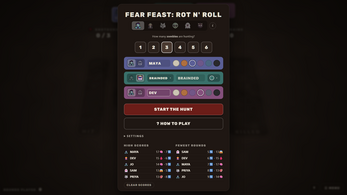
The race runs to 13 brains, and whoever gets there first starts the last round. Between one and six people can share the same device, and any seat without a human can be handed to a robot. The monster roster can be changed at any point, because every character plays by the same rules.
Controls
Four input methods are supported: mouse, keyboard, touch, and any controller. A group can pass a laptop around, plug in a pad, or tap through a turn on a phone. Phones work, and the screen can be held either way.
Comfort options are part of the interface rather than an afterthought. Color marks help players who cannot rely on hue alone, screen reader support is included, and a reduced-motion setting tones down movement for anyone who wants a calmer screen.
Nothing here requires an account, an install, or a live connection once the game has loaded. The browser build is playable on the spot, and Windows and Linux versions are also available. Offline play continues after the initial load, which suits a plane, a train, or an unreliable connection. Language choices, including a Zombie language, sit in the settings.
| Input | Action |
|---|---|
| Mouse | Supported for play |
| Keyboard | Supported for play |
| Touch | Supported for play; phones work held either way |
| Any controller | Supported for play |
Tips for your first run
Watch a match before joining one. Every seat can be given to a robot, and the game will play a complete round while a newcomer studies the rhythm of banking and busting. Nine robots are available to fill seats, and they are not equal: Prowler is the one to worry about, while Brainded gets every call wrong and makes a gentler opponent.
Because three shotguns erase a turn's brains, banking earlier than instinct suggests is usually wise, especially once the shotgun pile is growing. Footprints are not a loss, since those people return to the line for the next roll and keep the crowd stocked. Bullets list the habits worth forming first. Bullets:
Content and replayability
Six monsters share one rulebook. Zombie, vampire, werewolf, alien, ghost and demon each bring a separate table, a separate set of dice and separate jokes threaded through play. Because the mechanics never change, the roster works as a fresh coat of paint: a table can swap characters between turns and keep the same match running.
Nine robots supply opposition or company. They fill empty seats when fewer than six humans are present, and they can take every seat so a game plays itself as a spectator event. A full local match, a solo session against robots and the all-robot mode all use the same 13-brain race.
Four languages widen the table further, covering English, French, Spanish and a Zombie tongue. The game is released into the public domain under CC0 and built with three.js, which matters to anyone who enjoys poking at the code behind a game.
Presentation and performance
The game is rendered with three.js in the browser. Sound and music come from a long credit list, all of it released under CC0, and no AI-generated sound or images are used. No AI runs during play, so a session stays local and self-contained.
Demands on hardware are modest, as befits a dice game, and the practical benefit is that play continues after the connection drops. Offline support kicks in once everything has loaded. Phones work in either orientation.
Accessibility goes further than most party games bother to go: color marks for players who cannot distinguish hues, a screen reader path, and a reduced-motion setting. There are no accounts, no ads and nothing collected, so a group can begin a match without signing anything or handing over contact details.
Who should play it
Groups gathered around one screen are the obvious audience. Up to six players can share a single device, with robots covering the spare seats. It fits a Halloween party, a lunch break, or any setting where a round has to be short and the rules have to be explainable in under a minute: three symbols, one decision, one target score.
Solo players get a real game too. Filling seats with robots turns it into a quick push-your-luck exercise, and the all-robot mode makes it a spectator toy for anyone curious about how the machines behave.
Players who need accessibility options should find it welcoming, and French and Spanish speakers get full localizations alongside the joke Zombie language. Anyone wary of installs will appreciate a game that runs in a browser and keeps working offline. It is free to play, and a one-dollar contribution is invited from those who enjoy it.
Screenshots
How we tested it
The build was loaded from games.debutplay.com in a headless Chromium session on ; the canvas started and no request was blocked. The guide was last checked on .
From the developer
A push-your-luck dice game for 1 to 6 players, in your browser. You're a zombie and the dice are people. Grab three from the crowd and roll: a brain you keep, footprints means they ran (they stay in line for your next roll), a shotgun means they fought back. Keep rolling or bank what you've caught. Three shotguns and the turn's brains are gone. First to 13 starts the last round. You can play as a vampire, werewolf, alien, ghost or demon instead. Each has its own table, dice and jokes (the vampire gets turned away at the door and repelled by garlic), but the rules stay the same, so you can switch in the middle of a game. Up to six people on one device, and robots for the empty seats. There are nine of them: Prowler is the one to worry about, Brainded gets every call wrong. Make every seat a robot and they'll play a whole game while you watch. Mouse, keyboard, touch, or any controller.Phones work, held either way.English, French,…
Frequently asked questions
Is Fear Feast: Rot n' Roll free?
Yes. The game costs nothing to play. A one-dollar contribution is invited from players who liked it, but the game itself is free.
How many players can join a game?
Between one and six players can share a single device in local play. Any empty seat can be filled by a robot, so a small group still gets a full table.
Can it be played solo?
Yes, one player is supported. Robots occupy the other seats, and if every seat is given to a robot the game plays a full match on its own while someone watches.
What do the three dice results mean?
A brain is caught and kept. Footprints mean the person ran, and those runners stay in line for a later roll. A shotgun means the person fought back, and three of them erase the turn's brains.
What happens at 13 brains?
The first player to reach 13 brains starts the last round, giving everyone else a final opportunity to change the outcome.
Does it work on a phone or offline?
Phones work and can be held either way, with touch supported. After the game has loaded it keeps running without a connection. Mouse, keyboard and any controller also work.
What games are similar to Fear Feast: Rot n' Roll?
The closest matches on DebutPlay are Bean Wars, punnamada Legends: vallam kali, Beachside café. They share the same genre, so the controls and the pace carry over.
Something wrong or missing? Tell us. How we test games.