Adventure · New game
Fjord Saga
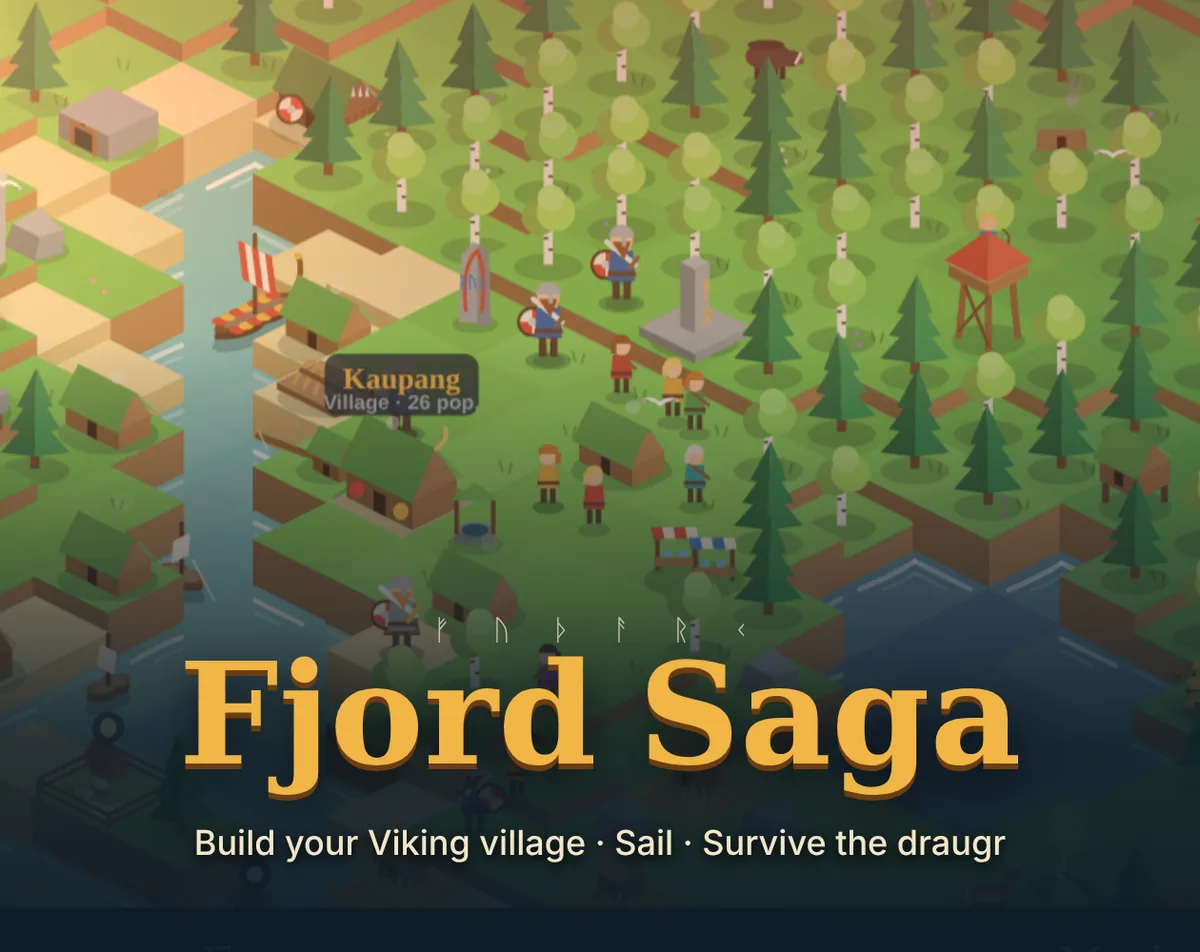
A browser-based Viking settlement game that starts with a single farm in Kaupang and grows into trade, sailing, raids and long nights full of draugr.
#49 this weekAI-assisted: Code
The game runs in this tab. No install, no account.
The short answer
Fjord Saga is an isometric Viking management and adventure game that runs in a browser on desktop and mobile with no download or sign-up. Click a tree or a rock and your viking walks there. Grow Kaupang from one farm into a town, feed villagers each dawn, sail, trade and fight.
What is Fjord Saga?
Fjord Saga hands a player one farm, Kaupang, on the Vestfold coast, and sets the long-term target of turning that holding into a legend of the North. It plays from an isometric view and mixes management with adventure, running inside a browser on desktop and mobile with nothing to download and no account to create.
The setting follows the shape of the real map: the Norwegian fjords, the forests of Sweden, the lakes of Finland, Denmark, and out to Iceland and the Faroes. Regions differ by biome, whether fertile plain, boreal forest, tundra, moorland, volcanic land or marsh, and each carries its own perks and pitfalls that change what a settlement can support.
Weather is part of the problem rather than decoration. Rain, storms, mist and snow pass over the map, sunrise and sunset show on the water, the nights run long, and the dark brings draugr out of the mist alongside wolves, bears, trolls and cursed ships.
How to play
The opening is about raw materials. Wood gets chopped, stone gets quarried, wheat gets grown, and those materials go into longhouses, a forge, a mead hall and an altar to Odin. The village climbs through stages from that lone farm toward a mighty town, and each stage opens a new set of buildings.
Food runs on a daily rhythm: people must be fed every dawn or famine follows. Livestock carries that load. Hens, sheep, pigs and cows can be captured in the wild, fed on hay, bred, and kept for eggs, wool and milk, with the option of holding animals back for lean days instead of collecting everything.
A shipyard opens the coast with three hulls: a fishing boat, a trading knarr that voyages to other towns, and a longship of war, plus the option to sail yourself toward distant lands. Ribe, Birka, Uppsala, Niðarós and Reykjavík develop on their own according to their resources and their fortunes. Contracts and friendship there bring hunters, huscarls and settlers, while a surprise raid, a declared war or a siege can turn a town into a vassal that pays tribute, at the price of grudges the other towns keep.
Controls
Input is deliberately small. A click or a tap on a tree, a rock, an animal or an enemy is enough: the viking sets off and handles the task himself, so there is no separate move command to learn. Along the bottom edge sit the Build, Forge and Market panels, which is where construction, crafting and trade begin.
Dragging pans the isometric view across the map, and pinching or scrolling with a wheel zooms between a close look at the village and a wider look at the coast. The same taps and gestures carry over to a phone, since the game is built to run in a browser on desktop and mobile.
What remains is a game of target choice rather than finger speed. Deciding which tree, rock, animal or enemy is worth sending the viking to next is the real input, and the rest of the loop follows from that decision.
| Input | Action |
|---|---|
| Click or tap | Select a tree, rock, animal or enemy, and the viking walks there and acts on his own |
| Bottom screen panels | Open Build, Forge and Market |
| Drag | Explore and pan the isometric map |
| Pinch or scroll | Zoom in and out |
Tips for your first run
The first hours are decided by food and by whatever stands between the village and the dark. Storage discipline matters more than speed: a pile of hay and a few animals held in reserve are what carry a settlement through a bad stretch.
Kaupang is a starting point rather than the whole game. Sailing yourself to distant lands is the route to regions with different biomes, and each one poses a different resource problem to solve.
- Feed the settlement at dawn before spending anything on new buildings, since famine punishes delay.
- Capture wild animals rather than relying only on the pens you already have, and keep hay spare for breeding.
- Hold back some eggs, wool and milk for lean days instead of collecting every last one.
- Match the first hull to the need: fishing boat for food, knarr for contracts, longship when war is the plan.
- Put materials into palisades, walls and towers, plus forged weapons and armour, before the long nights arrive.
- Take town contracts early, because friendship is what brings hunters, huscarls and settlers.
Content and replayability
The build list runs past 35 structures, and 20 items can be crafted at the forge and related stations. Viking levels sit on top of that, unlocking gear and buildings as they are reached, so the settlement keeps opening new options rather than stalling once the basic longhouses are up.
Random events do the rest of the work. Floods, droughts, fires, fevers, harsh winters, herring shoals and a visiting skald all interrupt a plan, and no two runs line up the same way because of them. The towns abroad shift as well, growing according to their resources and whatever happens to them, so the diplomatic map is never fixed.
Single-player is available now, with multiplayer announced as coming soon. Autosave means closing the tab does not cost progress, and the game is playable in English or French. Four screenshots and a playable browser frame are already in place for anyone who wants a look before starting.
Presentation and performance
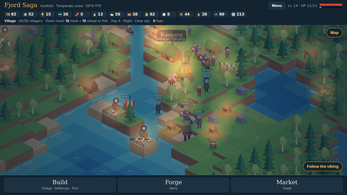
The look is isometric and medieval: timber longhouses, a forge, a mead hall and an altar to Odin, arranged around a coast that changes with the weather. Sunrise and sunset shimmer on the water, rain and storms and mist and snow move across the map, and the long nights change what the settlement looks like as much as what it can do.
Sound follows the same clock. The Norse-inspired score shifts with the time of day and with how much danger is on the map, so a quiet dawn and a draugr-filled night do not sound alike.
Delivery is a browser page built on HTML5 with a playable frame, so there is nothing to install and no account step before play. The same build is meant for desktop and mobile, which keeps sessions short and easy to resume. A full technical baseline for older machines sits outside what has been published so far.
Who should play it
Settlement builders who like a visible climb are the obvious audience: one farm on the Vestfold coast turning into a town with a forge, a mead hall and an altar to Odin, with each stage opening new structures and viking levels unlocking gear. The dawn feeding rule and the livestock loop add the kind of small daily decision that management players enjoy.
Survival and mythology fans get the night side of the game, where draugr, wolves, bears, trolls and cursed ships push back against palisades, walls, towers and forged armour. Strategy players who prefer maps to menus get the towns abroad, contracts, vassals and the grudges that follow a raid.
It also suits anyone who wants a Viking game without an install: a browser tab on desktop or a phone is the whole setup, and autosave protects a session that has to be abandoned mid-build. The game is still marked as in development, so players who want a fixed, finished feature set should weigh that.
Screenshots
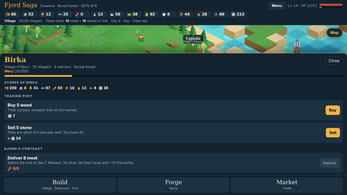
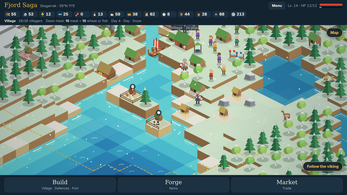
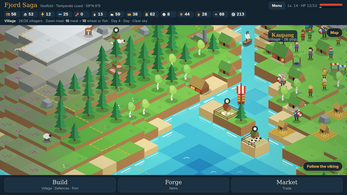
How we tested it
The build was loaded from games.debutplay.com in a headless Chromium session on ; the canvas started and no request was blocked. The guide was last checked on .
From the developer
Fjord Saga Your saga begins in Kaupang, a lone farm on the coast of Vestfold. It may end as a legend of the North. Fjord Saga is an isometric Viking management and adventure game that runs right in your browser, on desktop and mobile. No download, no sign-up: tap, and your viking acts. A living North Explore a Scandinavia true to the real map: the fjords of Norway, the forests of Sweden, the lakes of Finland, Denmark, all the way to Iceland and the Faroes. Each region has its own biome (fertile plain, boreal forest, tundra, moorland, volcanic land, marsh), each with its perks and pitfalls. Sunrises and sunsets shimmer on the water, the weather changes (rain, storms, mist, snow), and the nights are long… Build your village Chop wood, quarry stone, grow wheat, raise longhouses, a forge, a mead hall, an altar to Odin… Your village grows from a lone farm into a mighty town, and every stage unlocks new buildings. Feed your people every…
Frequently asked questions
Is Fjord Saga free to play?
Yes, it costs nothing to play. It runs in a browser with nothing to download and no account to create, and the single-player mode is available now.
Does Fjord Saga work on phones?
Yes. It is built to run in a browser on desktop and mobile, and selection is tap-based, so touching a tree, rock, animal or enemy sends the viking to it.
Can two players play together yet?
Not yet. Single-player is available now and multiplayer is announced as coming soon, with no timing attached to that update.
What happens when night falls?
Draugr rise from the mist after dark, and wolves, bears, trolls and cursed ships roam as well. Palisades, walls, towers, forged weapons and armour are the defences set against them.
How does saving work?
The game autosaves, so closing the tab and returning later resumes the same saga rather than restarting the climb from the lone farm.
How much is there to build and craft?
The build list runs past 35 structures, 20 items can be crafted, and viking levels unlock extra gear and buildings. Text and interface are available in English or French.
What games are similar to Fjord Saga?
The closest matches on DebutPlay are The Little Island Lighthouse, PORTHOLE, Ashcombe Green. They share the same genre, so the controls and the pace carry over.
Something wrong or missing? Tell us. How we test games.