Card game · New game
Fudatsuki Island
A free single-player deckbuilder about a fogbound island, a too-kind welcome, and the cost of mapping what the sea has hidden.
#9 this weekAI-assisted: Code, Graphics, Sound, Text
The game runs in this tab. No install, no account.
The short answer
Fudatsuki Island is a free, single-player card game that alternates island exploration with turn-based card battles against islanders. Walk out from campfires, fill in the map, collect keepsakes and journal pages, and build a 40-card deck from 200 original cards. Quiet horror, mystery, and deckbuilding meet in a browser or downloadable version.
What is Fudatsuki Island?
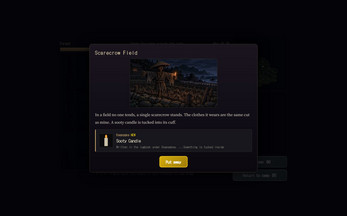
Fudatsuki Island is a single-player card game built around two alternating modes: exploration and turn-based card battles. The premise begins with an investigator washed ashore on an island that exists on old sea charts only as a name. White fog seals off the sea, and the moon hangs at the same height without setting. The islanders offer food and shelter and point the way forward, but none will explain what happened to earlier visitors. A scarecrow in an untended field wears clothes cut exactly like the investigator's. That image sets the tone for a quiet horror mystery rather than a gore-driven one.
The game is free and runs as an HTML5 browser title, with downloadable versions for Windows, macOS, and Linux. Progress is single-player. The card game is original: 200 cards, a 40-card deck limit, and up to three copies of the same card. Deckbuilding and exploration feed each other through Glyphstones, keepsakes, journal pages, and four Masks. The release date is 29 October 2026.
How to play
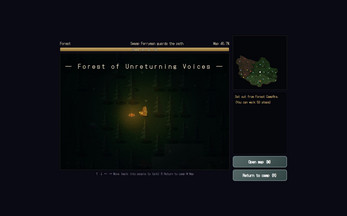
An outing starts at the campfire. Walking draws the route onto the island map, and filling that map is one of the goals. Each excursion has a walking limit; when legs grow heavy, the return to the fire becomes part of the plan. Old campfires found on the island become new starting points, which shortens later routes and opens different approaches. Places can be investigated, and events appear while walking. These events force choices, and the choice changes the outcome. Islanders may ask for favors; completing one yields a return. Keepsakes and journal pages left by earlier visitors are recorded in a logbook, and gathering more makes the island's history clearer.
Card battles begin by talking to an islander. The board has a front row and a back row. The front row serves as a barrier, while the back row sits behind that protection, so placement changes the fight. Reducing the opposing HP to zero wins. If the attack path to the player is blocked by the front row, direct attacks are impossible. The cost limit rises each turn, so stronger cards arrive later. Card abilities can fire on summon, on defeat, or continuously while the card remains in play. Spirit is separate: it can be charged once each turn and then used for Attack, Heal, or Draw; every use increases the cost.
Controls
Control in Fudatsuki Island is split between excursion planning and board position. From a campfire, the player chooses when to set out and how far to push before the walking limit makes a return necessary. The map records the route, so each walk is also a decision about which edges of the island become known. Old campfires turn into new starting points, giving the player more control over later routes and which investigations are reachable. Events force a choice, and that choice changes the outcome, so the control is not only spatial but narrative.
In card battles, control comes from where cards are placed. Cards in the front row form a barrier; cards in the back row remain shielded behind that line. If the path to the player is blocked, direct attacks cannot be made, which makes the board state matter more than a simple race to zero HP. The rising cost limit shapes when strong cards can enter play. Spirit adds another decision: one charge is available each turn for Attack, Heal, or Draw, and each use makes the next cost higher. Abilities that fire on summon, on defeat, or continuously while a card remains in play reward sequencing and combination.
The game page does not list its controls. Check the in-game tutorial or pause menu for the current scheme.
Tips for your first run
Treat the campfire as a base. The walking limit means each excursion should have a purpose: reach a new map edge, investigate a place, or follow an event. Returning before legs grow heavy keeps the route productive, and old campfires found along the way become new starting points.
In battle, the front row is the wall that protects the back row and can block direct attacks. Placing cards without that structure gives the opponent a cleaner path. Cost limits rise each turn, so early turns set up and later turns pay off. Spend Spirit with the next cost in mind, not simply because it is available.
A legal deck holds 40 cards with no more than three copies of any single card, so consistency matters. Glyphstones from the story buy card packs, and spare cards can be traded. Keepsakes, requests, and exploration finds can produce Possessed Cards that never appear in packs, so time on the island adds options that pack opening cannot.
- Return to camp before the walking limit forces it; old campfires become new starting points.
- Use the front row as a wall and keep the back row protected.
- Use the single Spirit charge each turn only when the rising cost is worth the effect.
- Check the logbook for keepsakes and journal pages; they clarify the island's history.
- Build toward 40 cards with the three-copy limit rather than adding every new card.
Content and replayability
The collection is the long tail. There are 200 original cards, and a deck is built from 40 of them with a maximum of three copies per card. Glyphstones earned through the story buy card packs, and spare cards can be traded for other cards. Possessed Cards come from keepsakes, requests, and other exploration finds, and they never appear in packs. That separation gives exploration a direct deckbuilding payoff rather than leaving it as a side activity.
Four Masks can be strengthened as the story progresses. Wearing a Mask improves HP, hand, Spirit, and more, so the growth system touches both survival and card flow. The logbook tracks keepsakes and journal pages, and the collected cards, keepsakes, and journal pages can be reviewed in their lists. Filling in the island map is a stated goal, and events force choices that change outcomes. Those choices and the deckbuilding limits give a first run reasons to revisit routes and card combinations.
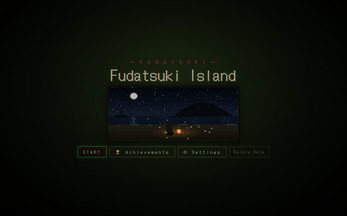
Achievements can be checked from the title screen. The game supports Japanese, English, and Simplified Chinese, with a Settings switch on the title screen. The content is single-player, with no ads, accounts, or purchases.
Presentation and performance
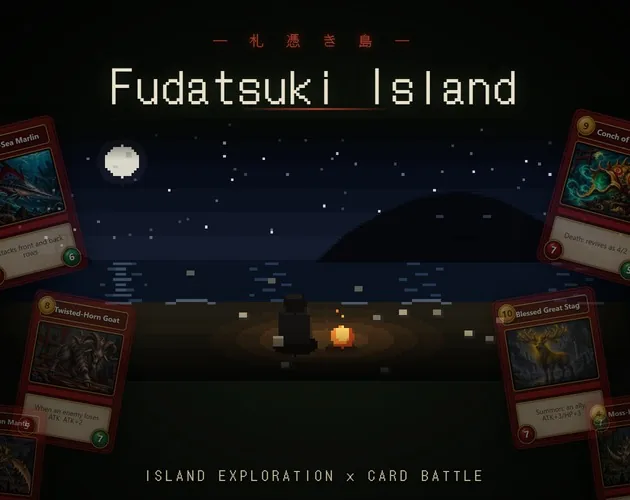
Fudatsuki Island presents its mystery in pixel art with an atmospheric, dark tone. The white fog sealing the sea and the moon fixed at the same height establish the island as a place outside normal time. The scarecrow dressed in clothes cut like the investigator's is the clearest early image, and it carries more dread than a jump scare. The tone is quiet horror: graphic gore and sexual content are absent, yet the narrative confronts mortality and the erosion of identity. Players who find those themes difficult should take that warning seriously.
The browser version runs without installation, and the download version opens through index.html after unzipping. Windows, macOS, and Linux are supported, and a modern browser such as Chrome, Edge, or Firefox is the requirement. There are no ads, accounts, or purchases. Saves are automatic inside the browser. Clearing browsing history or site data may erase progress, and browser saves can be lost more easily depending on settings. For a longer playthrough, the download version is recommended, with the same content. Moving or renaming the download folder may prevent the save from carrying over. The project was made with AI assistance.
Who should play it
Fudatsuki Island suits players who want a deckbuilder with a mystery attached rather than a pure ladder. The loop alternates calm, map-filling excursions with card battles against islanders, so the appeal is as much in reading the island as in tuning a 40-card deck. The 200-card pool, three-copy limit, four Masks, and Possessed Cards give deckbuilders enough structure to care about collection and combination. The front-row barrier and back-row protection add positional decisions to each battle.
The quiet horror tone is specific. Graphic gore and sexual content are absent, but death and the loss of self are central themes. Players who prefer atmospheric dread, pixel art, and a slow reveal will find the premise aimed at them; players who want high-action horror or a purely combat-focused card game should adjust expectations. The single-player structure, automatic saves, and lack of ads, accounts, or purchases make it easy to start in a browser. The downloadable version is the better fit for a long session because browser data can erase progress. The language options are Japanese, English, and Simplified Chinese.
Screenshots
How we tested it
The build was loaded from games.debutplay.com in a headless Chromium session on ; the canvas started and no request was blocked. The guide was last checked on .
From the developer
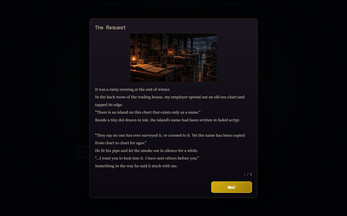
There is an island on the old sea charts that exists only as a name. No one has surveyed it. No one has crossed to it. Those sent to look into it never came back. Not a letter. Not a single belonging....Now, an investigator washes ashore on this island. A wall of white fog seals off the sea, and the moon hangs at the same height, never setting. When I washed ashore, the islanders were kind to me. Too kind. They give me food and a place to sleep, and tell me where I should go next. But not one of them will say what became of those who came before. In a field no one tends, a single scarecrow stands. The clothes it wears are cut exactly like mine. ■ System This is a single-player game in which you move back and forth between "exploration", where you investigate the island and advance the story, and "card battles", where you cross cards with the islanders. [Island Exploration] ― Advancing the story - Set out onto the island from the…
Frequently asked questions
Is Fudatsuki Island free?
Yes. The game is free, with no ads, accounts, or purchases.
Which platforms are supported?
HTML5 in the browser, plus downloadable versions for Windows, macOS, and Linux.
Is there multiplayer?
No. Fudatsuki Island is built as a single-player experience.
How are saves handled?
Progress saves automatically inside the browser. Clearing browsing history or site data may erase it, and the download version is recommended for longer play. Moving or renaming the download folder may prevent the save from carrying over.
What languages are included?
Japanese, English, and Simplified Chinese are available. The language can be switched from Settings on the title screen.
Does the game contain graphic gore?
Graphic gore and sexual content are not present. The narrative still deals with mortality and the loss of self, framed as quiet horror.
What games are similar to Fudatsuki Island?
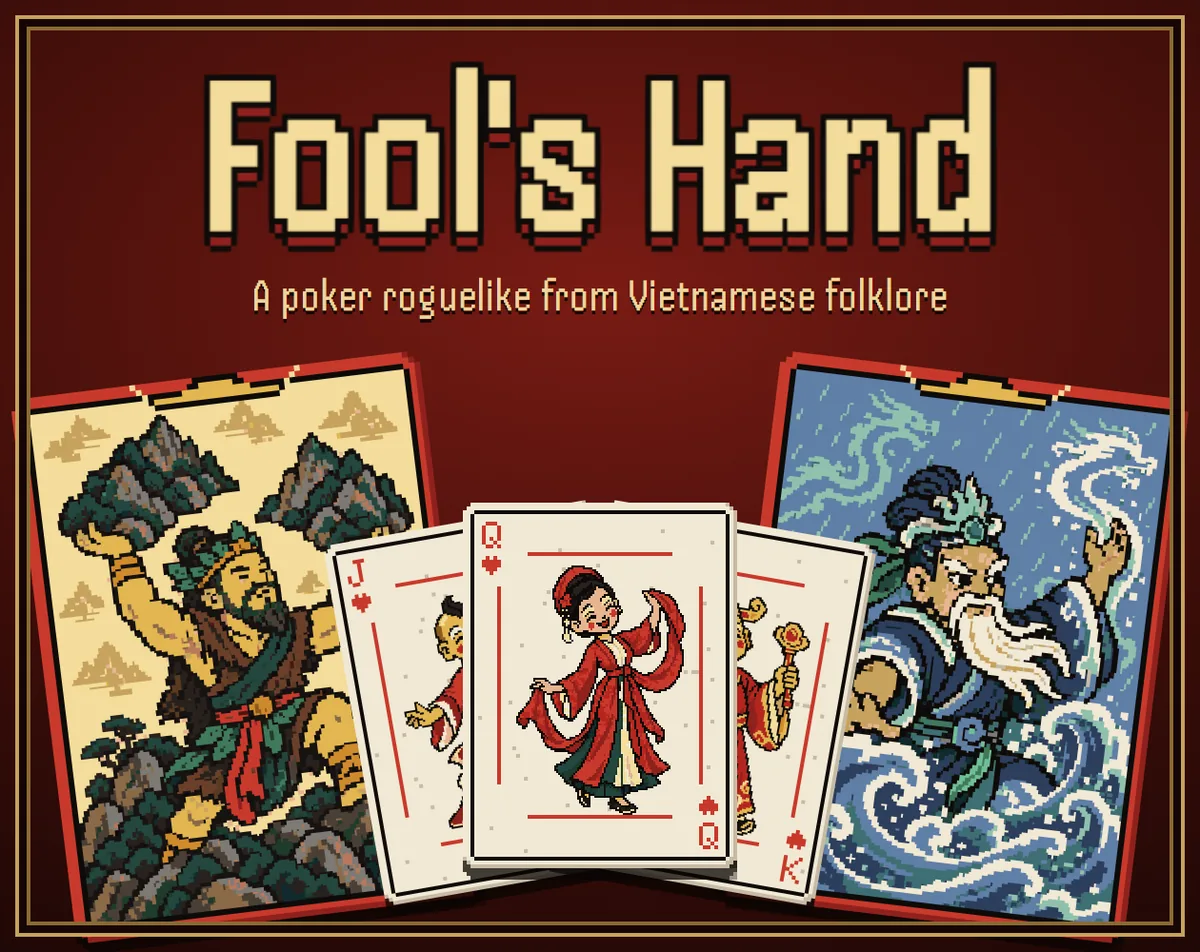
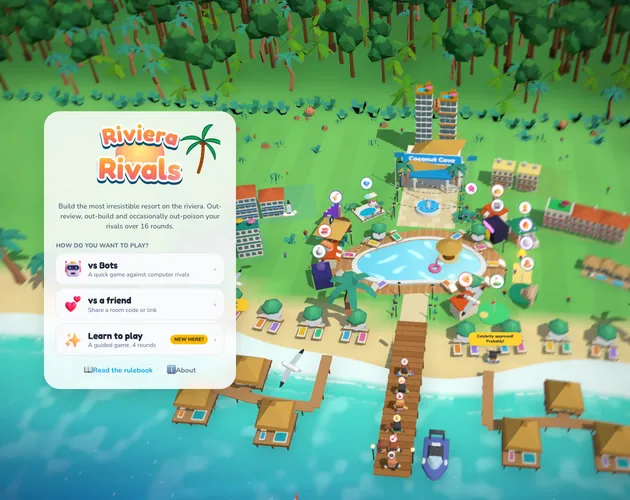
The closest matches on DebutPlay are Fool's Hand, Riviera Rivals, Spell Weave (Demo). They share the same genre, so the controls and the pace carry over.
Something wrong or missing? Tell us. How we test games.