Simulation · New game
Gig Promotor (free early playtest of first 2 seasons)
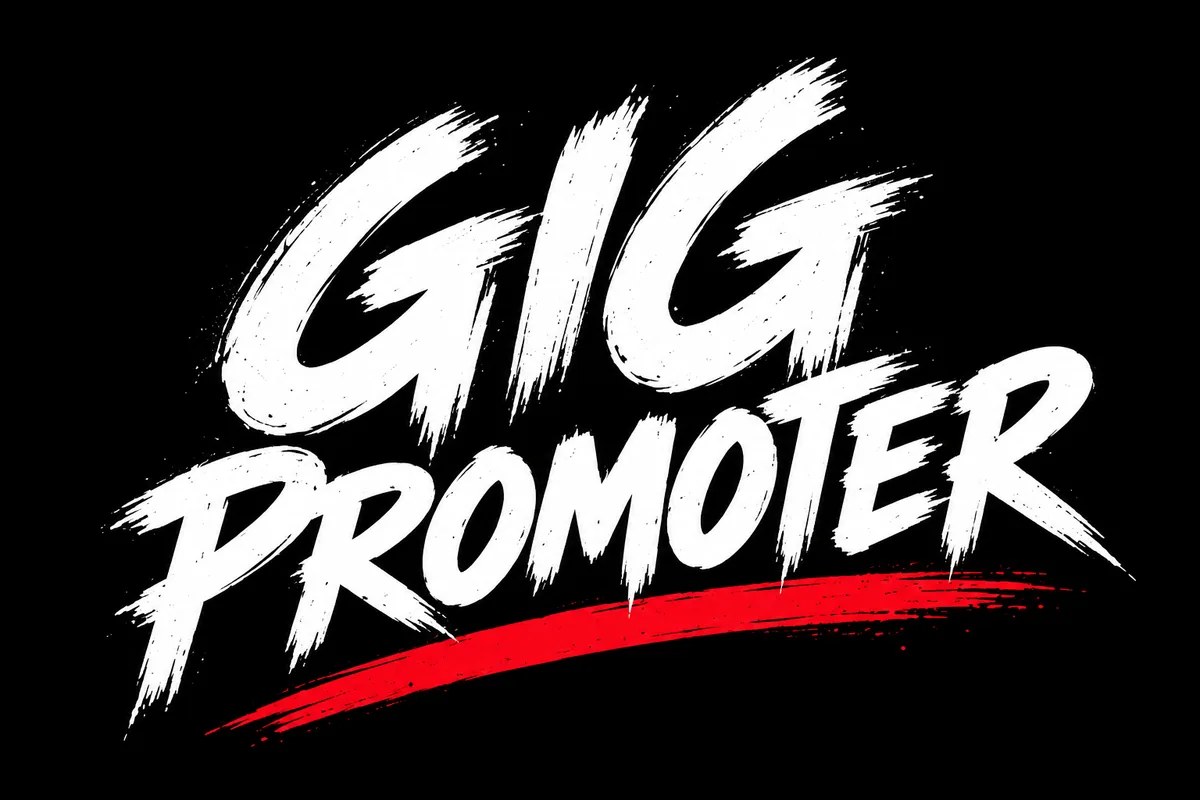
Gig Promotor is a free browser prototype that puts players in charge of a live music promotion business across the first two seasons.
#46 this weekAI-assisted: Code, Graphics
The game runs in this tab. No install, no account.
The short answer
Gig Promotor is a music management simulation about finding bands, negotiating contracts, choosing venues, and making shows profitable. This early playtest covers the first two seasons for free in a browser, so players can test the core loop now: scout talent, plan a calendar, balance budgets, and watch a gig succeed or fail.
What is Gig Promotor?
Gig Promotor is a simulation and strategy game about running a live music promotion business. The player starts small, searches for emerging talent, negotiates with ambitious musicians, and tries to put on shows that strengthen rather than damage a reputation. A good bill is only one part of the job: venues need filling, budgets need balancing, and artists need to stay happy. Every choice feeds into the next problem, whether it is a contract term, a calendar slot, or a spending decision.
The current release is an early playtest rather than a finished game. It is free, runs in a browser, and covers the first two seasons. The developer is testing the core gameplay, the economy balance, and the overall experience before expanding toward a 12-season vision. For a new player, that means the appeal is seeing the management loop in its prototype form: scout a band, strike a deal, book a room, manage the money, and watch the show result.
How to play
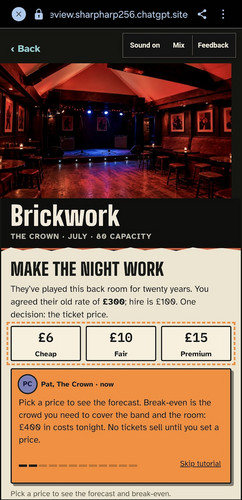
The loop begins with talent. Players scout upcoming bands at Battle of the Bands events, looking for an act that can become the next big draw. Contract talks come next: artists have ambitions, and a deal has to work for both sides rather than simply being cheap. Booking follows, with venue choice and calendar management shaping the next show.
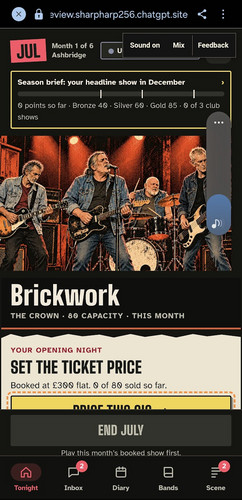
Money management runs through all of it. Artist pay, ticket income, promotion spending, and merchandise all affect whether a gig ends up profitable, so a strong lineup can still be undermined by a weak budget. Relationships matter as well, because getting to know bands and building a reputation in the music industry is part of the longer game.
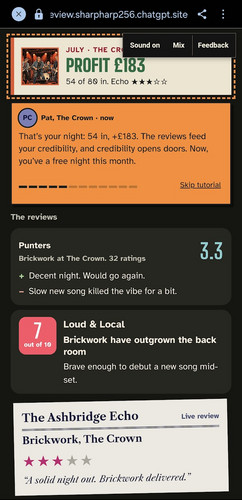
The payoff is the show itself. Players watch the planning come together and learn whether the night was a hit or a financial disaster. The first two seasons are available in this prototype, giving a clear view of that cycle.
Controls
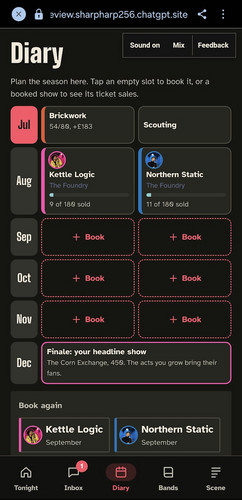
Gig Promotor is played through the management decisions that define the business. The playable HTML5 frame is the entry point, and the first two seasons are the current scope. Within that scope, interaction means choosing which bands to scout at Battle of the Bands, how to negotiate contracts, which venues to book, where shows sit on the calendar, and how to split money across artist fees, ticket income, promotion costs, and merchandise.
Reputation and artist happiness add another layer to those choices. The show phase then serves as the result of the planning: the gig either lands as a hit or turns into a financial disaster. The four screenshots and 2D presentation support that management view. A useful way to read the control layer is as a chain of trade-offs, because each contract, booking, calendar slot, and budget line changes the next decision. The practical starting point is the playable frame, where the interface presents the first choices.
The game page does not list its controls. Check the in-game tutorial or pause menu for the current scheme.
Tips for your first run
Treat the first two seasons as a test of the whole chain rather than a race. Scouting at Battle of the Bands is the front door to the business, so pay attention to acts that fit the shows being planned. Negotiations deserve care because artists have ambitions and a deal has to work for both sides. The budget is not just a single number: artist pay, ticket revenue, promotion costs, and merchandise all pull on the result. Use the calendar deliberately, since venue choice and show timing are part of the booking decision. Reputation is built through relationships as well as results, so keeping bands happy matters alongside filling the room. Finally, watch the show result closely; it is the clearest feedback on whether the planning held together.
- Scout at Battle of the Bands before committing to a bill.
- Read artist ambitions during contract talks instead of focusing only on cost.
- Balance artist pay, ticket revenue, promotion costs, and merchandise when judging a gig budget.
- Use the calendar and venue choice as one planning decision, not separate steps.
- Check reputation and artist relationships after each show result.
Content and replayability
The current build is deliberately limited. It is a free browser prototype of the first two seasons, not the finished 12-season game. That scope gives players a concentrated look at the core loop: discovering talent, negotiating, booking, budgeting, and seeing a show through to its result.
Replay value in this version comes from the decisions inside that loop. A different contract approach, venue choice, calendar plan, or spending split can change the pressure on the budget and the reputation outcome. The prototype is also positioned as a feedback build. The developer is testing core gameplay and economy balance before expanding the experience, so the early sessions are useful for learning how the systems interact.
The stated aim is a 12-season experience, but the playtest does not yet cover that larger arc. Players who want the full management campaign should treat the current release as an early slice.
Presentation and performance
Gig Promotor uses a 2D presentation for its music management business. Four screenshots accompany the build, and the playable version sits in an HTML5 frame. The visual scope matches the prototype status: the focus is on the management decisions, the bands, the venues, the calendar, and the money rather than on a large finished campaign.
The game is in development, with the first two seasons serving as the test area for core gameplay and economy balancing. That makes the presentation feel like a working slice of a larger idea rather than a final package. The music-industry setting comes through in the subject matter: scouting at Battle of the Bands, negotiating with artists, booking gigs, and watching a show result. The browser frame is the place to judge the build in action.
Who should play it
Gig Promotor should appeal to players who like management simulations with a business edge. The core pleasures are scouting at Battle of the Bands, negotiating with ambitious artists, choosing venues, managing a calendar, and balancing a budget across fees, ticket income, promotion, and merchandise. Players who enjoy tycoon-style planning and music-industry settings will find the loop familiar in shape but specific in subject.
The early playtest is also suited to players who are willing to try a prototype and think about how the economy behaves. It is less suited to anyone wanting the complete 12-season experience right away, because the current build covers the first two seasons only. The free browser format makes the trial low-commitment, and the feedback focus means the session is as much about testing the systems as finishing a campaign. A new player should come for the gig planning and stay for the show result.
Screenshots
How we tested it
The build was loaded from games.debutplay.com in a headless Chromium session on ; the canvas started and no request was blocked. The guide was last checked on .
From the developer
GIG PROMOTER Scout the bands. Book the gigs. Build your reputation. Ever thought you could run a better gig? Gig Promoter is an indie music management simulation where you take control of your own live music promotion business. Start small, discover emerging talent, negotiate with ambitious musicians and put on shows that could make or break your reputation. But putting on a great gig isn't just about booking a good band. You've got venues to fill, budgets to balance and artists to keep happy. Every decision matters. What can you do? Discover new talent: Scout upcoming bands at Battle of the Bands events and find your next big act.Negotiate contracts: Talk to artists, understand their ambitions and strike deals that work for both sides.Book your gigs: Choose venues, manage your calendar and plan your next show.Manage the money: Balance artist fees, ticket sales, promotion and merchandise to make your gigs profitable.Build…
Frequently asked questions
Is Gig Promotor free to play?
Yes. The current release is a free browser prototype covering the first two seasons.
What is the main goal?
Run a live music promotion business: scout bands, negotiate contracts, book venues, manage the calendar, balance the budget, and put on a show that protects or builds reputation.
How many seasons are included?
The playtest includes the first two seasons. The longer aim is a 12-season experience, but that is not the current scope.
What happens during a gig?
The show is the result of the planning. Players watch the work come together and find out whether the gig was a hit or a financial disaster.
Is the game finished?
No. Gig Promotor is in development as an early playtest focused on core gameplay, economy balance, and feedback before further expansion.
Can players send feedback?
Yes. The build invites thoughts, suggestions, and bug reports from players trying the first two seasons.
What games are similar to Gig Promotor (free early playtest of first 2 seasons)?
The closest matches on DebutPlay are Penguin Nursery, A Well-Run Exercise / Eine gut gelungene Alarmprobe, Penalty Clicker. They share the same genre, so the controls and the pace carry over.
Something wrong or missing? Tell us. How we test games.