RPG · New game
Lanternbound
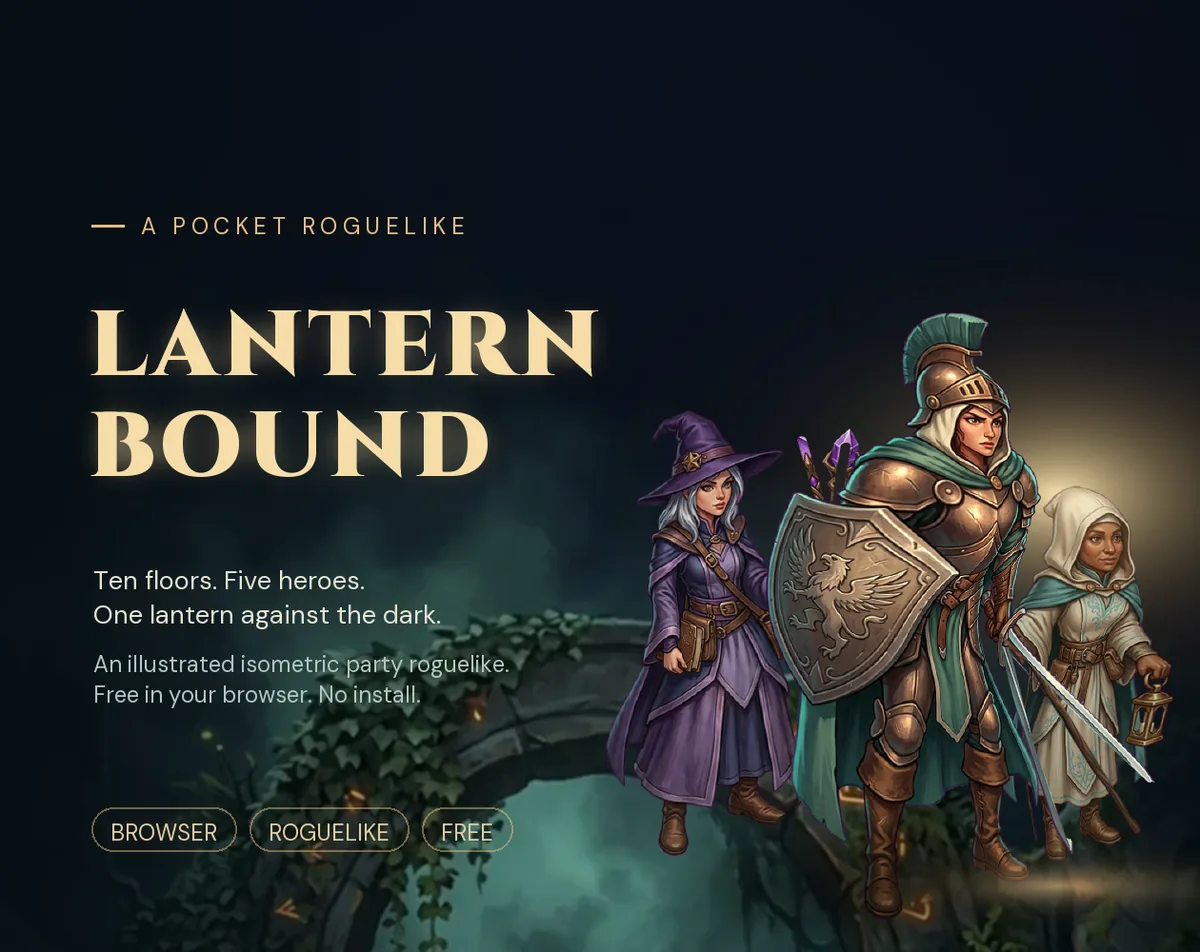
A free browser roguelike about five adventurers, one lantern, and a living dungeon that rewards careful formation, readable combat, and risky detours.
#41 this weekAI-assisted: Unspecified
The game runs in this tab. No install, no account.
The short answer
Lanternbound is a free browser-based isometric party roguelike. Build a five-hero party from ten jobs, descend a seeded dungeon floor by floor, and keep the lantern burning toward the Heart of Night. Combat shows a visible initiative queue and telegraphed strike phases, while shortcuts, guarded armories, and shrines create risk-reward choices. A short three-floor Quick Descent is also available.
What is Lanternbound?
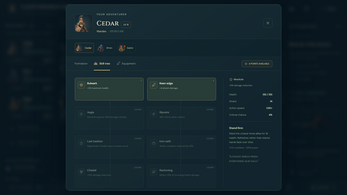
Lanternbound is a free illustrated isometric party roguelike that runs in a browser. The objective is to guide five adventurers down ten floors to the Heart of Night while keeping one small lantern burning. The party is assembled from ten jobs, and each hero has a personal skill tree and a signature ability.
The broader talent system contains eighty talents, while five cross-job bonds reward parties built to fit together. Runs are seeded and replayable, so the dungeon layout and encounter mix can be revisited rather than treated as a single fixed campaign. The game is in development, but the current build already includes the full ten-floor expedition, a three-floor Quick Descent, gear durability, legacy upgrades, and post-victory difficulty. It is a turn-based dungeon crawler with a strategy layer built around formation, initiative, and resource management. The tone is dark fantasy, and the presentation uses 2D cutout sprites in an isometric view.
How to play
Start by gathering five adventurers from the ten available jobs. Marching order matters: melee heroes belong up front, while ranged and support heroes sit behind them. The dungeon is charted floor by floor, with each descent generating 14–22 irregular chambers, loop shortcuts, flooded causeways, and armories behind guarded keys. A guardian waits at the end of each floor. Clearing any three encounters earns the seals needed to open the guardian gate, so the remaining branches are optional exploration rather than mandatory chores.
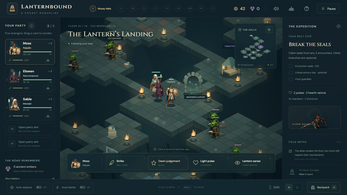
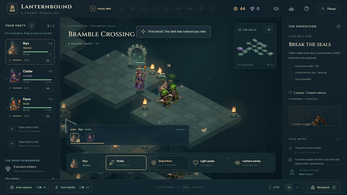
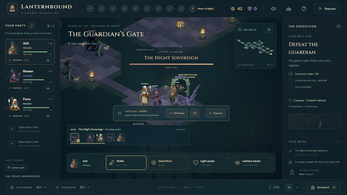
Combat uses a visible initiative queue. Every actor telegraphs windup, lunge, travel, impact, and recovery, and health, sound, and recoil all resolve on the deferred impact. That makes a queued strike something to watch land rather than a burst of hidden numbers. Pause freezes everything mid-swing, which gives time to read the queue and reconsider. Quick Descent offers a shorter three-floor run for about three minutes of active play.
Between fights, the dungeon itself creates decisions: keys tied to guarded rooms unlock particular armories, while floodgates can drain pools and cut new routes. Optional sites range from shrines and bargain encounters to lost libraries, runic forges, stranded recruits, and a hidden vault. Equipment wears out and eventually perishes, so looting, repairing, and replacing gear is part of the run.
Controls
Lanternbound supports mouse, keyboard, and touch input, and the interface adapts to a phone screen. On desktop, Space pauses the game, and pause freezes everything mid-swing. Number keys 1 through 4 trigger actions. Tab opens the floor map, O opens formation, T opens talents, B opens the backpack, C opens the codex, and H opens help.
Those keyboard shortcuts cover the main planning screens without forcing a trip through menus. Mouse input is supported, and touch input is supported, including on phone layouts. The game is best on desktop but fully playable on a phone; the control scheme is built around that split. Because the dungeon is turn-based and the initiative queue is visible, there is room to pause, inspect the formation, and check talents before committing. The layout reflows for smaller screens, so the same interface pieces remain available rather than becoming a separate mobile build.
| Input | Action |
|---|---|
| Space | Pause; pause freezes everything mid-swing |
| 1–4 | Trigger actions |
| Tab | Open floor map |
| O | Open formation |
| T | Open talents |
| B | Open backpack |
| C | Open codex |
| H | Open help |
| Mouse | Supported input for play |
| Touch | Supported input on phone layouts |
Tips for your first run
Treat the three-encounter seal requirement as a route-planning tool, not a mandate to clear every room. Three cleared encounters open the guardian gate, so optional branches can be taken when the reward justifies the risk. Guarded keys are worth tracking because they open specific armories, and floodgates can change the map by draining pools and carving shortcuts.
Read the initiative queue before committing to a strike; the visible order and the five telegraph phases are there to make timing legible. Use pause during a windup or impact to inspect the formation and talents. Keep melee heroes in front and ranged or support heroes behind them, then check whether the party's five cross-job bonds are doing useful work. Watch gear durability before a long branch. Equipment wears out and eventually perishes, so repair what cannot be replaced and avoid carrying loot that will not survive the descent. Quick Descent is a low-commitment way to test a party idea in a three-floor run before starting a ten-floor expedition.
- Clear three encounters to earn guardian seals, then choose whether optional branches are worth the detour.
- Track guarded keys for specific armories and use floodgates to drain pools and open shortcuts.
- Pause mid-swing to read the initiative queue and the windup, lunge, travel, impact, and recovery phases.
- Keep melee in front and ranged or support behind, then verify that cross-job bonds support the formation.
- Repair or replace worn equipment before a long branch; gear can perish.
Content and replayability
The current build centers on two run shapes: a ten-floor expedition and a three-floor Quick Descent. The long descent is seeded and replayable, with 14–22 chambers per floor, optional branches, and a guardian at the end. The short descent keeps the three-floor structure and runs for about three minutes of active play, which makes it useful for testing a party or fitting a run into a small window.
Ten jobs, eighty talents, and five cross-job bonds provide the party-building layer. Fifteen enemy archetypes and ten guardians supply the opposition, with telegraphed patterns and phases rather than surprise damage. Legacy upgrades and post-victory difficulty extend the progression beyond a first win. Gear durability adds a second resource track: equipment wears out and eventually perishes, so loot, repair, and replacement compete for attention. Off-road locations include shrines, bargains, lost libraries, runic forges, stranded recruits, and a hidden vault, each offering a different reason to leave the main route. The result is a roguelike that values route choice and party composition as much as individual combat turns.
Presentation and performance
Lanternbound uses an isometric 2D presentation with animated cutout sprites. Each hero job has 22 authored frames, which gives the party an authored animation set rather than a single static pose. Hero illustrations and the cover are AI-generated for the project. Most monster artwork is adapted from CC-BY-SA Flare and OpenGameArt sprite sheets, with credits inside the game's art credits.
The build is self-contained: it uses procedural audio, requires no account, and avoids third-party CDNs. It is built with vanilla JavaScript and Canvas 2D, and it runs as an HTML5 browser game. Mouse, keyboard, and touch controls are supported, and the layout adapts to a phone screen. Desktop is the best-fit option, while phone play remains fully supported. Because the game is turn-based, the visible initiative queue and pause function support a readable pace even when the screen is small. The art direction is dark fantasy, matching the dungeon-crawler setting and the lantern-lit descent.
Who should play it
Lanternbound suits players who want a turn-based party roguelike with a readable combat log in visual form. The visible initiative queue, five telegraph phases, and pause function reward players who like to inspect a situation before acting. The ten jobs, eighty talents, and five cross-job bonds give party planners a reason to experiment with formation and role coverage.
Dungeon crawler fans get 14–22 chambers per floor, guarded armories, floodgates, shrines, and optional branches. Players who prefer short sessions can use Quick Descent for a three-floor run of about three minutes, while the ten-floor expedition supports a longer descent toward the Heart of Night. The browser format and touch-ready layout make it accessible on desktop and phone, though desktop is the better fit. It is in development, so players who want to test an evolving roguelike rather than a finished boxed release are the natural audience. Strategy-minded players who enjoy gear durability, legacy upgrades, and post-victory difficulty will find more to manage than a simple combat loop.
Screenshots
How we tested it
The build was loaded from games.debutplay.com in a headless Chromium session on ; the canvas started and no request was blocked. The guide was last checked on .
From the developer
A little light. A long way down. Lanternbound is an illustrated isometric party roguelike that runs entirely in your browser. Gather five adventurers, chart a living dungeon floor by floor, and keep one small lantern burning all the way to the Heart of Night. One lantern, ten floors Every descent is a new floor: 14–22 irregular chambers, loop shortcuts, flooded causeways, armories behind guarded keys, and a guardian waiting at the end. Any three cleared encounters earn the seals that open the guardian's gate — the rest of the branches are yours to explore or leave in the dark. In a hurry? Quick Descent keeps the short three-floor run, about three minutes of active play. Ten jobs, eighty talents Warden, Ranger, Mender, Arcanist, Rogue, Berserker, Paladin, Engineer, Druid, Necromancer. Each hero has their own skill tree, a signature ability, and a role in the marching order — melee up front, ranged and support behind. Five cross-job…
Frequently asked questions
Is Lanternbound free?
Yes. Lanternbound is free to play in the browser.
What platforms does it run on?
It is an HTML5 browser game. Mouse, keyboard, and touch input are supported, and the layout adapts to phone screens. Desktop is the best fit.
How long is a run?
Quick Descent covers three floors and about three minutes of active play. The ten-floor expedition is the longer format.
How many heroes are in a party?
Five adventurers form the party. They are chosen from ten jobs, and each job has its own skill tree and signature ability.
Does Lanternbound have multiplayer?
Lanternbound is singleplayer.
Is the game finished?
The game is in development. The current build includes a ten-floor expedition, a three-floor Quick Descent, legacy upgrades, and post-victory difficulty.
What games are similar to Lanternbound?
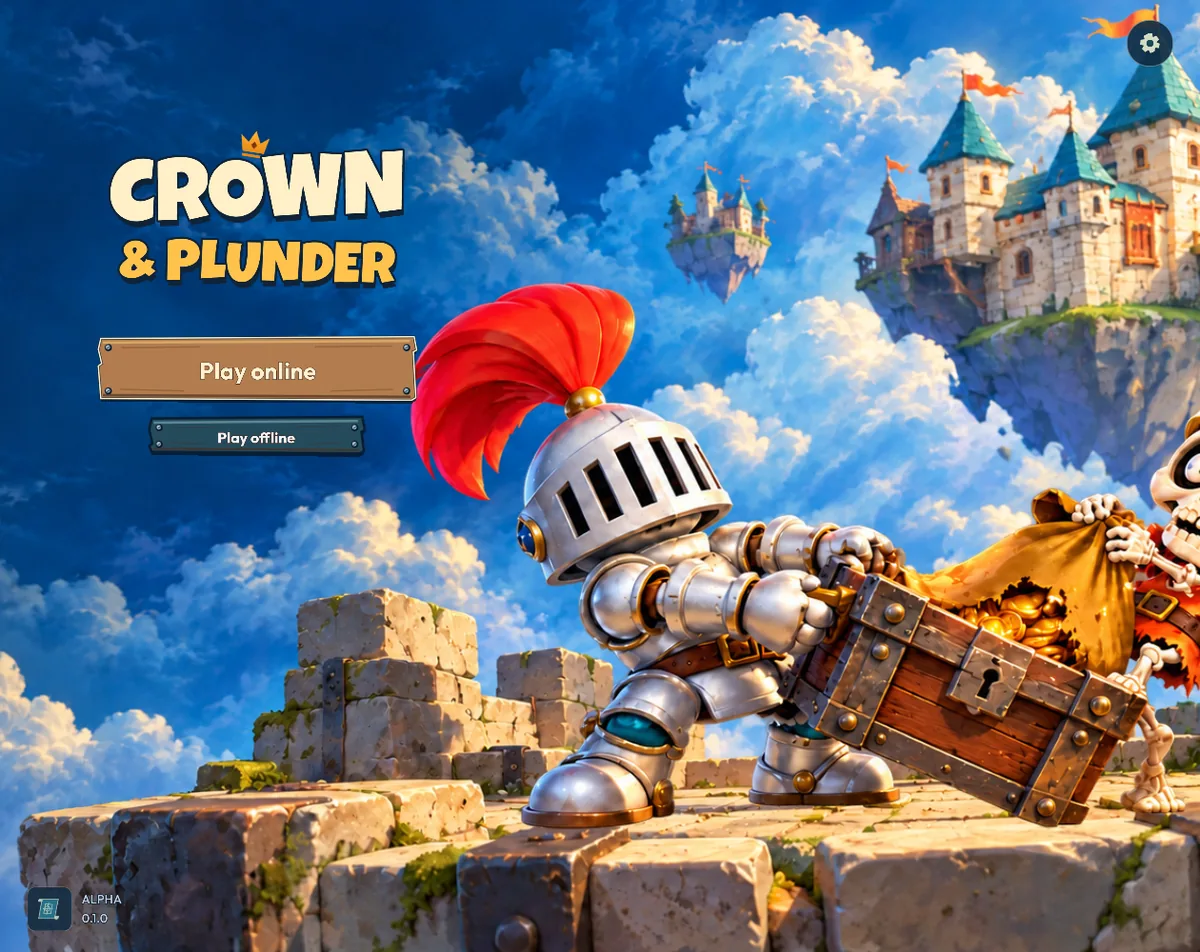
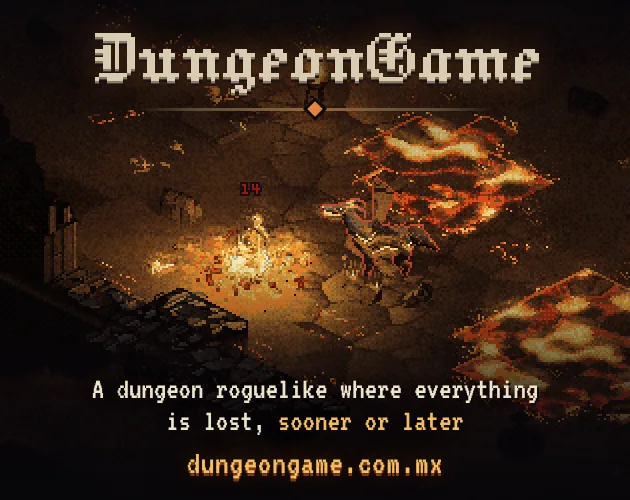
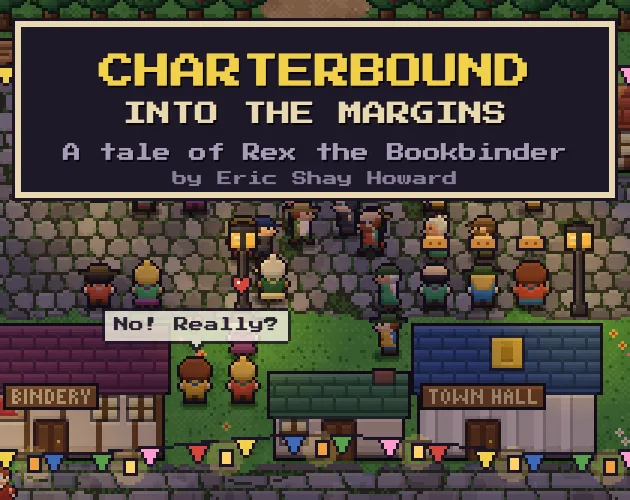
The closest matches on DebutPlay are Crown and Plunder, DungeonGame, Charterbound: Into the Margins. They share the same genre, so the controls and the pace carry over.
Something wrong or missing? Tell us. How we test games.