Simulation · New game
Charterbound: Into the Margins
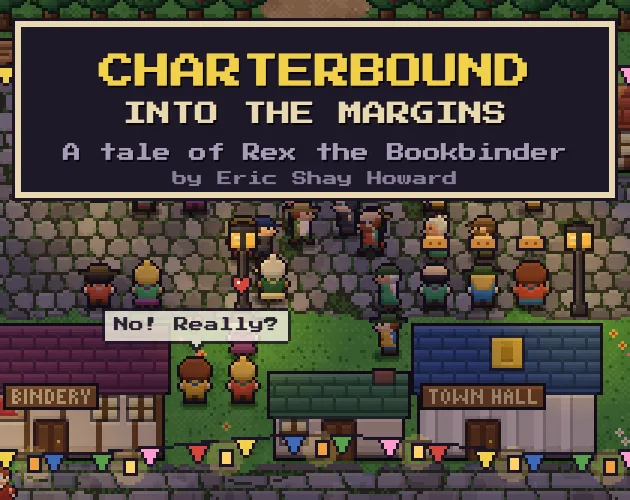
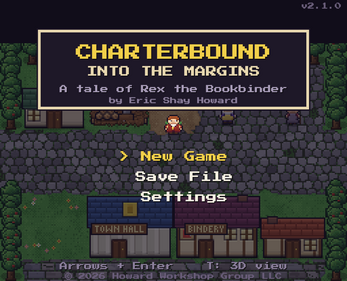
Charterbound: Into the Margins is a free browser simulation adventure where Rex binds charters, shapes towns, explores five counties, and watches a living kingdom grow.
#24 this weekAI-assisted: Code, Graphics, Sound, Text
The game runs in this tab. No install, no account.
The short answer
Charterbound: Into the Margins is a free single-player browser game from Eric Shay Howard. It mixes town-building, shop management, exploration, and family life. Rex binds found materials into charters that guide each town's growth, while townsfolk marry, work, and elect mayors. Play now for a cozy simulation with pixel art, an optional 3D diorama view, and a kingdom that continues when the player steps back.
What is Charterbound: Into the Margins?
Charterbound: Into the Margins is a free browser game in the simulation, adventure, and role-playing space. The player takes the role of Rex, a bookbinder in a kingdom where words are fading from every page. The work splits between expeditions beyond town gates and a bindery back home. Beyond the gates are five counties, with open meadows, a gloomy fen, frozen fields, volcanic ground, swamps that swallow footing, and the Unwritten, a lake-underworld of lost words. The released game runs in HTML5.
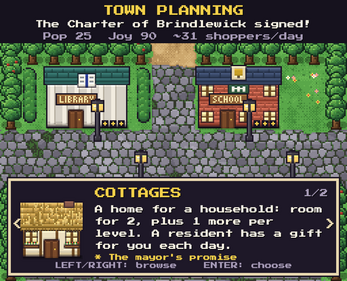
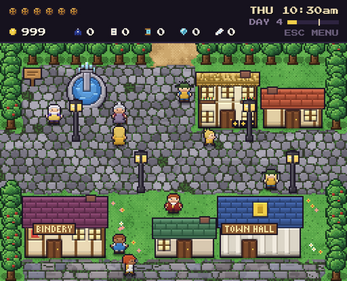
The central loop ties exploration to town growth. Rare materials gathered in the wilds become charters, and charters determine what each town builds, where construction goes, and which neighbors are pleased. Rex also runs the bindery and shops, makes wares, writes books, and keeps shelves stocked. Happier townsfolk who read more tend to buy more, so shop work and civic choices feed each other. Every townsperson has a name, home, job, routine, and mood.
How to play
A run starts with Rex in town and expands through the five counties. Exploration involves gathering rare materials, navigating mazes that no map will mark, and facing the creatures behind the fading. Those monsters have dens, families, and long memories for anyone who harmed their kin. Back in town, found materials are bound into charters. The charters act as planning decisions: they shape construction, placement, and neighbor reactions.
Town life runs on routine. Residents make friends, fall out, romance, marry, have children, and grow old. They hold festivals, contests, plays, and tavern nights, send children to school, and elect a mayor every few weeks. The mayor's tastes influence what the town builds. Rex can marry, raise a family, and eventually hand the bindery to an heir. Sleeping in Rex's bed in any town saves progress.
Controls
The game accepts keyboard, gamepad, and touch input. Touch play is tied to a phone held sideways, while the same browser build can be played on a computer. The world can be viewed as classic 2D pixel art or as a small 3D diorama, so the presentation can change without changing the kingdom. Keyboard and gamepad offer alternatives to touch, and the computer version runs in the browser. The game is an HTML5 release.
Progress is saved by sleeping in Rex's bed in any town; bed access is therefore a practical checkpoint before closing the browser. Stepping back is an option at any time, and the camera can follow weddings, festivals, and raids at the gates while taking photos for an album.
| Input | Action |
|---|---|
| Keyboard | Supported play input |
| Gamepad | Supported play input |
| Touch | Supported on a phone held sideways |
Tips for your first run
The first run is meant to be a little hard. The route is communicated by people met along the way, not by on-screen markers, so conversation matters. A player can step back at any time and let the kingdom continue; the camera will find weddings, festivals, and raids at the gates and take photos for an album. Starting a new game rearranges the counties and townsfolk, while the classic land uses the first layout.
- Talk to townsfolk for directions because the way is told by people met rather than marked on screen.
- Treat charters as long-term town plans; they decide what gets built, where it goes, and which neighbors are pleased.
- Keep shelves full and town mood high; happier residents who read more buy more.
- Avoid harming monster kin without need; creatures have dens, families, and long memories.
- Sleep in Rex's bed in any town to save before closing the browser.
Content and replayability
The released game has five counties to explore, with wild places that include meadows, a dark fen, snowfields, lava fields, sinking swamps, and the Unwritten beneath the lakes. Monsters live in dens with families and remember harm done to kin. Mazes are unmarked by maps, so routes depend on what people share. Back home, the simulation tracks named residents with homes, jobs, routines, and moods. Relationships move through friendship, falling out, romance, marriage, children, and old age.
Town life adds festivals, contests, plays, tavern nights, schooling, and mayoral elections every few weeks. The mayor's tastes shape construction. Rex can marry, raise a family, and pass the bindery to an heir. Replay comes from procedural rearrangement: each new game lays out counties afresh with a new cast of townsfolk, or the classic land can be played as first made. The camera can follow the kingdom without direct input and keep an album of weddings, festivals, and gate raids.
Presentation and performance
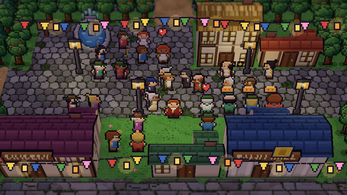
The game is rendered in classic 2D pixel art, with an alternate view of the same world as a small 3D diorama. That choice is presentational rather than a separate setting. The camera can step back and find weddings, festivals, and raids at the gates, then take photos for an album. The kingdom keeps running while the player watches.
It runs as an HTML5 browser game on a computer or a phone held sideways, with keyboard, gamepad, or touch input. Saves are stored in the browser, and progress can be exported and imported manually when moving between browser versions of the game. The free release has no ads, no accounts, and nothing collected. Because the town simulation continues while the player steps back, the camera can find weddings, festivals, and raids at the gates and take photos for an album.
Who should play it
This suits players who want a cozy simulation with management and exploration rather than a pure action game. The town-building layer tracks named residents, businesses, schooling, festivals, and mayoral elections. The adventure layer adds five counties, unmarked mazes, rare materials, and monsters with dens and family memories. The charter system gives each choice a visible effect on construction and neighbors.
It also fits players who like a little difficulty and discovery through conversation. The route is told by people met, not marked on screen. Family play is supported: Rex can marry, raise a family, and hand the bindery to an heir. The camera and album make it possible to watch the kingdom without direct input. Fans of pixel art can use the 2D view, while the 3D diorama offers the same world in a different presentation.
Screenshots
How we tested it
The build was loaded from games.debutplay.com in a headless Chromium session on ; the canvas started and no request was blocked. The guide was last checked on .
From the developer
You are Rex, a bookbinder in a kingdom whose words are fading from every page. Into the wilds. Five counties lie beyond the town gates: meadows and a dark fen snowfields, lava fields, sinking swamps, and the Unwritten, an underworld of lost words beneath the lakes. Gather rare materials, find your way through mazes no map will mark for you, and face the creatures behind the fading. The monsters have lives of their own: dens, families, and long memories for whoever hurt their kin. Back in town. Bind what you've found into charters, and the charters decide how each town grows: what gets built, where it goes, and which neighbors it pleases. Run Rex's bindery and shops, make wares and write books, and keep the shelves full, because the happier the townsfolk are and the more they read, the more they buy. A town that lives. Everyone has a name, a home, a job, a daily routine and a mood. They make friends, fall out, court, marry, have…
Frequently asked questions
Is Charterbound: Into the Margins free?
Yes. The release is free to play, carries no ads, requires no account, and collects nothing.
What platforms and inputs are supported?
The game runs in a browser as an HTML5 release. Keyboard, gamepad, and touch input are supported, and play is possible on a computer or a phone held sideways.
How do saves work?
Progress is saved by sleeping in Rex's bed in any town. Saved files are stored in the browser. Moving between browser versions of the game uses manual export and import if progress is to follow.
Is mobile play supported?
Yes, with touch input on a phone held sideways. The game also runs on a computer.
How difficult is the game?
It is meant to be a little hard. Directions come from people met rather than on-screen markers, so exploration relies on conversation and attention. Charters and town mood add planning pressure.
What changes in a new game?
Each new game lays out the counties afresh and provides a new cast of townsfolk. The classic land can be played as first made. Rex can also marry, raise a family, and pass the bindery to an heir.
What games are similar to Charterbound: Into the Margins?
The closest matches on DebutPlay are DEAD AIR, Sealed Goods, Toxicode. They share the same genre, so the controls and the pace carry over.
Something wrong or missing? Tell us. How we test games.