Simulation · New game
Layer8Problem
A free, browser-playable office satire about being GlobalCorp's only IT person, where every coffee run and ticket call burns clock that never runs backwards.
#11 this weekAI-assisted: Code, Graphics, Text
The game runs in this tab. No install, no account.
The short answer
Layer8Problem is a text-driven management satire in which one sysadmin covers an entire company's IT needs. A fresh ticket arrives every half hour and ten open ones end the run, so phone calls, server-room dashes and coffee errands all compete for a one-way clock. Play a single shift or a full Monday-to-Friday week, free, in the browser.
What is Layer8Problem?
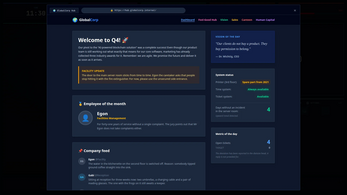
Layer8Problem is a satirical simulation with visual-novel bones, casting one player as the entire IT department of a company called GlobalCorp. The staff roster is a single person. Everyone else is a customer with a problem, including Chantal from marketing and a boss who treats technology as something close to witchcraft.
The job is a queue that never shrinks. Every thirty minutes another ticket lands in the system, and the whole run falls apart the moment ten of them are open at once. Between those tickets sit phone calls, sprints to the server room, coffee runs and errands, all of which eat time from a clock that only moves forward.
Three meters ride along the whole shift. Laziness makes the boss harsher when mistakes happen, Aggro ends everything once it fills, and Boss Radar produces a written warning at the top before a dismissal follows. It is a comedy about office life, free to play, and it opens straight in the browser.
How to play
There are two ways in. Working Day covers a single shift running from 08:00 to 16:30, and before it starts the player picks how miserable the day should be: a relaxed Friday, an ordinary Wednesday, or a Monday. Working Week strings Monday through Friday together in one continuous run, carrying tickets, meter values and the contents of the backpack across each night. Fail once and the entire week is lost.
Whatever the mode, every decision spends time and the clock never rewinds. Answering a call, crossing the building, fetching coffee and running errands all pull from the same budget, so the real skill is triage: which ticket gets handled, which meter gets calmed, and which problem is left to rot for another thirty minutes.
The schedule is not only ticket work. Boss fights interrupt the day, lunch breaks appear, and a company gala sits at the far end of the content for players stubborn enough to reach it.
Controls
The whole game is playable from the keyboard, and the key bindings can be reassigned to whatever suits the player's hands. A tutorial is available for anyone who would rather be walked through the first steps than work them out alone.
Language is handled just as flexibly. German and English cover every single event, and the choice can be swapped mid-game, even in the middle of a working week, without disturbing the save file.
Because it runs in the browser through an HTML5 frame, there is no install step: pressing Play drops the player into the shift. The game runs on desktop and on a phone, and progress is stored in the browser, with export and import options on the start screen for carrying a career over to a different device.
| Input | Action |
|---|---|
| Keyboard | Full keyboard support, with keys the player can rebind |
Tips for your first run
Treat the first session as a scouting trip. A relaxed Friday exists for exactly this: learning which errands are worth the walk and which tickets can wait while the meters are brought back under control. Only then does a Monday start make any sense, and only after that should a full week be attempted.
Aggro is the meter that ends the run outright, so it deserves the most attention. Boss Radar is the slower threat, since a full bar means a written warning and the next step is the sack. Laziness quietly makes every mistake more expensive, which is easy to forget until the boss reacts badly. Start with a single Working Day before committing to a week. Keep the open ticket count well under ten, because tickets keep arriving every half hour regardless of workload. Watch Aggro first: filling it ends the run, and the relief valve opens exactly once. Remember that the backpack survives the night in Working Week, so hoarded items are not wasted. Look for duct tape among the 33 repurposable items, since it reportedly fixes more than it should.
- Start with a single Working Day before committing to a week.
- Keep the open ticket count well under ten, because tickets keep arriving every half hour regardless of workload.
- Watch Aggro first: filling it ends the run, and the relief valve opens exactly once.
- Remember that the backpack survives the night in Working Week, so hoarded items are not wasted.
- Look for duct tape among the 33 repurposable items, since it reportedly fixes more than it should.
Content and replayability
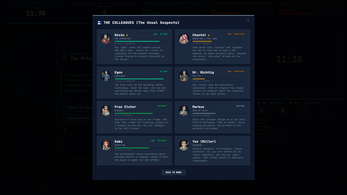
Volume is the draw here. More than 1,300 events sit scattered across the server room, the coffee kitchen, the phone line, errands and the inbox, and the schedule still finds room for boss fights, lunch breaks and that elusive company gala. Seven colleagues track how each decision was made and settle the score later, in either direction, which makes a second run read differently from the first.
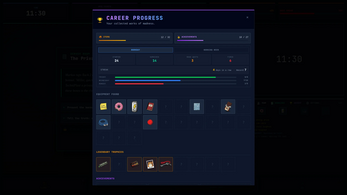
Between those scenes are 33 findable items that can be repurposed, with duct tape solving more problems than it reasonably should. A diary retells each day every evening, a company chronicle keeps growing across the run, and 27 achievements mark the milestones. Kevin's reinstalled machine reappears in the rack hours later, now wearing a dragon sticker and running a program that sells compute power overseas.
Everything is written in both German and English, event for event, and the language can be switched mid-save. Three day types, a week mode that punishes failure with total loss, and a memory system that follows the player across days give plenty of reasons to start over.
Presentation and performance
The look is pixel art with a retro sensibility, and the writing carries most of the weight: this is a reading-heavy office comedy rather than an action game. The satire aims squarely at corporate IT life, from the ticket queue to managers who treat a server rack as a mysterious shrine.
It runs in the browser as an HTML5 title, so clicking Play begins the shift with no install and no launcher. It plays on desktop and on a phone, and progress lives in browser storage; export and import on the start screen move a career between devices.
A Steam release carries the same content with offline play, Steam achievements and cloud saves for anyone who wants to back development, and the project is open source under the MIT licence. There is also a full keyboard control scheme with rebindable keys and an optional tutorial for the first day.
Who should play it
Anyone who has ever stared down a ticket queue will recognise the joke immediately. Layer8Problem suits players who enjoy management pressure, text-heavy comedy and workplace satire, and who like watching three numbers creep toward disaster while a clock refuses to rewind. The visual-novel framing means plenty of reading, and the pixel art promises a stylised, modest look rather than spectacle.
It is single-player, free, and carries no sign-up and no ads, so trying one shift costs nothing but time. German and English are supported for every event, with switching allowed mid-run, which makes it unusually easy to hand the laptop to someone else. Keyboard players get rebindable keys and a tutorial to start with.
Players who prefer offline play, cloud saves and Steam achievements can look at the Steam edition, which holds the same content. Those wanting reflex-driven action or a multiplayer office brawl will not find it here.
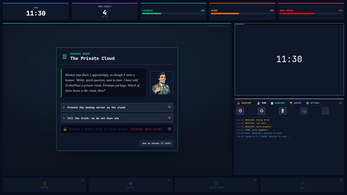
Screenshots
How we tested it
The build was loaded from games.debutplay.com in a headless Chromium session on ; the canvas started and no request was blocked. The guide was last checked on .
From the developer
A satirical sysadmin simulator. You are GlobalCorp's IT department. One person. For everyone. Between Chantal from marketing, a boss who thinks IT is voodoo, and a ticket counter that never runs backwards: every 30 minutes a new ticket lands in your system, and at ten open tickets it collapses. So you take calls, run to the server room, fetch coffee and go on errands – keeping an eye on three values while you do: Laziness – the higher it is, the harder the boss punishes your mistakes. Aggro – at 100 % you blow up. The valve opens exactly once. Boss Radar – at 100 % you get a written warning. After that, the sack. Every decision costs time, and the clock only runs one way. Two ways to play Working Day – one shift, 08:00 to 16:30. Choose beforehand how much you hate your life: a relaxed Friday, an ordinary Wednesday, or a Monday. Working Week – Monday to Friday in one go. Tickets, values and your backpack survive the night. Fail, and…
Frequently asked questions
Is Layer8Problem really free?
Yes. It costs nothing, requires no sign-up and shows no ads. A Steam edition with offline play, cloud saves and Steam achievements exists for players who want to support development.
Where can it be played?
In a browser on desktop or on a phone, through a playable HTML5 frame, and in a Steam release that carries the same content.
How long is one run?
A Working Day covers one shift from 08:00 to 16:30. Working Week runs Monday to Friday in one go, carrying tickets, meters and the backpack overnight, and failure costs the whole week.
What happens at ten open tickets?
The system collapses and the run ends, which is why a new ticket arriving every 30 minutes has to be balanced against calls, errands and coffee runs.
What do the three meters do?
Laziness makes the boss punish mistakes harder as it climbs, Aggro blows up the run when it hits 100 percent, and Boss Radar triggers a written warning at the top, then a dismissal.
Can the language be changed mid-game?
Yes. German and English cover every event, and the switch can happen mid-week without affecting the save.
What games are similar to Layer8Problem?
The closest matches on DebutPlay are Sai no Kawara, Hundred Rooms, Spirevale (Demo). They share the same genre, so the controls and the pace carry over.
Something wrong or missing? Tell us. How we test games.