Adventure · New game
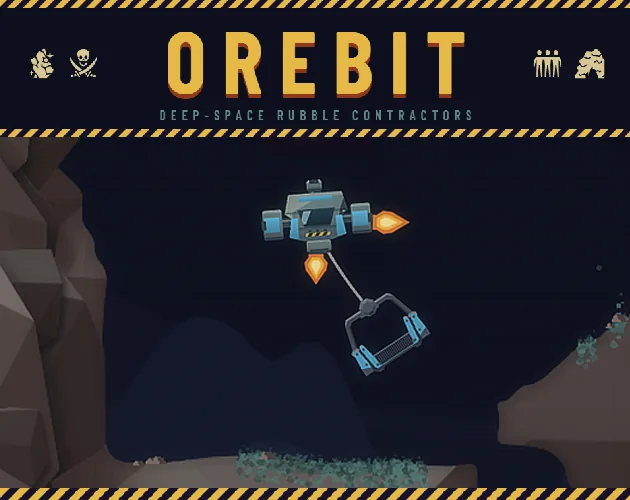
OREBIT
A free browser party game about hauling rubble, stealing cargo and surviving three short shifts while rival crews bump into a swinging bucket.
#11 this weekAI-assisted: Code
The game runs in this tab. No install, no account.
The short answer
OREBIT is a free HTML5 party game for one to four players. Each session runs three shifts of three minutes: hover over rubble, load the bucket, fly it home and hold to unload before hazards or rival craft knock the cargo loose. Between shifts, wages go on upgrade cards. No account is needed to play.
What is OREBIT?
OREBIT is a small online party game built for one to four players. Each match seats every participant in a mining craft fitted with a bucket on a rope, and the job is straightforward: gather rubble and get it back to a personal machine without losing it on the way. The crusher then grades the delivery, sorting anything from plain rock at the bottom end up through copper, silver, gold and rare gems, so a haul carries a clear value.
Competition comes from the other crews rather than from a story. Everyone plays on a separate screen, and nothing needs signing up for: no account stands between a player and a room.
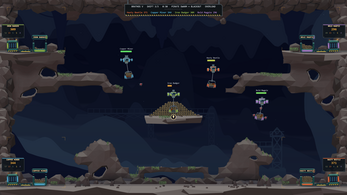
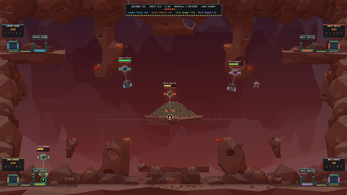
A match divides into three shifts of three minutes, with a shop break in between where wages turn into upgrade cards. Every shift brings a freshly generated cave, and the hazard set rotates as well, so a crew is rarely working the same layout or the same dangers twice. Player crafts and the pirates that hunt cargo are generated too. OREBIT runs in the browser as an HTML5 game and costs nothing to play.
How to play
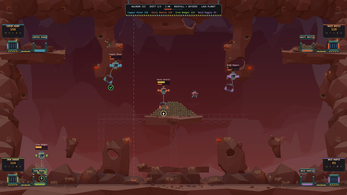
The loop starts at the rubble pile. Hover the craft over it and hold the button to fill the bucket trailing on its rope, then fly to the machine in the corner and hold again to empty the load. The crusher immediately shows what the delivery was worth, grading it anywhere from plain rock through copper, silver and gold up to rare gems.
Cargo is fragile in practice. Swinging the bucket and colliding with anything spills rubble, and rivals are actively trying to cause exactly that: bumping another player knocks cargo loose, and a close pass can lift material straight out of a rival's bucket for the taking.
A session is three shifts of three minutes each. Between shifts the crew pauses for a shop break and spends the wage earned on upgrade cards.
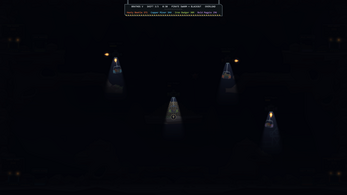
Hazards reshuffle every shift. The rotation covers falling rock, quakes, blackouts, acid drips and gas geysers, plus pirates and drone swarms that go after cargo, along with rock worms in the tunnels. Pirates have to be rammed rather than dodged. Housekeeping runs from the ESC menu, where a vote can remove a player as long as everyone else agrees.
Controls
Keyboard play uses WASD with Space, or the arrow keys with Enter for anyone who prefers the other side of the board. Holding that action key is what does the work: hold to fill the bucket at the rubble pile, hold again at the personal machine to empty it.
Two players can share a single keyboard, which makes OREBIT a workable fit for a setup where one machine serves a pair of crews.
In the phone browser the same actions map to an on-screen stick and a button, and on iPhone the game can be added to the Home Screen to run full screen.
Quick chat sits on the number row. Keys 1 through 5 send Help, Thanks, Go go go, Watch out and Nice. ESC opens the menu, which is where names can be hidden and where a vote to remove a player begins.
| Input | Action |
|---|---|
| WASD | Fly the mining craft |
| Space (hold) | Load rubble at the pile and unload at the personal machine |
| Arrow keys | Alternative flying controls |
| Enter (hold) | Load and unload when flying with the arrow keys |
| Keys 1 to 5 | Send quick chat: Help, Thanks, Go go go, Watch out, Nice |
| ESC | Open the menu for name hiding, voting a player out and bug reporting |
| On-screen stick | Fly the craft in the phone browser |
| On-screen button | Load and unload in the phone browser |
Tips for your first run
The opening shift is mostly about learning the rhythm of load, fly, unload without spilling everything on the turn. The single-player practice session exists for exactly that, and two players can also use it to test a shared keyboard before taking a pair of crews into a public room.
Because swinging and bumping are what spill cargo, a tidy flight beats a fast one, and bumping a rival is one of the few ways to take material off them.
- Settle the craft before the bucket swings wide, since a wide swing spills rubble.
- Check the crusher readout after each drop to learn which hauls paid out.
- Ram the pirates that steal cargo instead of trying to outrun them.
- Convert wages into upgrade cards during the shop break, before the next shift starts.
- Use keys 1 to 5 to flag hazards to the crew rather than typing anything.
- Ready up quickly in Quick Play: a match begins after 20 seconds or sooner once everyone is ready.
Content and replayability
Replay value rests on regeneration. Every shift receives a newly generated cave, so the layout changes within a single session, and the crafts and pirates are generated too. The developer has said the caves will grow more varied over time.
The structure stays short: three shifts of three minutes with a shop break between each, giving a match a beginning, middle and end rather than an open grind. Hazards rotate between shifts, spanning rockfall, quakes, blackouts, acid drips, gas geysers, cargo-thieving pirates, a pirate drone swarm and rock worms, so a crew never settles into one defensive habit.
Getting into a game is handled two ways. Quick Play drops a player into a waiting public crew or opens a new room, and with two or more players the match starts after 20 seconds or sooner once everyone is ready; anyone arriving after the start watches and joins at the next shop break. Private rooms share a 4-letter code or a link. Solo practice and two players on one keyboard are also available, and a vote can remove a disruptive player from the ESC menu provided everyone else agrees.
A co-op mode where the crew works together is planned for a later version, alongside more cave variety. Neither is part of the current build, which is described as an early version still in active development.
Presentation and performance
OREBIT arrives as an HTML5 build that runs inside a browser tab, so the barrier to a first match is a page load rather than an install. On iPhone the game can be added to the Home Screen to run full screen, and the phone layout swaps the keyboard for an on-screen stick and button.
Online sessions connect players directly over peer-to-peer WebRTC. That has a practical consequence worth knowing before joining a stranger's room: people in the same room can see each other's IP addresses. Public rooms are announced on public Nostr relays, and the announcement carries only the room code and the player count, with no names attached. Player names are filtered on every screen and can be hidden from the ESC menu.
Readability leans on a few compact signals: the crusher readout that converts a delivery into a grade, and the five quick chat lines that let a crew call out hazards without stopping. If something breaks, a ladybug button in the menu opens an e-mail with the details already filled in.
Who should play it
OREBIT suits players who want a short, loud competition rather than a long campaign. Three shifts of three minutes means a full match fits into a break, and the shop break gives a natural pause to work out who spent their wage well.
The bucket-on-a-rope carrying is the social core. Bumping a rival to spill their haul, or lifting material out of their bucket, creates the kind of grudge that carries into the next shift, and the rotating hazards keep crews from settling on one safe route.
Groups of two to four get the most from it, especially pairs who can share one keyboard across two crews. A single player can run practice sessions, so learning the flight and loading rhythm does not require a full crew.
Anyone allergic to sign-ups will appreciate that no account is involved, though players careful about IP exposure should stick to private rooms with people they know. It is early software still in active development, so the co-op mode and wider cave variety are things to watch for rather than features to expect today.
Screenshots
How we tested it
The build was loaded from games.debutplay.com in a headless Chromium session on ; the canvas started and no request was blocked. The guide was last checked on .
From the developer
OREBIT is a small online party game for 1 to 4 players. You fly a mining craft, haul rubble home and try not to spill it while the others bump into you. Everyone plays on their own screen and you don't need an account. How to play Your craft carries a bucket on a rope. Hover over the rubble pile and hold the button to load. Fly to your machine in your corner and hold to unload. The crusher shows what it was worth: plain rock, copper, silver, gold or rare gems. Swinging and bumping spill rubble. Bump other players to make them lose cargo, or steal from their bucket. A session is 3 shifts of 3 minutes. Between shifts you spend your wage on upgrade cards. Hazards change each shift: rockfall, pirates that steal cargo (ram them), a pirate drone swarm, quakes, EMP storms, gas geysers, acid drips, blackouts and rock worms. Controls WASD + Space, or arrows + Enter. Two players can share one keyboard. Phone: on-screen stick and button. Keys 1…
Frequently asked questions
Is OREBIT free to play?
Yes. It is a free browser game, and no account is needed to join a room.
How many people can play at once?
Between one and four. Solo practice is available, and two players can share a single keyboard.
How long does a match last?
Three shifts of three minutes, with a shop break between shifts for spending wages on upgrade cards.
Can it be played on a phone?
It runs in the phone browser with an on-screen stick and button, and on iPhone it can be added to the Home Screen for full screen play.
What happens if a match has already started?
A running game can be watched, and the late arrival joins at the next shop break.
Is there a co-op mode?
Not yet. A mode where the crew works together is planned for a later version, along with more cave variety.
What games are similar to OREBIT?
The closest matches on DebutPlay are HELPDESK, NIGHT SHIFT, Tending Grave — Trông Mộ (Demo), Fjord Saga. They share the same genre, so the controls and the pace carry over.
Something wrong or missing? Tell us. How we test games.