Simulation · New game
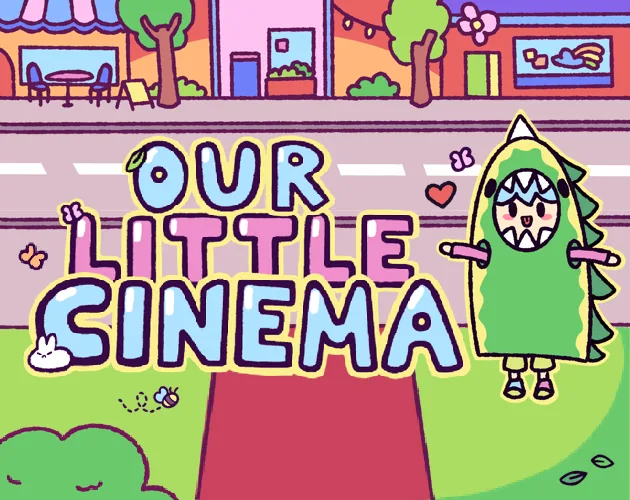
Our Little Cinema Demo
A free browser demo that puts players behind the ticket booth of a small-town cinema for three days of seating, snacks, payments, and film choices.
#61 this week
The game runs in this tab. No install, no account.
The short answer
Our Little Cinema Demo is a free HTML5 simulation about running a small-town movie theater ticket booth. Open at 9 AM, take tablet orders, seat customers according to their personalities, collect payment, close at 10 PM, restock snacks, license films, and manage a weekly debt. This demo covers the first three days, so it is a short, cozy look at the booth routine.
What is Our Little Cinema Demo?
Our Little Cinema Demo is a cozy 2D job simulator set in a small-town movie theater. The central task is the ticket booth: opening the shutter at 9 AM, greeting regulars, taking orders on a tablet, selecting seats, and collecting the right payment before closing at 10 PM. The cinema is behind on bills, and the town turns up to help across the story's one-month frame. This demo is a free browser build for HTML5.
It is still in development and covers the first three days rather than the complete game, so not every feature from the full release appears here. The tone is warm and lightly busy: snack restocking, film licensing, and seat assignments all feed into the next day. Amy's Everything Shop gives players a place to buy supplies and decorations after the shutters come down. The weekly debt payment is the pressure point that keeps the cozy routine from becoming aimless. Even in the short demo, the booth routine connects customer personalities, film choices, and the look of the cinema.
How to play
Each day begins when the shutter opens at 9 AM. Regulars arrive with orders that are handled on a tablet: choose tickets, add snacks, assign seats, and take the correct amount of payment. The seating step is the heart of the job. Guests have personalities, and their placement affects tips and reactions. Conversation-minded customers do well beside fellow talkers, while quieter guests prefer calmer neighbors. Some dislike an unpleasant seatmate; others have poor sight and need the front row.
After the 10 PM close, count tips and make the weekly debt payment. The day does not end there: restock sold-out snacks, license new films, and buy small decorations. Amy's Everything Shop is the place for those purchases, and decorations improve the cinema's coziness, which in turn can improve tips. Before the next day, choose which films will play tomorrow. Keep regulars' favorites in rotation and mix genres so different customers find something. Some guests know exactly what they want; others ask for a broad mood such as something scary. Special regulars appear only when their favorite film is showing.
Controls
The booth routine is built around service actions. The tablet is the order tool: players pick tickets, add snacks, choose seats, and take payment from customers. The shutter marks the start and end of the working day, with a 9 AM opening and a 10 PM close. After closing, the flow moves to counting tips, paying the weekly debt, restocking snacks, licensing films, and shopping for decorations.
Film selection for the next day is another decision point. Seating is handled through the same customer-by-customer service rhythm, and the choice matters because personalities and sight needs change the outcome. The demo is an HTML5 browser game with a playable frame, so the entire routine happens in-page. A courier kid brings a dürüm at noon, adding one small midday event to the booth shift.
The game page does not list its controls. Check the in-game tutorial or pause menu for the current scheme.
Tips for your first run
Start the first day by treating seating as the main puzzle, not a formality. A customer's personality, sight needs, and tolerance for neighbors all change the tip and the reaction. Keep the tablet order accurate: tickets, snacks, seat choice, and payment are separate steps, and a rushed payment can undo a good seat. After 10 PM, settle the weekly debt before spending freely at Amy's Everything Shop. Restocking popcorn that sold out is a practical first purchase, while decorations can wait until the debt is covered. For tomorrow's schedule, protect regulars' favorites and add genre variety so mood-based requests have an answer.
- Open promptly at 9 AM and use the early shift to learn which regulars arrive first.
- Seat talkative guests beside chatty neighbors and quieter guests away from constant conversation.
- Move guests with poor sight toward the front row.
- Avoid placing customers next to a seatmate they find unpleasant.
- Take the exact payment amount rather than guessing.
- Before choosing tomorrow's films, check which special regulars only attend for a favorite title.
Content and replayability
The demo's content is deliberately bounded: three playable days, not the full month described by the premise. Those days cover the booth loop, customer seating, snack restocking, film licensing, decoration shopping, and the weekly debt. The larger frame is a one-month effort to save the cinema, but this build does not include every feature from the full game.
Variety comes from the customer mix: personalities affect seating, film tastes affect who shows up, and special regulars are tied to favorite titles. A day can shift based on which movies are scheduled and which seats are available. Themed movie nights and the noon dürüm delivery add texture to the routine. The three-day sample is best treated as an introduction to the loop rather than a full campaign. The film slate and shop purchases made today shape the customers and stock for tomorrow, which gives even the short run a forward-looking management rhythm.
Presentation and performance
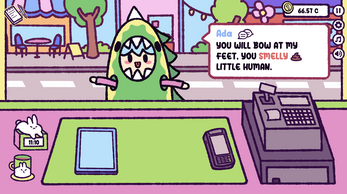
The visual identity is warm, colorful, and hand-drawn, with 2D graphics and cute chibi characters. The setting is a small-town cinema, and the booth, shop, seats, snacks, and film choices give the art plenty of everyday detail to work with. Four screenshots accompany the demo, and the browser frame makes the game playable without a separate client. Presentation leans cozy rather than realistic: the cinema is a place of regulars, themed movie nights, and a courier kid who arrives with a dürüm at noon.
The booth flow is task-focused, moving from tablet orders to seat selection to payment and then to after-hours shopping. As an HTML5 title, the game is delivered in-page. The browser frame places the game directly in a web page rather than a separate download. The demo status matters for expectations: this is a short, in-development slice rather than the complete game.
Who should play it
This is for players who like cozy management tasks with a clear daily rhythm. The appeal is not action but the small decisions: matching a customer to a seat, remembering which snack ran out, taking the right payment, and choosing a film slate that brings regulars back. Players who enjoy shopkeeping, 2D presentation, and personality-driven customers will find the booth loop easy to understand.
The demo is especially suited to a short session: three days, one small cinema, and a town that keeps showing up. Anyone who wants a low-pressure simulation with a debt deadline and a decorative shop has a clear reason to try it. The film-selection layer adds a light scheduling puzzle for players who like planning tomorrow while finishing today. Because the demo is short and still in development, it best serves curious players who want a sample of the routine rather than a complete campaign.
Screenshots
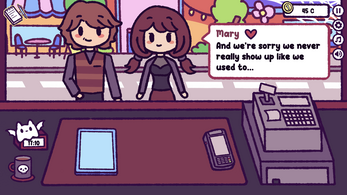
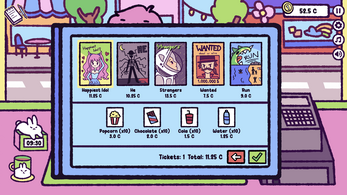
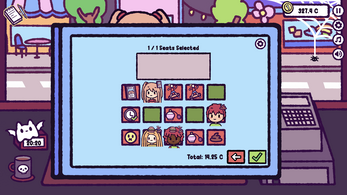
How we tested it
The build was loaded from games.debutplay.com in a headless Chromium session on ; the canvas started and no request was blocked. The guide was last checked on .
From the developer
🎟️ Our Little Cinema needs your help! We have one month to save it. Our Little Cinema is a cozy job simulator with 2D graphics. In this game you will be running the ticket booth of a small-town movie theater. The bills are piling up, but word got out, and now the whole town keeps showing up to help. ☀️ Your day at the booth - 🎬 Open the shutter at 9 AM and greet the regulars - 🍿 Take their order on your tablet: pick the tickets and various snacks - 🪑 Pick their seats. Everyone in town has a personality, and who sits where really matters - 💳 Take the correct amount of payment from the customers - 🌙 Close up at 10 PM, count your tips, don't forget to pay the weekly debt - 🛒 Restock snacks and license new films - 📽️ Choose which movies play tomorrow 🪑 Seating is personal Talkative folks want chatty neighbors, quiet ones don't. Some can't stand a smelly seatmate, some can't see well and need the front row. Seat them right and…
Frequently asked questions
Is Our Little Cinema Demo free?
Yes, it is free. It is an HTML5 browser game with a playable frame.
How long is the demo?
The demo covers the first three days of play. The larger story is framed around one month to save the cinema, but not all content and features from the full game are included.
What is the main daily loop?
A day moves from opening the shutter and serving tablet orders to seating customers and taking payment. After the 10 PM close, tips are counted, the weekly debt is handled, snacks are restocked, and tomorrow's film slate is chosen.
Why does seating matter?
Customer personalities and needs affect reactions and tips. Talkative guests prefer chatty neighbors, quiet guests want calmer seats, some dislike unpleasant seatmates, and guests with poor sight need the front row.
Can players choose the movies?
Yes. At the end of each day, players select which films play tomorrow. New films are licensed at Amy's Everything Shop, regulars' favorites can be kept in rotation, and genre mixing helps satisfy different requests.
Is this the full game?
No. This is a demo of Our Little Cinema, not the complete game. It is in development and offers the first three days, with some full-game content and features unavailable.
What games are similar to Our Little Cinema Demo?
The closest matches on DebutPlay are Enfield: Chalkboard Basketball, Le Grenier (The Attic), Sushi Wave. They share the same genre, so the controls and the pace carry over.
Something wrong or missing? Tell us. How we test games.