Strategy · New game
Pax Libera
A browser-based alternate-history simulator where plain-language orders shape budgets, armies, and borders across 175 countries and four starting years.
#8 this weekAI-assisted: Code, Text
The game runs in this tab. No install, no account.
The short answer
Pax Libera is a free browser grand-strategy simulator built around alternate-history scenarios. Choose one of 175 countries, begin in 1914, 1936, 1985, or 2026, then type orders in plain language and jump six months at a time. The local engine resolves each order, so the full game works without an account or download.
What is Pax Libera?
Pax Libera is a single-player alternate-history strategy and simulation game that runs in a browser. It offers 175 countries and four starting points: 1914, 1936, 1985, and 2026. The appeal is not a fixed campaign with a scripted ending. Instead, the game turns plain-language orders into measurable pressure on budget, stability, factories, divisions, and debt.
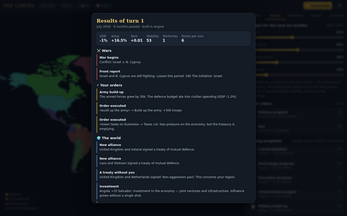
A turn advances six months, then returns a report on what worked, what it cost, and how neighbouring governments reacted. Those governments are active while the player is occupied: they form alliances, build armies, attack weak targets, and redraw regional borders. The game is free, with no token system or paid turn packs. It is a text-based grand-strategy sandbox, not a twitch game. The release is dated 27 October 2026 and is labelled v1.0. A local engine resolves orders rather than a language model improvising outcomes, which matters for players who want to understand why a decision succeeded or failed.
How to play
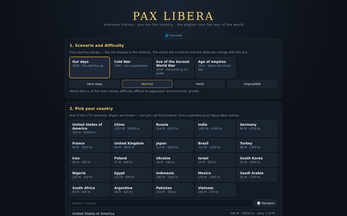
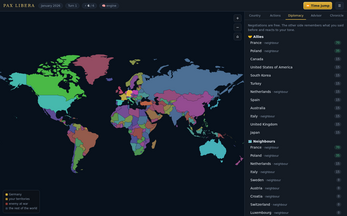
Play begins with country selection: click a country on the map or search for it by name. Once a country is chosen, the player writes orders in the Actions tab or uses quick orders. Typical instructions include expanding the military, increasing taxes on wealthy citizens, or proposing a trade arrangement with France. The engine translates those instructions into numbers across budget, stability, factories, divisions, and debt.
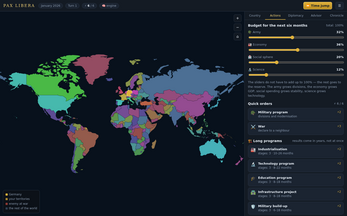
Political points are the main limit: a turn allows four to nine actions, so not every problem can be addressed at once. Budget allocation is a separate decision, split between army, economy, social spending, and science. Pressing Jump moves time forward by six months; nothing advances until that command is given. The resulting report explains what worked, what it cost, and what other governments did. If a turn goes badly, the Menu includes a roll-back option. Before spending points, the game tells the player why an impossible order cannot be carried out.
Controls
Country selection uses the map or a name search. Orders are typed into the Actions tab, while quick orders offer a faster route for players who do not want to compose text. The budget decision divides spending across army, economy, social programmes, and science. The Jump control advances the simulation by six months, and the Menu contains the roll-back command for undoing a turn. The start screen has a small Russian/English switch for changing language.
The interface is designed around mouse clicks and typed orders rather than direct unit movement. There is no account creation step, launcher, or download before play. Saves can be managed through autosave, manual slots, and file export, which gives players a way to keep a run outside the browser. The optional prose layer is connected through the in-game menu with a free-tier key or a local Ollama model; the key remains in the browser.
| Input | Action |
|---|---|
| Mouse | Click a country on the map to select it. |
| Keyboard | Search for a country by name. |
| Keyboard | Type an order in the Actions tab. |
| Mouse | Use quick orders instead of composing text. |
| Mouse | Set budget allocation across army, economy, social, and science. |
| Mouse | Press Jump to advance six months. |
| Mouse | Open Menu to roll back a turn. |
| Mouse | Switch between English and Russian from the start screen. |
Tips for your first run
Treat political points as the real currency of a turn. With only four to nine actions available, a broad wish list will produce a weak result; a few linked orders usually tell a clearer story. Read the pre-check message before committing points, because an impossible order is flagged before it consumes the budget. Give the budget a purpose that matches the orders: military expansion needs army funding, while industrial or scientific goals need their own allocations.
After pressing Jump, read the report for costs and foreign responses rather than skipping to the next order set. Other governments are not paused while the player focuses on domestic matters, so a neighbour's alliance or attack can change the next turn's priorities. Use the roll-back option when a test turn produces an outcome that breaks the intended plan, then revise the order instead of accepting a dead end. Keep manual saves or an exported file for runs that matter, and remember that a damaged save is rejected rather than ending the campaign.
- Select a country and starting year that match the scenario you want to explore.
- Write a small set of connected orders instead of spending every action on unrelated goals.
- Check the reason for a rejected order before spending political points.
- Set army, economy, social, and science funding to support the orders you typed.
- After each Jump, read the six-month report and adjust to foreign moves.
- Use autosave, manual slots, or file export before trying a risky turn.
Content and replayability
Replayability comes from the combination of country choice and start date. With 175 countries across 1914, 1936, 1985, and 2026, the same order style can meet very different strategic contexts. The game is described as a sandbox with procedural generation, so a run is not limited to one prescribed path through a campaign. A player can spend many turns on domestic budgets, military build-up, or regional diplomacy, then continue for as long as desired.
The political-point cap keeps each turn focused, while the wider world continues to sign alliances, raise armies, and attack weaker states. Optional AI adds a prose layer: consequences can be written out, and governments can answer in character. The complete game works without that layer, and the simulation itself remains local. English and Russian are available through the start-screen switch. Save tools, including autosave, manual slots, and export, support long-running experiments and alternate starts.
Presentation and performance
Pax Libera is built for browser play rather than a launcher or installed client. The HTML5 release is one file, with no account, download, or launcher step. The simulation engine is local, so a run can continue offline; this is a meaningful difference from browser games that depend on a remote server for every action. The presentation is text-based, with map selection and typed orders carrying the interaction.
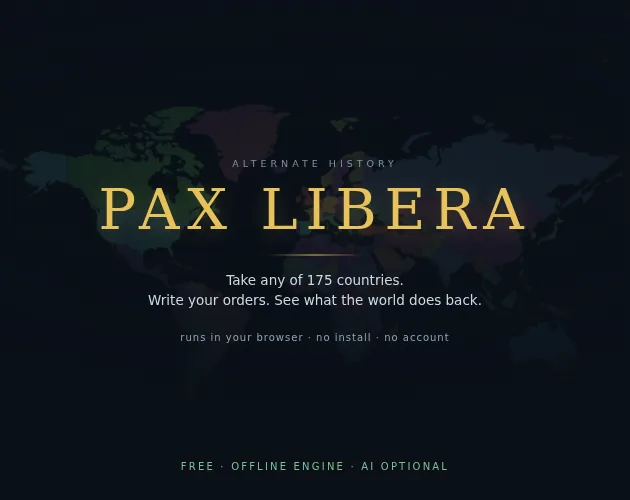
A turn is resolved as a six-month block, then summarised in a report, which keeps the pace closer to a planning desk than a real-time battlefield. Four screenshots accompany the release, but the core experience is the report-and-order loop. Saves are handled with autosave, manual slots, and file export, and invalid save files are rejected instead of destroying a campaign. The optional AI prose layer uses a free-tier key or a local Ollama model, with the key stored in the browser. No charge is attached to that optional connection.
Who should play it
Pax Libera suits players who enjoy alternate history, political simulation, and grand strategy built around written orders. The strongest fit is someone who likes constrained decisions: four to nine actions per turn, a budget split across army, economy, social, and science, and a report that explains costs and consequences. Players who want a sandbox for long-running experiments will find the 175-country roster and four start dates useful, especially with manual saves and file export.
The optional AI layer appeals to those who want richer prose and in-character government replies, but it is not required. The game is less suited to players seeking real-time combat, direct unit control, or a fixed narrative campaign. A one-person v1.0 project may also appeal to players interested in a growing strategy toy and willing to report border or bug issues. The free browser format lowers the barrier: no account, no launcher, and no paid turn packs stand between a curious player and the first Jump.
Screenshots
How we tested it
The build was loaded from games.debutplay.com in a headless Chromium session on ; the canvas started and no request was blocked. The guide was last checked on .
From the developer
Pax Libera is an alternate history simulator that runs entirely in your browser. Pick any of 175 countries, in 2026, 1985, 1936 or 1914, and run it for as long as you like. You write orders in plain language — "build up the army", "raise taxes on the rich", "offer France a trade deal" — and the built-in engine turns them into real numbers: budget, stability, factories, divisions, debt. Then you press Jump and six months pass. You get a report: what worked, what it cost, and what your neighbours did about it. The rest of the world is not waiting for you. Other governments sign alliances, build armies, attack the weak and redraw their region while you are busy with your own problems. What it is One file, no install. No account, no launcher, no download. It works on a phone. Free, and nothing is locked behind a paywall. No tokens, no credits, no "buy more turns". Works offline. The simulation engine is local. You can play on a train with…
Frequently asked questions
Is Pax Libera free?
Yes. The game is free, with no tokens, credits, paywall, or paid turn packs.
What platforms does it run on?
It runs as an HTML5 browser game. The release is one file with no account, launcher, or download, and the local engine supports offline play.
How long is a turn?
Pressing Jump advances six months. A turn allows four to nine actions, limited by political points, and returns a report.
Is AI required to play?
No. The simulation is complete without AI. An optional prose layer can be connected through the in-game menu with a free-tier key or a local Ollama model; the key stays in the browser.
Can you save a campaign?
Yes. The game supports autosave, manual slots, and file export. A broken save file is rejected instead of ending the run.
What languages are available?
English and Russian are available, with a switch on the start screen.
What games are similar to Pax Libera?
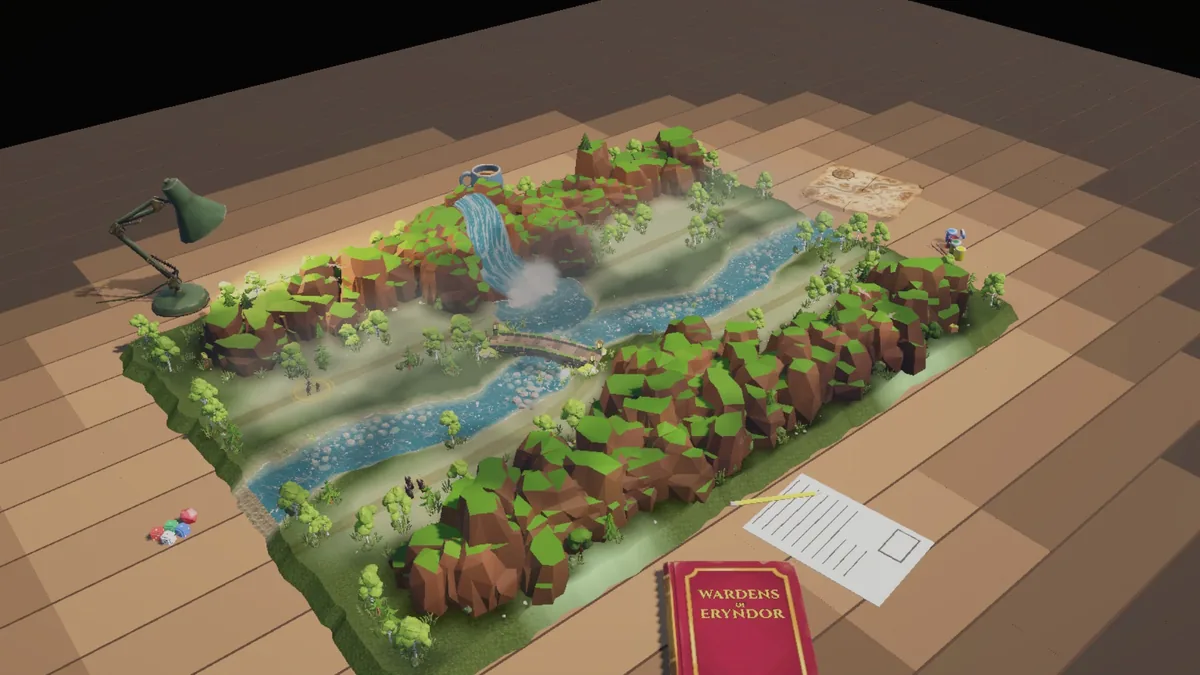
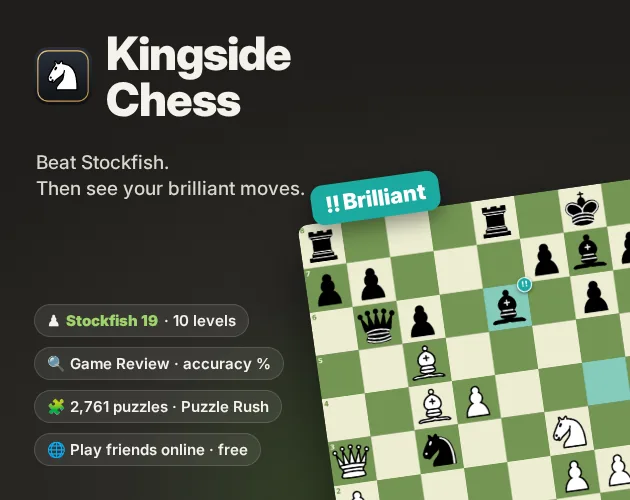
The closest matches on DebutPlay are Wardens Of Eryndor, Janken Football, Kingside Chess. They share the same genre, so the controls and the pace carry over.
Something wrong or missing? Tell us. How we test games.