Simulation · New game
Pocket Overlord
Pocket Overlord lets you raise pixel settlements, then test them with dynamite, dragons, volcanoes, monsters and weather in a singleplayer browser sandbox.
#53 this week
The game runs in this tab. No install, no account.
The short answer
Pocket Overlord is a free, browser-based god-game sandbox where pixel civilizations grow and then face dynamite, rockets, dragons, volcanoes, monsters and extreme weather. The appeal is direct experimentation: pause, choose a disaster, press play and watch buildings, roads and forests change. It is in development, singleplayer, and playable in an HTML5 frame.
What is Pocket Overlord?
Pocket Overlord is a god-game sandbox built around a clear loop: nurture a pixel civilization, then decide how much of it survives. The world begins as an island with populations to settle and settlements to grow. Human, elf, orc and dwarf communities expand through families, housing, farms and roads, while trade, migration, alliances and war create movement across the map. Seasons change around those systems, giving the sandbox a living backdrop before any disaster arrives.
The second half of that loop is destruction with immediate feedback. A click can bring rockets, dynamite chains, dragon fire, napalm, a volcano, acid, a thunderstorm, a kaiju, a flying saucer, a blood tornado or Gravity Clap into the world. Homes fall, roads split, woodland catches fire and blast damage reshapes the terrain. Rain can extinguish blazes, scarred ground heals over time, and villagers who live through the event return to their routines. The point is not only the blast but the changed place left behind and the rebuilding that follows.
How to play
Start by filling the island with people and places. The simulation follows families as they grow, homes as they appear, farms as they support settlements and roads as they connect villages. Civilizations exchange goods, move between settlements, make pacts and enter conflicts as seasons shift. That makes the world worth examining before the first explosion, because the damage has a baseline to compare against.
When ready to intervene, pause the world and arrange the next experiment. Select a disaster, resume the simulation and observe the consequences. A dynamite chain might be enough; a rocket, dragon strike or volcano will change more. Powers can be combined, so fire, weather, monsters and gravity can overlap. Move the camera close afterward to follow individual lives and see what survives. Continue the destruction or let rain, healing terrain and rebuilding give survivors a chance.
Controls
The control layer is built around clicks and the pause state. A click can set off the selected disaster, pause holds the world so the next experiment can be arranged, and play lets the event run. Zoom moves the view in to follow individual lives and settlements after a strike. That is enough to support the sandbox rhythm: choose a power, time it, watch the chain reaction, then inspect the result.
The same click-driven approach covers explosive, fiery, natural, monstrous and gravity-based powers. Pause is the planning tool and play is the moment of commitment. Because disasters can be combined, a useful habit is to pause before stacking effects, then resume and watch the interaction spread across the landscape. The controls keep the focus on quick experiments: choose a power, set it off with a click, then inspect the result.
| Input | Action |
|---|---|
| Click | Trigger the selected disaster or power |
| Pause / Play | Stop the world to arrange a disaster, then resume the simulation |
| Zoom | Move the view close to follow individual lives and settlements |
Tips for your first run
The first run is easiest to read when the island already has homes, farms and roads to lose. Let the civilization establish itself, then pause and choose a single disaster before combining powers. A dynamite chain, rocket or dragon strike gives clear feedback about fire spread, collapse and the way debris moves. Move the camera close after the blast to see how individual lives and settlements are affected.
- Pause before stacking effects so the order of fire, weather, monsters and gravity is easy to follow.
- Use rain after a blaze if the goal is to test recovery rather than total ruin.
- Watch scarred ground and survivors over time; healing and rebuilding are part of the sandbox.
- Try a volcano, acid or thunderstorm when the aim is to alter terrain and settlements rather than only flatten buildings.
- Finish a run by deciding whether to keep the destruction going or give the world a fresh start.
Content and replayability
The content mix favors open-ended experimentation over a fixed mission path. The island can hold human, elf, orc and dwarf civilizations that exchange goods, move between settlements, make pacts and enter conflicts as seasons shift. Players can alter terrain, introduce different biomes and move the camera close enough to track individual residents. Disaster tools span explosives such as dynamite chains, rockets and the Tsar Bomba, plus fire, weather, monsters and gravity, which makes each combination a different test of the same world.
Replayability comes from the rebuild as much as the blast. Homes fall, roads split, woodland catches fire and blast damage reshapes the terrain, but rain can extinguish blazes, scarred ground heals over time and survivors return to their routines. That cycle invites another experiment: inspect what survived, choose a new power and decide when the world gets a fresh start. The singleplayer sandbox structure and broad power set support repeated experiments rather than a single scripted outcome.
Presentation and performance
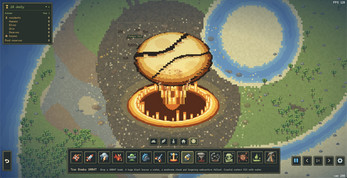
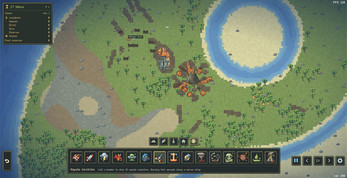
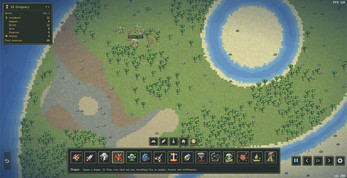
The presentation is 2D pixel art, with the camera moving from a broad island view to individual lives. Destruction is visualized through collapsing buildings, broken roads, burning forests, lava, falling rocks, craters and mushroom clouds. Those effects matter because the world retains the damage: explosions carve the landscape, and fires spread through forests and settlements. The pixel style keeps the scale legible, from small residents to large blast effects.
Recovery is part of the visual language too. Rain can extinguish blazes, scarred ground heals over time, and survivors return to their routines. Because the game runs in a browser through HTML5, the playable frame is the point of access. The focus is on readable cause and effect rather than a fixed cinematic sequence: a power is chosen, the world reacts, and the aftermath remains visible for the next experiment.
Who should play it
Pocket Overlord should appeal to players who like god-games, pixel sandboxes and destruction that leaves a visible mark. The civilization layer gives the island farms, roads, families and alliances, so a disaster has something to interrupt. The power set adds rockets, dragons, volcanoes, monsters, weather and gravity tricks for players who prefer direct experimentation over long campaigns.
It is also suited to singleplayer sessions built around small tests: pause, trigger one effect, watch what happens, then move the camera close for the aftermath. Players who want to rebuild as much as destroy can use rain, natural healing and survivor activity to test resilience. The HTML5 browser format keeps access inside a browser, and the free price lowers the barrier to trying a world. It remains in development, so the current build is best approached as a sandbox to explore rather than a finished campaign. The attraction is the ability to switch between caretaker and destroyer without leaving the same island.
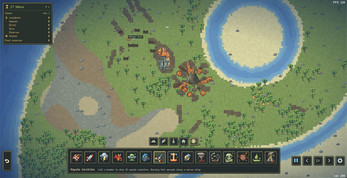
Screenshots
How we tested it
The build was loaded from games.debutplay.com in a headless Chromium session on ; the canvas started and no request was blocked. The guide was last checked on .
From the developer
Build a world. Bring it crashing down. Grow a pixel civilization, then decide how it ends. Pocket Overlord is a god-game sandbox where peaceful villages are one click away from rockets, dragon fire and a very bad day. Play in your browser. Make a little chaos, trigger a catastrophe, or see what survives when you combine your powers. Pick your disaster Blow it apart. Set off chains of dynamite, launch rockets, or drop Tsar Bomba for a huge blast, a mushroom cloud, a crater and lingering radioactive fallout. Set the world on fire. Call in a napalm airstrike or unleash fire-breathing dragons. Watch flames spread through forests and settlements. Turn nature against them. Raise an erupting volcano, spill acid across the land, or summon a thunderstorm. Lava and falling rocks make short work of a quiet neighborhood. Bring in the monsters. Unleash a giant kaiju or a flying saucer. Tiny villagers suddenly have much bigger problems. Throw…
Frequently asked questions
Is Pocket Overlord free?
Yes. It is free to play in the browser.
Where can Pocket Overlord be played?
It runs in a browser through HTML5 and includes a playable frame.
Is Pocket Overlord multiplayer?
No. It is a singleplayer sandbox.
Can the simulation be paused?
Yes. Pause lets you arrange the next disaster, and play resumes the action.
What kinds of disasters are available?
Explosives, fire, weather, monsters and gravity effects are available, including dynamite, rockets, dragons, a volcano, acid, a thunderstorm, a kaiju, a flying saucer, a blood tornado and Gravity Clap.
Does damage stay in the world?
Yes. Homes fall, roads split, woodland catches fire and blast damage reshapes the terrain. Rain, gradual healing and survivor rebuilding can change the aftermath.
What games are similar to Pocket Overlord?
The closest matches on DebutPlay are Le Grenier (The Attic), Sushi Wave, Accent Football Simulator. They share the same genre, so the controls and the pace carry over.
Something wrong or missing? Tell us. How we test games.