Simulation · New game
PokéShelter
A free browser shelter sim where a retiring professor hands over a mountain hideout and 971 Pokémon to build for, staff and send on expeditions.
#61 this weekAI-assisted: Code, Graphics, Sound
The game runs in this tab. No install, no account.
The short answer
PokéShelter is a free, single-player management sim that runs in a browser on PC and mobile, with nothing to download and no ads. Players take over a mountain shelter built by Professor Mutfruit, construct rooms floor by floor, match Pokémon to jobs, and send teams across nine regions to collect creatures and badges. It is in development and playable in English and French.
What is PokéShelter?
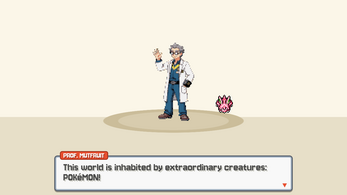
The humans are gone. Professor Mutfruit spent his life digging a shelter beneath a mountain to preserve every species of Pokémon, convinced he was the last person left on Earth, until someone knocked on his door. That visitor takes charge: from the first day onward, the shelter belongs to the player.
PokéShelter is a free simulation and management game that runs inside a browser on PC and mobile, with no download and no advertising attached. The shelter is expanded room by room, staffed by collected Pokémon and pushed outward into the rock around it.
This is an amateur, non-commercial fan project from developer Dragundevil, unaffiliated with Nintendo, Creatures, Game Freak or The Pokémon Company, and Pokémon names remain trademarks of their respective owners. Sprite and portrait work comes from the PMD Sprite Collab, credited inside the game. The build is in development, and both English and French are supported.
How to play
Construction happens floor by floor. Generators, berry fields, water stations, a Daycare, a laboratory and training rooms are all part of the room set, and rooms merge and level up once they are placed. Growth is not only vertical: digging around the shelter opens new building zones where the giant skeletons of Pokémon lie sleeping in the stone.
Every resident is a worker, and the right job depends on that Pokémon's PIKACHU stats. Matching a creature to fitting work is the core staffing decision, and the roster grows through expeditions sent into nine regions, where new Pokémon are caught and brought home.
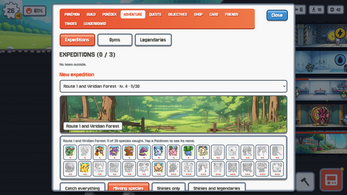
Expeditions keep running while the game is closed, for up to two hours at a time, which makes them something to set up before stepping away. Health matters during those trips: a team that faints loses half of everything it found out in the field.
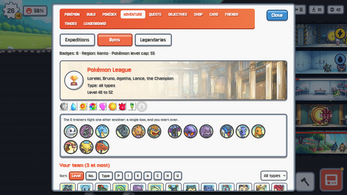
The long game runs through 72 gyms and 9 Pokémon Leagues, worth 81 badges in total. Beyond that, the Link Room allows Pokémon to be traded with friends, and the trainer leaderboard ranks those who climb highest.
Controls
Play begins with a single click on the Run game button, which loads the HTML5 build straight into the page. Nothing is installed, no launcher intervenes and no advert runs first, so the distance between deciding to play and running a shelter is one button. The game is also served from its own site, and a save made on one host stays separate from a save made on the other.
The build runs in browsers on PC and mobile, and the work is management rather than reflex: rooms get placed, jobs get assigned and expeditions get dispatched. Expeditions keep resolving while the tab is shut, for up to two hours, and the shelter saves itself automatically as it grows. Signing in with Google moves progress online so the same shelter opens on other devices.
The game page does not list its controls. Check the in-game tutorial or pause menu for the current scheme.
Tips for your first run
The opening floors set the tone for everything after, so bring the support rooms online before expanding sideways: generators for power, berry fields for food and water stations for drink, with the Daycare, laboratory and training rooms following once the layout allows. Rooms are built to merge and level up, which rewards a deliberate floor plan over a scattered one.
Staffing is the other half of the job. Every Pokémon carries PIKACHU stats, and the shelter runs smoother when each one is pointed at work that suits those numbers instead of being dropped into the first empty slot. Expeditions come next, and they are worth queuing before closing the tab.
- Watch expedition health closely, because a fainted team returns with half of its haul gone.
- Queue region runs before logging off; they continue for up to two hours away from the game.
- Dig out fresh building space when the current floors start feeling tight.
- Trade through the Link Room to plug gaps in the collection rather than sitting on spare creatures.
- Sign in with Google if the shelter needs to follow onto other devices and other hosts.
- Check the Daycare, lab and training rooms once power, food and water are stable.
Content and replayability
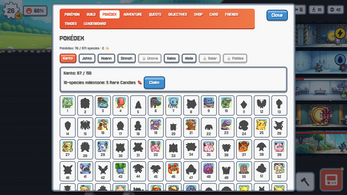
The collection target is enormous: 971 Pokémon to gather, with legendaries, shinies, eggs and held items mixed in among the ordinary catches. Nine regions feed that collection through expeditions, and each run carries the risk of losing half the findings if the team goes down.
Progression is structured around battles as well as building. There are 72 gyms to beat and 9 Pokémon Leagues to clear, adding up to 81 badges, which gives the shelter a ladder to climb beyond its own walls. Digging adds another long tail, since new construction areas open up around the mountain hideout and the bones of immense Pokémon are waiting in the rock.
Social play sits alongside the single-player loop. The Link Room handles trades with friends, and the trainer leaderboard gives those trades and battles somewhere to point. The project is still in development, and the English and French versions open the same shelter to a wider audience.
Presentation and performance
The visual identity is pixel art, carried by sprites and portraits taken from the PMD Sprite Collab and credited in-game. Rooms, floors and the fossil bones uncovered while digging all sit in that same blocky, readable style.
Technically, this is an HTML5 browser build, which is the reason play works on PC and mobile without a download or an install step. The idle layer does a lot of the heavy lifting: expeditions resolve while the game is closed, up to two hours of progress at a time, so a short session can pick up a result that was set in motion much earlier.
Because the game is still in development, the build is best treated as one that is still taking shape rather than a finished package.
Who should play it
Pokémon fans who enjoy the quieter side of the universe, the breeding, sorting and caretaking, will find plenty to organise here: 971 creatures, held items, eggs and a Daycare to run. Management and idle players get a similar pull from the loop of building rooms, merging them, leveling them and assigning staff by their PIKACHU stats, with expeditions that keep working for up to two hours after the tab closes.
Collectors chasing completion have 81 badges, 72 gyms and 9 Leagues to work through, plus shiny hunting and legendary captures on top. Players who want something to dip into during a browser break will appreciate that there is no download and no ads, and French-speaking players get a full translation rather than a menu swap.
Anyone looking for an official, finished Pokémon product should adjust expectations: this is a free amateur fan game in development, with trading and a leaderboard rather than a boxed release.
Screenshots
How we tested it
The build was loaded from games.debutplay.com in a headless Chromium session on ; the canvas started and no request was blocked. The guide was last checked on .
From the developer
Poké Shelter is a free shelter-management game starring Pokémon, played in your browser on PC and mobile. No download, no ads. The humans are gone. Professor Mutfruit, who thought he was the last one on Earth, dug a shelter under the mountain to save every species of Pokémon. Now he's getting old, and you just knocked on his door: from today on, you run the shelter. ▶ PLAY: click "Run game" above, or on its own site: https://pokeshelter.com WHAT YOU DO - Build rooms floor by floor: generators, berry fields, water stations, a Daycare, a lab, training rooms and more. Rooms merge and level up. - Give each Pokémon the job that fits its P.I.K.A.C.H.U. stats. - Send expeditions across 9 regions to catch new Pokémon, even while the game is closed (up to 2 hours). Watch their HP: a team that faints loses half of what it found. - Beat 72 gyms and 9 Pokémon Leagues, win 81 badges. - 971 Pokémon to collect, legendaries, shinies, eggs and held…
Frequently asked questions
Is PokéShelter free to play?
Yes. It is a free, non-commercial fan game with no ads and no download, started from the browser build on PC or mobile.
Do expeditions continue while the game is closed?
They do, for up to two hours. Teams that faint out in a region lose half of what they found, so health is worth monitoring.
How much is there to collect and beat?
971 Pokémon including legendaries, shinies, eggs and held items, spread across 9 regions, with 72 gyms, 9 Pokémon Leagues and 81 badges to earn.
Is this an official Pokémon game?
No. Dragundevil's project is an amateur, non-commercial fan game, unaffiliated with Nintendo, Creatures, Game Freak and The Pokémon Company.
How do saves work?
The shelter saves automatically. Guest progress stays in that browser, and a save on one host is separate from the other; signing in with Google keeps it online across devices.
Which languages are supported?
English and French, both available in the same browser release, covering the shelter management, expeditions and gym progression.
What games are similar to PokéShelter?
The closest matches on DebutPlay are Attract Mode, Baba Records, Rooftop. They share the same genre, so the controls and the pace carry over.
Something wrong or missing? Tell us. How we test games.