Strategy · New game
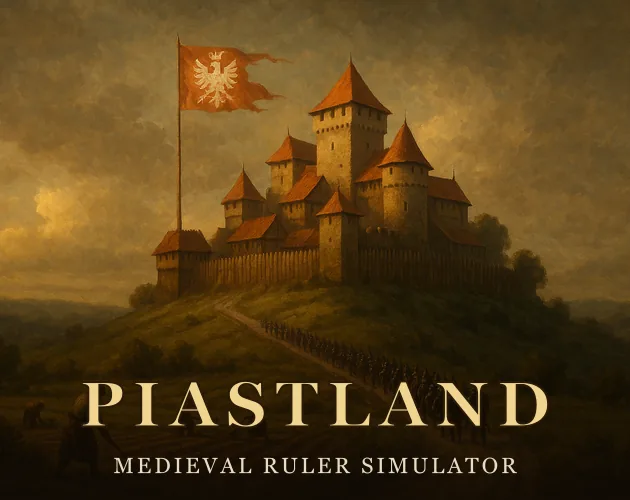
Piastland
A free browser ruler sim about holding a fragile duchy together in 1250 through courtroom verdicts, town workshops, grid battles and an heir-to-heir dynasty.
#30 this weekAI-assisted: Code, Graphics
The game runs in this tab. No install, no account.
The short answer
Piastland drops you onto a young duchy's throne in a fragmented 1250 Poland, then hands you weekly petitions, a workshop economy, tactical grid battles and a dynasty to continue. It is free, runs in the browser, supports touch screens and is an early test build from a single developer, which makes a first playthrough genuinely useful feedback.
What is Piastland?
Piastland is a medieval ruler simulator set around the year 1250, when the Polish lands were divided between rival dukes. The player takes the throne of a young duchy and keeps ruling across years and generations rather than a single short campaign. It is free, built in HTML5, and runs inside a browser window, with touch screens supported alongside the mouse.
The long objective is to unite the land and climb from Duke to King before a rival does. Getting there means juggling several systems at once: verdicts delivered in the throne room, a castle town that has to keep growing, turn-based battles fought on a grid, a map of lords and bandit camps to raid, conquer, vassalise or ally with, and a family line that has to outlast its own ruler.
The build ships in English, Polish, German and Spanish, and progress is stored in the browser. This is an early test version made by one person, so it is a work in progress rather than a finished product, and the game menu carries both a rating option and a bug-report option for players who want to send something back.
How to play
Time moves on its own. A game week runs for roughly three minutes in real time, and the clock stops at the end of every week, so the rhythm is simple: watch the week unfold, then plan while everything is frozen.
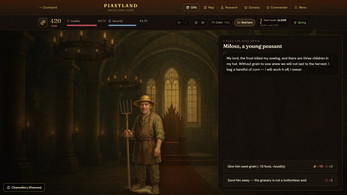
The throne room carries the week's business. Petitioners arrive in sequence: a merchant after a privilege, a peasant complaining about bandits, an abbot pressing for his tithe, an envoy carrying a rival's message. Each verdict moves the treasury, the loyalty of the people and the ruler's reputation, and the people judged do not forget how they were treated.
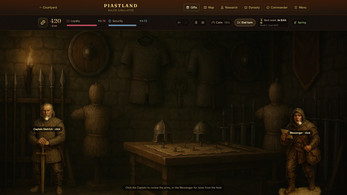
The castle town covers the economic side. Farms, woodcutters and quarries supply raw materials, while workshops convert ore into steel and steel into armour, and grain into bread and beer. Prosperity keeps the population calm and the town expanding, which in turn feeds everything else.
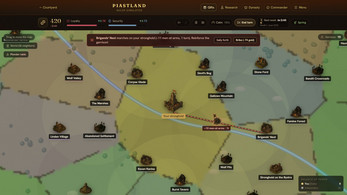
On the political map, lords and bandit camps sit on a living landscape. Raiding, conquering, vassalising and allying are all available, and conquered land has to be held down or it revolts. Battles are turn-based fights on a grid where initiative, terrain, flanking, castle walls and sieges all matter, and a commander earns levels, skills and artefacts. Eventually the ruler ages and an heir inherits the throne.
Controls
Input is almost entirely pointer-driven. Clicking handles buildings and characters, and dragging moves the view. Two keys carry the shortcuts: Space pauses time, and M opens the map. Touch screens are supported as an alternative to the mouse.
Learning the pause key early pays off, because the simulation runs in real time between week breaks; stopping the clock is how a decision gets room to breathe before the next petitioner arrives. The map key is the other shortcut worth internalising, since the political map is where rivals, vassals and bandit camps are tracked.
The end-of-week stop works as a second layer of breathing room on top of the manual pause, so there is an automatic moment to think at every week boundary as well as a key to press whenever the situation turns. Between clicks, drags and those two shortcuts, the input set stays small enough to pick up in the opening week.
| Input | Action |
|---|---|
| Mouse click | Select buildings and characters |
| Mouse drag | Move the view |
| Space | Pause time |
| M | Open the map |
| Touch screen | Alternative input to the mouse |
Tips for your first run
The opening weeks set the tone for an entire dynasty, so treat the first throne room sessions as the moment to establish a direction rather than an attempt to please every petitioner at once.
- Keep track of how each petitioner was treated. Judged people remember, so a verdict that saves coin today can cost loyalty later.
- Build the raw side of the town before the workshops: farms, woodcutters and quarries feed the ore-to-steel-to-armour and grain-to-bread-and-beer chains that keep the town growing.
- Treat prosperity as a stability measure, not just an income line. A calm population does not turn into a problem while a war is under way.
- Spend commander levels, skills and artefacts before a siege rather than after. Initiative, terrain and flanking are the levers in a grid fight, and castle walls reward preparation.
- Choose conquests with revolt in mind. Conquered land has to be held, so a vassal or an alliance can be cheaper than another restive stretch of ground.
- Lean on Space. The week pauses by itself, but the manual pause is the difference between reacting to a crisis and deciding how to handle it.
- Watch the ruler's age. The heir inherits the throne and the state of the realm along with it, good or bad.
Content and replayability
The scale is generational. A ruler ages and eventually passes the throne to an heir, so a run is not one reign but a sequence of them, each inheriting whatever the previous ruler built, conquered or lost. That alone gives a long game several distinct phases.
The political map is populated with lords and bandit camps, which means neighbours to raid, conquer, vassalise or ally with, plus the standing problem of keeping conquered lands from revolting. Battles add another layer of persistence through a commander who accumulates levels, skills and artefacts while fighting across terrain, around flanking positions and through sieges against castle walls.
Four languages — English, Polish, German and Spanish — widen the audience, and saving in the browser means a run can be picked back up on the same machine.
Because the build is an early test version from one developer, the content is still shifting. The feedback channels built into the menu, rating the game and reporting a bug, are part of the current experience, and the question the developer most wants answered is the point at which a player stopped knowing what to do next.
Presentation and performance
The game is an HTML5 build that plays inside a browser frame, and progress is written to browser storage rather than an account. There is nothing to install before the first week starts, which suits a strategy game built around short bursts of decision-making separated by a real-time clock.
Pacing does most of the presentational work. A week of roughly three minutes, followed by a hard stop, keeps a session moving without demanding constant attention, and the manual pause covers the moments when a verdict needs more thought. The throne room, the town and the map all sit behind the same click-and-drag interface, so switching between them is a matter of moving the view rather than learning a new control scheme.
Audio, visual style and frame rates are not covered here. Because this is an early test version made by one person, the build should be treated as a moving target: systems can change between sessions, and the in-menu bug report is the intended route for anything that breaks. Four language options are available from the start.
Who should play it
Strategy and simulation players are the obvious core audience: anyone who enjoys managing an economy of farms, woodcutters, quarries and workshops while answering petitions that move a treasury and a reputation. The weekly verdict system rewards people who like consequences that arrive later rather than immediately.
Tactical combat fans get grid battles with initiative, terrain, flanking, castle walls and sieges, plus a commander who grows through levels, skills and artefacts. Those who liked the idea of Heroes of Might and Magic style encounters will recognise the shape of the fights without needing prior knowledge of the Polish succession disputes of the 1250s.
The dynasty layer suits players who prefer long arcs to single battles: an ageing ruler, an heir waiting, and a map of lords and bandit camps to work through. It is free, needs only a browser, and supports touch screens, which makes it a low-risk try for a curious newcomer. Anyone who enjoys early builds and giving feedback will get the most out of it.
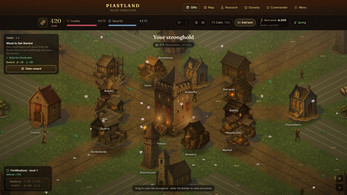
Screenshots
How we tested it
The build was loaded from games.debutplay.com in a headless Chromium session on ; the canvas started and no request was blocked. The guide was last checked on .
From the developer
Piastland is a medieval ruler simulator set around the year 1250, when the Polish lands were split between rival dukes. You take the throne of a young duchy and rule it for years and generations. THE THRONE ROOM. Every week petitioners come before you: a merchant asks for a privilege, a peasant complains about bandits, an abbot demands his tithe, a rival sends envoys. Your verdicts affect the treasury, the loyalty of your people and your reputation, and the people you judged remember. YOUR CASTLE TOWN. Build farms, woodcutters and quarries, then workshops that turn raw goods into finished ones: ore into steel, steel into armour, grain into bread and beer. Prosperity keeps the people calm and the town growing. TURN-BASED BATTLES. Fight on a grid in the spirit of Heroes of Might and Magic: initiative, terrain, flanking, castle walls and sieges. Your commander gains levels, skills and artefacts. CONQUEST AND DIPLOMACY. A living map full…
Frequently asked questions
Is Piastland free to play?
Yes, there is no cost to start. It is an HTML5 game that runs in a browser, and touch screens are supported in addition to the mouse.
How long does one game week last?
About three minutes of real time. The clock pauses at the end of every week, and Space pauses it manually whenever a decision needs more thought.
What is the goal of a run?
Unite the land and rise from Duke to King before a rival does, using verdicts, town building, conquest, diplomacy and a dynasty of heirs.
Is progress saved?
Yes, progress is stored in the browser, so a run can be resumed later in the same browser.
Which languages are supported?
English, Polish, German and Spanish.
How do you send feedback?
Use the Rate the game or Report a bug options in the game menu, or leave a comment. The most useful thing to report is the moment when it stopped being clear what to do next.
What games are similar to Piastland?
The closest matches on DebutPlay are Rooftop, THE VOTE, Lanternbound. They share the same genre, so the controls and the pace carry over.
Something wrong or missing? Tell us. How we test games.