Action · New game
Shadows of the Arcane
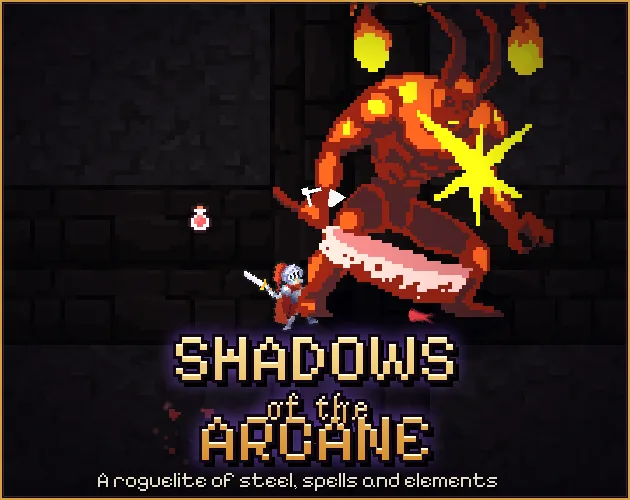
Seven heroes enter three cursed places in a top-down pixel-art action roguelite where elemental reactions and boss patterns matter more than blind aggression.
#22 this weekAI-assisted: Code, Graphics
The game runs in this tab. No install, no account.
The short answer
Shadows of the Arcane is a top-down pixel-art action roguelite built around seven heroes, each with a distinct element, skill, and ultimate. Combat leans on burning, soaking, freezing, and shattering reactions, while bosses demand pattern recognition. Runs branch through five map variants, secret walls, puzzles, a peddler, blood altars, and synergistic relics; souls, a bestiary, and a journal persist.
What is Shadows of the Arcane?
Shadows of the Arcane is a top-down pixel-art action roguelite set across three cursed places. The roster spans a knight, samurai, assassin, mage, cleric, necromancer, and archer. Each one brings an element, a skill, and an ultimate into combat, so the choice changes both moment-to-moment attacks and the bigger ability decisions. The elemental layer is central. Burning, soaking, freezing, and shattering create reactions, and every element has an answer, which makes enemy composition and boss phases something to read rather than ignore. Bosses are framed as lessons. A golem exposes its core after a slam, an ice shell protects another guardian, a demon's rising heat becomes hellfire, and sunlight is the key to a fallen champion. Those examples show the game's promise: learn the tell, survive the punish, then find the opening. The structure is roguelite rather than a straight dungeon crawl. Each map has five variants, secret walls and puzzles add exploration, and a peddler, blood altars, and relics with concealed synergies give each run its own decisions.
Souls persist between attempts, while a bestiary and journal record enemies and world story. The current build is free and in development, so balance, content, and art keep changing.
How to play
The game combines a hero with one of the three cursed places, then settles into a loop of exploring, fighting, and learning. Movement, attacks, active defense, and hero abilities all matter; blocking can become a parry when timed, while dodge covers what should not be blocked. E and Q are the hero-specific skill and ultimate, so the current kit defines the available answers. Combat also rewards elemental setup. The reaction set covers burning, soaking, freezing, and shattering, and the useful question is which element answers the current threat rather than which button does the most damage. Bosses follow the same logic at a larger scale. The golem's core opens after a slam, the guardian hides behind an ice shell, the demon turns building heat into hellfire, and the fallen champion is broken by sunlight. Those are cues to watch, not damage races. Between fights, explore for secret walls, puzzles, a peddler, blood altars, and relics; hidden synergies can reshape a build. Souls carry forward alongside the bestiary and journal, so a failed attempt still adds knowledge. The build is in active development, so expect balance and content shifts.
Controls
The scheme is built for keyboard and mouse. WASD moves the hero, the left mouse button attacks, and the right mouse button blocks; a block pressed at the right moment turns into a parry. Space is the dodge, E fires the hero's skill, and Q triggers the ultimate. F is the interact key, C and V handle potions, TAB opens the map, and Esc pauses. The layout puts movement and defense under the left hand, with attacks on the mouse, while the longer abilities sit on E and Q. That separation matters in boss fights, where a parry or dodge is often the difference between seeing the opening and losing the attempt. The same scheme supports exploration: F for interactions, TAB for orientation, and C or V when a potion is the better answer than another attack. The practical setup is a keyboard and mouse. Practice the timed right-click parry separately from the ordinary block, then add Space, E, and Q once the defensive rhythm feels natural. A hero's element, skill, and ultimate are worth reviewing before the first boss.
| Input | Action |
|---|---|
| WASD | Move the hero |
| Left mouse button | Attack |
| Right mouse button | Block; a timed press parries |
| Space | Dodge |
| E | Use the hero's skill |
| Q | Use the hero's ultimate |
| F | Interact |
| C / V | Drink potions |
| TAB | Open the map |
| Esc | Pause |
Tips for your first run
First runs go better when the boss is treated as a reading test. Watch the golem for the slam that opens its core, the guardian for the ice shell that has to be answered, the demon for heat that builds into hellfire, and the fallen champion for the sunlight condition. Do not spend every defensive option at once: a timed right-click parry and a Space dodge solve different problems, and keeping one available is often more valuable than a greedy attack. Use E and Q deliberately. The skill and ultimate belong to the chosen hero, so learn what the current kit is meant to answer before treating them as panic buttons. Potions on C and V are part of the plan, not a failure state. Explore before committing. Secret walls, puzzles, a peddler, blood altars, and relics with hidden synergies can change a run, and the map on TAB helps track where the search has gone.
- Learn one boss tell at a time, starting with the golem's post-slam core or the guardian's ice shell.
- Hold the right mouse button to block, but practice the timed parry version against telegraphed hits.
- Save Space for dodges that cannot be blocked rather than using it as a second movement key.
- Read the hero's E skill and Q ultimate before a boss, because each hero has a different element and kit.
- Use TAB to reorient and C or V to recover; a potion spent early can preserve a run.
Content and replayability
The replay hook is structural. Each map has five variants, so the same cursed place can present different layouts and decisions across attempts. Concealed walls and puzzles add discovery, while a peddler, blood altars, and relics with hidden synergies create run-specific choices that reward experimentation. Seven heroes range from a samurai and knight to a necromancer, cleric, mage, assassin, and archer. Because each has an element, a skill, and an ultimate, switching heroes changes the available answers rather than only the silhouette. Bosses are designed to be learned. The golem's core opens after a slam, the guardian sits behind an ice shell, the demon's heat becomes hellfire, and the fallen champion needs sunlight to break. Those conditions make repeat attempts about recognition and execution. Longer-term progress comes from souls that stay between runs, plus a bestiary and a journal of the world's story. The bestiary supports the boss-learning angle by recording enemies, while the journal gives the three cursed places and their guardians a narrative frame. The build remains in development, with balance, content, and art still changing.
Presentation and performance
Shadows of the Arcane presents itself as a top-down pixel-art fantasy game, with a look built for readable silhouettes and boss tells. The boss examples are visual as much as mechanical: a golem with a core that opens after a slam, a guardian inside an ice shell, a demon whose heat becomes hellfire, and a fallen champion tied to sunlight. The score is credited as original music by Marllon Silva, also known as xDeviruchi, drawn from 16-bit Fantasy & Adventure Music. Sound work is credited to PlumpDev, JC Sounds, rubberduck, HaelDB, bart, and Kenney, with fonts under SIL OFL 1.1. Boss art credits include Demon Slime and Frost Guardian by chierit, with additional enemy and hero art from several pixel artists. The game is built in Godot and offered as an HTML5 build with a playable frame. A free Windows beta is available as an unsigned build: unzip the download, run ShadowsOfTheArcane.exe, and if SmartScreen appears, use More info then Run anyway. Saves for souls, the journal, and the bestiary live in a Godot app data folder under %APPDATA%. The project is in active development, so art, balance, and content are moving targets.
Who should play it
Shadows of the Arcane is for players who want an action roguelite with a readable boss language. The appeal is a set of lessons: the golem's core after a slam, the guardian's ice shell, the demon's heat turning into hellfire, and the fallen champion's sunlight weakness. Players who enjoy timed defense will find the right-click block and parry, the Space dodge, and the E skill and Q ultimate create a compact combat vocabulary. Fans of elemental systems get burning, soaking, freezing, and shattering reactions, with the promise that every element has an answer. The seven-hero roster, from knight and archer to necromancer and samurai, gives run variety without changing the top-down pixel-art frame. Explorers have five takes on every map, concealed walls, puzzles, blood altars, a peddler, and relics with hidden synergies to chase. Players who like persistent knowledge should appreciate souls that stay between runs, plus a bestiary and journal that record progress and story. It is a singleplayer game, so the focus is on solo learning rather than group coordination.
The current build is free and in active development; players who want a fixed final meta should wait, while those who enjoy watching systems evolve have a reason to start now.
Screenshots
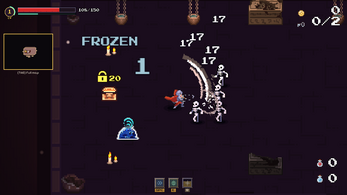
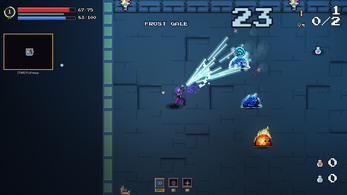
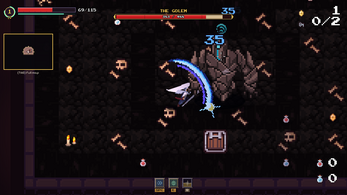
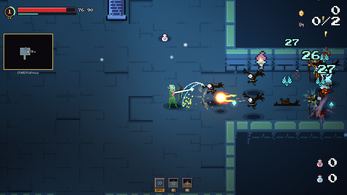
How we tested it
The build was loaded from games.debutplay.com in a headless Chromium session on ; the canvas started and no request was blocked. The guide was last checked on .
From the developer
Seven heroes. Three cursed places. Guardians that have to be learned, not just hit. A top-down pixel-art action roguelite: free Windows beta. Features Seven heroes: knight, archer, assassin, cleric, mage, necromancer and samurai, each with their own element, skill and ultimate.Elemental reactions: burn, soak, freeze and shatter. Every element has an answer.Bosses to learn: a golem whose core opens after it slams, a guardian behind an ice shell, a demon whose heat builds into hellfire, and a fallen champion only sunlight can break.No two runs alike: five versions of every map, secret walls, puzzles, a peddler, blood altars, and relics with hidden synergies.Souls that stay with you between runs, a bestiary and a journal of the world's story. Controls WASD move · Left click attack · Right click block (parry on time) · Space dodge · E skill · Q ultimate · F interact · C / V potions · TAB map · Esc pause Beta The game is in active…
Frequently asked questions
Is Shadows of the Arcane free?
Yes. The current build is free, and the game is still in active development.
How many heroes are playable?
Seven, including a knight, samurai, assassin, mage, cleric, necromancer, and archer. Each has an element, skill, and ultimate.
What reactions can elements create?
Burning, soaking, freezing, and shattering. Every element is designed to have an answer.
What carries from one run to the next?
Souls persist, along with the bestiary and the journal of the world's story.
How should bosses be approached?
As patterns to learn. A golem opens its core after a slam, an ice shell guards another boss, a demon builds heat into hellfire, and sunlight breaks a fallen champion.
Is there multiplayer?
No. It is a singleplayer game built around solo runs and boss learning.
What games are similar to Shadows of the Arcane?
The closest matches on DebutPlay are Cat abdutor, Farmer Survivors, BONEFOLD. They share the same genre, so the controls and the pace carry over.
Something wrong or missing? Tell us. How we test games.