Puzzle · New game
Tadaima
A ten-to-fifteen-minute browser puzzle about returning to a century-old Hokkaido homestay and spotting what has changed before stepping inside.
#6 this weekAI-assisted: Code, Graphics, Text
The game runs in this tab. No install, no account.
The short answer
Tadaima is a short anomaly-spotting puzzle set in a traditional Japanese home in Hokkaido, playable free in a browser. Each evening the player judges whether the house is unchanged, stepping in when it is and backing out when it is not, across eight consecutive nights and ten hidden anomalies.
What is Tadaima?
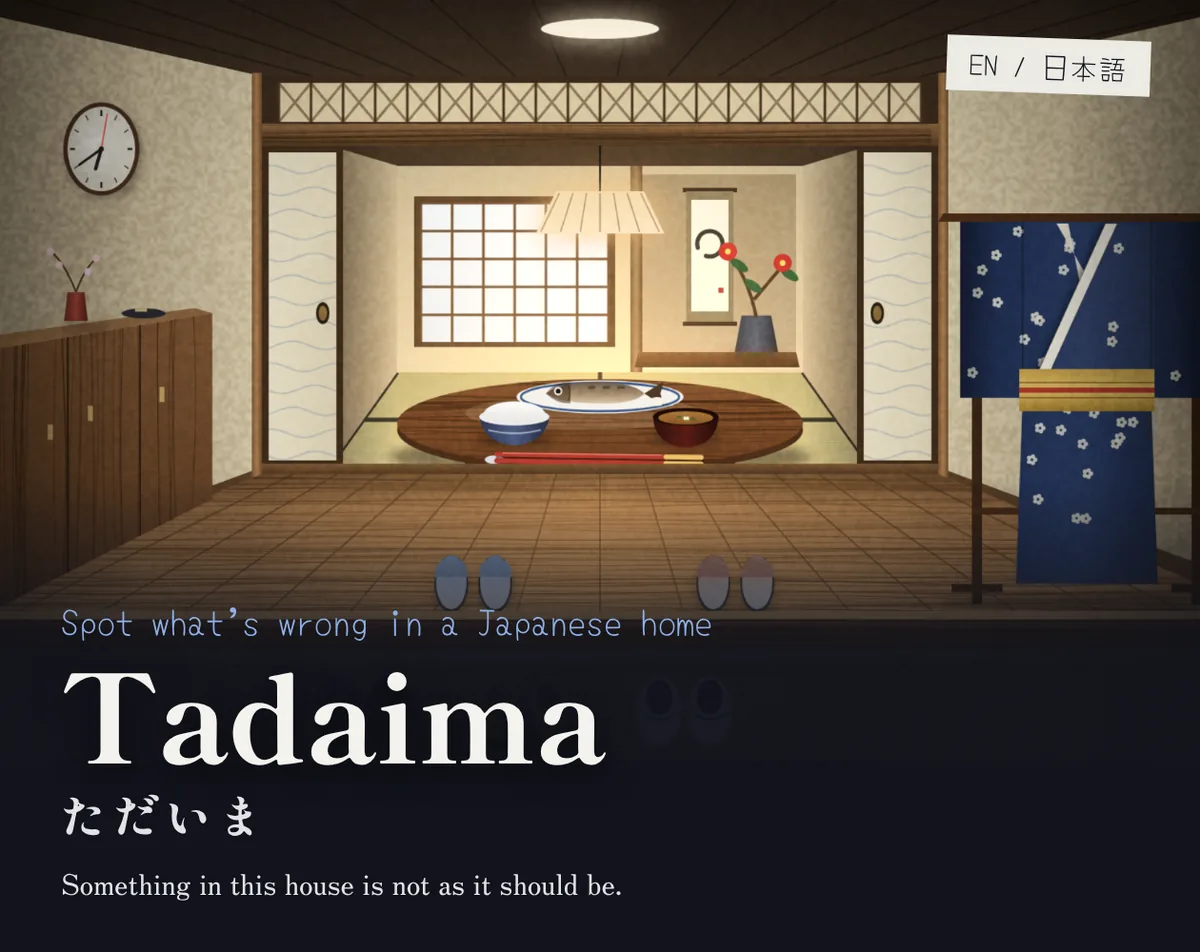
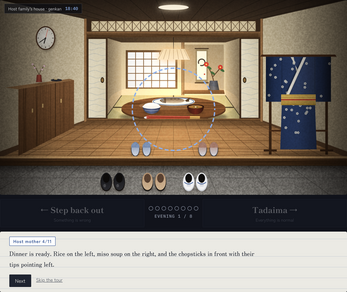
Tadaima is a short anomaly-spotting puzzle with an educational bent, set inside a traditional Japanese house in Hokkaido and played entirely in a browser. The framing is a homestay: the family lives in a building more than a hundred years old and still keeps the old customs. On the first evening the host mother walks the player through the rooms and demonstrates how everything is supposed to look. From then on, every arrival happens at the same front door, and the question is whether the interior still matches that lesson.
The routine is a small ritual. When the house is as it should be, the move is to announce arrival and step inside. When something has shifted, the move is to retreat and close the door. Eight correct evenings in a row count as genuinely coming home.
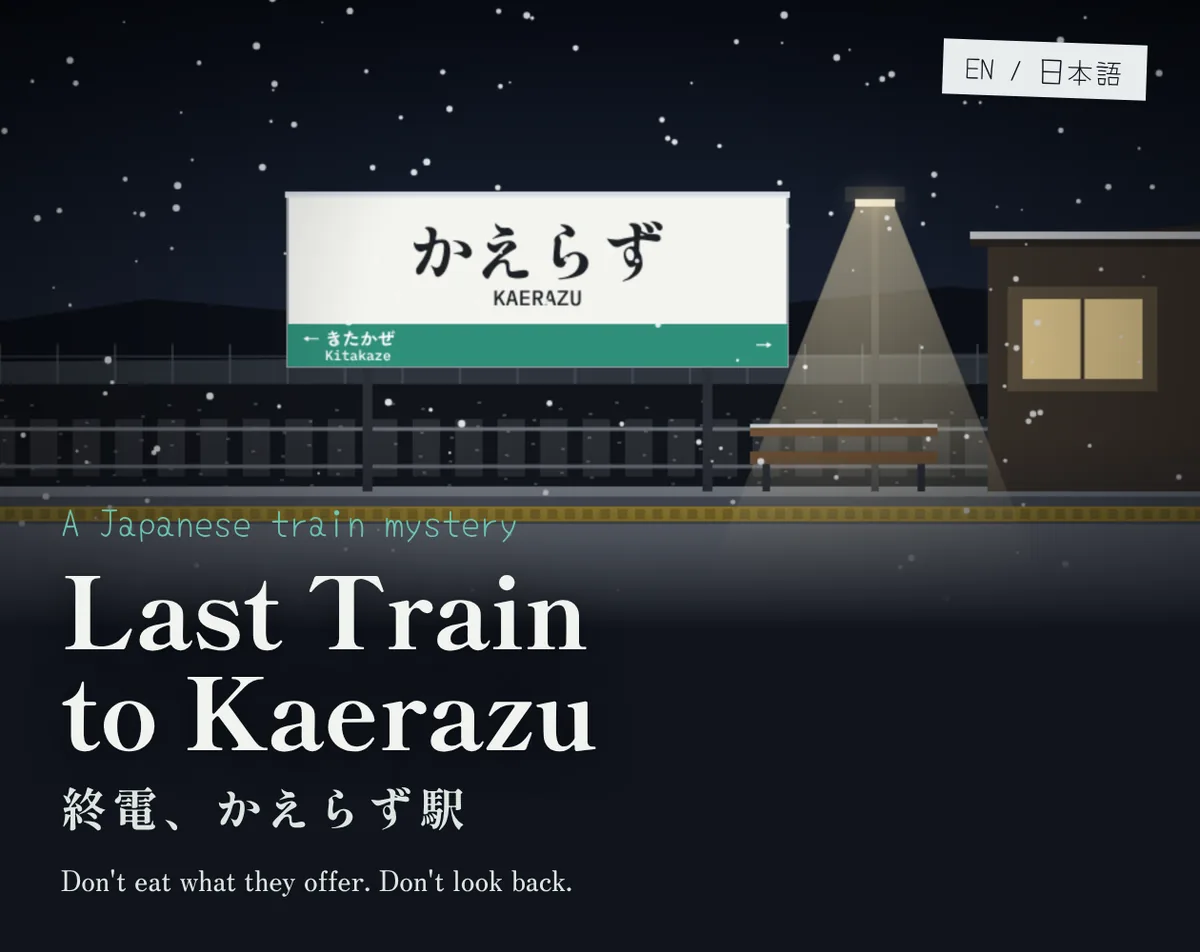
Ten anomalies are tucked into those evenings, and each one is explained once it is spotted, which is where the educational side sits. A full run lands at roughly ten to fifteen minutes, closer to a coffee break than a campaign. It is the third entry in a series about everyday Japan, following Desk No. 31 and Last Train to Kaerazu.
How to play
Each evening presents the same domestic scene, and the work is comparison. The guided tour on the first night is the reference point: furniture placement, the entryway, the way objects sit in the rooms. Later arrivals are judged against that memory, and the answer is a single binary call made with the keyboard.
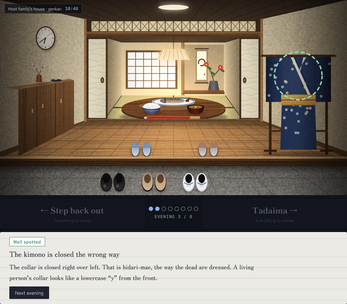
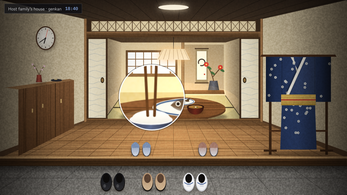
The differences split into two kinds. Some are supernatural. Others are breaches of ordinary Japanese household etiquette — outdoor shoes worn across the tatami, chopsticks left standing upright in a bowl of rice, a kimono closed the wrong way. Those domestic details carry most of the difficulty, because a player without the cultural background will not read them as wrong at first glance.
The notebook answers that problem. Culture notes accumulate as anomalies are found, and each discovery is explained rather than merely marked correct. Some of the customs involved are old enough that plenty of Japanese players will not recognise them either, so the explanations double as the reward for a sharp eye.
Controls
Everything runs off three keys and a mouse. The left arrow or A steps back out and closes the door, which is the response for a house that has changed. The right arrow or D announces the arrival and steps inside, which is the response for a house that has not. N opens the notebook.
Zooming is handled by hovering the pointer over the picture, which magnifies whatever detail sits under the cursor. On mobile the same effect comes from pressing and holding on a detail instead of hovering, since there is no cursor to rest. There is nothing else to learn, and the whole input scheme fits in a single line for anyone who has played a spot-the-difference game before.
| Input | Action |
|---|---|
| Left Arrow or A | Step back out and close the door |
| Right Arrow or D | Say Tadaima and step inside |
| N | Open the notebook of culture notes |
| Mouse hover | Zoom in on a detail of the picture |
| Press and hold (mobile) | Zoom in on a detail of the picture |
Tips for your first run
The first evening is a tutorial disguised as a scene, so treat the host mother's tour as the answer key rather than as flavour. Everything judged later is judged against it, and a player who skims the walkthrough will spend the following evenings guessing at what the entryway used to look like.
Scan rather than stare. The zoom on hover exists because the anomalies are small — a shifted object, a misplaced pair of shoes — and the ones rooted in etiquette are often a single detail in an otherwise correct room. Move across the image in a set order, corners first, then the floor, then the surfaces.
- Watch the full tour on the first evening; it sets the baseline for every later comparison.
- Hover or press and hold to zoom before deciding, especially on tatami, bowls and clothing.
- Learn the three etiquette examples — shoes indoors, upright chopsticks, a wrongly closed kimono — because the puzzle leans on household rules rather than spectacle.
- Read the culture note attached to each find; the explanation is what turns a lucky spot into a repeatable skill.
- Switch the text to Japanese if the etiquette terms read more clearly that way, then switch back at any point.
Content and replayability
The content count is small and stated plainly: ten anomalies to uncover, ten culture notes to collect, and eight consecutive evenings to get right. A clean run takes about ten to fifteen minutes, so the first sitting is likely to finish the whole arc rather than a portion of it.
Replay value comes from knowledge rather than variation. Once the etiquette rules are known — the shoes, the chopsticks, the kimono — the anomalies become much easier to name on a second pass, which makes the game a short refresher on Japanese domestic custom as much as a puzzle. The notebook and the instant switch between English and Japanese give a second run a slightly different texture, since the culture notes can be reread in the other language.
The series framing adds context rather than length. Desk No. 31 handled a high school mystery, Last Train to Kaerazu handled train folklore, and this entry moves the same observational format into a family home.
Presentation and performance
The game is built as an HTML5 browser title, so it opens in a tab without an install step. It runs on PC and on mobile, with PC recommended as the primary way to play — unsurprising given how much of the game depends on a precise hover zoom over illustrated detail.
The setting does a lot of the atmospheric work: a house over a century old, a family that keeps the old ways, and a front door the player returns to night after night. The anomaly premise gives that stillness a purpose, and the supernatural entries sit alongside the mundane etiquette slips rather than replacing them.
Story, code and illustrations were produced with the help of generative AI, and the project was made in Hokkaido. Text is available in English and Japanese and can be flipped at any moment, which keeps the culture notes legible for players who prefer the original terminology. Nothing about the presentation asks for a powerful machine; the demands are a browser and a pointer.
Who should play it
This suits players who like spot-the-difference puzzles with a rule set underneath them, and anyone curious about Japanese domestic etiquette who wants the rules taught rather than assumed. The three etiquette examples — outdoor shoes on tatami, chopsticks standing in rice, a kimono closed the wrong way — are the kind of detail that rewards attention and then sticks.
It also fits short sessions. A ten-to-fifteen-minute runtime with eight evenings and ten anomalies means a single sitting covers the whole thing, which makes it a reasonable lunch-break game or a palate cleanser between longer titles. Players who want a horror experience with sustained threat should calibrate: the tone is a quiet, uncanny house rather than an action-driven one.
Anyone who has played Desk No. 31 or Last Train to Kaerazu will recognise the format immediately, and newcomers can start here without prior knowledge of the others.
Screenshots
How we tested it
The build was loaded from games.debutplay.com in a headless Chromium session on ; the canvas started and no request was blocked. The guide was last checked on .
From the developer
“Tadaima.” I’m home. You are staying with a host family in Hokkaido. Their house is more than a hundred years old, and they still keep the old ways. Every evening you come home through the same front door. Lately, the house has not always been the same house. Tadaima is a short anomaly game (about 10–15 minutes) set in a traditional Japanese home. On your first evening, your host mother shows you around and teaches you how things should be. After that it is up to you: If everything is as it should be, say “Tadaima” and step inside. If anything is wrong, step back out and close the door. Get it right 8 evenings in a row to really come home. Some anomalies are supernatural. Others are simply things a Japanese person would never do at home: outdoor shoes on the tatami, chopsticks standing in a bowl of rice, a kimono closed the wrong way. Some of these customs are old enough that even many Japanese people have forgotten them, so every one…
Frequently asked questions
Is Tadaima free to play?
Yes. It is free and runs in a browser, so there is no purchase step before playing.
How long does a playthrough take?
Roughly ten to fifteen minutes. The goal is eight correct evenings in a row, with ten anomalies to find along the way.
Do you need to read Japanese?
No. The text can be switched between English and Japanese at any time, and each anomaly is explained when it is found.
Can it be played on a phone?
Yes. It runs in the browser on PC and mobile, with PC recommended. On mobile, pressing and holding on a detail zooms in where hovering would on desktop.
How many anomalies are there?
Ten. Each one is explained once spotted, and the explanations fill a notebook of ten culture notes covering customs such as shoes on tatami, upright chopsticks and a kimono closed the wrong way.
Is it connected to other games?
It is the third game in a series about everyday Japan, alongside Desk No. 31, a high school mystery, and Last Train to Kaerazu, a train folklore mystery.
What games are similar to Tadaima?
The closest matches on DebutPlay are Grim Appraisals, Last Local, JUST ONE MORE CHEST. They share the same genre, so the controls and the pace carry over.
Something wrong or missing? Tell us. How we test games.