Puzzle · New game
Grim Appraisals
A 1924 antiques shop doubles as a licensed post for cursed objects, where careful interviews and a bench of instruments decide what gets vaulted, cleansed, pardoned or expelled.
#21 this weekAI-assisted: Code, Graphics, Text
The game runs in this tab. No install, no account.
The short answer
Grim Appraisals is a deduction puzzle game about running an antiques shop that also serves as a registry post for unquiet objects. Interview customers, test each piece with a dozen instruments, then choose to vault, cleanse, pardon or expel it. The full game costs $2.00 and runs from a single offline HTML file on PC, Mac, Linux and Android.
What is Grim Appraisals?
Saltmere, October 1924. An uncle named Cornelius has vanished, and the antiques shop he left behind turns out to be more than a shop: behind the counter it operates as a licensed post of the Registry of Unquiet Objects. That premise is what the deduction work hangs on.
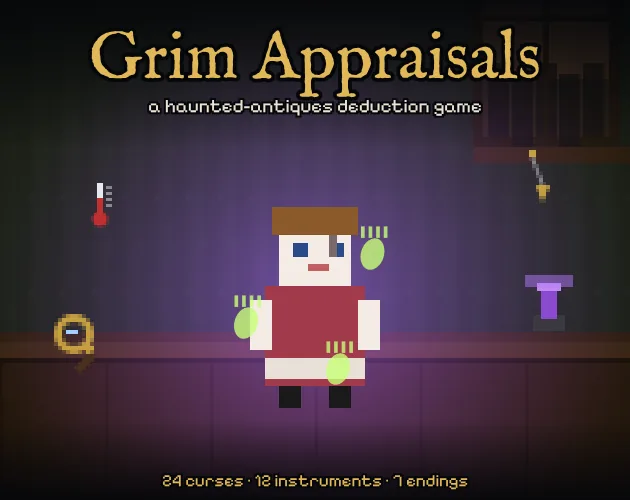
Customers arrive with weeping pocket watches, dolls that leave handprints and mirrors with no reflection. The job is not to sell the pieces but to establish exactly what is wrong with each one, name the curse and file a verdict. The game carries puzzle, detective and mystery tags, with horror and Halloween leanings, a story-rich structure and pixel art.
It comes from developer Leonardo Guidolin, costs $2.00, and released on 25 October 2026 for HTML5, Windows, macOS, Linux and Android. A playable HTML5 frame means the first appraisal can begin in a browser before anything is downloaded.
How to play
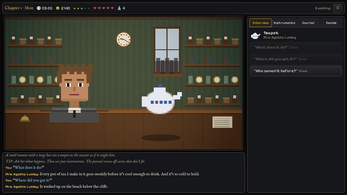
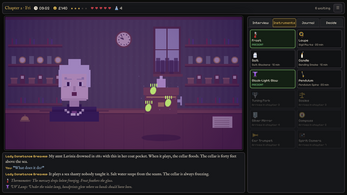
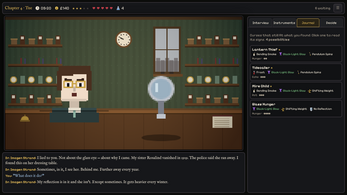
Every appraisal opens as an interview. Customers are unreliable narrators, because people lie, so testimony is only the opening move. A bench of twelve instruments does the rest: thermometer, loupe, salt, candle, UV lamp, pendulum, tuning fork, scales, silver mirror, compass, ear trumpet and spirit camera. Each reading lets a curse be crossed off the journal, narrowing the field until one identification remains.
The verdict comes in four forms: contain the object in the vault, cleanse it, declare it harmless, or send it away. Filing is not busywork. Misfiled curses break out at night, so a wrong decision returns later as a problem rather than a line in a ledger.
Twenty-four curses fill the full set, and some are Imitator curses that fake a single sign, which means one clean reading is not proof. Seven characters and the seven Greaves heirlooms run through the plot, and what happens to each heirloom alters later events. Between appraisals the shop needs attention too: upgrades, vault wards and weekly rent.
Controls
Grim Appraisals accepts mouse, keyboard or touch input, so the same appraisal loop works on a desktop or a touch device. Housekeeping stays light: progress is autosaved, and three save slots are available for separate runs or for restarting without overwriting an earlier file.
English and Brazilian Portuguese are both included, and the language can be switched at any point instead of being locked at first launch.
The full game ships as a single offline HTML file that runs on PC, Mac, Linux and Android, keeping the shop, journal and codex in one local file after download. An HTML5 build is also playable in the browser, and the free demo covering the first two chapters runs there directly.
| Input | Action |
|---|---|
| Mouse | Supported input for playing; no further bindings are detailed |
| Keyboard | Supported input for playing; no further bindings are detailed |
| Touch | Supported input for playing on touch devices; no gestures are detailed |
Tips for your first run
The opening two chapters double as a free demo: 12 shop days, 8 curses and 2 heirlooms, playable in the browser. That is enough room to learn the instrument bench before paying $2.00 for the rest of the story.
- Treat testimony as a lead rather than a fact. Customers lie, so confirm the story with instruments before crossing anything off the journal.
- Run a second check on any object that reads clean too quickly. Imitator curses fake one signal, so a single instrument result can point the wrong way.
- File carefully the first time. Misfiled curses break out at night, turning a rushed verdict into a nighttime problem.
- Read the uncle's journal. It runs 10 pages, and the seven Greaves heirlooms shift the story depending on what is done with each one.
- Keep rent in view. Weekly rent, shop upgrades and vault wards draw on the same funds, so decide early whether stock or storage matters more.
- Save the extra modes for after the credits: Night Shift and Endless Appraisal unlock only once an ending has been reached.
Content and replayability
The story is generously sized for the price. Ten chapters span 60 shop days and roughly 300 objects to appraise, with 24 curses behind them and 12 instruments to work with. Seven characters carry the narrative alongside seven Greaves heirlooms, and outcomes branch into seven endings, one of them secret. The uncle's journal adds 10 pages, while a full codex and 31 achievements track what has been uncovered.
Replay is built in rather than bolted on. Night Shift, a new-game-plus mode, and Endless Appraisal both unlock after a first ending, and the estimate of 8 to 10 hours covers the story alone; the extra modes stretch it further. Because decisions about the heirlooms feed back into the narrative, a second run has structural reasons to differ.
Running the shop is a progression of its own: upgrades, vault wards and weekly rent, plus a brass parrot that talks when nobody winds it.
Presentation and performance
The look is pixel art, which suits the 1924 antiques setting and the horror-adjacent material: watches that weep, dolls that leave handprints, mirrors that give nothing back. The tone is a ghost story rather than a jump-scare showcase, and the deduction framing keeps attention on observation and small details.
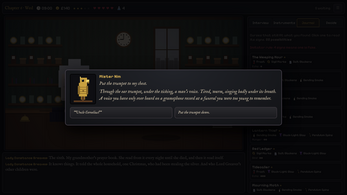
Four screenshots show the shop and its objects, and a playable HTML5 frame lets a curious player see the interface before spending anything at all.
The shipping build is a single offline HTML file that runs on PC, Mac, Linux and Android, with autosave and three save slots doing the record keeping. Testing the free two-chapter demo in a browser is the most direct way to judge how it feels on a given machine.
Who should play it
This suits players who like being handed a strange object and asked to explain it. The loop rewards patience: interviews, instrument readings, journal cross-offs and a verdict that can be wrong. Anyone fond of detective fiction with a supernatural streak will recognise the appeal of a 1924 shop counter and a customer who is not telling the whole truth.
It also fits players who want management pressure attached to their mysteries. Weekly rent, shop upgrades and vault wards keep the antiques business from being scenery, and misfiled curses surfacing at night give the paperwork teeth. Those after action-first horror should look elsewhere, because the pace here is appraisal by appraisal.
The cost of finding out is low. At $2.00, with a free two-chapter demo in the browser and an offline single-file build for PC, Mac, Linux and Android, there is a cheap route to test whether the bench, the journal and the lying customers hold attention across an estimated 8 to 10 hours.
Screenshots
How we tested it
The build was loaded from games.debutplay.com in a headless Chromium session on ; the canvas started and no request was blocked. The guide was last checked on .
From the developer
Grim Appraisals Saltmere, October 1924. Your uncle Cornelius has vanished and left you his antiques shop. Behind the counter it is something else: a licensed post of the Registry of Unquiet Objects. People bring you pocket watches that weep, dolls that leave handprints, mirrors with no reflection — and you have to find out exactly what is wrong with them. Grim Appraisals is a deduction game with a ghost story and a shop to run. Interview each customer (people lie). Use your instruments — thermometer, loupe, salt, candle, UV lamp, pendulum, tuning fork, scales, silver mirror, compass, ear trumpet, spirit camera — and cross curses off your journal. Then decide: contain it in the vault, cleanse it, declare it harmless, or send it away. Misfiled curses break out at night. What's inside (full game) 10 chapters, 60 shop days and about 300 objects to appraise 24 curses to identify, 12 instruments, liars and Imitator curses that fake a sign 7…
Frequently asked questions
Which platforms run Grim Appraisals?
The full game is one offline HTML file that runs on Windows, macOS, Linux and Android. An HTML5 build is playable in the browser through a frame on the game's page.
How much does it cost, and is there a demo?
The full game costs $2.00. The first two chapters are a free demo with 12 shop days, 8 curses and 2 heirlooms, playable in the browser.
How long is the story?
Around 8 to 10 hours is the estimate for the story alone, and Night Shift and Endless Appraisal add more play once a first ending is reached.
How many endings are there?
Seven endings, one of them secret. Decisions about the seven Greaves heirlooms change how the story unfolds.
Does the game save progress?
Yes. Autosave runs during play and three separate save slots are available.
What languages are included?
English and Brazilian Portuguese, and the language can be switched at any point rather than fixed at the start.
What games are similar to Grim Appraisals?
The closest matches on DebutPlay are Tadaima, Last Local, JUST ONE MORE CHEST. They share the same genre, so the controls and the pace carry over.
Something wrong or missing? Tell us. How we test games.