Platformer · New game
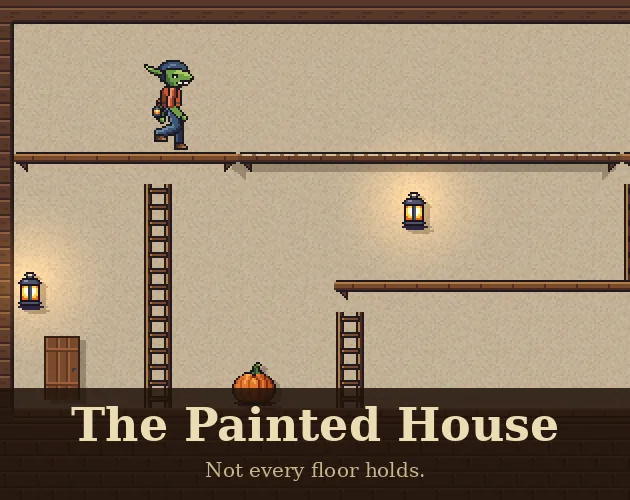
The Painted House
A free browser puzzle platformer about a house painted to fool the eye, where Wick delivers a lamp and learns which doors, ladders and bridges are only pigment.
#11 this weekAI-assisted: Code, Graphics, Text
The game runs in this tab. No install, no account.
The short answer
The Painted House is a side-view puzzle platformer set in a trompe-l'œil painter's home, where Wick arrives with a lamp delivery and finds doors, ladders and floors that may be paint. It is free, runs in a desktop browser, uses keyboard controls only, and rewards reading shadows over reflex.
What is The Painted House?
The Painted House is a side-view puzzle platformer from goblin-mol in which almost nothing on the walls can be trusted. Wick has come to deliver a lamp to a trompe-l'œil painter, an artist whose work is built to fool the eye, and the painter is not home. What Wick walks into is a house fitted with doors, ladders and floors that may be solid or may be nothing but paint.
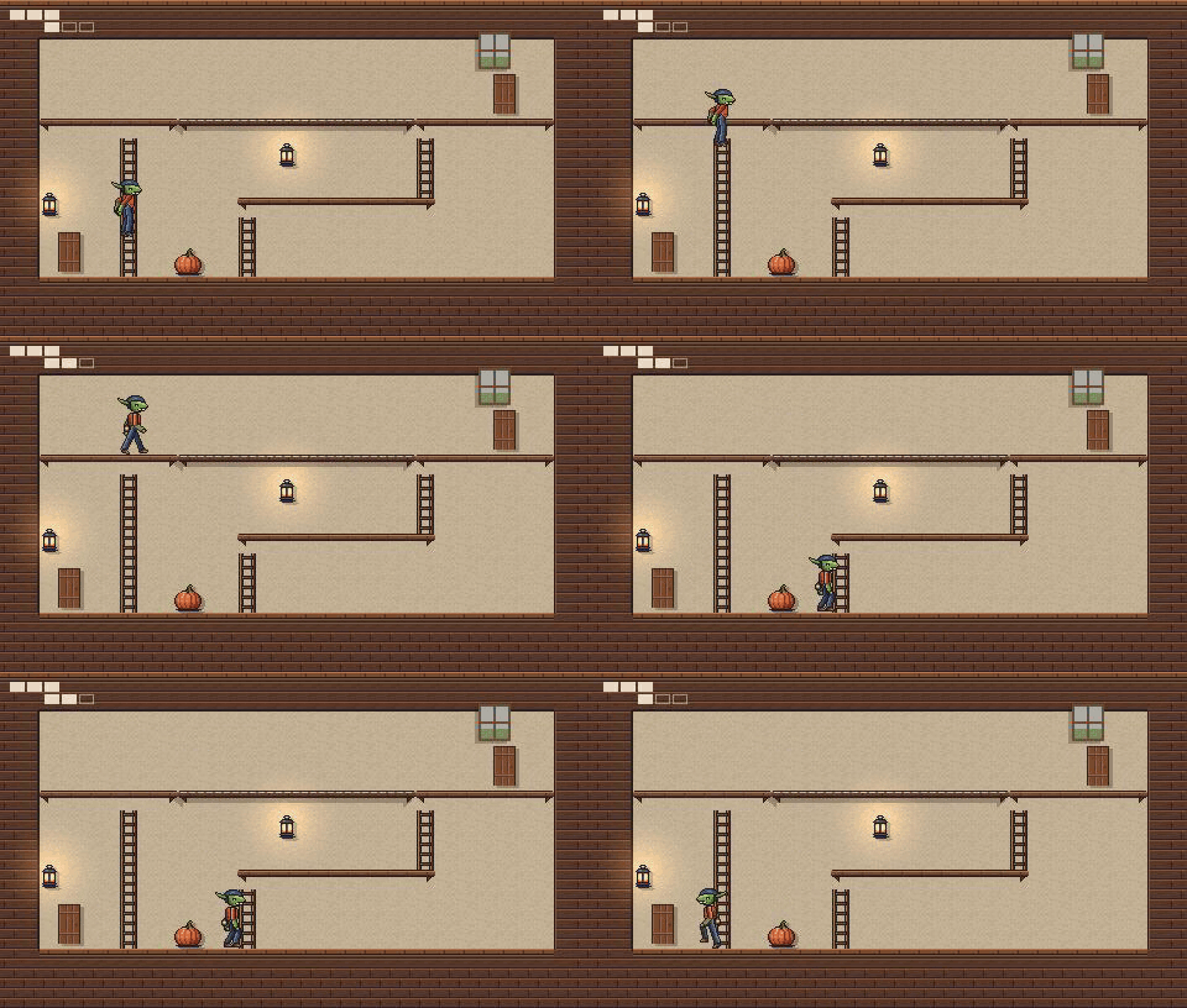
The game was made for All Tools Allowed 3, a jam built around the theme Trick, and that theme shapes the whole house. A door may open, or it may be a picture of a door. A ladder may turn out to be plaster. A bridge may hold at one end and fail at the other. It plays free in a desktop browser, rendered in pixel art on 16x16 tiles, and it asks for a keyboard rather than a mouse. Progress comes from looking harder, not from moving faster.
How to play
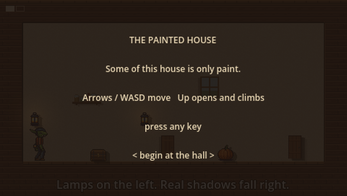
The errand is simple and the house is not. Wick needs to deliver a lamp, the painter is absent, and every surface between the front door and the far side of the building has to be tested before it is trusted. A title card opens the run: Space drops Wick into the hall, while Left and Right first choose which wing to begin from if time is short.
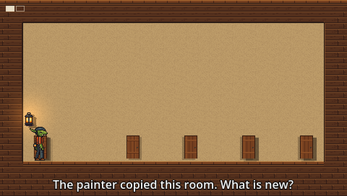
Each wing teaches a different way the painter lies. In the cellar, real objects have been disguised to look painted. In the gallery, framed pictures work as doors into painted copies of rooms nearby, and whatever a copy gets wrong becomes the clue. In the lamp rooms, a lamp is placed by hand and the painter's lens reveals canvas weave only where the light falls. Along the long wall, bridges are painted to look true from one end and not the other. The studio is where Wick stops being fooled.
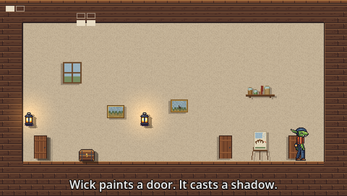
Shadows are the constant tell. Real objects throw their shadows away from the lamps, while painted things have their shadows painted on, so the direction of a shadow can contradict the surface it belongs to.
Controls
Movement is handled with the arrow keys or WASD, which walk and climb. Pressing Up at a door or a ladder operates it. Space jumps. Once Wick finds the painter's lens, Shift or R looks closer at the world, and that closer look is where painted surfaces give themselves away.
The whole game is keyboard only. There are no touch controls and no mouse input to learn. On the title card, Space starts in the hall, and Left or Right picks a wing to start from instead. That small choice matters on a short break, because it lets a run begin somewhere other than the hall.
Nothing needs to be rebound or configured before the first jump. A player can sit down, press Space, and be inside the painted house within seconds, testing a door to see whether it opens or merely depicts one.
| Input | Action |
|---|---|
| Arrow keys or WASD | Walk and climb |
| Up | Enter a door or use a ladder |
| Space | Jump |
| Shift or R | Look closer with the painter's lens, once found |
| Space on the title card | Start in the hall |
| Left or Right on the title card | Pick a wing to start from |
Tips for your first run
The first instinct in most platformers is to jump at everything. Here the better habit is to stand still and check the light. Lamps anchor the truth of a room: a genuine object throws a shadow away from the lamp that lit it, while a painted object carries a shadow that was applied with a brush and does not follow the same rule.
Treat every wing as a lesson rather than an obstacle. The order in which the wings teach their tricks is fixed, but the trick taught in each one carries forward into the rooms after it.
- Compare a shadow's direction with the nearest lamp before stepping onto anything.
- In the cellar, suspect objects that look painted but behave solidly, since real things there are dressed as art.
- In the gallery, hold a painted copy against the room it duplicates and look for the detail the copy gets wrong.
- In the lamp rooms, set the lamp down and use the lens, because canvas weave appears only where the light lands.
- On the long wall, test a bridge from both ends; some are painted to look true from one side only.
- Short on time? Pick a wing with Left or Right on the title card instead of starting in the hall.
Content and replayability
The house is organised into a hall and five distinct wings: the cellar, the gallery, the lamp rooms, the long wall and the studio. Each one introduces a fresh form of deception rather than repeating the last, so the game reads as a sequence of small lessons that build toward the studio, where Wick finally stops being fooled. A title card and an end card bookend the run.
Because the title card allows a starting wing to be chosen, the game accommodates short sessions. A player with only a few minutes can begin partway around the house rather than replaying the hall each time. The lens also changes how earlier rooms read once it is in hand: surfaces that were merely suspicious become readable, which gives a reason to look again at places already passed through.
Nothing about the length of a full run is stated, so treat it as a compact jam game rather than a long campaign.
Presentation and performance
The look is 2D pixel art on a 16x16 tile grid, which suits a game about surfaces that are not what they seem: a brushstroke and a brick can share the same handful of pixels. The art draws on Goblin's free sample packs, including Far Country, Lantern-lit Hollow, Market Lane, Movement Cast, Rooms & Ground, Satchel & Signals, Small Trouble and Under the Hill, with the painted doors, ladders, walls, bridges, window, frames, easel, lens, lamp brackets and brush created during the jam itself.
It is built in Godot 4.6 with Python image scripts, and no AI image generation was used and no third-party assets are included. The game runs in a desktop browser at 960×544 and has been tested in Chromium. There is no sound at all, so the cues are entirely visual, which puts more weight on shadows and the lens. Phones and tablets are untested and there are no touch controls, so a keyboard and a desktop browser are the reliable way in.
Who should play it
This is a game for players who like being misled on purpose. Anyone who enjoys optical illusions, painted doors that are not doors, and puzzles solved by careful observation rather than fast fingers will find the premise doing real work rather than sitting on the surface. The jump and climb controls are simple enough that the challenge lives in judgement, not execution.
It also suits players who want something short and free in a browser tab, since the title card allows a starting wing to be selected when time is tight. Fans of pixel art and small jam projects will appreciate a house built from a single idea carried through five different expressions of it. Those who need audio cues, touch controls or a controller should look elsewhere, because the game offers none of those. Come for the trick, stay for the studio, where Wick finally stops being fooled.
Screenshots
How we tested it
The build was loaded from games.debutplay.com in a headless Chromium session on ; the canvas started and no request was blocked. The guide was last checked on .
From the developer
A trompe-l'œil painter has gone out. Their house is full of doors, ladders and floors that are only paint. The Painted House is a side-view puzzle game made for All Tools Allowed 3 (theme: Trick). Wick has come to deliver a lamp. The painter isn't home, and the house has been painted to fool the eye. A door on the wall may be a door, or a picture of one. A ladder may be plaster. A bridge may hold you from one end and not the other. Each wing of the house teaches a new way the painter lies. Read the shadows first: real things cast them away from the lamps, and paint has its shadow painted on. In the cellar the painter has disguised real things to look painted. In the gallery, framed pictures are doors into painted copies of nearby rooms, and what a copy gets wrong is a clue. In the lamp rooms you place the lamp, and the painter's lens only shows the canvas weave where the light falls. Along the long wall, bridges are painted to look…
Frequently asked questions
Is The Painted House free to play?
Yes. It costs nothing to play and runs in a desktop browser, so no purchase or download is needed to start.
Where can the game be played?
In a desktop browser at 960×544, with Chromium confirmed as tested. It is an HTML5 build rather than a separate download.
Does it work on phones or tablets?
Phones and tablets are untested, and the game has no touch controls. It is keyboard only, so a desktop browser is the reliable option.
Is there any sound?
There is no sound. Every clue in the game is visual, which is why shadows and the painter's lens carry so much of the puzzle work.
What is the goal?
Wick arrives to deliver a lamp to a trompe-l'œil painter who is not home. The house itself is the obstacle, and the studio is where Wick stops being fooled.
Can a run be started somewhere other than the hall?
Yes. On the title card, Space starts in the hall, while Left or Right first selects a wing to begin from, which suits players short on time.
What games are similar to The Painted House?
The closest matches on DebutPlay are Overclock Alley, Boo's Candy Dash, Corvus: BlackMoss. They share the same genre, so the controls and the pace carry over.
Something wrong or missing? Tell us. How we test games.