Card game · New game
9 Fingers
A browser card game about selling lies, challenging suspicious plays, and keeping your fingers while a guillotine waits for the loser.
#44 this weekAI-assisted: Unspecified
The game runs in this tab. No install, no account.
The short answer
9 Fingers is a free browser card game about face-down bluffs, suspicious claims, challenges, and the fingers lost when rounds go wrong. A friend can join online as a rival, not an ally, while the boss uses his own bonuses and items. Play it now to test whether a convincing lie can beat a strong hand.
What is 9 Fingers?
9 Fingers is a card game built around the gap between the hand a player holds and the hand they claim to hold. A cash-filled case sits on the table, a guillotine waits for the loser, and every round lost costs a finger. That pressure is the point: a persuasive bluff can matter more than a strong card. The game is played against a boss, alone or with an online friend, and joining the same table does not make the two human players allies. Both are competing against each other and the boss. The boss has his own bonuses and items and can challenge plays just as a human opponent can. Play happens in a browser through an HTML5 frame, and the game is currently in development. The appeal is not simply card luck; it is the social risk of claiming a weak card is better, deciding whether to let a suspicious play pass, and choosing when to spend a finger bonus or a case item such as a mirror or razor.
How to play
At the table, cards are treated as whatever the player says they are. A weak card can be played face down with a claim that it is something stronger, and the aim is to empty the hand before anyone catches the lie. Other players can let a suspicious play pass or risk a challenge. A correct challenge makes the bluffer pay; an incorrect challenge puts the penalty on the accuser. The accused is not without a reply: if caught bluffing, they may challenge the accuser's earlier play and try to turn the accusation around. A successful counter can shift the penalty, while a failed one risks a harsher result.
Finger bonuses are another layer: reveal an opponent's last play, burn an unwanted card from hand, or make a check's penalty more painful. The case adds dirty tricks: a mirror to peek at cards, a razor to mark a card, or a theft of bonuses before they can be used. Solo play is a duel with the boss; online play puts a friend at the same table as a rival, not a partner.
Controls
9 Fingers runs inside a playable HTML5 frame, and the match is organized around a series of table decisions. The first is a face-down card and the claim attached to it: a weak card can be presented as something better in an effort to empty the hand. The second is whether to accept an opponent's claim or challenge it, with the penalty landing on the wrong caller. If a bluff is caught, the accused can challenge the accuser's earlier play, turning the moment into a counter-challenge. Finger bonuses form another decision point: reveal an opponent's last play, burn an unwanted card, or make a check hurt more. Case items add a final layer: a mirror for peeking at an opponent's cards, a razor for marking a card, or a theft of bonuses before they can be used. The tactical control is knowing when to lie, when to pass, when to challenge, and when to spend a tool. The same language of claims and challenges carries into a solo duel with the boss or an online game with a friend.
The game page does not list its controls. Check the in-game tutorial or pause menu for the current scheme.
Tips for your first run
First runs go better when the table is treated as a test of credibility, not a search for perfect cards. Waiting for a strong hand will not always be enough; sometimes the boss or a friend must be convinced that the cards already in hand are better than they look. A weak card can become useful when played face down with a confident claim, so the goal is to empty the hand before suspicion turns into a challenge.
- Challenge when a claim feels unsafe, but remember that a wrong call puts the penalty on the caller.
- If caught bluffing, look for an earlier play by the accuser to counter; a successful turnabout can move the penalty.
- Spend finger bonuses deliberately: reveal a last play, burn an unwanted card, or increase a check's penalty.
- Use case items before they become dead weight: a mirror exposes cards, a razor marks one, and theft removes bonuses.
- In an online game, treat the friend as a rival; both players are against each other and the boss.
Content and replayability
The main content split is solo play against the boss versus an online table with a friend. Those modes change the social pressure: a solo duel is about reading one opponent's claims and bonuses, while an online game adds a human rival who is not on the same side. The boss can challenge plays just as a human can, and he has his own bonuses and items. A lost round costs a finger, so every challenge and every failed bluff carries visible stakes.
Replay value comes from the bluffing loop rather than a fixed sequence of stages. Cards can be presented as something better, suspicious plays can be challenged, and a caught bluffer can counter an accuser's earlier play. Finger bonuses and case items add different tactical answers: reveal a last play, burn a card, sharpen a check penalty, peek with a mirror, mark with a razor, or steal bonuses. The game is in development and carries a 26 October 2026 publication date, so the table on offer is the one to judge now.
Presentation and performance
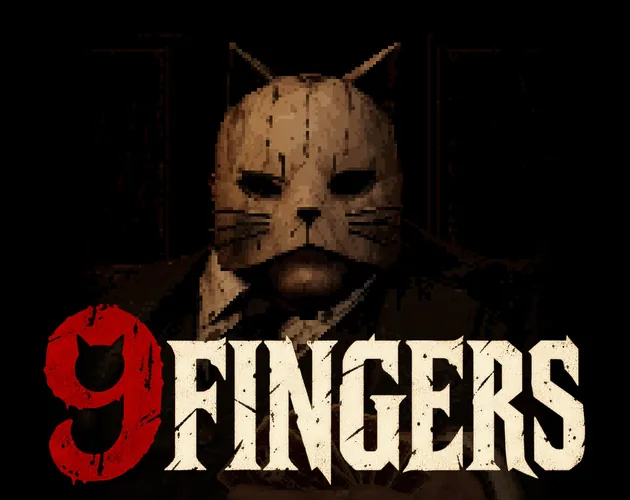
9 Fingers presents a dark, creepy table scene in 3D and first-person view. The setting is built from a case of cash, face-down cards, and a guillotine waiting for the loser, which gives every challenge a horror-flavored edge. The mood is atmospheric and retro rather than bright or comic, and the guillotine and finger penalties reinforce the idea that a bad call has a cost. The item set, including a mirror, a razor, and stolen bonuses, fits the same tense, dirty-tricks tone. The game runs in a browser through an HTML5 frame, so play is delivered inside the browser. Four screenshots accompany the game, and the visual direction keeps the table at the center. The dark table and first-person framing suit the bluffing tension, putting the cash and the threat of the guillotine in the same space.
Who should play it
9 Fingers is for players who enjoy a card game where the claim matters as much as the card. The bluffing loop, challenge system, and counter-challenge rule reward players who like social risk and reading an opponent's confidence. The guillotine, finger penalties, and dark first-person presentation give the table a horror edge. Solo players can duel the boss, who has his own bonuses and items, while players with a friend can join an online game and compete against each other and the boss. This is not a cooperative table; joining the same game does not put friends on the same side. The case items and finger bonuses add dirty-tricks play for anyone who wants more than waiting for good cards. The game is free and runs in a browser, which makes it easy to test the bluffing hook.
Screenshots
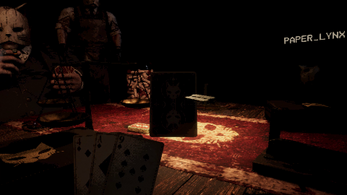
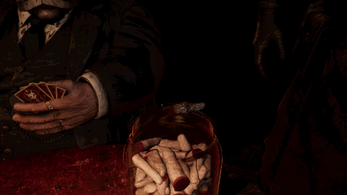
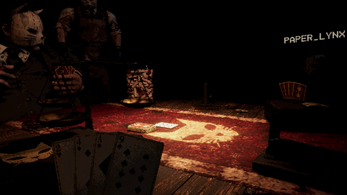
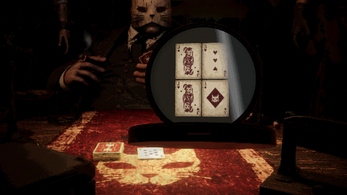
How we tested it
The build was loaded from games.debutplay.com in a headless Chromium session on ; the canvas started and no request was blocked. The guide was last checked on .
From the developer
Money on the table. Fingers on the line. A case full of cash. A table full of liars. And a guillotine waiting for whoever loses. In 9 Fingers, a convincing bluff can be worth more than a strong hand. Face the boss alone or bring a friend online. Catch their lies, set your own traps and take the money. Every round you lose costs you a finger. Bring a friend. Trust no one. Invite a friend to the table and find out how well you really know their bluffs. You’re playing against each other and the boss, so joining the same game doesn’t put you on the same side. Catch them lying, ruin their plans with an item or let them believe you’re telling the truth this time. Prefer a duel with the boss? He has his own bonuses and items, and he can challenge your plays just as you can challenge his. Waiting for good cards won’t always be enough. Sometimes you need to convince him you already have them. Your cards are whatever you say they are. A weak…
Frequently asked questions
Is 9 Fingers free?
Yes. 9 Fingers is free to play.
Where can it be played?
It runs in a browser through an HTML5 frame.
Can you play alone?
Yes. Solo play is a duel against the boss, who has his own bonuses and items and can challenge plays.
Can a friend join as an ally?
No. An online friend joins the same game as a rival; both players compete against each other and the boss.
How do challenges and counters work?
A player can challenge a suspicious claim. A correct call punishes the bluffer; a wrong call punishes the caller. A caught bluffer can counter by challenging the accuser's earlier play, shifting the penalty if successful.
What do finger bonuses and case items add?
Finger bonuses can reveal an opponent's last play, burn an unwanted card, or make a check's penalty worse. Case items include a mirror for peeking, a razor for marking a card, and a way to steal bonuses.
What games are similar to 9 Fingers?
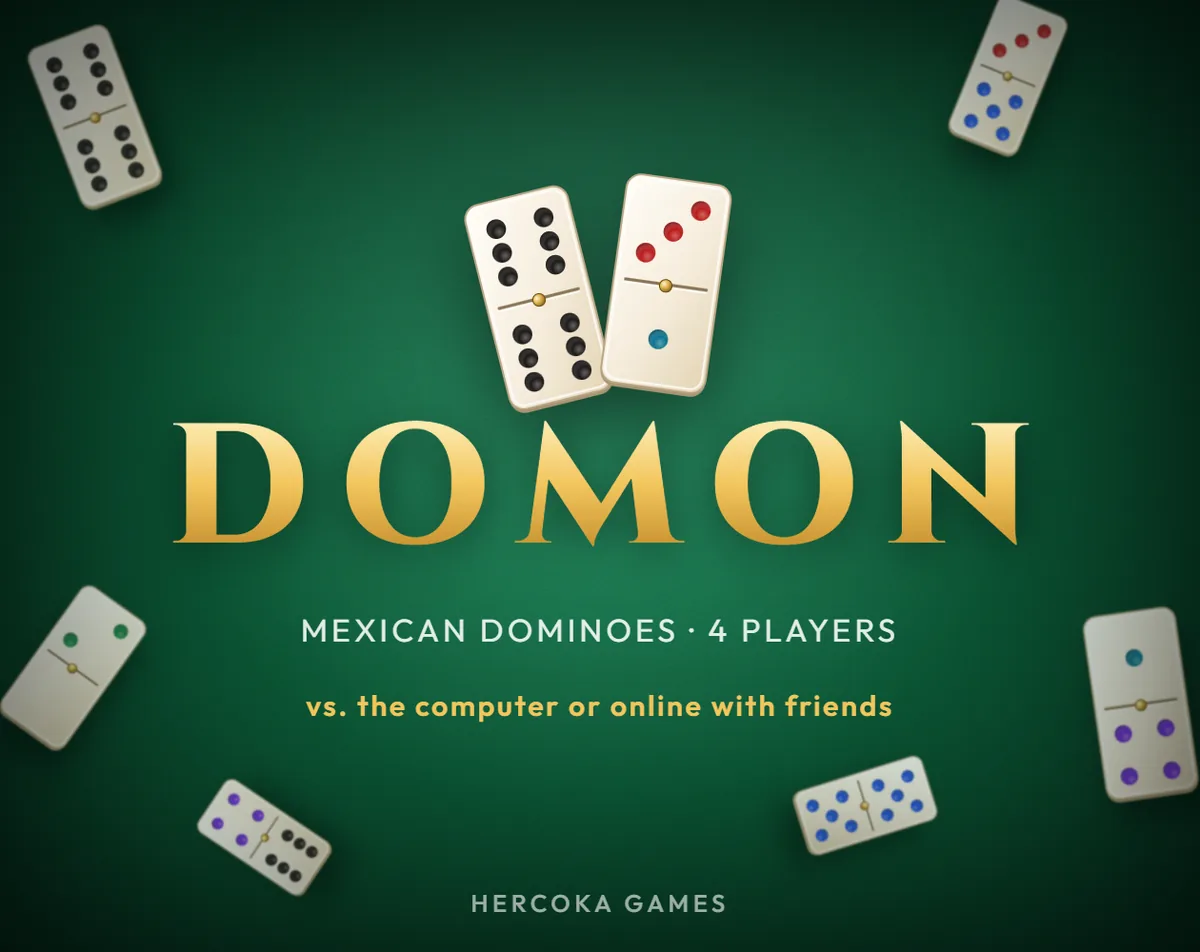
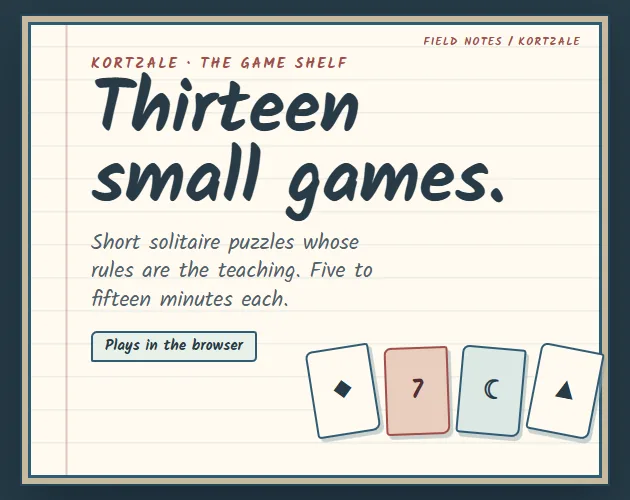
The closest matches on DebutPlay are Domon, Western Hold'em: Last Light, Kortzale Solitaires. They share the same genre, so the controls and the pace carry over.
Something wrong or missing? Tell us. How we test games.