Simulation · New game
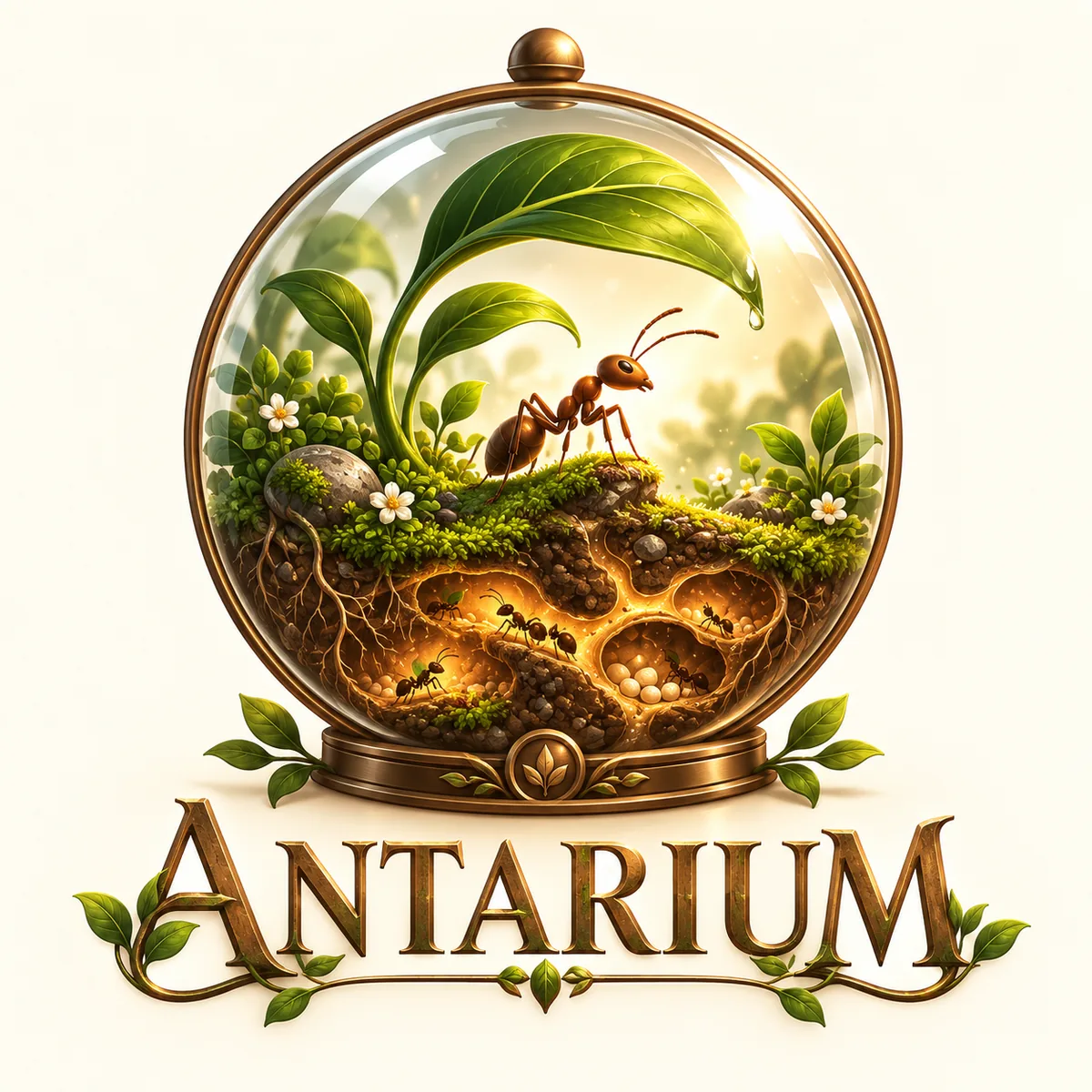
Antarium
A free browser ant colony sim about raising a single queen into a living city, with calm observation modes, seasonal wildlife, and no timer to beat.
#31 this weekAI-assisted: Code, Graphics, Sound, Text
The game runs in this tab. No install, no account.
The short answer
Antarium is a free HTML5 colony simulation built around watching and gently shaping a cutaway ant world. Start with a queen, pick a landscape, and let tunnels, brood, food stores, and routes emerge. Five modes range from pure Zen watching to Creative freedom and goal-driven Scenarios, with Peace on by default and no timer.
What is Antarium?
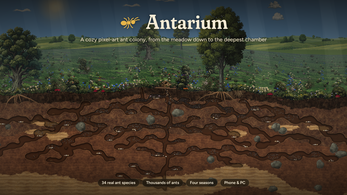
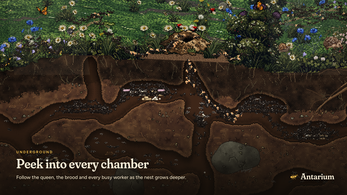
Antarium is a free HTML5 simulation about keeping a calm ant colony beside everyday life. The view cuts through the earth, from flowers above ground to the deepest chamber below, so tunnels and rooms that normally stay hidden remain visible. A single queen can develop into a living ant city, one passage at a time. It is a watch-and-enjoy experience rather than a management rush.
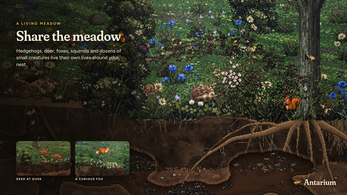
The tone is deliberately unhurried: no timer, no fast demands, and nothing to lose. The colony can include 34 real ant species from every continent, each with its own nesting and living style. Day and night cycle alongside all four seasons, while the meadow can host hedgehogs, deer, foxes, squirrels, birds, and smaller creatures. The name ties ant to the ending familiar from terrarium or aquarium, fitting the idea of a small world behind glass.
How to play
A new Antarium begins with a landscape choice: flower meadow, garden, forest edge, pond, or stream are examples, followed by founding a first colony. After that, the ants largely run their own lives. They excavate tunnels and chambers, raise brood, keep food stores, and find routes home. A first colony can begin small; the ants handle digging, brood care, food storage, and route finding themselves once the habitat is founded.
The player can add food, plants, trees, and animals, reshape the ground, follow a single ant, or simply observe. Five modes frame the experience: Zen for calm watching and creating; Living Ecosystem for natural development with adjustable challenges; Creative, where landscape, species, relationships, and environment are all open; Scenario, which supplies a goal such as starting a colony or restoring a dry habitat; and Nature Watch for behavior study.
Peace, which blocks attacks between creatures, is enabled by default and can be switched at any time. Carefree removes deaths from hunger, thirst, or environment. Optional real conditions add age and temperature, so brood needs warmth and old ants forage. Rest mode lets the colony continue gently while away, and settings cover day length, breeding and building speed, ant size, and crowd liveliness.
Controls
The interaction model is organized around tending a living diorama rather than reacting to threats. Food, plants, trees, and animals can be placed; ground can be shaped; an individual ant can be followed; or the whole colony can be watched without intervention. Observation can be close-up or wide: following one ant reveals route-finding, while terrain edits and organism placement reshape the habitat.
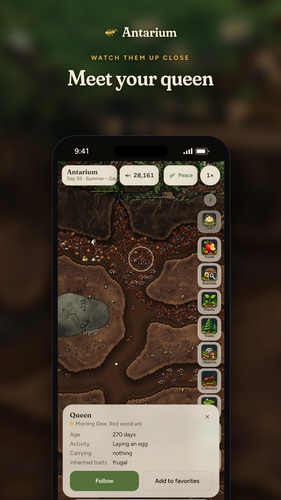
Several features change how much interface is present. Zen view hides every button and leaves the view clear. Documentary mode moves the camera automatically and explains events like a small nature film. Photos can be taken and kept in an album. Peace, Carefree, and real conditions alter the simulation's rules, changing how much conflict, death, and natural aging the colony experiences.
The game page does not list its controls. Check the in-game tutorial or pause menu for the current scheme.
Tips for your first run
The first run is best treated as a small experiment. Start in Zen with Peace left on, then decide whether Carefree suits the mood; it removes hunger, thirst, and environmental deaths. If the goal is to learn natural rhythms, enable real conditions later so temperature and age matter.
- Begin with one landscape and one colony, then watch tunnel growth before adding many plants or animals.
- Use Zen view when the interface distracts from the cutaway view.
- Try Documentary mode to learn colony behavior without steering the camera.
- Take photos of early chambers and compare them as the city expands.
- Adjust day length, breeding speed, and building speed to match the time available.
- Let rest mode carry the colony during longer absences.
Content and replayability
The mode structure supplies most of the replay value. Zen supports calm construction and observation. Living Ecosystem introduces natural development with challenges that can be tuned. Creative opens landscape, species, relationships, and environment. Scenario provides concrete goals, including founding a first colony or restoring a dry habitat. Nature Watch shifts attention to behavior and learning. The five modes can be revisited as the colony changes, so the same map can serve as a calm watch, a creative test, or a scenario objective.
Long-term variety comes from 34 real ant species, each with distinct building and living habits, plus a meadow food web that can include nursing, defense, pollination, predation, and seed dispersal. Colonies generate their own sagas, and young queens carry small traits into daughter colonies. The photo album records moments, while seasonal and day-night cycles keep the cutaway changing. More interactive modes are in development.
Presentation and performance
The presentation is a 2D pixel-art cutaway of the earth, with the surface world and underground chambers visible in one composition. That framing makes the colony the main spectacle: passages, rooms, brood, and food stores can be inspected without leaving the view. The cutaway keeps underground activity legible alongside surface plants and wildlife. The camera work and soundscape support the same slow pace as the simulation.
Day, night, and all four seasons alter the meadow, while soft music or pure nature sounds set the pace. Documentary mode gives the camera its own movement and narration, and the photo album preserves captured scenes. Antarium runs as an HTML5 game in a browser and is available in English and German. Progress is stored locally in the browser, so clearing browser data removes it.
Who should play it
Antarium suits players who want a colony sim they can check on rather than command under pressure. The absence of a timer, the default Peace setting, and the option to remove hunger and environmental deaths make it a low-stress watch-and-shape game. Nature watchers can use Documentary mode and Nature Watch to study behavior. The game is built for short check-ins as much as long observation sessions.
Creative sandbox players can arrange landscapes, species, relationships, and environments freely. Scenario players get goals such as founding a colony or restoring a dry habitat. People who enjoy ants, pixel-art cutaways, seasonal wildlife, or idle rest-mode growth have clear reasons to try it. It is also free to play in the browser. Players seeking fast conflict or demanding management will find little of that here.
Screenshots
How we tested it
The build was loaded from games.debutplay.com in a headless Chromium session on ; the canvas started and no request was blocked. The guide was last checked on .
From the developer
Antarium – A World Behind Glass Antarium is a calm, cozy ant colony you can keep running beside your day. Put on the soft music or just the sounds of the meadow, lean back and watch a single queen grow into a living ant city, one tunnel at a time. This is not a fast or demanding game. There is nothing to lose and no timer to beat. Antarium is made for slowing down: a little world to check in on, watch for a while and enjoy. How it plays You create your own Antarium: choose a landscape such as a flower meadow, a garden, a forest edge, a pond or a stream, and found your first colony. From then on, the ants live their own lives. They dig tunnels and chambers, raise their brood, store food and find their way back home. You can place food, plants, trees and animals, shape the ground, follow single ants or simply watch. Modes Zen: calm watching and creating. Peace is on by default. Living Ecosystem: natural development with challenges you…
Frequently asked questions
Is Antarium free?
Yes. Antarium is free and runs as an HTML5 browser game.
Does the colony keep running while away?
Rest mode lets the colony keep growing gently while away.
Can the player lose?
There is no timer and nothing to lose. Peace is on by default, and Carefree can remove deaths from hunger, thirst, and environment.
How many ant species are included?
34 real ant species from every continent, each with its own building and living style.
What modes are available?
Zen, Living Ecosystem, Creative, Scenario, and Nature Watch.
Is progress saved?
The colony is saved in the browser. Clearing browser data deletes it.
What games are similar to Antarium?
The closest matches on DebutPlay are Deuce Agency (Demo), Pax Libera, Mit englischer Zunge – English on the Tongue. They share the same genre, so the controls and the pace carry over.
Something wrong or missing? Tell us. How we test games.