Strategy · New game
ARGON DOMINATES
A free browser strategy game where a violet argon swarm absorbs rival noble gases across six physics-driven chambers, with ion beacons, medals and adaptive difficulty.
#17 this weekAI-assisted: Code, Graphics, Sound, Text
The game runs in this tab. No install, no account.
The short answer
ARGON DOMINATES is a real-time liquid-swarm strategy game for the browser. You steer thousands of violet argon atoms toward rival neon, krypton and xenon, absorbing every enemy atom to win. Six chambers, ion beacons, discharge bursts and free battle make it worth clicking Play now.
What is ARGON DOMINATES?
ARGON DOMINATES is a real-time strategy game built for the browser around a simple, strange idea: a noble gas behaving like a living army. The player commands violet argon, rendered as thousands of individual atoms that flow toward the cursor along the shortest available path through each chamber. Every rival gas works the same way, so the moving fronts on screen are genuine collisions of particle swarms rather than painted effects.
The goal is total absorption. Push argon into neon, krypton or xenon and the enemy atoms wear down; each one that breaks turns violet and joins the player's side. A level ends only when every other gas has been absorbed, and the run ends if the last argon atom turns. Six abstract chambers each introduce one spatial idea, starting with a two-chamber valve and ending at the shells of a nucleus. The game takes inspiration from Liquid War (1995) and rebuilds that liquid-swarm concept around noble gases and light.
How to play
Every match is a contest of pressure and positioning. Argon is the balanced option and the only gas that can discharge, which makes the player's swarm the most flexible force on the board. Holding the discharge input makes nearby atoms move faster and hit twice as hard, but the effect builds heat until the swarm overheats.
The ion beacon is the main tactical tool. Dropping one sends half the swarm streaming toward the beacon for ten seconds while the other half stays with the cursor, creating two fronts from a single force. That split can hold a corridor, pinch an enemy, or distract a flanker. The rival gases demand different answers: neon is quick and hits hard but breaks easily, krypton is slow and dense and pushes back after holding ground, and xenon hunts the weakest group and discharges on its own.
Winning requires absorbing every other gas, not merely outlasting it. That means chasing down stragglers and finishing the job, which is where the last-stand moment comes in: when the enemies are reduced to a handful of atoms, time slows and the final blow sweeps across the screen.
Controls
On desktop, moving the mouse or pressing WASD or the arrow keys steers the swarm; argon flows toward that cursor position. Holding the left mouse button or Space triggers discharge. Right-clicking or pressing E places an ion beacon, which lasts ten seconds and pulls half the gas toward it. Escape pauses, R restarts the current level, and F switches fullscreen on or off.
Touch controls cover phones and tablets in landscape. Dragging anywhere behaves like a trackpad for the cursor, while tapping sends the gas to a chosen spot. Discharge can be held with the on-screen button or by resting a second finger on the field. A separate beacon button drops the ion beacon at the cursor, and steering away then splits the swarm.
The fullscreen toggle matters because the game runs in a browser embed. Sound begins after the first click or tap. The interface also includes a fullscreen button in the top right, which is useful on smaller screens and when playing in landscape.
| Input | Action |
|---|---|
| Mouse | Steer the argon swarm toward the cursor |
| WASD or arrow keys | Steer the argon swarm |
| Left mouse button or Space | Discharge, boosting nearby atoms until they overheat |
| Right-click or E | Drop an ion beacon for 10 seconds, splitting the swarm |
| Esc | Pause |
| R | Restart the level |
| F | Toggle fullscreen |
| Touch drag | Steer the cursor like a trackpad in landscape |
| Touch tap | Send the gas to a spot |
| Touch discharge button or second finger | Discharge |
| Touch beacon button | Drop an ion beacon at the cursor |
Tips for your first run
First runs tend to collapse because the swarm is spread too thin. Keep the bulk of the argon together and treat the ion beacon as a planned split, not a reflex; ten seconds is long enough for half the army to strand itself in a bad pocket. Discharge is a burst rather than a default state: the extra speed and doubled damage break a front, but overheating leaves the swarm exposed.
Read the opposing gas before committing. Neon breaks easily yet hits hard, krypton holds ground and pushes back, and xenon seeks out the smallest argon group and discharges into it. Keep a reserve near the weakest cluster, and remember that a loss eases the other gases on that level by one step.
- Hold discharge briefly to crack a front, then release before the swarm overheats.
- Drop the beacon to create two fronts, and steer away so the split is intentional.
- Finish stragglers; a level is only won when every rival atom turns violet.
- Use R to restart a level quickly and chase a better medal or time.
Content and replayability
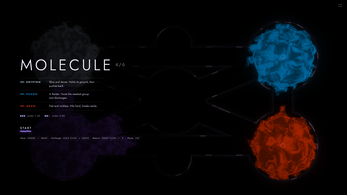
Six levels form the main progression, each built around a single spatial idea: VALVE, ORBIT, LATTICE, MOLECULE, VORTEX and NUCLEUS. The six-chamber progression begins with a two-chamber valve and finishes around the shells of a nucleus, where every gas fights at full strength. Clearing a level displays DOMINATED; clearing all six completes the title itself.
Each level tracks medals and best times, giving a reason to replay beyond a first clear. Free battle opens any of the six chambers with one to three opponents and three strength settings, so the same maps can be revisited as skirmish spaces. Adaptive difficulty softens the opposing gases after each loss on a level, which keeps progress moving without removing the challenge entirely.
The last-stand sequence adds a dramatic finish when the enemy is down to a handful of atoms: time slows and the final blow crosses the screen. Between the six-level campaign, the free battle setup and the time-chasing medals, there is more here than a single browser session.
Presentation and performance
The swarm is drawn as glowing smoke in WebGL2. Wisps curl away from every front, and captured atoms flash as they change colour. The whole field runs on a 320×180 simulation grid, with each team following its own shortest-path field, so the fronts are real. A late-night radio voice narrates the action, and the music intensifies as the fighting heats up. Even the main menu is animated: a discharge tube with parallax depth and live electrical arcs.
The game runs in an HTML5 frame and needs WebGL2, which means a current version of Chrome, Edge or Firefox, or Safari 15 or newer on macOS and iOS. Fullscreen is recommended and can be toggled with F or the top-right button. On phones and tablets, landscape orientation is the intended way to play. Sound begins after the first click or tap, and if performance drops, the game reduces its rendering resolution automatically within a few seconds.
Who should play it
Players who like real-time strategy but want something less conventional will find a compact, readable game here. The rules fit on a short list: steer the swarm, absorb rival atoms, win by total domination. The six chambers add just enough spatial variety to keep the idea from feeling one-note, and the gas matchups give each front a distinct texture.
Fans of Liquid War and other swarm-based experiments are the obvious audience, along with browser players who want a short session that still has medals, best times and a free battle mode. Touch support in landscape makes it viable on phones and tablets, not just desktop. Anyone who prefers a gentle on-ramp can lean on the adaptive difficulty, which eases the opposition after a loss.
The appeal sits in the physics-driven flow of thousands of atoms, the discharge timing and the beacon splits. The free price and instant browser frame lower the barrier to trying a run.
Screenshots
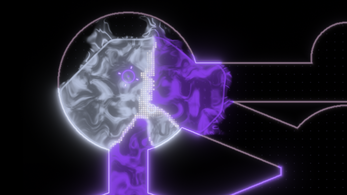
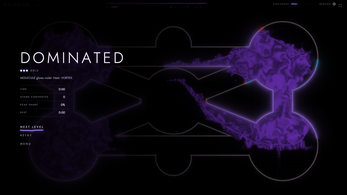
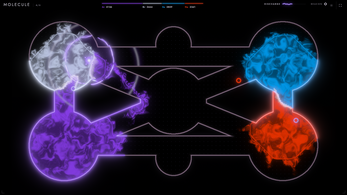
How we tested it
The build was loaded from games.debutplay.com in a headless Chromium session on ; the canvas started and no request was blocked. The guide was last checked on .
From the developer
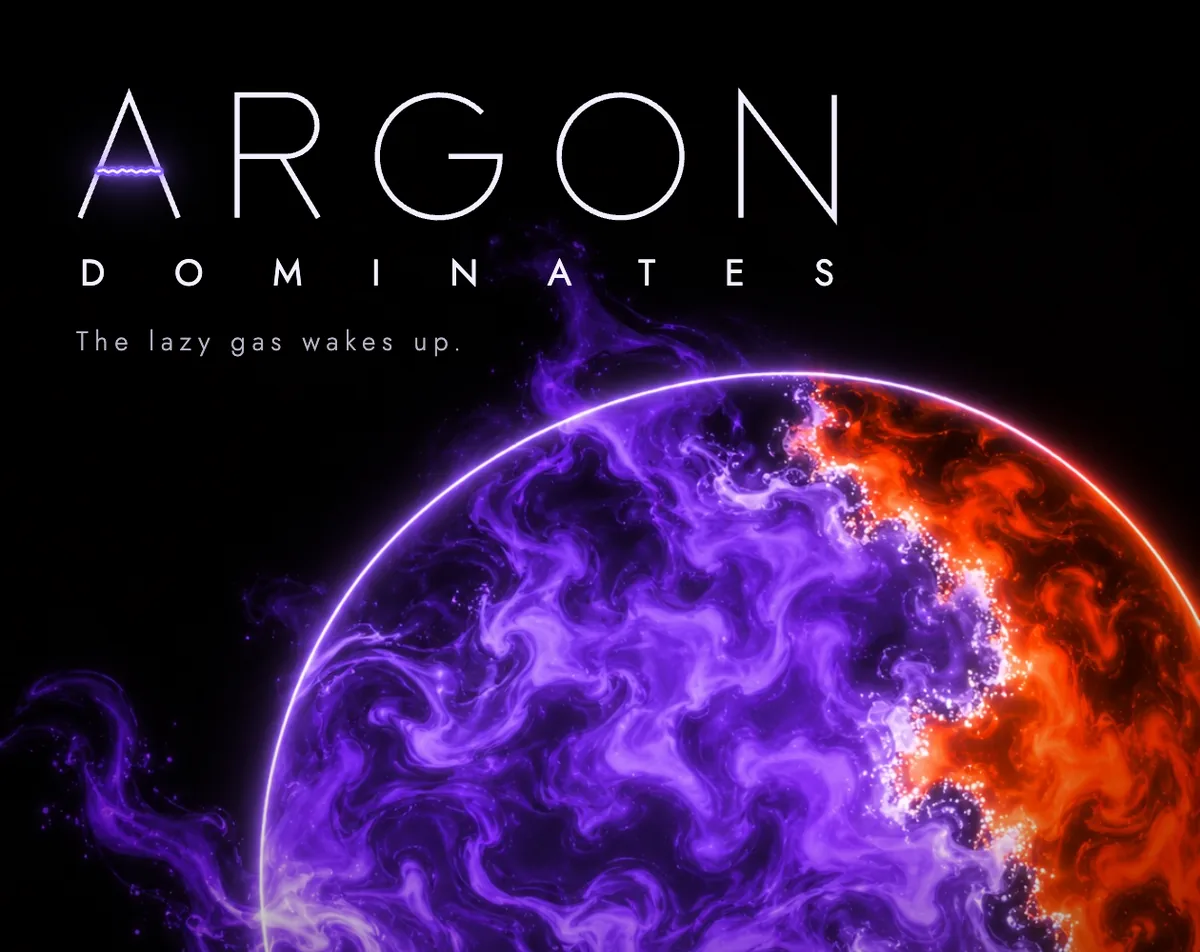
The lazy gas wakes up. Steer a living swarm of violet argon and absorb every other noble gas in the chamber. ARGON DOMINATES is a liquid-swarm strategy game in the spirit of Liquid War (1995), rebuilt for the browser around noble gases and light. Your gas is thousands of atoms that flow after your cursor along the shortest path through the chamber. Push into neon, krypton or xenon and you wear their atoms down; every atom you break turns violet and joins you. Hold to discharge and the atoms around your cursor move and hit twice as hard, until they overheat. Six abstract gas-physics experiments take you from a two-chamber valve to the shells of a nucleus, where every gas fights at full strength. How to play Mouse and keyboard Move the mouse (or WASD / arrows): your gas flows toward the cursor. Hold the left button or Space to discharge. Right-click or E drops an ion beacon for 10 seconds: half of your gas streams to it, half stays with…
Frequently asked questions
Is ARGON DOMINATES free?
Yes. It is a free browser game that runs in an HTML5 frame.
Which browsers can run it?
It needs WebGL2, so a current Chrome, Edge or Firefox, or Safari 15 or newer on macOS and iOS.
Can it be played on a phone or tablet?
Yes, in landscape. Drag to steer like a trackpad, tap to send the gas to a spot, use the discharge button or a second finger, and tap the beacon button to split the swarm.
How do you win a level?
Absorb every atom of every other gas. The level reads DOMINATED when that happens; the run ends if the last argon atom turns.
What does the ion beacon do?
It drops at the cursor for ten seconds. Half the gas streams toward it while half stays with the cursor, creating two fronts from one swarm.
How many levels and modes are included?
Six chambers named VALVE, ORBIT, LATTICE, MOLECULE, VORTEX and NUCLEUS, plus free battle on any chamber with one to three opponents and three strengths.
What games are similar to ARGON DOMINATES?
The closest matches on DebutPlay are A Well-Run Exercise / Eine gut gelungene Alarmprobe, Terminal Tanks, Gig Promotor (free early playtest of first 2 seasons). They share the same genre, so the controls and the pace carry over.
Something wrong or missing? Tell us. How we test games.