Simulation · New game
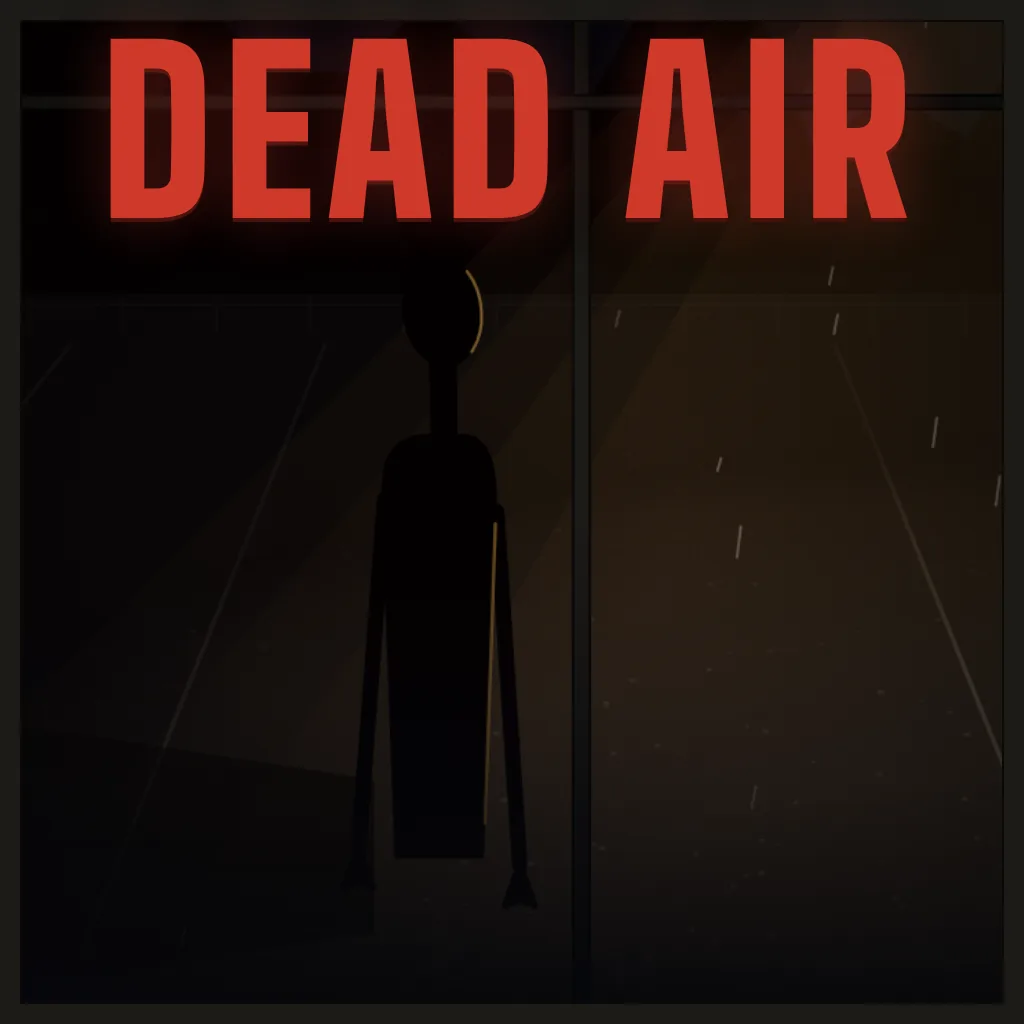
DEAD AIR
Dead Air turns an overnight radio shift into an idle horror test of signal growth, static management, and knowing when to cut the carrier.
#23 this weekAI-assisted: Unspecified
The game runs in this tab. No install, no account.
The short answer
Dead Air is an HTML5 idle simulation about running the overnight broadcast at WKHL 1340 AM. Build a signal, buy gear, manage rising static, answer or ignore callers, and survive visits by cutting the carrier. A night lasts about two hours, and death resets the booth while listeners persist.
What is Dead Air?
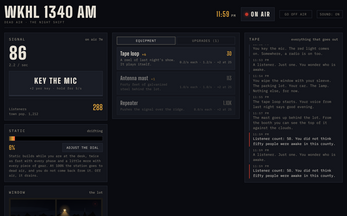
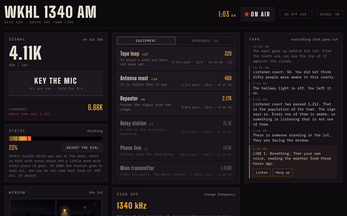
Dead Air is an idle simulation set during the overnight shift at WKHL 1340 AM, a fifty-kilowatt station set behind a gravel lot on the edge of a town with 1,212 residents. The work starts with the mic: key it, or hold it down, to send a signal and watch the listener count climb. Growth is not safe. Every purchase that pushes the signal higher also pushes static higher, and at 100 percent the carrier falls away, the station falls silent, and the host does not return. The premise is a station that turns on its operator. A phone line brings callers who should not have the number, movement in the parking lot occurs only during the lamp's flickers, and the broadcast becomes something to survive rather than simply grow. Each death brings a fresh host, a reset booth, and an unchanged audience.
How to play
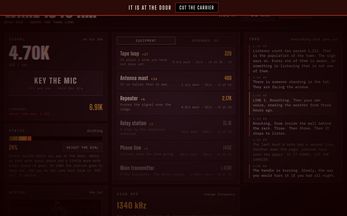
The main loop is to key the mic or hold it down and turn that action into a larger audience. The mic has eleven upgrades, each raising the value of a key press. The rack contains eight pieces of equipment, and output doubles at ownership milestones from 25 up to 2,000. Static is the opposing meter. The dial can be adjusted, dampeners can be bought, or the station can go off air and let static drain; it doubles with every phase. The phone line adds decisions: answer a caller or do not. Visits follow three stages of warning and then reach the door; cutting the carrier and sitting in the dark until the visitor leaves is the survival move. Signing off changes frequency and returns the station stronger. The million-listener mark brings a final sign-off and a single-use choice.
Controls
Dead Air frames control around the broadcast desk. The mic is keyed or held down to send out a signal. The dial is adjusted to manage static, while dampeners and going off air are the other ways to bring the meter down. Equipment and mic upgrades are purchased to build the rack and make each key count for more. The phone can be answered or ignored, so every caller becomes a decision rather than an automatic event. When a visit reaches the door, the carrier is cut and the host sits in the dark until it leaves. Signing off changes frequency and sets up a stronger return. Survival depends on using these actions in sequence: transmit, manage static, handle callers, respond to warnings, and sign off when the station needs a new frequency. The control set stays tied to the fiction of an overnight radio booth.
The game page does not list its controls. Check the in-game tutorial or pause menu for the current scheme.
Tips for your first run
Treat static as the primary threat, not a side effect. Every purchase that raises the signal also raises static, and the meter doubles with every phase. At 100 percent the carrier drops and the run ends, so dampeners, dial changes, and time off air are part of growth rather than interruptions. When a visit begins, count the three stages of warning and cut the carrier before the door. Sitting in the dark until it leaves is safer than keeping the broadcast going; continued talking brings it to the desk. The phone is optional. Callers who should not have the number can be ignored, though each call remains a choice. Signing off is not only a reset: it changes frequency and brings the station back stronger. Build toward the million-listener last sign-off rather than treating every death as a blank slate.
- Use mic upgrades to make each key press worth more before expanding the rack.
- Watch equipment ownership milestones, where output doubles; the first is 25 and the last is 2,000.
- Keep static under 100 percent with dial changes, dampeners, or time off air.
- When the three warning stages begin, cut the carrier and wait in the dark.
- Sign off to change frequency and return stronger.
Content and replayability
Dead Air is structured around five audience-count phases. Each phase alters the palette, the equipment copy, the figure in the window, the 3:33 AM log entry, and the amount of static the station makes. Crossing the town line brings rain. Beyond 10,000 listeners, the clock becomes unreliable. Beyond 100,000, they are all present. One night runs roughly two hours. Death is not a full reset. Each death installs another host, clears the booth, and leaves the audience intact. Afterward, a true new game tracks the number of nights spent. The million-listener mark brings a final sign-off and one decision that cannot be repeated. Replay value comes from pushing the same station through different phases, managing the static that scales with progress, and seeing how the booth and broadcasts change as the audience grows.
Presentation and performance
Dead Air uses a radio-station frame for its horror. The palette shifts by phase, equipment copy changes, a figure appears in the window, and the 3:33 AM log changes with progress. The listener count drives those changes, so the presentation is tied to the central number rather than applied as a separate layer. The game is an HTML5 release, playable in a browser frame. A night runs about two hours, which shapes both pacing and the cost of a failed broadcast. The static meter is both a mechanic and a pressure gauge: it rises alongside the purchases that raise the signal and doubles with every phase. The overnight setting, the gravel lot, the parking lot, and the lamp whose flicker accompanies movement in the lot give the simulation a specific place rather than a generic idle backdrop.
Who should play it
Dead Air is for players who like idle and incremental games but want a horror frame around the numbers. The core pleasures are watchable growth, equipment milestones, and a listener count that climbs past the population of a 1,212-person town. It also suits players who enjoy risk management: static doubles with each phase, visits have three warning stages, and the correct move is often to cut the carrier and sit in the dark. Caller choices and the phone line add decision points beyond pure waiting. The two-hour night and the true new game that tracks nights spent give long-session players a reason to return. Anyone seeking a cheerful radio sim should look elsewhere; this one turns the gear, the callers, and the parking lot against the host.
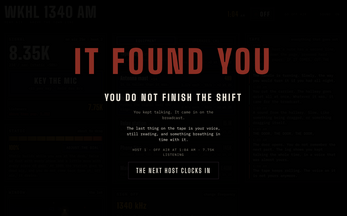
Screenshots
How we tested it
The build was loaded from games.debutplay.com in a headless Chromium session on ; the canvas started and no request was blocked. The guide was last checked on .
From the developer
You run the overnight at WKHL 1340 AM, a fifty-kilowatt station behind a gravel lot at the edge of a town of 1,212 people. Key the mic. Buy tape loops, antenna masts, repeaters, a phone line, the main transmitter. Watch the listener count climb. Then watch it pass the population of the town. Dead Air is an idle game that turns on you. The gear that grows your signal also grows the static, and at 100% the carrier drops, the station goes to dead air, and you do not come back from it. The phone line brings callers who should not have your number. Something starts moving in the parking lot, and it only moves while the lamp flickers. When it comes for the broadcast, the only thing that saves you is cutting the carrier in time. If you keep talking, it finds you at the desk. A new host clocks in after every death. The booth is reset. The listeners are not. What you do: Key the mic, or hold it down, to send out a signal. Eleven mic upgrades…
Frequently asked questions
Is Dead Air free?
Yes. Dead Air is free to play.
What platform is Dead Air on?
Dead Air is an HTML5 game. It is playable in a browser frame.
How long is a night?
A night is about two hours. Afterward, a true new game tracks the number of nights spent.
What happens at 100 percent static?
At 100 percent static, the carrier drops, the station goes to dead air, and the host does not come back. Each death brings another host, a cleared booth, and an unchanged audience.
How do you survive a visit?
Visits have three stages of warning, then the door. Cut the carrier and sit in the dark until it leaves. Continuing the broadcast brings it to the desk.
Is there an ending?
At the million-listener mark, there is a final sign-off and a choice that can only be made once.
What games are similar to DEAD AIR?
The closest matches on DebutPlay are Sealed Goods, Toxicode, FOSSICK. They share the same genre, so the controls and the pace carry over.
Something wrong or missing? Tell us. How we test games.