Simulation · New game
FOSSICK
A pixel-art digging sim where a pickaxe and a brush decide whether Rinsewick's fossils reach the museum intact or crumble into gravel.
#3 this weekAI-assisted: Code, Graphics, Sound, Text
The game runs in this tab. No install, no account.
The short answer
FOSSICK is a pixel-art simulation about excavating a hillside through seven rock layers, pulling ore and fossil bone out of the dark before the lantern oil runs out. The pickaxe is fast and reckless, the brush is slow and careful, and the museum only fills if enough bone survives the trip.
What is FOSSICK?
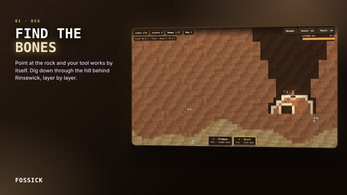
FOSSICK is a digging simulation set in the hill behind a place called Rinsewick. The loop is easy to grasp and hard to put down: point at rock, let the tool work on anything touching open air, and pull out ore and fossil bone before the lantern burns dry. When the oil is gone the day ends, and whatever was found goes into upgrades before the next descent.
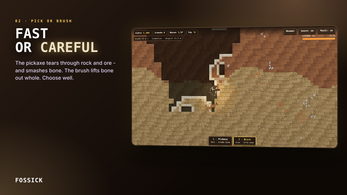
Two tools decide what kind of run it becomes. The pickaxe bites quickly through rock and ore but ruins bone on contact; the brush barely scratches stone yet lifts a fossil out in one piece. A bone pays according to how much of it came up intact, so speed has a price. Progress is permanent in the literal sense — what gets dug stays dug, and the hill does not reset between sessions.
The game costs $2.99 and runs in an HTML5 frame in the browser, with downloadable versions for Windows, macOS and Linux. Eight museum cases wait to be filled, and the Rinsewick Museum of the Deep Past opens once every case is complete.
How to play
Every descent begins with a lit lamp and a limited supply of oil, so a session is really a countdown. The equipped tool only bites into blocks that touch open air, which means the shaft downward is carved step by step rather than blasted open. Switching between pickaxe and brush is one keypress or a flick of the scroll wheel.
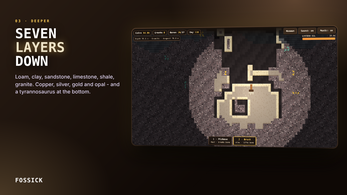
The hill stacks seven layers: topsoil first, then loam, clay and sandstone, followed by limestone, shale and finally granite. Each is harder and darker than the one above it. Copper, silver, gold and opal glint in the walls beside the fossils, so a descent can pay for itself even when no bone is recovered.
Bone quality is the real currency. A fossil lifted carefully earns more than one that arrives in fragments, and completing a whole skeleton triggers a research grant. Ore and bone feed the same upgrade pool, so weighing a clean specimen against a rich seam is the central gamble of any given day. The lamp sets the pace; everything else is a decision about how much to risk before the light dies.
Controls
Input is entirely mouse and keyboard. The mouse points at a block and the equipped tool works by itself on anything exposed to open air, so there is no click-per-swing rhythm to learn — aiming is the action. Keys 1 and 2 swap between pickaxe and brush, and the mouse wheel does the same job.
W and S tilt the view up and down the shaft, and holding Shift while rolling the wheel does the same. Those inputs cover everything the game asks for, and the short list keeps attention on decisions rather than dexterity.
Because the tool operates on its own once it is pointed at exposed rock, the pace stays unhurried. The challenge sits in choosing a target and timing the switch, not in reflex speed, which suits a mouse in one hand and the number row under the other.
| Input | Action |
|---|---|
| Mouse | Point at rock so the equipped tool digs into exposed blocks |
| 1 / 2 | Switch between pickaxe and brush |
| Mouse wheel | Switch between pickaxe and brush |
| W / S | Look up and down the shaft |
| Shift + mouse wheel | Look up and down the shaft |
Tips for your first run
The opening hour is about learning when to slow down. Rock and ore respond well to the pickaxe, but the moment pale bone shows through, the brush earns its keep. A smashed fossil is never a dead end — another one turns up deeper down — but the payout for that specimen shrinks.
Spend early finds on the upgrades that prevent expensive mistakes rather than on raw speed, and let the day end when the oil does instead of pushing for one more seam.
Watch the oil more closely than the depth; a run that finishes with an empty lantern and a full satchel is a good one. Pick up Soft Touch once it appears, since it stops the pickaxe short of bone. Take fossil sense to plan a descent around visible bone instead of guessing at it. Use ore sense when the upgrade budget is thin and the walls need to pay for themselves. Hold research grants back for the five golden tools rather than frittering them on small conveniences. Consider dig dogs when night work matters, since they keep the site going after hours.
- Watch the oil more closely than the depth; an empty lantern with a full satchel is a good run.
- Pick up Soft Touch once it appears, since it stops the pickaxe short of bone.
- Take fossil sense to plan a descent around visible bone instead of guessing.
- Use ore sense when the upgrade budget is thin and the walls must pay for themselves.
- Hold research grants back for the five golden tools rather than small conveniences.
- Consider dig dogs when working after dark matters.
Content and replayability
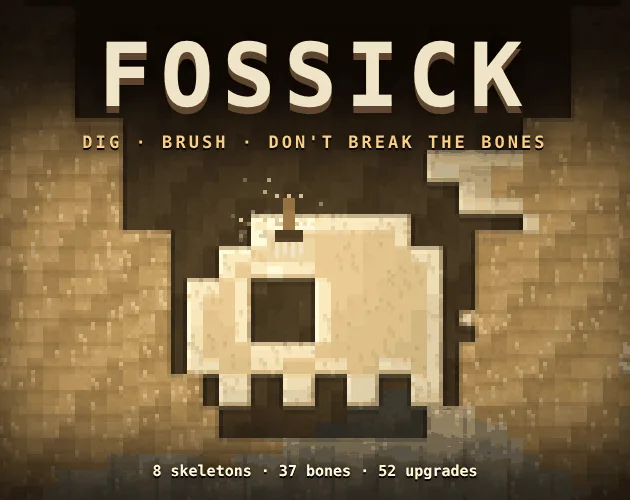
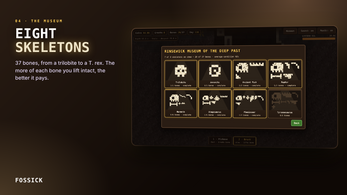
The hill holds eight skeletons spread across 37 bones: a trilobite, an ammonite, an ancient fish, a raptor, a mammoth, a stegosaurus and a plesiosaur, with a tyrannosaurus waiting at the very bottom. Each bone goes into the museum, and finishing a skeleton releases a research grant that funds the deeper end of the upgrade tree.
There are 52 upgrades in total. They cover stronger picks, wider brushes, extra lantern oil, a brighter lamp, ore and fossil senses, Soft Touch for cautious digging, dig dogs that keep working through the night, and blast caps. Five golden tools sit at the top of the tree and are bought with research grants rather than ordinary finds.
Condition is the long tail. A careful hand earns three stars on a specimen, so the hill stays worth revisiting after the cases are full. The developer also runs a bot through the entire game using the real game code before every build: all 37 bones lifted, no dead ends, roughly an hour of play. Most people take longer.
Presentation and performance
The look is pixel art, and the code does all of the work: there are no image or audio files in the build, with every picture and every sound generated at runtime. That gives the hill a consistent handmade texture, from the loose topsoil down to the dark granite at the base, with the lamp carving a moving pool of light out of each layer.
Depth is communicated through contrast. Layers grow harder and darker as the shaft goes down, so the descent reads visually before a single number appears on screen. Ore catches the lantern light in the walls, which makes a productive seam easy to spot on the way past.
The full game downloads as an archive that unzips into a folder; opening index.html in any modern browser starts it, with no installation step and no connection needed once the files are local. Progress saves automatically in the browser. The browser demo covers the first three skeletons in the HTML5 frame. Code, graphics, sound and text were produced with the help of generative AI.
Who should play it
This is a game for players who like a slow, methodical loop with a clear score at the end of it. The clicker and idle crowd will recognise the shape — spend what the last run earned, go deeper, repeat — but the tool choice adds a genuine risk calculation that most incremental games never ask for.
Fossil and museum fans get a tidy collection structure: eight skeletons, each assembled bone by bone, each rated on how gently it was handled. The tension between a fast pickaxe and a patient brush gives every encounter the same small dilemma, and the three-star ceiling gives completionists something to chase after the cases are already full.
It is a poor fit for anyone hunting action, combat or twitch reactions. The pace is deliberately gentle, the day ends when the oil does, and the satisfaction comes from a fossil arriving whole rather than from anything exploding.
Screenshots
How we tested it
The build was loaded from games.debutplay.com in a headless Chromium session on ; the canvas started and no request was blocked. The guide was last checked on .
From the developer
Dig down through the hill behind Rinsewick. Find ore, find bones - and don't break them. Point at the rock and your tool works by itself on anything that touches open air. When the lantern runs out of oil the day is over - spend what you found on upgrades, and dig again. What you dig stays dug. FAST OR CAREFULThe pickaxe tears through rock and ore - and smashes bone. The brush is slow on rock, but lifts bone out whole. Switch with 1-2 or the mouse wheel. Every bone pays by how much of it you lifted intact. SEVEN LAYERS DOWNTopsoil, loam, clay, sandstone, limestone, shale and granite - each harder and darker than the last. Copper, silver, gold and opal glint in the walls. Your lamp lights the way. EIGHT SKELETONS, 37 BONESA trilobite, an ammonite, an ancient fish, a raptor, a mammoth, a stegosaurus, a plesiosaur - and a tyrannosaurus at the bottom of the hill. Every bone goes into the museum; finish a skeleton for a research grant. 52…
Frequently asked questions
How much does FOSSICK cost?
The full game is priced at $2.99. A browser demo covering the first three skeletons is playable in the HTML5 frame before buying.
Can it be played in a browser?
Yes. The demo runs in an HTML5 frame on the site. Buying the game downloads the whole hill, which unzips and opens through index.html in any modern browser.
Does the full version work offline?
Yes. Once downloaded and unzipped, it runs from local files with no install step and no connection required. Progress saves by itself in the browser.
Are the platforms Windows, macOS and Linux only?
Those are the listed desktop platforms, alongside the HTML5 build. Nothing about phones or touch controls is part of the release.
What happens if a fossil gets smashed?
It is not a dead end. Another one appears further down the hill, though the payout for the broken specimen is lower because bone value depends on how much was lifted intact.
How long does a full playthrough take?
A bot running the real game code clears all 37 bones in roughly an hour, with no dead ends, and most players take longer than that.
What games are similar to FOSSICK?
The closest matches on DebutPlay are DEAD AIR, Toxicode, Creepy Ballers. They share the same genre, so the controls and the pace carry over.
Something wrong or missing? Tell us. How we test games.