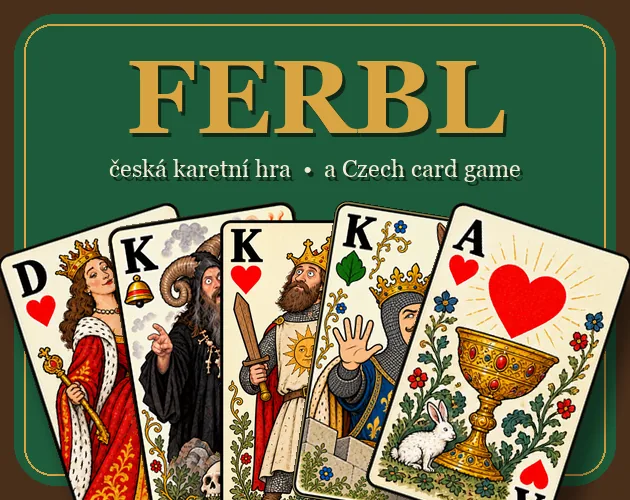
Card game · New game
Ferbl
Ferbl is a free browser card game that turns the Czech shedding classic into a multi-round contest of special cards, penalties, and private code-based rooms.
#53 this weekAI-assisted: Code, Graphics, Sound, Text
The game runs in this tab. No install, no account.
The short answer
Ferbl is a free browser card game for two to ten players that builds on the Czech shedding game prší. Rounds score across a session, special cards add draw penalties, suit and rank changes, extra turns, and the loser's hand shrinks. Play against bots or host a room and invite friends with a code.
What is Ferbl?
Ferbl is a free HTML5 card game from Hedgemming, played in the browser and currently marked as in development. It takes the Czech shedding game prší as its base and adds extra cards, expanded rules, and scoring across several rounds. The table supports two to ten players, either with bots or in an online room where one person hosts and the rest join through a code.
The game is turn-based and built around shedding cards rather than collecting them. Each round ends in one of three ways: four matching ranks appear in a row, a queen is played as the final card, or the deck is exhausted. The player holding the most points in hand loses that round, and that loss shapes the next deal because the loser shuffles and starts with one fewer card.
How to play
At the start of a round, players take turns adding cards to the table. The special cards carry the strategy. A seven makes the next player draw two, and another seven can pass the penalty onward, with the amount rising as sevens are chained. A green king imposes a five-card draw that only the green seven can beat. An ace makes the next player stand, unless that player answers with another ace. An eight sends the turn back to the previous player, while the ten of hearts makes everyone draw a card and gives the same player another turn. Queens change the suit; jacks call a rank.
Multiple cards of one rank can be laid together, and their effects stack. Losing a round matters beyond the immediate score: the loser shuffles for the next round and receives one fewer card. A player who begins a round with just one card and then loses that round is out of the entire game, not just the round. The session is scored across rounds, with the most points left in hand marking the round loser.
Controls
Ferbl is turn-based, so every decision arrives as a choice about the next card action. The meaningful controls are the card choices: play a card, add several cards of one rank, or respond to a penalty with the right counter. A queen shifts the suit and a jack sets a called rank, so the next move is read from the current table constraint. A seven or green king creates a draw threat, an ace can make the next player stand, and an eight returns the decision to the previous player. The ten of hearts changes the sequence by making everyone draw and giving the same player another turn. The menu also contains a language switch. A session against bots or a hosted code room with two to ten players is the setting in which those decisions unfold.
The game page does not list its controls. Check the in-game tutorial or pause menu for the current scheme.
Tips for your first run
First-run play should start with the round-ending conditions, because they change when it is safe to hold or shed cards. Four matching ranks in a row will close a round, a queen as the final card does the same, and an exhausted deck ends it too. Keep the most points out of the hand, since the highest hand total loses the round. Treat the one-card start as a serious risk: beginning a round with a single card and then losing it ends the whole game.
- Chain sevens only when the growing draw penalty helps the table position; the next player can pass it back with another seven.
- Save a green seven for a green king, since that is the only card that beats the five-card draw.
- Use a queen to change suit or a jack to call a rank when the current constraint is working against the hand.
- Stack cards of the same rank when the combined effects do more than a single play.
- Watch for a ten of hearts sequence, because everyone draws and the same player acts again.
- When a round begins with one card in hand, treat it as sudden death; losing it ends the match.
Content and replayability
Ferbl's replay value comes from the range of table setups and the way special cards alter each round. A session can run with two to ten players, either as a solo table against bots or as an online room organized by a host code. The special cards create different pressure points: sevens pass draw penalties, a green king requires a green seven answer, aces make the next player stand, eights send play to the previous player, tens of hearts trigger a group draw, queens alter the suit, and jacks call a rank. Because several cards of one rank can be played together, their effects can combine in a single turn. Multi-round scoring gives the session continuity, while the shrinking hand for a round loser changes the pressure in later deals. The menu language switch adds another setup choice for groups that want a different interface language.
Presentation and performance
Ferbl is an HTML5 browser game with a turn-based pace, so the table state carries the experience. The suit after a queen, the rank named by a jack, the draw threat from a seven or green king, the stand caused by an ace, and the extra turn from a ten of hearts are the states that shape each decision. The turn-based pace means one card choice resolves before the next player acts. The game is marked as in development, and the browser build is playable for a first look. A session can be started against bots or through a host code with two to ten players, and the menu includes a language switch. The play area has to hold the current suit, called rank, active draw threat, and turn order without relying on real-time reactions.
Who should play it
Ferbl suits players who want a casual card game with a party-game pulse and a medieval flavor, especially groups that can fill a table of two to ten. The rules are turn-based and browser-based, so the appeal is in reading the special-card chain rather than in reflex play. A solo player can test hands against bots; friends can organize an online room with one host and a shared code. The scoring over multiple rounds gives the session a reason to continue after a single deal, and the one-card whole-game loss adds a sharp risk to an otherwise relaxing table. Comedy and casual tags fit the tone, while the language switch helps a menu feel usable for different groups. It is free, in development, and aimed at players who like shedding games such as prší, Crazy Eights, or Mau-Mau.
Screenshots
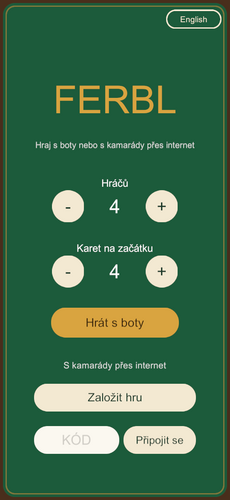
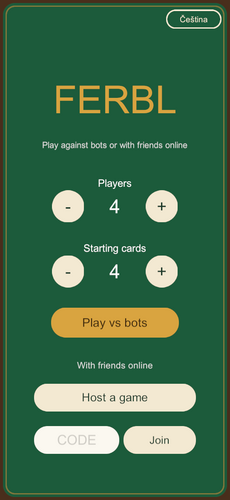
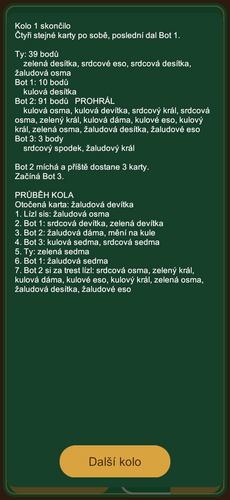
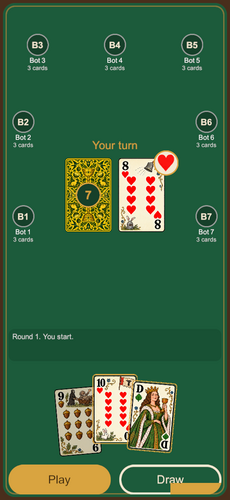
How we tested it
The build was loaded from games.debutplay.com in a headless Chromium session on ; the canvas started and no request was blocked. The guide was last checked on .
From the developer
Česky · English below Ferbl je prší, s rozšířenými pravidly, pár karet navíc něco umí a hraje se na body přes více kol. Kdo prohraje kolo, míchá a příště dostane o kartu míň. Kdo prohraje kolo, ve kterém začínal s jedinou kartou, prohrál celou hru. Sedma – další hráč si lízne 2, nebo ji přebije další sedmou (pak 4, 6…). Zelený král – líže se 5, přebije ho jen zelená sedma. Eso – další hráč stojí, nebo dá taky eso. Osma – znovu hraje hráč před tebou. Srdcová desítka – všichni si líznou kartu a hraješ znovu. Dáma mění barvu, spodek mění číslo. Víc karet stejného čísla můžeš vyložit naráz, jejich účinky se sčítají. Kolo končí čtyřmi stejnými kartami po sobě, dámou jako poslední kartou, nebo když dojdou karty. Prohrává, kdo má v ruce nejvíc bodů. Hraj proti botům, nebo s kamarády přes internet: jeden založí hru a ostatní zadají její kód. 2 až 10 hráčů, hraje se v prohlížeči na počítači i na telefonu. English Ferbl is a Czech take on the…
Frequently asked questions
Is Ferbl free to play?
Yes. Ferbl is free to play.
How many players can join?
Ferbl supports two to ten players in a session, either against bots or in an online room.
How do friends join an online game?
One player hosts the game and gives the others the room code; the rest join with that code.
Can Ferbl be played solo?
Yes. A solo player can take on bots.
What do the special cards do?
Sevens add a two-card draw that can be passed onward and grows with more sevens. A green king draws five unless answered by a green seven. An ace makes the next player stand, and eights send play to the previous player. A ten of hearts makes everyone draw and gives the same player another turn. Queens change suit, and jacks call a rank.
How does losing a round work?
The player with the most points in hand loses the round, shuffles for the next deal, and starts the following round with one fewer card. Losing a round that began with a single card ends the whole game.
What games are similar to Ferbl?
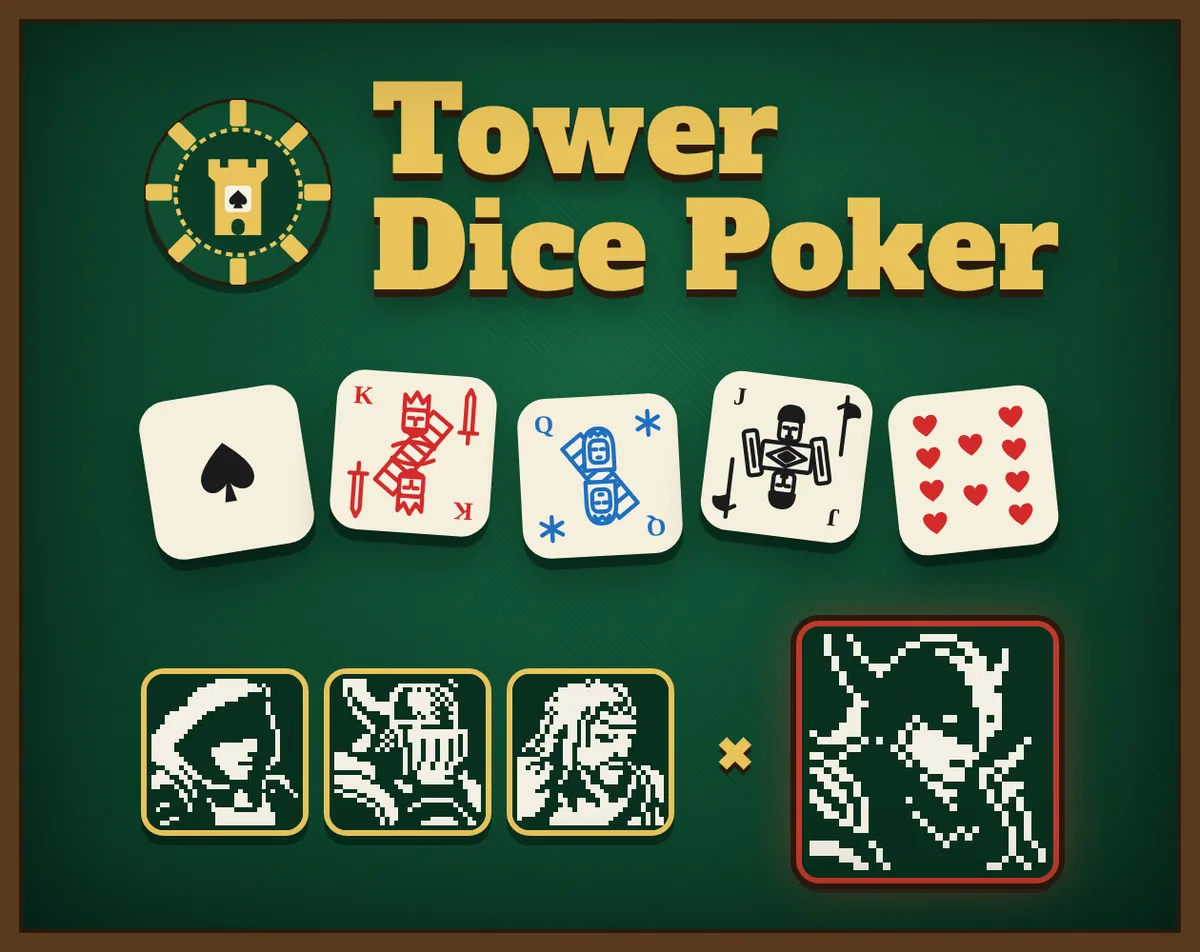
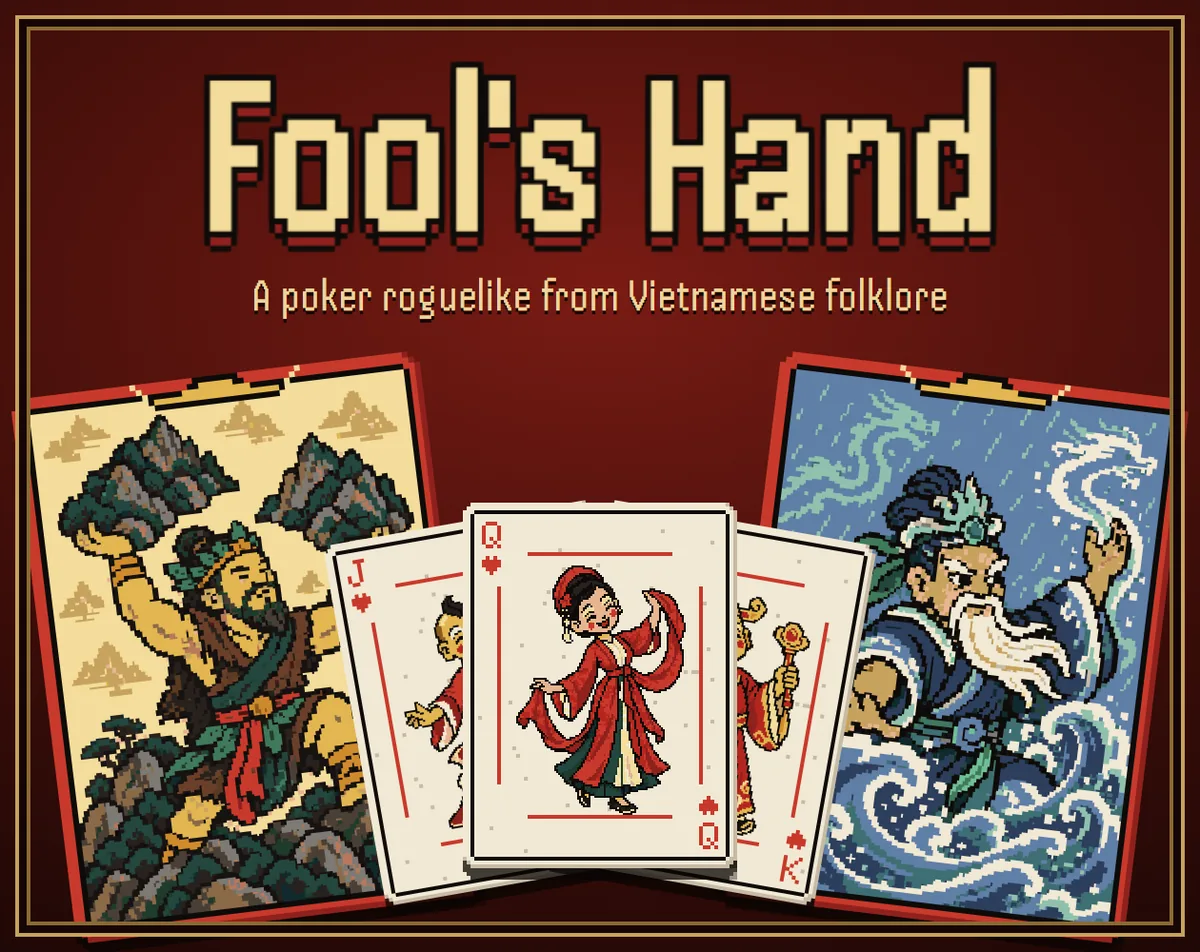
The closest matches on DebutPlay are Tower Dice Poker, Fool's Hand, Fudatsuki Island. They share the same genre, so the controls and the pace carry over.
Something wrong or missing? Tell us. How we test games.