Simulation · New game
HackerOS
HackerOS drops players into a shared online hacking simulation where every target can be another person, and every trace has consequences.
#57 this weekAI-assisted: Code, Graphics, Text
The game runs in this tab. No install, no account.
The short answer
HackerOS is a free browser-based hacking simulation set in a persistent online world. Players start with a weak computer, a terminal, and an e-mail from Ghost, then scan targets, crack passwords, connect over SSH, take files or money, and clear logs before a trace closes in. Other players can target the same machines, so the pressure is live.
What is HackerOS?
HackerOS is an online hacking simulation built around a persistent, shared world. Each machine, file, bank account, website, and e-mail exists inside a simulated operating system that runs in a browser, and the game makes clear that nothing touches real systems. The starting position is deliberately modest: a weak computer, a terminal, and a mysterious message from someone named Ghost.
The central idea separates HackerOS from a single-player hacking game. The machine being attacked may belong to another player who is preparing a counterattack, so the familiar trace timer carries live pressure. The project is a solo fan work inspired by Uplink and Hacker Experience, with no affiliation to the Uplink studio and no Uplink assets. It is currently in development as a free test server, so availability can fluctuate and progress may be wiped between playtests.
How to play
Begin by running the game and creating an account. The interface opens in English, and the language can be changed through Settings > Account. After that, read the in-game e-mail; Ghost is waiting, and the message sets the opening direction. The core loop is to scan for targets, break passwords, connect over SSH, and take what matters, whether that is files, money, or CPU time for mining. Before the trace finishes, clear /var/log/auth.log.
The world is shared, so targets are not static practice dummies. Another player's machine can be a source of files, funds, or processing power, and that same player can turn the tables. Proxies can extend the time before a trace closes, but they slow the connection. Banks add fees and loans, while HexCoin is a crypto market mined by the player network. A mission board, e-mail, forum, and planted clues across a simulated web give reasons to move beyond the first break-in.
Controls
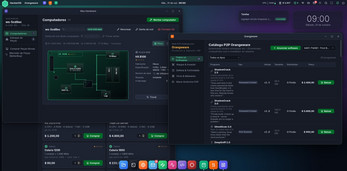
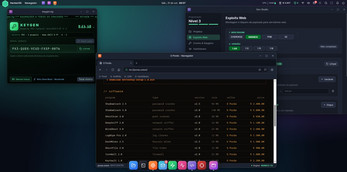
The main control choice is between a terminal and a point-and-click GUI. The terminal accepts real commands, so players who prefer typed input can work through the simulated operating system that way. The GUI offers a clickable route for the same broad activity, which makes the game approachable for players who do not want every action to begin with a command line. Both options sit inside the browser-based HackerOS interface.
Account and language options are handled in Settings > Account; the UI starts in English and can be switched there. The terminal is the place for command-driven work, while the graphical layer is the place for pointing and clicking through machines and services. Since the game is a simulation, the controls operate on simulated machines, files, bank accounts, websites, and e-mail rather than real systems.
| Input | Action |
|---|---|
| Keyboard | Type commands into the terminal. |
| Mouse | Point and click through the graphical interface. |
Tips for your first run
The opening minutes reward careful reading. Ghost's e-mail gives the first lead, and the first trace is the main teacher. Use the mission board and in-game e-mail for direction, then keep the exit clean. Treat proxies as a tradeoff: they slow the trace, but the connection becomes slower. If police heat rises, the NSA bounty can follow, so sloppy work compounds.
- Read the e-mail from Ghost before scanning at random.
- Scan, crack the password, enter through SSH, and identify files, money, or CPU time worth taking.
- Clear /var/log/auth.log before the trace finishes.
- Use proxies when the extra time matters, and accept the slower connection.
- Check bank fees, loans, and HexCoin activity before treating funds as simple profit.
- Expect possible wipes during playtests, so treat early progress as testing rather than permanent wealth.
Content and replayability
Because other players' machines are live targets, the content is not limited to fixed missions. Players can take files, drain bank accounts, or plant miners on another person's CPU. That turns routine systems into contested ground, and it gives every scan a social edge. The mission board provides contracts, while in-game e-mail and a forum support coordination or rivalry. A simulated web holds planted clues for players who enjoy digging.
Progression includes hardware upgrades, paid courses, and software that can be downloaded, bought, or compiled. Banks introduce fees and loans, and HexCoin ties the economy to a crypto market mined by the whole player network. Police heat and an NSA bounty add a second layer of risk beyond the trace timer. With a persistent shared world, the mix of contracts, player targets, market activity, and counter-hacking gives HackerOS reasons to return beyond a first successful break-in. A first break-in is only one step in a world where other players can respond and where economic choices keep changing the stakes.
Presentation and performance
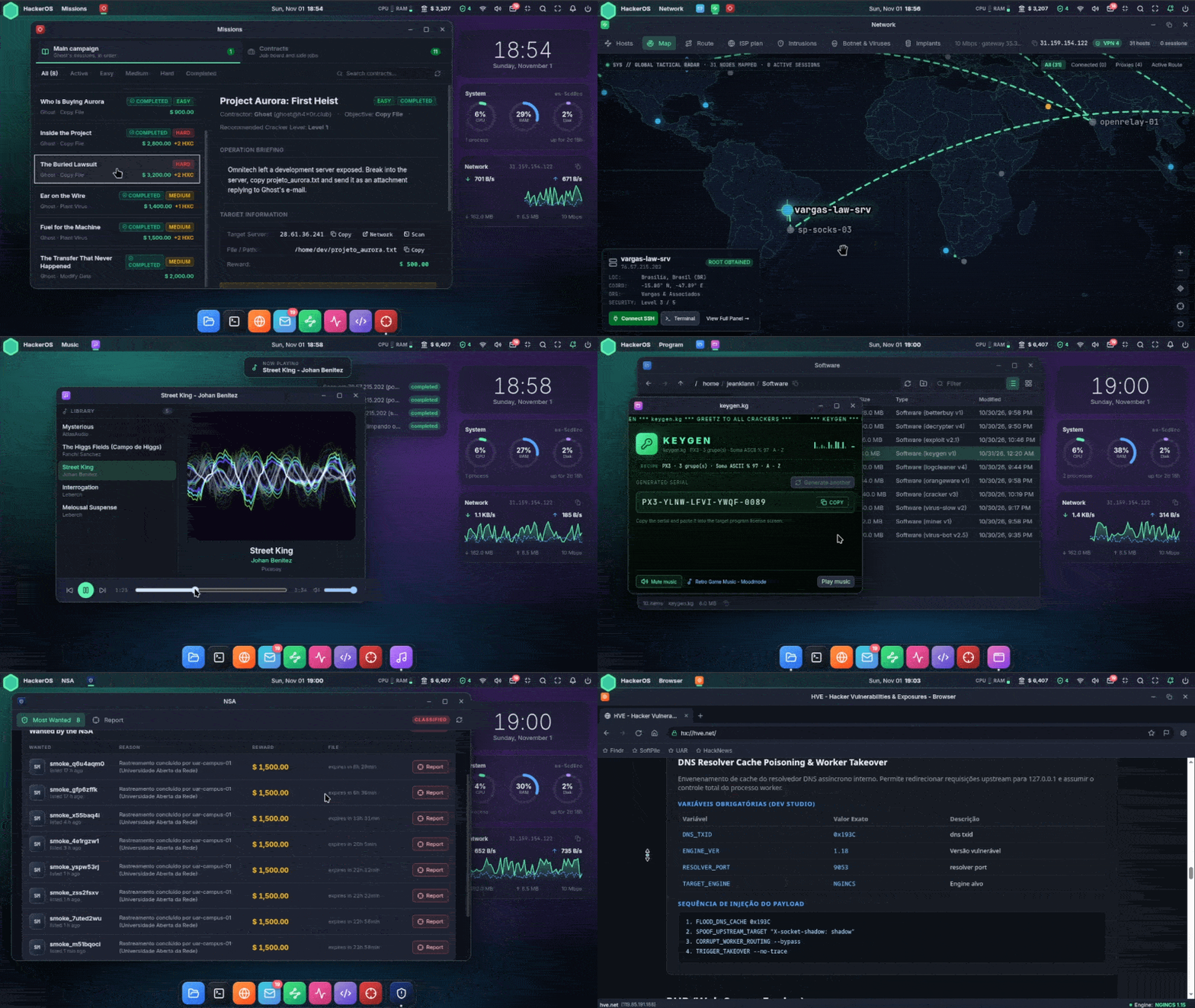
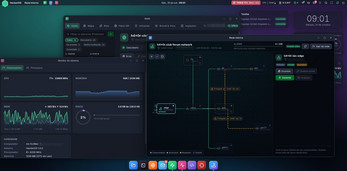
HackerOS presents itself as a simulated operating system inside a browser. The terminal and the point-and-click GUI are the two visible interfaces, and the fiction extends to machines, files, banks, websites, and e-mail. The trace timer supplies the central tension, especially when the target belongs to another player. The look and feel are tied to that fake OS rather than to a conventional action-game presentation.
Technically, the game is an HTML5 browser title. It is in development and runs as a free test server; the project is small, may go offline, and progress may be wiped between playtests. Those conditions matter more than any performance expectation: a player should treat availability and persistence as test-server realities. The multiplayer and PvP tags fit the shared-world design, where live targets and counter-hacking are part of the loop.
Who should play it
HackerOS is aimed at players who enjoy hacking fantasies with systems to learn. Fans of Uplink and Hacker Experience are the obvious audience, especially those who like terminal commands, trace timers, and the idea that another person might be on the other end of a connection. Players who prefer a point-and-click route can use the GUI, so the terminal is not the only way in.
The shared-world setup suits players who want PvP pressure rather than a purely scripted campaign. Bank fees, loans, HexCoin mining, hardware upgrades, paid courses, and software acquisition add economic and progression layers for players who like planning. Because this is an in-development free test server, it best suits people willing to tolerate outages, possible wipes, and rough edges while giving feedback on onboarding, balance, bugs, and clarity.
Screenshots
How we tested it
The build was loaded from games.debutplay.com in a headless Chromium session on ; the canvas started and no request was blocked. The guide was last checked on .
From the developer
HackerOS is an online hacking simulation inspired by classics like Uplink and Hacker Experience - with one big difference: the world is persistent and shared. The machine you are hacking might belong to someone who is hacking you back. You start with a weak computer, a mysterious e-mail from someone called Ghost, and a terminal. Everything happens inside a fake operating system that runs in your browser: every machine, file, bank account, website and e-mail is simulated on the server. Nothing touches real systems. The loop Scan targets, crack passwords, SSH in, grab what matters - files, money, CPU time for mining - then wipe /var/log/auth.log before the trace completes. The tension of the classic trace timer is all here. Now with live targets. What's in it - A persistent online world: other players' machines are real targets - steal files, drain bank accounts or plant miners on their CPUs - Proxies to slow down traces... at the cost…
Frequently asked questions
Is HackerOS free?
Yes. It is free to play as a test server.
What platform is HackerOS on?
HackerOS runs in a browser through HTML5. It is an online simulation, so the shared world depends on server access.
Does HackerOS require terminal commands?
No single route is forced. The game offers a command terminal and a GUI driven by pointing and clicking, so players can choose the style that suits them.
Can other players hack a player's machines?
Yes. The world is persistent and shared, and another player's machine can be a target. Files, bank accounts, and CPU time for mining can all be taken, and the victim may hack back.
What should a new player do first?
Create an account, read the e-mail from Ghost, then scan targets, crack passwords, connect over SSH, and clear /var/log/auth.log before the trace completes.
Is progress permanent during the test?
Not necessarily. Progress may be wiped between playtests, and the test server may go offline now and then.
What games are similar to HackerOS?
The closest matches on DebutPlay are Galileo Base: Forces & Motion in 3D, Filthy Rich-ish, Against History: WW2. They share the same genre, so the controls and the pace carry over.
Something wrong or missing? Tell us. How we test games.