Simulation · New game
OVERSHOT
A free browser mill simulation where one water wheel drives five machines on a single shaft, and every gear you engage changes how the rest of the line behaves.
#6 this weekAI-assisted: Code, Graphics, Text
The game runs in this tab. No install, no account.
The short answer
OVERSHOT is a free incremental simulation about running a water mill through four seasons. One wheel turns one line shaft, five machines each need their speed band held, and water held in the pond carries a flood into a dry summer. Play it now for the gear-juggling puzzle and the quarterly rent deadline.
What is OVERSHOT?
OVERSHOT is a free browser simulation about a water mill that has to earn its keep. The setup is deliberately narrow: one water wheel turns one line shaft, and every working machine in the mill draws power from that single turning bar. Five slots exist for machinery covering grain, timber, cloth, ironwork and paper, each one bolted to the shaft with its own gearbox and its own preferred running speed.
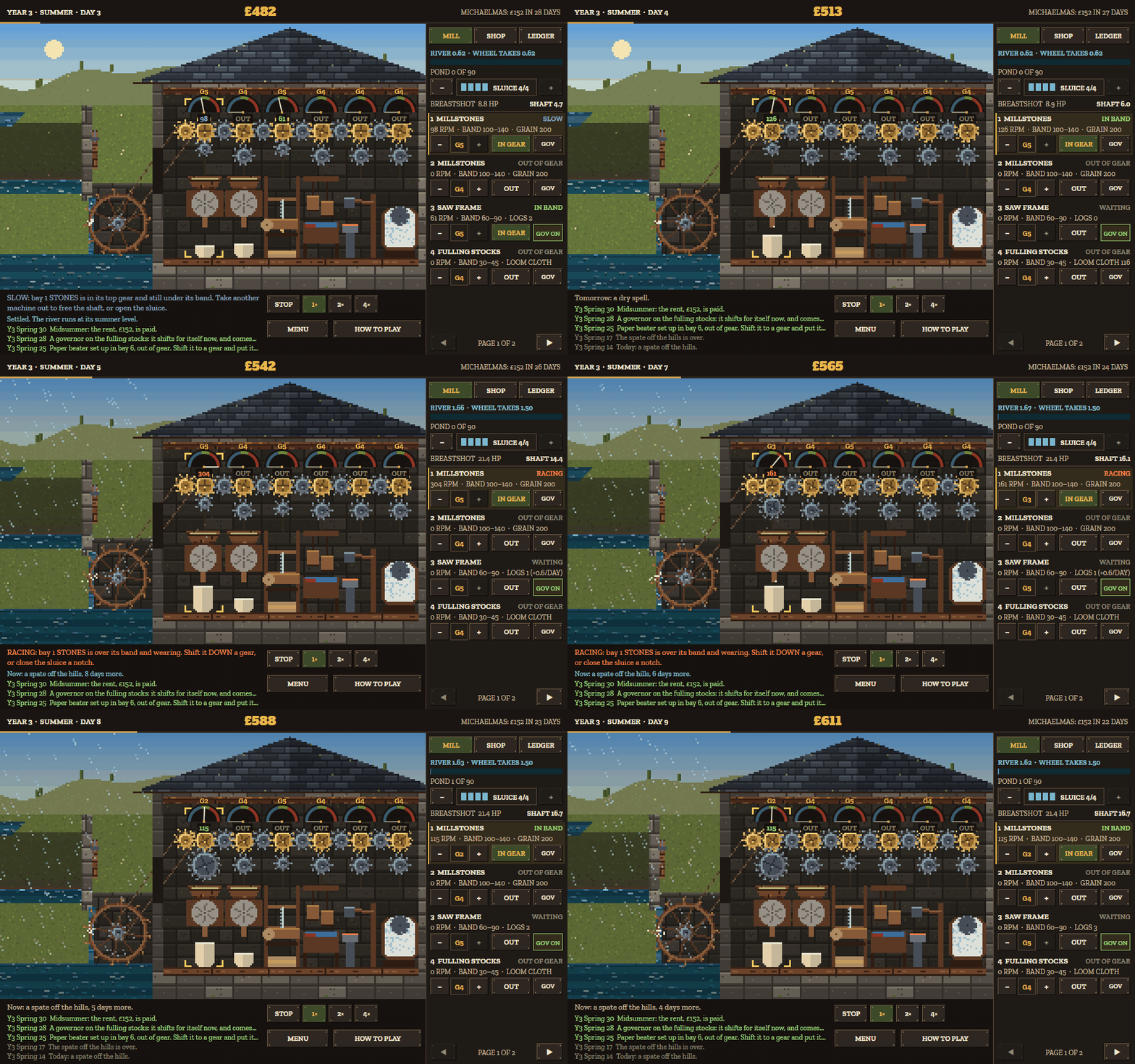
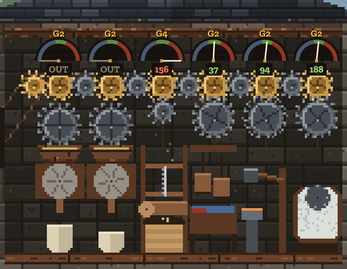
The speed a machine wants is drawn as a green arc on its dial. Keep it inside that arc and it produces; fall under it and the machine drags; push past it and the machine races, wears and eventually breaks. Because the shaft is shared, the balance never settles. Putting a new machine into gear steals speed from the rest of the line, and a clutch lets you choose which machines actually run.
The long-term goal is ownership. Rent falls due every quarter day and climbs each year, and buying the freehold is what ends the arrangement. The game was made for GitHub Game Off 2026, whose theme was SHIFT, and it runs in the browser for free, saving progress locally without an account.
How to play
Play starts at the wheel and works outward along the shaft. Machinery is engaged one piece at a time, and every engagement is a trade: more machines turning means more output, but also more drag on the line, so a fresh machine can pull its neighbours under their bands until something else is taken out. The clutch is the tool for that juggling act, and the dials show what the last change did.
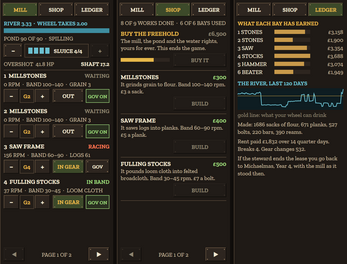
Water is the other half of the job. A spate is forecast a day ahead, so there is warning before a surge reaches the wheel. The mill pond holds water back for later, which is how a spring flood can be banked for a dry summer, and the sluice sets how much of that stored water is allowed through.
Those two systems run together: watch the dials, adjust the clutch, adjust the sluice, let the machines work, and bank what they make before the next quarter day. Rent is the clock that keeps the pressure on, and missing two quarter days in a row costs the lease.
Controls
Everything in the mill can be handled with a click or a tap, so the interface does not require a keyboard. Keyboard players get shortcuts instead of menus: the number keys 1 through 6 pick a machine, the up and down arrows shift, and the space bar puts the selected machine in or out of gear. The sluice is nudged with the bracket keys, P stops, F controls speed, M handles sound, and Escape opens the menu.
That split matters because the game asks for small, frequent corrections rather than long turns. Selecting a machine by number and toggling it with space keeps both hands on the keyboard while the dials are being read, and the sluice brackets sit next to those keys so water and gearing can be adjusted in the same pass. Nothing in the control set requires a mouse, and nothing requires a keyboard, which keeps the game playable in either style.
| Input | Action |
|---|---|
| Mouse or tap | Operate everything in the interface |
| 1 to 6 | Pick a machine |
| Up and Down arrows | Shift |
| Space | Put a machine in or out of gear |
| [ and ] | Adjust the sluice |
| P | Stop |
| F | Speed |
| M | Sound |
| Esc | Menu |
Tips for your first run
The first year is mostly about not overloading the shaft. Output feels slow at the start, but every machine added to the line takes speed from the ones already running, so the temptation to engage everything at once is the fastest way to stall the mill. Keep a rent reserve from the beginning: the quarterly demand rises each year, and two missed quarter days is all it takes for the steward to end the lease.
- Engage one machine at a time and re-read the dials of the machines already running before adding the next.
- Check the spate forecast a day ahead and set the sluice before the water arrives rather than during it.
- Use the pond as storage: water banked from a wet spell is what carries the mill through a dry summer.
- Take upgrades that widen your margin - different wheel types, iron and crown gearing, a longer shaft, a granary, and fly-ball governors that make the shift adjustments themselves.
- Treat the quarter day as a deadline, not a surprise, and keep enough set aside that a bad season does not end the lease.
Content and replayability
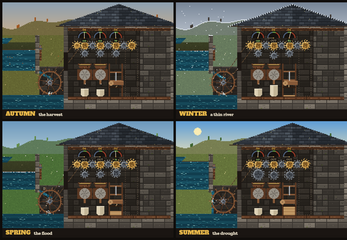
The year is divided into four seasons that behave differently at the wheel: autumn rain, a thin winter, a spring flood that races everything, and a dry summer that drags it all. Work follows the same rhythm. Grain arrives after the harvest, logs come in winter, and loom cloth follows the shearing, so the mix of machines worth running changes as the months turn.
Upgrades run along two lines. On the water side there are undershot, breastshot and overshot wheels, with the mill pond and sluice shaping what reaches them. On the mechanical side there is iron gearing, crown gears, a granary, a longer shaft, and fly-ball governors that handle shifting automatically, each one loosening the constraint that made the early game tight.
Failure is a rewind rather than a wipe. If two quarter days pass unpaid, the steward ends the lease and the mill returns to Michaelmas of that year exactly as it stood, with the arrears forgiven. That makes a bad year recoverable and encourages a second attempt with better gearing choices.
Presentation and performance
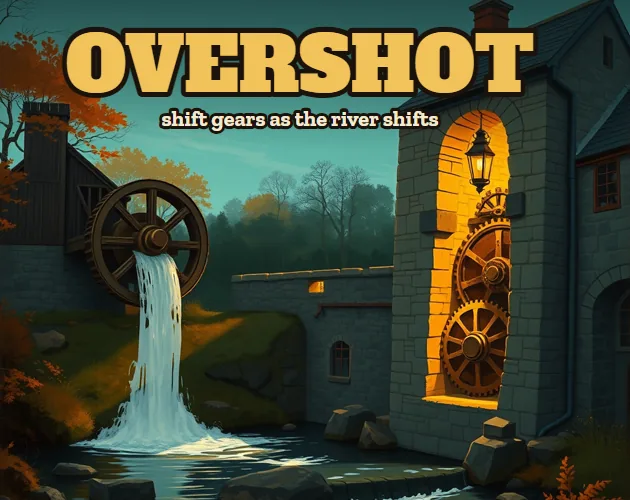
The mill is drawn in pixel art, with textures produced by the studio's own pixel generator. Sound is entirely synthesised by the game's own code, with no samples and no AI audio, while the music, the code and the written text were made with AI tools and the cover painting came from an AI image model.
OVERSHOT is an HTML5 build that runs in the browser and saves itself locally, with no account to create. Upright and sideways screens each get their own layout, and at the smallest tested sizes of 360 by 560 upright and 640 by 320 sideways every word is at least 9.5 CSS pixels and every control at least 24, measured on simulated phones rather than a physical handset. Tap controls and those dedicated layouts are what make a phone-sized screen workable.
Who should play it
This is one for players who like incremental and idle games that keep asking for attention rather than running themselves. The appeal is the interlock: a speed band here, a clutch there, a sluice setting that only pays off two seasons later. Anyone who enjoys tuning a small system until it hums will find plenty to fiddle with.
The historical framing suits players who like industrial settings without a combat layer, and the quarter-day rent gives each year a shape, which helps anyone playing in short sittings. It is free, runs in a browser tab, and saves locally, so there is no account or download standing between a curious click and the first turning of the wheel.
Players looking for action, story or hand-authored levels will not find them here; the pleasure is in holding a line of machinery inside its bands while the river refuses to cooperate.
Screenshots
How we tested it
The build was loaded from games.debutplay.com in a headless Chromium session on ; the canvas started and no request was blocked. The guide was last checked on .
From the developer
Shift gears as the river shifts. OVERSHOT is a free browser incremental made for GitHub Game Off 2026: run a water mill with 5 machines on one shaft through the seasons, and buy the freehold. How it plays One water wheel turns one line shaft. Every machine on it has its own gearbox and a speed band, the green arc on its dial. Hold the band. Inside it a machine works. Under it, it drags. Over it, it races, wears and breaks. One shaft, shared. Every machine you put in gear slows the whole shaft, so a new machine can pull its neighbours under their bands. The clutch decides who runs. The river shifts. Autumn rain, a thin winter, a spring flood that races everything, a dry summer that drags it all. A spate is forecast a day ahead. Water through time. A mill pond stores the flood for the drought, and the sluice sets how much reaches the wheel. The year's work. Grain after the harvest, logs in winter, loom cloth after the shearing.…
Frequently asked questions
Is OVERSHOT free to play?
Yes. It is a free browser game with no account required, and progress saves locally in the browser.
What do you actually do in OVERSHOT?
One water wheel turns one line shaft. Machines are clutched in and out, each one kept inside its speed band, while the sluice and mill pond decide how much water reaches the wheel.
How many machines can run on the shaft?
Five machines share the single shaft, covering milling, sawing, fulling, hammering and paper beating, and each one has its own gearbox and speed band.
What happens if rent is missed?
Two missed quarter days and the steward ends the lease. The mill returns to Michaelmas of that year as it stood, with the arrears forgiven.
Does OVERSHOT work on a phone?
Tap controls operate everything, and upright and sideways screens have separate layouts sized so text and controls stay legible at the smallest tested dimensions.
What are the keyboard shortcuts?
Number keys 1 to 6 select a machine, arrows shift, space toggles gear, brackets move the sluice, and P, F, M and Escape handle stop, speed, sound and the menu.
What games are similar to OVERSHOT?
The closest matches on DebutPlay are Galileo Base: Forces & Motion in 3D, Filthy Rich-ish, Against History: WW2. They share the same genre, so the controls and the pace carry over.
Something wrong or missing? Tell us. How we test games.