Strategy · New game
Last Pixel
A free HTML5 tower defense about guarding the last red pixel against an erasing grey tide, built from sixteen towers, five rounds and thirty waves of pressure.
#6 this weekAI-assisted: Text
The game runs in this tab. No install, no account.
The short answer
Last Pixel is a free, single-player tower defense that runs in the browser. A grey tide called the Static is wiping the world clean, and one red pixel inside the Portal is all that stands against it. Build towers along the road, upgrade them through three levels, and hold for thirty waves. Five rounds, sixteen towers and a secret Endless mode give plenty to learn, with nothing to pay.
What is Last Pixel?
Last Pixel is a monochrome pixel-art tower defense played in a browser tab. The premise is small and sharp: colour has drained out of the world, a grey tide known as the Static erases whatever it touches, and a single red pixel survives inside the Portal. While that pixel burns, the world can still be redrawn, and you are its Keeper.
The campaign is arranged as five handcrafted rounds that move from The Gate down to The Core. Enemies bring behaviours rather than raw numbers alone, including Menders that stitch the horde back together and Glitches that slip through your lines, with the Eraser saved for the very end.
It is a single-player strategy game, free to play, and built in HTML5, so nothing needs installing before the first wave. Sixteen towers, four road placeables and six campaign perks make up the toolbox you defend with.
How to play
Towers go beside the road, never on it. Each has a narrow job: fast shooting, area damage, a chilling effect that slows enemies, chained lightning, fire that punches through armour, knockback, mines, aura buffs, and one role tied to gold. Every tower upgrades through three levels, and any tower that aims can be told which target to prefer — first, last, strongest or closest.
The road itself accepts placeables: spikes, tar pits, barricades and shock traps. These cover ground that towers cannot reach, but each one wears out with use, so they are temporary tools rather than permanent construction.
Perks are bought for the whole campaign rather than a single round. Once a perk is purchased it carries into every later round, which turns the perk list into a long-term investment.
A run lasts thirty waves. A Colossus arrives every ten waves, and a single Colossus reaching the portal ends the run, so those waves are the real checkpoints. The pressure escalates through enemy design: Menders repair the horde, Glitches bypass your lines, and the Eraser appears at the close. Ten enemy types appear across the campaign, covering armour plating, splitting, immunity to slowing, healing and blinking, alongside two bosses.
Controls
On desktop, click a tower in the Build list or press its number key, then click an empty tile to place it. Holding Shift keeps the build mode open so you can drop several towers in a row. Clicking a tower you have already placed opens the options to upgrade it, sell it, or change what it targets.
Keyboard shortcuts handle the rest: Space sends the next wave, U upgrades, S sells, T cycles targeting, F changes speed, P pauses and Esc cancels. On a phone the scheme simplifies — tap a tile once to preview the placement and tap again to confirm the build.
Speed can be set to 1x, 2x or 3x, so a messy wave can run slowly and a build you trust can be fast-forwarded, while auto-wave takes over wave calling once your setup is stable. The game autosaves between waves, so closing the tab does not cost you the run.
| Input | Action |
|---|---|
| Mouse | Click a tower in the Build list, then click an empty tile to build it |
| Number keys | Select the matching tower from the Build list |
| Shift (hold) | Keep building without reopening the Build list |
| Click a placed tower | Upgrade it, sell it or change its targeting |
| Space | Send the next wave |
| U | Upgrade |
| S | Sell |
| T | Cycle targeting |
| F | Change speed |
| P | Pause |
| Esc | Cancel |
| Touch | Tap a tile once to preview, tap again to build |
Tips for your first run
Build a mixed line rather than stacking one tower. Area damage handles crowds, cold slows the push, and armour-piercing fire exists because the enemy roster includes armour, splitting, slow immunity, healing and blinking types. One damage answer will not cover all of them.
Placeables belong on the road, where towers cannot go. Because spikes, tar pits, barricades and shock traps wear out, treat them as answers to a specific wave instead of walls you build once and forget.
Perks are the only purchase that outlives the round you bought it in, so an early perk keeps paying across the rest of the campaign. A secret achievement also gates Endless mode behind clearing a round. Bullets:
Content and replayability
The story campaign is five handcrafted rounds, running from The Gate down to The Core. The toolset is generous for that span: sixteen towers with three upgrade levels apiece, four placeables, six perks, ten enemy types and two bosses.
Replay comes from several directions at once. Eighteen achievements are tracked across campaigns rather than resetting per run, and one of them is secret — clearing a round unlocks Endless mode, which strips away the campaign framing and turns the game into a survival test. Because perks persist between rounds, a second campaign starts stronger than the first.
Autosave between waves keeps short sessions practical: close the tab and resume at the next wave. Speed settings and auto-wave cut the dead time once you know a build works, which matters in a game built on thirty-wave holds.
The game is open source under the MIT License, so forking, modding or building your own version is on the table. Playing it costs nothing, and support is optional if you want to say thanks.
Presentation and performance
There are no image or audio files here. Every sprite is generated in code, and the entire colour range is eight greys and four reds — which explains the look: a black-and-white world where red is the only sign of life.
Sound works the same way, with effects and music generated live by the browser rather than streamed. The chiptune tag fits that approach, and the interface uses the Silkscreen pixel font with Phosphor icons.
The build runs in a browser on desktop and on mobile, and desktop players get the full shortcut set. The autosave between waves is the genuinely practical feature: a browser game that respects a closed tab. Three speed settings plus auto-wave stop later waves from dragging.
Who should play it
This is for tower defense players who want to read a build rather than grind one. Sixteen towers, four placeables and six perks give real choice, and the enemy list — armour, splitting, slow immunity, healing, blinking, plus Menders, Glitches and the Eraser — rewards adjusting your layout instead of repeating it.
The minimalist presentation will appeal to anyone who likes retro pixel art and monochrome restraint; the eight-grey, four-red palette is a design constraint, not a placeholder. Players after a quick browser session get autosave and speed controls, while completionists get eighteen achievements, a secret Endless mode and five rounds to clear.
Desktop players who like hotkeys get a full set, and phone players get tap-to-preview building. Anyone curious about small, code-drawn games or open-source projects has a reason to look as well. Trying it costs nothing.
Presentation detail
The visual rule is strict and consistent: towers, enemies and the Portal all sit inside the same eight-grey range, with four reds reserved for the pixel you are protecting and the things threatening it. That constraint keeps the battlefield readable when the Static crowds the road.
Audio is generated rather than shipped, so effects and music are created by the browser as you play. Combined with the Silkscreen pixel font and Phosphor icon set, the whole presentation is assembled from type, code and sound instead of art files.
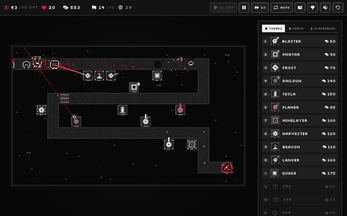
Screenshots
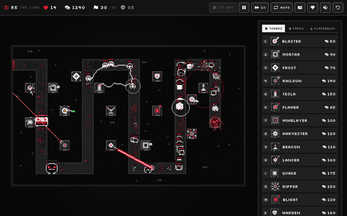
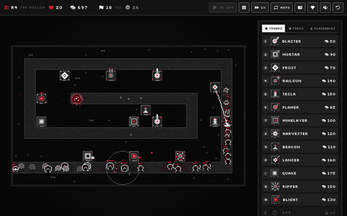
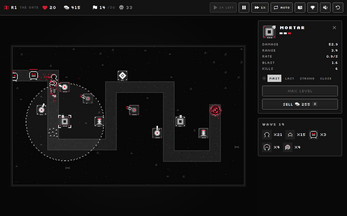
How we tested it
The build was loaded from games.debutplay.com in a headless Chromium session on ; the canvas started and no request was blocked. The guide was last checked on .
From the developer
The world has gone grey. One red pixel is left. Hold the line. Last Pixel is a monochrome pixel-art tower defense game. Everything was drawn in colour once. Then the Static came, a grey tide that erases whatever it touches. One pixel of red survived inside the Portal, and while it burns, the world can still be redrawn. You are its Keeper. Over five rounds the Static pushes deeper with new tricks. It sends Menders that stitch the horde back together, Glitches that skip through your lines and, at the very end, the Eraser. How it plays Build towers beside the road. Each one has its own job: rapid fire, splash damage, slowing cold, chain lightning, armour-piercing fire, knockback, mines, buff auras and gold. Upgrade and aim them. Every tower has three levels, and the ones that aim let you pick first, last, strongest or closest. Put placeables on the road itself. Spikes, tar pits, barricades and shock traps go where towers can't, and wear…
Frequently asked questions
Is Last Pixel free?
Yes. Last Pixel is free to play in the browser. Optional support is offered if you want to thank the developer, but paying is never required to play.
What platforms does it run on?
It is an HTML5 game that plays on desktop and mobile. Desktop gets full keyboard shortcuts; phones use tap-to-preview and tap-again-to-build placement.
How long does a run last?
A run is thirty waves, with a Colossus arriving every ten waves and ending the run if it reaches the portal. The campaign spans five handcrafted rounds.
Does it save progress?
It autosaves between waves, so you can close the tab and continue later. Eighteen achievements are kept across campaigns, and purchased perks carry into later rounds.
Is there an Endless mode?
Yes, but it is secret. One of the eighteen achievements unlocks Endless mode once a round has been cleared.
Can you play it on a phone?
Yes. Tap a tile once to preview a placement and again to build it. Desktop adds keyboard shortcuts for building, upgrading, selling, targeting, speed and pause.
What games are similar to Last Pixel?
The closest matches on DebutPlay are Box Ring Master, Fjord Saga, Gate & Globe. They share the same genre, so the controls and the pace carry over.
Something wrong or missing? Tell us. How we test games.