Action · New game
Lumenfall
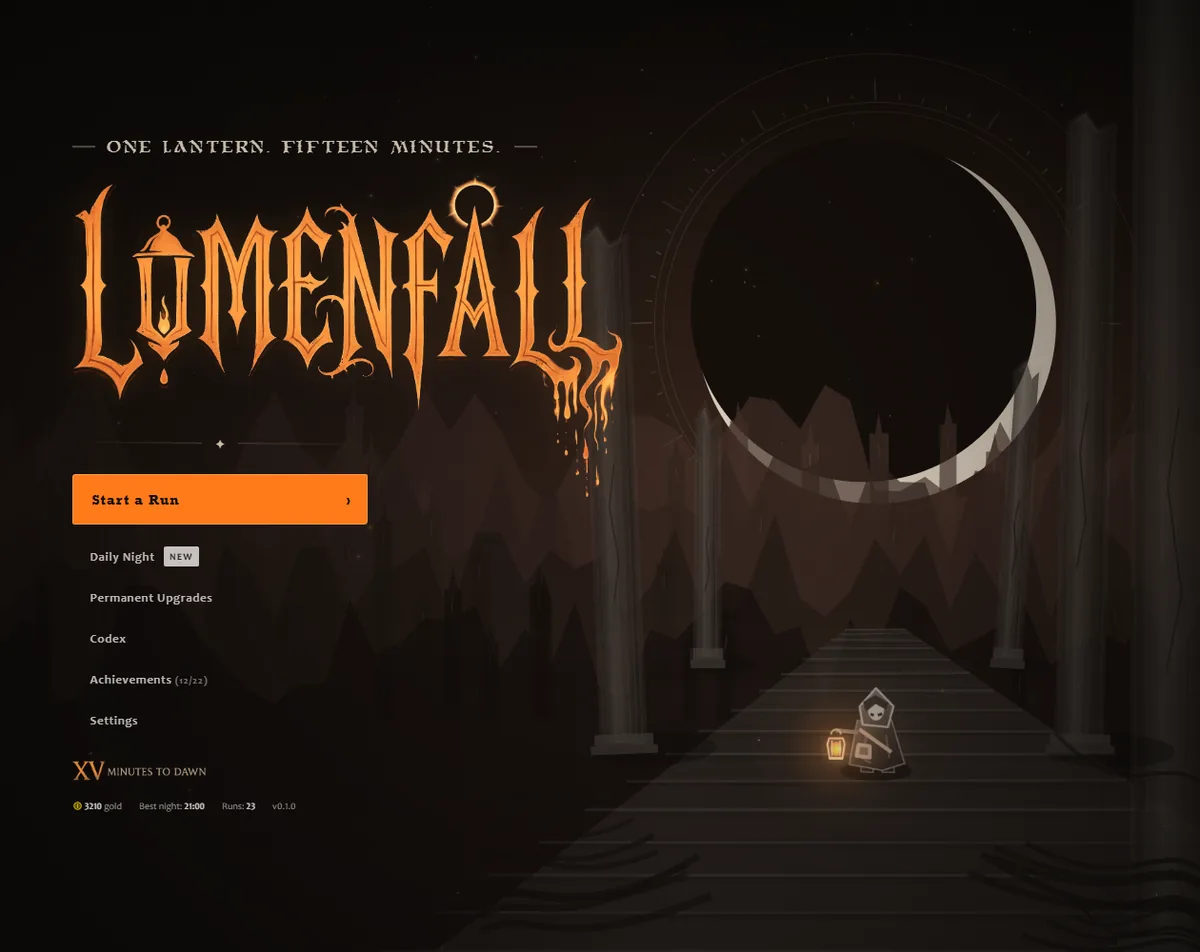
A lantern-lit survivor run that lasts fifteen minutes, ends with a boss called the Eclipse, and fits in a browser tab.
#29 this weekAI-assisted: Code, Graphics
The game runs in this tab. No install, no account.
The short answer
Lumenfall is a fast, dark survivors-style action game that runs in a browser tab with no install. Weapons fire on their own, so attention goes to movement and upgrade choices across a fifteen-minute night. Eight heroes, twelve evolvable weapons and shrine pacts carry the variety, and at 15:00 the Eclipse boss decides whether morning comes.
What is Lumenfall?
The premise fits in a sentence: one lantern, fifteen minutes of darkness, sunrise on the other side. Lumenfall is a fast, dark, survivors-style action game that plays in a browser tab with nothing to install. A run is a countdown rather than an open map, and the weapons handle their own firing, so movement and upgrade decisions take all of the attention.
The clock is the structure. Fifteen minutes is the target, and at the 15:00 mark the Eclipse arrives. Beat it and the night ends in morning; fail and the run stops there.
Everything else feeds that countdown. Eight heroes each play differently, twelve weapons can be pushed into evolved forms, and the level-up deck is assembled during the run rather than chosen in advance. The game is in development and playable right now in HTML5, with Windows and Linux downloads that add fullscreen support and file saves.
How to play
Because each of the eight heroes plays differently, a night starts from a different place depending on the pick. Enemies arrive in waves, the weapons fire automatically, and the loop reduces to two jobs: keep moving, and choose wisely when a level-up interrupts.
Each level-up deals a hand from the deck being built during that run. Reroll, skip and banish are all available when the hand is wrong, which turns the card screen into a filtering problem as much as a power spike.
Weapons evolve on a strict recipe. Push one weapon to its maximum, hold the relic tied to it, then open a chest dropped by an elite enemy or a boss, and the evolved version appears. Fourteen relics exist in total, and each is really a decision about what the deck can support later.
Shrines offer pacts: accept a curse and gain power in exchange. Gold collected along the way buys permanent upgrades that carry between runs, so a bad night still pays toward the next. At 15:00 the Eclipse lands, and beating it delivers morning, with The Long Night available for anyone who wants to keep going past dawn.
Controls
Keyboard, pad and touch are all accounted for. Movement maps to WASD, the arrow keys, a left stick, or a touch-and-drag input. Pause sits on Esc or Start. When an upgrade hand appears, a click, one of the 1-4 keys, or the D-pad plus A will take the card.
Controller support is complete rather than partial, with button prompts styled for Xbox, PlayStation and Switch pads, and every menu can be driven without a mouse or keyboard. That matters for players who never want to reach for a desk.
The only click input named is picking an upgrade card, so a run never depends on cursor precision or aiming speed. Desktop downloads add fullscreen support and the browser build needs no installation, so the same scheme applies either way.
| Input | Action |
|---|---|
| WASD | Move |
| Arrow keys | Move |
| Left stick | Move |
| Touch and drag | Move |
| Esc | Pause |
| Start | Pause |
| Click | Pick an upgrade card |
| 1-4 keys | Pick an upgrade card |
| D-pad and A | Pick an upgrade card |
Tips for your first run
The first night is mostly about learning the clock. Treat the fifteen-minute countdown as the real opponent and the Eclipse at 15:00 as the exam at the end of it. Everything picked before that point should serve the boss fight.
Build narrow rather than wide. A single weapon pushed to maximum, paired with its relic, is worth more than four half-finished picks once an elite or a boss finally drops a chest.
- Keep moving: weapons fire themselves, so positioning is the only mechanical skill being tested.
- Commit to one weapon early, max it, hold its matching relic, then hunt a chest from an elite or a boss.
- Use banish on cards that dilute the deck instead of burning rerolls on them repeatedly.
- Take a shrine pact when the curse does not interfere with the plan already in motion.
- Spend earned gold on permanent upgrades so a failed night still moves the account forward.
- In a browser, avoid clearing site data or playing in a private window if progress matters.
Content and replayability
Eight heroes, each with a distinct way to play, are the biggest source of variety. Twelve weapons sit underneath them and every one has an evolution, so a run can be built around a single maxed weapon plus its relic rather than a broad spread.
Ten enemy types demand different answers: some chase, some shoot, some charge, some explode, some teleport, some split, and some shield themselves. Three bosses cap the escalation — The Eye, Old Bramble and The Eclipse.
Between runs, gold buys permanent upgrades, so progress accumulates even when a night ends badly. Shrine pacts add a risk decision on top of the card choices by trading a curse for power.
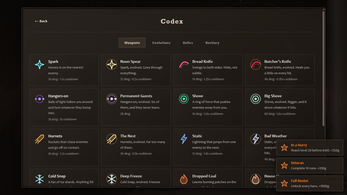
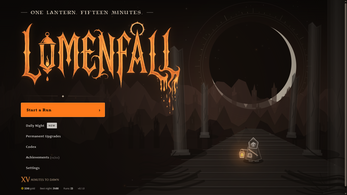
The Daily Night supplies a new seeded challenge each day, and The Long Night keeps a successful run going after dawn for anyone not finished. A Codex records new encounters as they happen, with 22 achievements alongside it, and reroll, skip and banish keep the deck from filling with cards the build does not want.
Presentation and performance
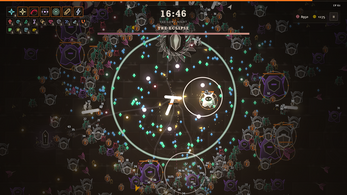
Darkness is the framing device, not just a color choice. A single lantern, a night that has to be outlasted and an eclipse that arrives on the timer give the run its shape, and the dawn ending works as a release valve after fifteen minutes of pressure.
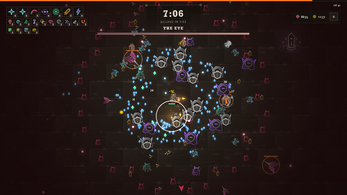
Enemy behavior does the visual work of a bullet hell: ten types that chase, shoot, charge, explode, teleport, split or shield mean the screen fills with varied threats instead of one repeated shape. The Eye, Old Bramble and The Eclipse mark the escalation.
On the technical side, the browser build runs with no installation and keeps progress in browser storage. Windows and Linux downloads add fullscreen support and file saves. The desktop builds are unsigned, so Windows may show a protection warning that needs More info followed by Run anyway, while Linux users unzip the download and run the lumenfall executable, adding execute permission first if required.
Who should play it
Anyone settled into the survivors rhythm will recognize the shape here: automatic fire, a ticking timer and upgrade cards that decide whether a build holds together. The difference is the fixed fifteen-minute night and the Eclipse standing at the end of it as a scheduled wall.
Players who like short sessions get a complete arc in a browser tab with no install, and controller users are covered by prompts for three pad families plus menus that work without a mouse or keyboard.
Completionists have a Codex that fills as new things are encountered and 22 achievements to chase, while the Daily Night offers a fresh seeded challenge each day for anyone who wants a reason to come back.
It is worth saying plainly that the game is in development, so systems can still shift. Anyone who wants a frozen, finished product may prefer to wait; anyone comfortable with a game still being shaped gets a full run today.
Screenshots
How we tested it
The build was loaded from games.debutplay.com in a headless Chromium session on ; the canvas started and no request was blocked. The guide was last checked on .
From the developer
<section class="game-description"> <header> One lantern. Fifteen minutes. Survive the night until dawn. Lumenfall is a fast, dark, survivors-style action game. Your weapons fire automatically. You move, pick upgrades, and try to stay alive until sunrise. At 15:00, the Eclipse arrives. Defeat it, and it's morning. Play it right here in your browser, with no installation required. Downloads for Windows and Linux add fullscreen support and file saves. </header> <section> What You Get 8 heroes, each with their own way to play. 12 weapons, each with an evolution. Max out a weapon, hold its relic, and open a chest from an elite enemy or boss to evolve it. 14 relics and a level-up deck you build as you go. Reroll, skip, or banish options you don't want. 10 enemy types that chase, shoot, charge, explode, teleport, split, and shield. 3 bosses: The Eye, Old Bramble, and The Eclipse. Shrine pacts: Take a curse in exchange for power. Daily Night:…
Frequently asked questions
How long does a run last?
A standard night runs fifteen minutes and ends at dawn. Defeating the Eclipse at the 15:00 mark brings morning, and The Long Night option lets a successful run continue past sunrise.
What happens at 15:00?
The Eclipse arrives as the final boss of the night. Winning that fight ends the run in morning, which makes the whole preceding fifteen minutes a build-up to a single encounter.
Can Lumenfall be played with a controller?
Yes. Controller support is full, with prompts for Xbox, PlayStation and Switch pads, and every menu can be navigated without a mouse or keyboard.
How do weapon evolutions work?
Max out a weapon, hold the relic associated with it, then open a chest dropped by an elite enemy or a boss. All twelve weapons have an evolution waiting behind that recipe.
Where is progress saved?
In the browser version, progress lives in browser storage and can be lost by clearing site data or playing in a private window. Desktop downloads save to a file in the user data folder, and browser and desktop saves stay separate.
Is there a reason to return after the first night?
Gold earned in runs buys permanent upgrades, the Daily Night provides a new seeded challenge each day, a Codex fills in as new things appear, and 22 achievements track longer-term goals.
What games are similar to Lumenfall?
The closest matches on DebutPlay are TORCH, TORCH!, Lanternfall, Izdrži do plate / Make It to Payday. They share the same genre, so the controls and the pace carry over.
Something wrong or missing? Tell us. How we test games.