Adventure · New game
Pracinhas
A researched, fictionalised account of the Brazilian Expeditionary Force told through one soldier's journey from his family kitchen to Naples, with a free first chapter.
#43 this weekAI-assisted: Graphics
The game runs in this tab. No install, no account.
The short answer
Pracinhas is an atmospheric browser story about the Brazilian soldiers who fought in Italy, told through Quim, a recruit carried from his family kitchen to Naples. You walk, talk and make small choices, with period photographs and short history cards filling in the record. Chapter 1 is free and saves as you go.
What is Pracinhas?
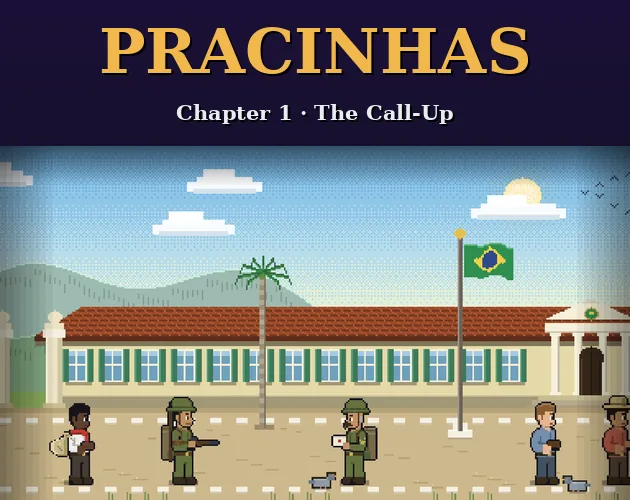
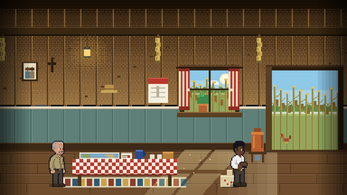
Pracinhas is a 2D interactive story about the Brazilians who served in Italy during the Second World War. The player takes the role of Quim, a young man called up to the Brazilian Expeditionary Force, and follows him from his family's kitchen through to his arrival in Naples. The path forward is built from walking, talking to people and making small choices.
The historical frame is treated as researched fact, while the people Quim meets are fictional creations made to carry that history with respect for those who lived it. Short history cards illustrated with period photographs break in to explain what happened, and a page inside the game collects the sources behind the telling.
Chapter 1, The Call-Up, is free and playable now. Chapter 2 moves the story to Monte Castello in February 1945 and is planned to arrive as an update to the same release. Progress saves itself in the browser, so a session can be closed and picked up again later.
How to play
A session begins in a family kitchen and, for now, ends with the arrival in Naples. Progress comes from walking through each scene, approaching the people in it and pressing the interact key to open a conversation. Dialogue carries most of the information, and the decisions Quim makes along the way are deliberately small ones.
History cards punctuate the story with period photographs and brief explanations of the events behind a scene. A page inside the game gathers the sources used in the research, so the factual layer can be checked from within the same release.
The game saves automatically in the browser, which means closing a tab does not force a restart. It opens in English or Portuguese depending on the browser's language setting, and the menu allows a switch at any time. Sound is recommended for play.
Controls
On a computer, walking is handled with A and D or with the arrow keys, and E is the interact button used to talk to people and trigger what is in front of Quim. Nothing more complicated than that is needed to move through Chapter 1.
On a phone the game switches to touch controls, and the screen should be turned to landscape before starting. The touch layer replaces the keyboard for the same two jobs: moving Quim through a scene and interacting with whatever the scene puts in his way.
Language is handled before play rather than during it. The game detects the browser's language and opens in English or Portuguese, with a menu option to swap if the guess is wrong. Sound is recommended, and the automatic save runs in the background in the browser.
| Input | Action |
|---|---|
| A / D | Walk |
| Arrow keys | Walk |
| E | Interact |
| Touch controls (phone, landscape) | Move and interact |
Tips for your first run
Chapter 1 is the free opening, so there is no cost to starting over if a scene goes by too quickly. The story is carried by conversation, which means the useful habit is to talk to everyone in a scene before moving on, then press E again on anyone who looks like they still have something to say.
The history cards are the part that separates the fiction from the record. Reading them as they appear keeps the Naples arrival and the call-up in context, and the in-game sources page answers the questions the cards raise.
- Turn the phone to landscape before the first scene, since touch controls are built for that orientation.
- On a computer, walk with A and D or the arrow keys and interact with E.
- Open the menu and switch language if the browser starts the game in the wrong one.
- Read each history card; the period photographs and short explanations carry the researched facts.
- Check the in-game sources page when a scene raises a question about the real campaign.
- Play with sound on where possible, as the game recommends it.
- Treat the small choices as the main input beyond walking and talking, and take them slowly.
Content and replayability
The free first chapter covers the call-up and the road to Naples. A second chapter is planned around Monte Castello in February 1945 and will arrive as an update to the same release rather than as a separate purchase. That structure means the story grows in place for anyone who has already started it.
The archive material is a content layer of its own: short cards tied to period photographs, plus a page of sources listed inside the game. Players who care about how the campaign is documented have something to read alongside the fictional scenes, and the two layers are kept visibly separate.
Because the browser save runs automatically, returning to the story does not require a manual checkpoint. The cast around Quim is fictional by design, created to carry a real history with care, and the game frames that choice openly rather than presenting invented characters as historical figures.
Presentation and performance
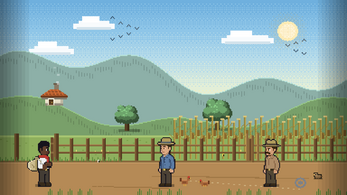
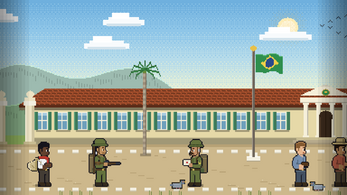
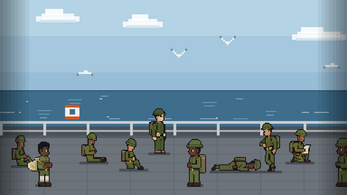
Pracinhas is built in 2D pixel art with an atmospheric, story-rich tone, and it trades on the contrast between quiet domestic scenes and the Italian campaign ahead. The visual style is period-minded rather than flashy, which suits a story told through conversations and small decisions.
The history cards use genuine period photographs, so the presentation shifts between drawn pixel scenes and archival imagery. That mix does the explanatory work: the drawn world holds the fiction, and the photographs anchor the facts.
It runs as an HTML5 game inside the browser, with the same build serving desktop keyboard play and phone touch play. Sound is recommended rather than incidental, and the automatic browser save keeps a run intact between sittings. The project is still in development, with the second chapter planned as an update.
Who should play it
This is for players who come to a war story for the people rather than the firefight. Anyone curious about the Brazilian Expeditionary Force, a campaign that gets little attention compared with the larger Allied fronts, will find the subject opened up through Quim's call-up and his arrival in Naples rather than through a lecture.
It also suits players who like short, quiet narrative games in a browser tab: no installation ritual, a save that handles itself, and a first chapter that costs nothing to try. Portuguese and English speakers are both served, with the language following the browser and a menu switch available.
Readers of history who want their fiction clearly labelled will appreciate the split between researched events and invented characters, and the sources page that backs it up. Players hunting for action, systems to master or competitive modes should look elsewhere; the verbs here are walking, talking and choosing.
Screenshots
How we tested it
The build was loaded from games.debutplay.com in a headless Chromium session on ; the canvas started and no request was blocked. The guide was last checked on .
From the developer
Pracinhas is an interactive story about the Brazilian soldiers who fought in Italy in World War II. You play Quim, called up to the Brazilian Expeditionary Force (FEB), from the family kitchen to the arrival in Naples. Walk, talk to people, make small choices and find out what really happened. The history is real and researched; the characters are fictional, created to tell it with respect to those who lived it. Short history cards with period photos explain the facts, and an in-game page lists the sources. Chapter 1: The Call-Up is free. Chapter 2 (Monte Castello, February 1945) is on its way and will arrive as an update to this same page. The game saves automatically in your browser. Controls: on PC, A/D or the arrow keys to walk, E to interact. On a phone, touch controls (turn the phone to landscape). The game opens in English or Portuguese depending on your browser, and you can switch in the menu. Sound recommended. ——— Pracinhas…
Frequently asked questions
Is Pracinhas free?
Chapter 1, The Call-Up, is free to play in the browser. Chapter 2, set at Monte Castello in February 1945, is planned to arrive as an update to the same release rather than as a separate game.
Where can the game be played?
It runs as an HTML5 game in a browser. On a computer it uses the keyboard, with A and D or the arrow keys to walk and E to interact. On a phone it uses touch controls, and the device should be turned to landscape.
Which languages does it support?
English and Portuguese. The game opens in one or the other depending on the browser's language, and the menu holds a switch if the automatic choice is not the one wanted.
How does saving work?
The game saves automatically in the browser. There is no manual save step to remember, and a session can be closed and resumed later in the same browser.
Is Quim a real person?
No. The history is researched and real, but Quim and the people around him are fictional characters created to tell it with respect for those who lived through the campaign.
Should it be played with sound?
Sound is recommended. The game presents audio as the intended way to experience the atmosphere, and the language can still be changed from the menu at any point.
What games are similar to Pracinhas?
The closest matches on DebutPlay are Maple Leaf, Prompt Asylum, //TODO: Save the Dev. They share the same genre, so the controls and the pace carry over.
Something wrong or missing? Tell us. How we test games.