Shooter · New game
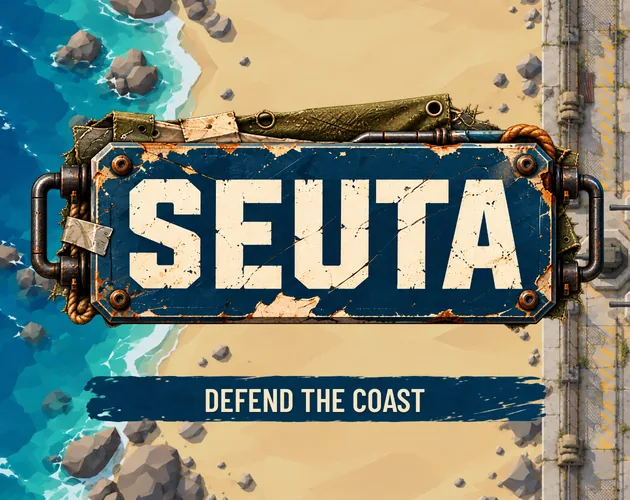
SEUTA
A free top-down browser shooter about holding a coastal fence against goblins, where every level-up pauses the action for a single upgrade choice.
#37 this weekAI-assisted: Code, Graphics, Text
The game runs in this tab. No install, no account.
The short answer
SEUTA is a free, single-player browser shooter about holding a coastal fence against goblins coming out of the sea. Aim with the mouse, hold to fire, and spend level-up upgrades on damage, fire rate, piercing rounds, explosive rounds or regeneration. Super waves add turrets. The run ends when the defense does, and the score is the point.
What is SEUTA?
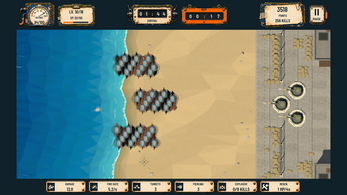
SEUTA is a top-down 3D shooter built to run in a browser, and its premise fits on a single coastline. Goblins climb out of the sea and march inland toward a fence, and the thing standing between them and that fence is the fire you direct from a small set of turrets. Rather than walking a character around the map, the player commands the guns: pick the cluster that threatens the line most, put rounds into it, and keep the defense upright for as long as possible.
It is a single-player arcade survival game with no finish line. Kills convert into points and experience, and experience is what drives the upgrade decisions that shape a run. The project is made in Godot, can be played in English or Italian, and remains in development, so the build described here is a snapshot rather than a finished release.
How to play
A run begins with a turret and a horde. Moving the pointer aims, holding the left mouse button fires, so the whole game is a conversation between where the goblins are massing and where your aim sits. The horde is not uniform: normal goblins march, fast ones close distance quickly, and armored ones are built to soak pressure. Breaking up the densest groups keeps the fence standing longer than picking off stragglers.
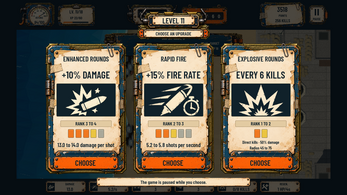
Every kill pays out points and experience. Experience fills a level bar, and when it does, the action stops and an upgrade screen takes over. Five options exist: damage, fire rate, piercing rounds, explosive rounds and regeneration. One is chosen before play resumes, and those picks stack across a run, so the same starting turret can end up playing quite differently by the end.
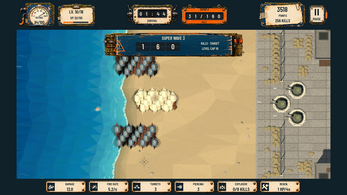
Super waves are the structural beat. They arrive at intervals that shorten as a run continues, and clearing one adds another turret to the defense, up to a maximum of four. There is no victory screen waiting at the end; the finish is the moment the defense finally collapses. Survival time and score are the only measures on offer.
Controls
Mouse control is minimal: move to aim, hold the left button to keep firing, and release to stop. ESC or an on-screen Pause button freezes and resumes the run. The game also pauses by itself whenever a level-up upgrade choice appears.
A touch interface is built in as an alternative. A joystick is dragged to aim and fire at the same time, and letting go stops the shooting, so the aim-and-hold rhythm translates to a finger. The build is tested on desktop in landscape orientation, with phone testing still pending.
Language selection sits at the top left of the screen, reachable before launching or from the main menu, and the choice is remembered afterward. Music volume levels are saved the same way rather than resetting each session.
| Input | Action |
|---|---|
| Mouse | Move to aim; hold the left button to fire |
| ESC or Pause button | Pause and resume the run |
| Touch joystick | Drag to aim and fire; release to stop firing |
| Language button (top left) | Switch between English and Italian before launching or in the main menu |
Tips for your first run
The opening minutes are about learning what the horde wants to do to the fence. Three goblin types share the field — normal, fast and armored — so read the crowd before committing fire to one spot.
The rest is pacing. Extra turrets only arrive through super waves, so every upgrade choice is really a bet on surviving the next one.
- Hold the left button only while the aim is on a crowd; releasing it stops the shooting entirely.
- Treat the super wave as the real objective. Clearing one is the only route to a second, third and fourth turret.
- Regeneration is the only one of the five upgrades named for recovery rather than damage, so it is worth weighing against fire rate and damage early.
- Expect the gaps between super waves to shrink. An easy stretch is not a promise that the next one will be.
- Reach for ESC or the Pause button when the battlefield fills up, then take a breath before resuming.
- Play in landscape on a desktop while phone testing is unfinished.
Content and replayability
The content is deliberately tight. Three goblin variants — normal, fast and armored — make up the opposing roster, five upgrades cover the player's side, and turrets cap at four. Super waves are the pacing device that hands out those extra guns, and they return at intervals that shorten as a run goes on, which is the pressure that eventually ends every attempt.
Replayability comes from the score rather than from modes. There is no campaign structure to complete; a run ends, and the next one starts from a single turret with a fresh set of upgrade picks. The online leaderboard is not active yet, so competition currently stays with the player's own best score. The game is single-player and still in development, which makes the current scope a snapshot rather than a final feature list.
Presentation and performance
SEUTA is a 3D game viewed from above, and its feedback is built around the act of firing: muzzle flashes, recoil on the turret, explosions where rounds land, and a brief shake of the battlefield when things get loud. Those are small touches, but in a game that is entirely about pointing at a crowd, they are what makes a hit read as a hit.
Audio is split across three musical contexts — the menu, ordinary combat and super waves — so the soundtrack shifts as the pressure does. Volume levels are adjustable and persist between sessions.
The build is an HTML5 browser game tested on desktop in landscape. A touch interface exists, but testing on physical phones is still pending, so the mouse path is the one with the most mileage on it. Graphics, parts of the code and the text were produced with generative AI assistance, and the music and sound effects come from CC0 resources.
Who should play it
SEUTA suits players who like the shape of an arcade survival run more than a story: short sessions, one screen of mounting pressure, and a score at the end that invites another attempt. Mouse-only aiming makes it a desk game in its current form, and the desktop landscape build is the tested configuration.
It also fits anyone curious about a small Godot browser project in active development, since the loop is legible within a couple of runs and the upgrade pool is short enough to sample quickly. Nothing is charged to try it.
Anyone who needs a permanent ending, a campaign, online rankings or confirmed phone support should hold off: the design intends for the defense to fall eventually, the leaderboard is not live yet, and physical-device testing is unfinished.
Screenshots
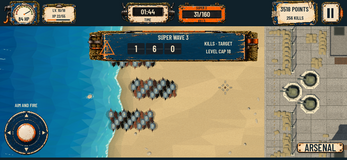
How we tested it
The build was loaded from games.debutplay.com in a headless Chromium session on ; the canvas started and no request was blocked. The guide was last checked on .
From the developer
English Defend the coast. The horde keeps coming. Goblins emerge from the sea and march towards the fence. You control the turrets’ fire: aim at the most dangerous groups, clear a path through the horde and keep the defense standing. Every kill earns points and experience. When you level up, the game pauses while you choose an upgrade. Super waves arrive at shorter intervals; completing them adds more turrets, up to four. You cannot hold out forever. Try to last longer and finish with a higher score. Inside SEUTA Dense hordes of normal, fast and armored goblins.Five upgrades: damage, fire rate, piercing rounds, explosive rounds and regeneration.From one to four turrets, unlocked by completing super waves.Muzzle flashes, recoil, explosions and brief battlefield shake.Music for the menu, combat and super waves, with saved volume settings. Controls Mouse: move to aim; hold the left button to fire.ESC or the Pause button: pause and resume…
Frequently asked questions
Is SEUTA free to play?
Yes. It runs in a browser at no cost, with no purchase needed to start a run.
Does it work on phones?
A touch interface is included, with a joystick that aims and fires while dragged. The build has been tested on desktop in landscape orientation, and testing on physical phones is still pending, so phone play is not yet confirmed.
Can the run be paused?
Yes. ESC or the on-screen Pause button stops and resumes play. The game also pauses automatically when a level-up upgrade choice appears.
Is there an online leaderboard?
Not yet. The online leaderboard is not active, so a run's score currently stays with the player.
Which languages are supported?
English and Italian. The switch sits at the top left of the screen, is available before launching or in the main menu, and the choice is saved.
How many turrets can be unlocked?
Up to four. Each completed super wave adds another turret, and super waves return at shorter and shorter intervals as a run goes on.
What games are similar to SEUTA?
The closest matches on DebutPlay are Ghost Line, the moon is a gun (Demo), GALAGUH!. They share the same genre, so the controls and the pace carry over.
Something wrong or missing? Tell us. How we test games.