Puzzle · New game
Strikeline: Quest
A free pixel-art puzzle RPG where cleared lines become sword swings, arrows and spells, and a shared board lets the enemy take the space you wanted.
#13 this weekAI-assisted: Code, Graphics, Text
The game runs in this tab. No install, no account.
The short answer
Strikeline: Quest turns block clearing into combat: red lines swing a sword, green lines loose an arrow, purple lines cast magic, and double clears hit twice as hard. Three heroes share one board against an opponent that places its own pieces, and a six-node run carries health between fights. It is free in the browser, with mouse or touch controls.
What is Strikeline: Quest?
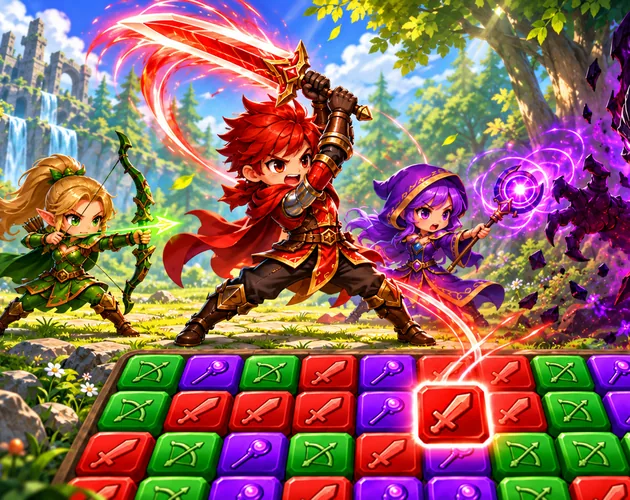
Strikeline: Quest is a block-puzzle RPG played in the browser. Three colours map to three heroes: red lines become a sword swing, green lines loose an arrow, and purple lines cast magic. Clearing rows and columns is not a side activity attached to the fighting, it is the attack input itself, and a double clear doubles the damage.
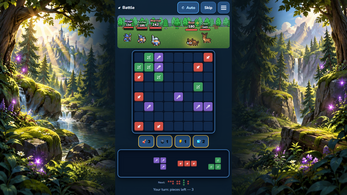
The board is shared. After three pieces are placed, the enemy drops pieces of its own, frequently into the exact gaps that were being saved for a big clear. That tug between building a line and denying space is the heart of the game, and it is why a crowded board can waste a turn outright when nothing fits.
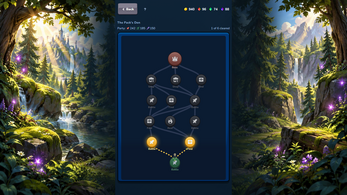
Behind the puzzle sits a run structure: six nodes with a fork at every step, a boss waiting at the end, and health that carries between fights without refilling on its own. Heroes can be lost, and a fallen hero's colour keeps working for the survivors at half power. It is free, single-player, turn-based, and drawn in pixel art.
How to play
A turn begins with the tray. Three pieces go down before the enemy answers with its own placements, and it is perfectly willing to take the space that was being held back. Placement is a negotiation rather than a solo puzzle, which is the whole reason the game avoids feeling like solitaire.
Each hero is tied to a colour. Clear a red line and the sword hero strikes, green sends an arrow, purple casts magic. Two lines cleared on one placement double the damage, so the setup is often worth more than the immediate hit. If the board fills up completely, the turn is simply lost.
Health is a run-long resource. It carries from fight to fight and does not return by itself, so a scrappy win still costs something. Heroes can die and the run continues: the lost hero's colour still counts, and the survivors use those blocks at half power.
When no piece fits, the skip turn option passes the turn and keeps the board clean instead of forcing an awkward placement. Tapping an enemy concentrates the turn's damage on that target, and the blue bar beneath each hero fills toward a special.
Controls
Everything is handled with a mouse or a finger. A piece is dragged from the tray straight onto the board. A tap on a piece, without dragging, rotates it, which is the fastest way to correct a shape before committing it to a column. Tapping an enemy redirects damage onto that target.
Every hero carries a blue bar that fills into a special. It runs automatically by default, and a switch in the header flips it to manual for players who would rather time the burst themselves.
The layout is built for phones as well as desktops, with mouse or touch, phone or desktop. The interface language is picked up from the browser and arrives in English, Spanish or Russian without a detour through a settings screen.
Nothing has to be studied before the first fight. The opening battle teaches the whole game and can be replayed from the menu at any time.
| Input | Action |
|---|---|
| Mouse drag | Pull a piece from the tray onto the board |
| Tap | Rotate a piece without dragging it |
| Tap enemy | Focus the turn's damage on that enemy |
| Header toggle | Switch the blue special bar between automatic and manual |
| Skip turn | Pass the turn and keep the board clean when nothing fits |
| Touch | Play with a finger on a phone or a desktop screen |
Tips for your first run
A first run is best treated as a scouting trip. The opening battle teaches everything, and the lessons that matter most are about placement rather than speed.
At each fork, weigh the node types against the health left in the run and keep the boss at the end in view.
- Rotate before placing: a tap turns a piece without dragging, so a shape can be corrected before it lands.
- Clear for the hero who needs the damage: red feeds the sword, green the arrow, purple the magic.
- Set up double clears where possible, because two lines on a single placement double the hit.
- Assume the enemy will take any gap left open, since its pieces come after the third one.
- Skip a turn instead of jamming the board; both cost the turn, but only one leaves a mess.
- Guard health like currency, because it carries between fights and never refills by itself.
- Switch the special bar to manual in the header when surprise bursts beat automatic ones.
Content and replayability
A run is a chain of six nodes with a fork at every step. The options include a battle, an elite fight, a rest stop, a shop and a find, and the chapter closes on a boss. Because health persists, route choice is a resource decision as much as a difficulty one.
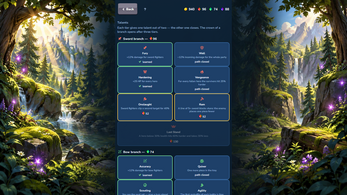
Between runs, gold and crystals buy fighters, gear and talents, so a failed attempt still moves the account forward. The talent tree holds 21 talents, and a single run opens 12 of them. Each tier offers a choice of two, and the path not taken closes for that run, which turns the tree into a set of commitments rather than a checklist.
Three chapters have to be cleared before ascension opens. Ascension revisits the same lands with tougher enemies and better loot, so the difficulty ladder works as a run modifier rather than a second campaign.
Losing a hero never ends a run outright: their colour keeps serving the survivors at half power. That softens the loss without making it free, and it keeps a battered run worth finishing.
Presentation and performance
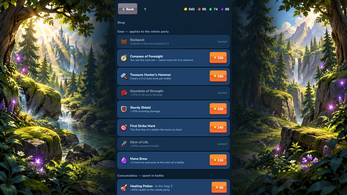
Pixel art runs throughout, drawn from licensed sprite packs rather than generated assets, with a matching interface kit and a licensed font. Music and sound effects come from credited creators, and the asset licences stay with their authors.
Under the hood the project is deliberately small: plain HTML and JavaScript in a single file, with no engine and no framework. That keeps the download light and the whole thing playable inside a browser frame without a launcher. Automated layout and tutorial checks were used during development to keep the interface usable on a 360 px phone, the kind of detail that shows up as buttons staying thumb-sized instead of shrinking into a corner.
The game runs with mouse or touch on phone or desktop, and the interface is available in English, Spanish and Russian, chosen from the browser.
The tutorial is the first battle, and it can be replayed from the menu whenever the mechanics need a refresher.
Who should play it
Players who enjoy the shape of a block puzzle but want a reason to care about each placement will get the most from this. The colour-to-hero mapping gives every line a purpose beyond clearing space, and the enemy's own placements turn the board into a two-sided argument.
It suits roguelite players who like routing: six nodes, forks at each step, health that carries, and a talent choice at every tier that locks out the alternative. It also suits short browser sessions, because a run is a self-contained sequence of fights rather than a level list to grind.
Players who want real-time action, aiming or reflex-based combat will not find it here; everything is turn-based and deliberate. Anyone who prefers to learn by doing can start immediately, since the opening battle doubles as the tutorial and can be replayed later. It is single-player, free to play, and needs nothing more than a browser.
Screenshots
How we tested it
The build was loaded from games.debutplay.com in a headless Chromium session on ; the canvas started and no request was blocked. The guide was last checked on .
From the developer
A block-puzzle RPG where every line you clear turns into a hero's strike.Three colours, three heroes: red swings a sword, green looses an arrow, purple casts magic. The board is shared You place three pieces, then the enemy places its own — right where you needed the space. This is not solitaire. Clear a red row and your warrior hits; clear two lines at once and the damage doubles; let the board fill up and your turn is wasted. A run, not a level list Six nodes with a fork at every step: battle, elite, rest, shop, find, and a boss at the end. Health carries between fights and never regenerates on its own, so charging straight ahead does not work. Lose a hero and their colour still counts — the survivors use those blocks at half power. Losing someone hurts; it is never pointless. Between runs Gold and crystals buy fighters, gear and talents. The tree holds 21 talents, a single run opens 12: every tier is a choice of two and the other…
Frequently asked questions
Is Strikeline: Quest free to play?
Yes. The game is free to play in the browser.
What is needed to play it?
A browser. It is an HTML5 game controlled with a mouse or a finger, on phone or desktop.
Which languages are supported?
English, Spanish and Russian. The language is picked up from the browser automatically.
What happens when a hero is lost?
The run continues. The fallen hero's colour still counts, and the survivors use those blocks at half power.
How many talents open in one run?
The tree holds 21 talents and a single run opens 12, with each tier a choice of two; the other path closes for that run.
How is ascension unlocked?
Clear three chapters. Ascension then revisits the same lands with tougher enemies and better loot.
What games are similar to Strikeline: Quest?
The closest matches on DebutPlay are Thaw, Impossible Factory, Ding Ding! Boxing Match-3. They share the same genre, so the controls and the pace carry over.
Something wrong or missing? Tell us. How we test games.