Puzzle · New game
Thaw
A free browser puzzle where momentum, snow, rocks, crates, and cracked ice turn twelve short rooms into a tidy test of planning.
#45 this weekAI-assisted: Code, Graphics, Sound, Text
The game runs in this tab. No install, no account.
The short answer
Thaw is a free HTML5 sliding puzzle built around simple brakes: snow halts a slide, rocks stop it just before contact, and crates can be kicked into place or into water to create standing ground. Twelve rooms introduce ideas one at a time, then combine them, with three-star par goals, unlimited undo, and saved progress.
What is Thaw?
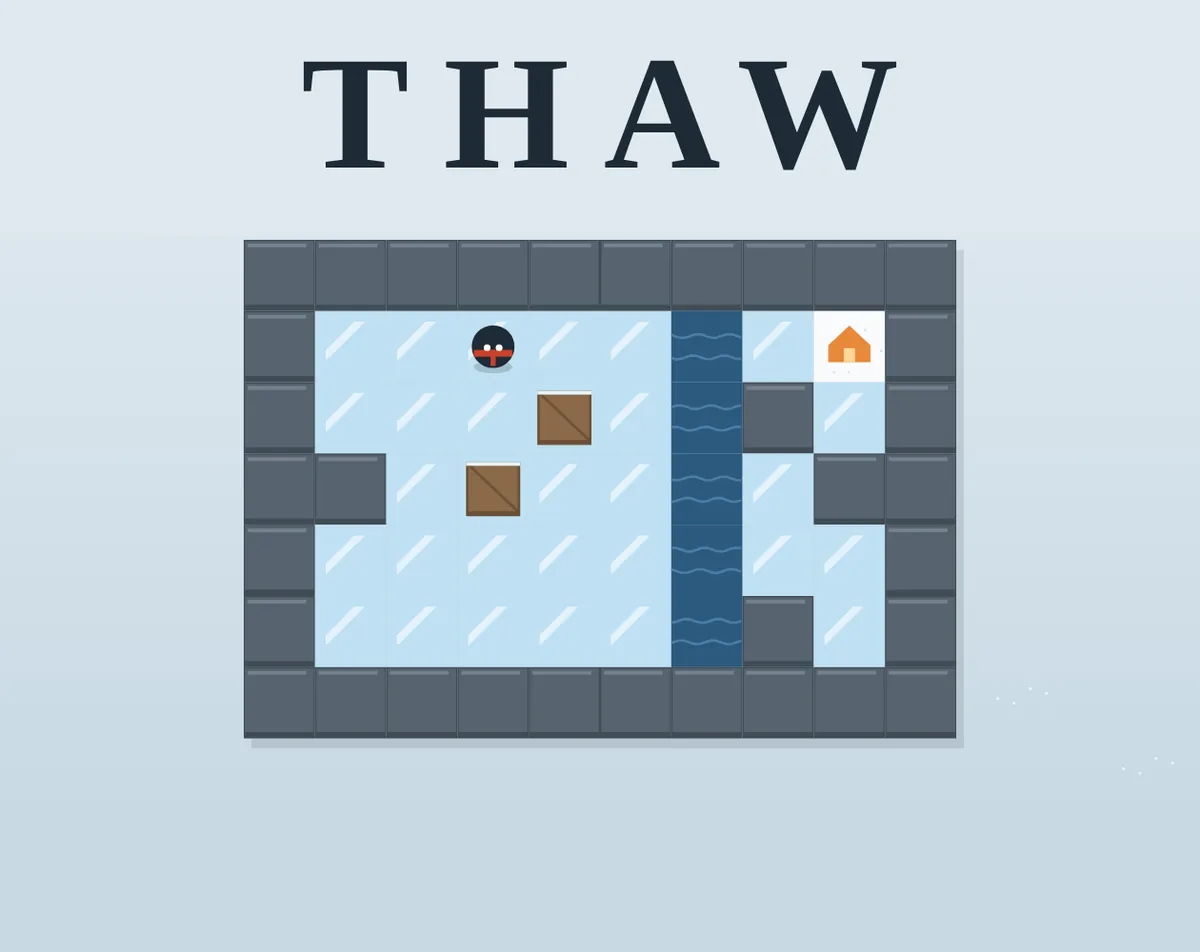
Thaw is a free HTML5 puzzle built around a single tempting motion: keep sliding until a surface or object interrupts the trip. The ice preserves movement, snow brings a slide to a stop on the tile itself, and a rock halts the slide just before contact. The goal is to reach the hut. Crates add a second layer because walking into one kicks it; the crate travels under the same rules and becomes a brake wherever it settles. A crate pushed into water drops, freezes, and leaves a snow tile that can hold a standing player. Cracked ice breaks behind whatever crosses it, so a route can close as another stopping place opens. The game has twelve rooms. New ideas appear alone with one line of explanation before later rooms combine them. Stars reward efficient finishes, undo is unlimited, and saved progress unlocks rooms in sequence. The project is in development, and the playable build runs in a browser.
How to play
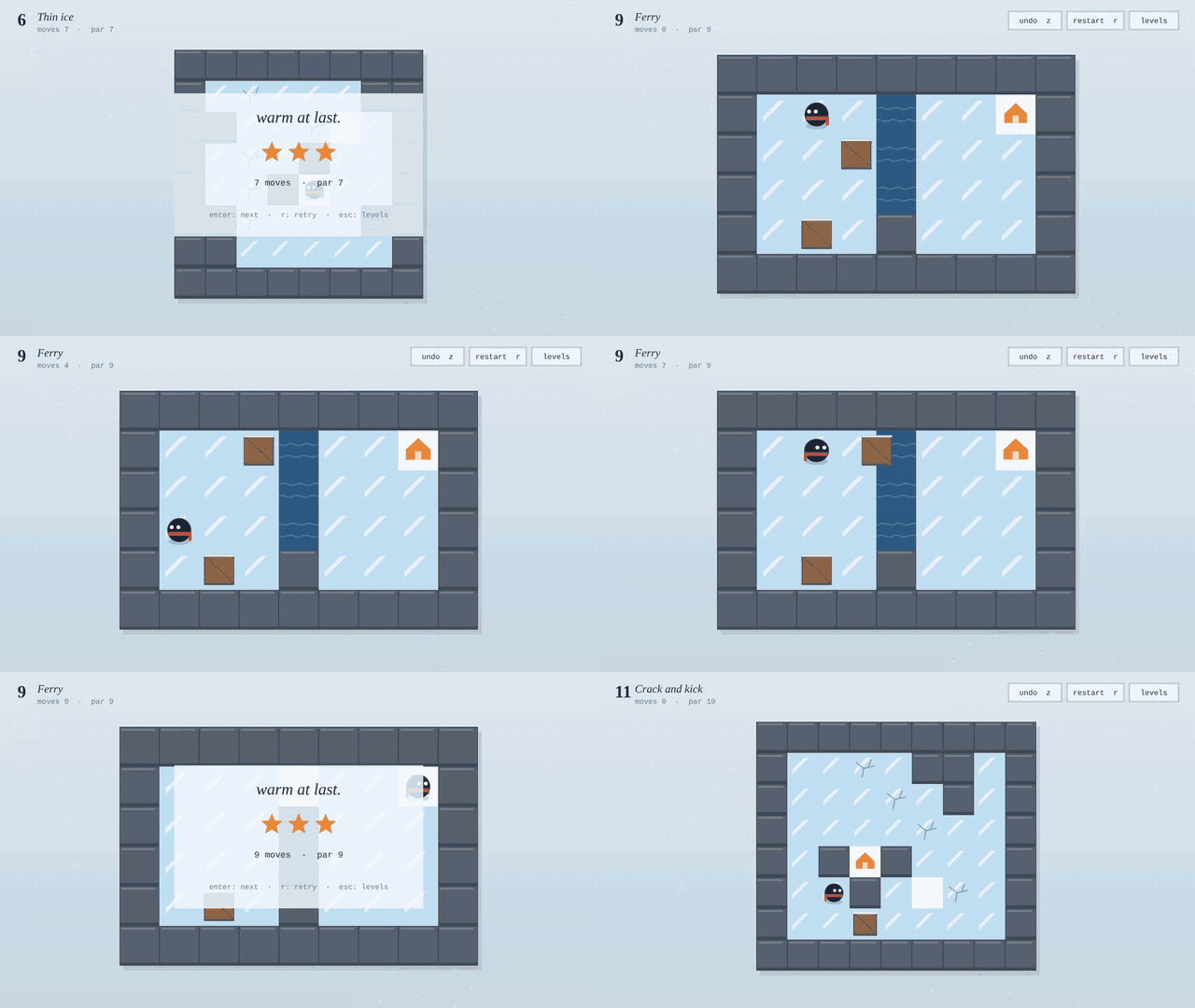
Each room asks for one clean outcome: guide the player to the hut. Movement is not free walking. A direction press begins a slide that continues over ice until snow, a rock, a crate, or another stopping surface ends it. Snow ends a slide on its tile; a rock ends it one step before contact. Walking into a crate kicks it away, and that crate follows the same slide rules. The place where the crate lands becomes a new brake, which can be useful for the next route. A crate kicked into water sinks and becomes a frozen snow patch, giving a new place to stand. Cracked ice collapses behind whatever leaves it, so a path can vanish and a new stop can appear. Early rooms isolate one idea and explain it in a single line. Later rooms combine the same ingredients. A par finish gives three stars, and a slightly slower clear yields two. Undo and restart are available at any time, and room completion opens the next room.
Controls
Keyboard slides use the arrow keys or WASD. Gamepad slides use the d-pad. Touch and mouse slides use a swipe. Undo has several routes: Z, U, Backspace, the B button, or an undo button. Restart uses R, Y, or a restart button. The levels screen opens with Esc, L, Start, or a levels button. Confirm and next-room actions use Enter, Space, A, or a tap. M mutes the game. The input system also queues commands made while a slide is still in progress, accepting up to three, so a quick press is not lost. That queue matters because every room is built around committed movement: a direction starts a slide, and the next decision can wait until the slide settles. On-screen buttons cover undo, restart, and levels, while a tap confirms. Keyboard and gamepad players get direct shortcuts for the same actions. The control set covers sliding, undo, restart, level selection, confirmation, and mute.
| Input | Action |
|---|---|
| Arrow keys, WASD, d-pad, or swipe | Slide |
| Z, U, Backspace, B, or the undo button | Undo |
| R, Y, or the restart button | Restart |
| Esc, L, Start, or the levels button | Open levels |
| Enter, Space, A, or tap | Confirm or advance to the next room |
| M | Mute |
Tips for your first run
Treat the first few rooms as vocabulary lessons. Each new idea arrives with a single explanatory line, so the useful habit is to watch what changes after a slide rather than rush toward the hut. A crate is not just an obstacle; it is a brake that can be placed, and a crate sent into water becomes standing ground. Cracked ice is a route-changing tool, not only a hazard. Undo costs nothing, so test a slide, read the new board, and rewind if the shape is wrong. Restart is the cleaner option when a room has collapsed into a dead end. The command queue holds up to three presses during a slide, which helps on touch, but planning one brake at a time is still clearer. Par is exact because a solver proves it; two stars are a fair result while learning a room. Saved stars and sequential room unlocks mean progress is not lost after a break.
- Use undo after a slide that breaks cracked ice, because the old route may be gone.
- Kick crates toward useful stopping points; a crate that lands well becomes a brake for a later slide.
- Send a crate into water when a room needs a snow patch to stand on, not as a routine move.
- Restart when a crate or cracked ice leaves no route to the hut.
Content and replayability
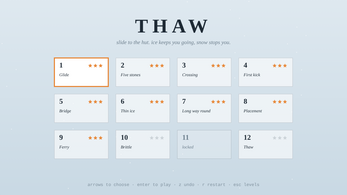
Twelve rooms form the room list. Each completed room opens the next, so the sequence is the main progression. Stars are the replay hook. A par clear carries three stars; a finish just above par still earns two. Because a breadth-first solver maps all reachable positions, par is the true shortest solution rather than an estimate. That makes repeated attempts meaningful: a room can be replayed to shave a wasteful slide, and the star record is saved. The build also verifies that crate rooms cannot be solved without their crates, so crate puzzles are not decorative. The room order was assembled by hand from solver-driven search results. Unlimited undo supports experimentation without a penalty, and restart gives a clean reset when a route is beyond repair. The scope is deliberately short. Players who enjoy optimizing a small set of sliding puzzles can return for three-star clears; players who only want to reach the hut can use undo and move through the sequence.
Presentation and performance
Thaw is built as plain JavaScript on a 2D canvas. The build uses no game engine and loads no art assets, and all audio is generated live in the browser. The look is minimalist: ice, snow, rocks, crates, cracked ice, water, and the hut carry the room language. The game aims for a cozy, minimalist, relaxing tone, and the twelve-room structure supports that short-session feel. The HTML5 build is playable in a frame and includes keyboard, gamepad, touch, and mouse input routes. The game is in development, so the build is best treated as a working launch version rather than a finished package. Rendering on a 2D canvas suits the step-by-step slides, and the state of snow, crates, cracks, and water is readable at a glance. Sound is generated rather than loaded, which keeps the browser build light. The practical check is how the frame responds in the browser.
Who should play it
Thaw suits players who like a puzzle to explain itself through movement. The appeal is not a long campaign but a compact set of twelve rooms where snow, rocks, crates, water, and cracked ice keep changing the stopping points. Fans of Sokoban and sliding-puzzle games will recognize the push-and-plan rhythm, though the crate that becomes a brake or freezes into snow gives the rooms a distinct vocabulary. Players who value generous undo and restart will find both, along with saved stars and sequential unlocks. The short, cozy, minimalist framing makes it a good fit for a quiet single-player browser session. Gamepad and touch controls widen the practical setups, and the HTML5 build runs in a browser. Anyone chasing three-star clears should enjoy the solver-proven par targets, because the score is a fixed shortest route rather than a rough time. The focus stays on the sliding puzzle and its compact room set.
Screenshots
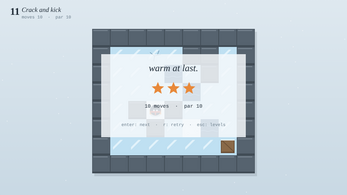
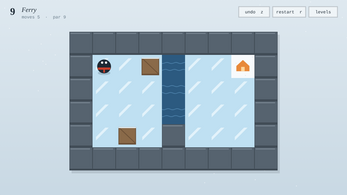
How we tested it
The build was loaded from games.debutplay.com in a headless Chromium session on ; the canvas started and no request was blocked. The guide was last checked on .
From the developer
Ice keeps you going. Snow stops you. Get to the hut. You slide until something stops you. Snow stops you on it. A rock stops you just before it. Walk into a crate and you kick it: it slides by the same rules, and wherever it lands becomes a brake you placed. Kick one into the water and it sinks and freezes into a patch of snow you can stand on. Cracked ice breaks behind whatever leaves it, which closes a path and opens a new place to stop. Twelve rooms. Each new idea arrives on its own, with one line of explanation, before the later rooms start combining them. Finish a room in par for three stars; a little over par still earns two. Undo as much as you like. Your stars are saved, and each room opens the next. Par is proven, not guessed. Every room has been checked by a solver that searches every reachable position, so par is the true shortest solution. Controls KeyboardGamepadTouch / mouseSlidearrows or WASDd-padswipeUndoZ, U or…
Frequently asked questions
Is Thaw free to play?
Yes. Thaw is free to play as an HTML5 browser build.
How many rooms does Thaw have?
Twelve rooms. Each completed room opens the next, and star results are saved.
How does the star system work?
A par clear gives three stars, and a slightly slower finish still earns two.
What stops a slide?
Snow ends a slide on its tile, a rock ends it just before contact, and crates act as brakes after being kicked.
Is the par score fair?
A breadth-first solver maps all reachable positions in each room, confirming that par is the shortest route.
What input options are available?
Keyboard, gamepad, touch, and mouse controls are supported, including undo, restart, levels, confirm, and mute actions.
What games are similar to Thaw?
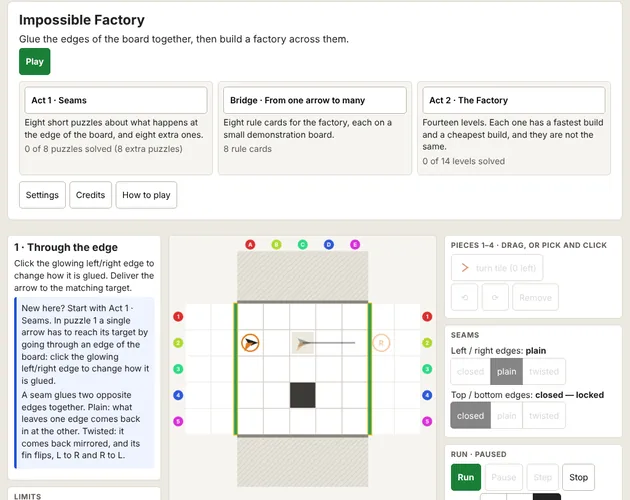
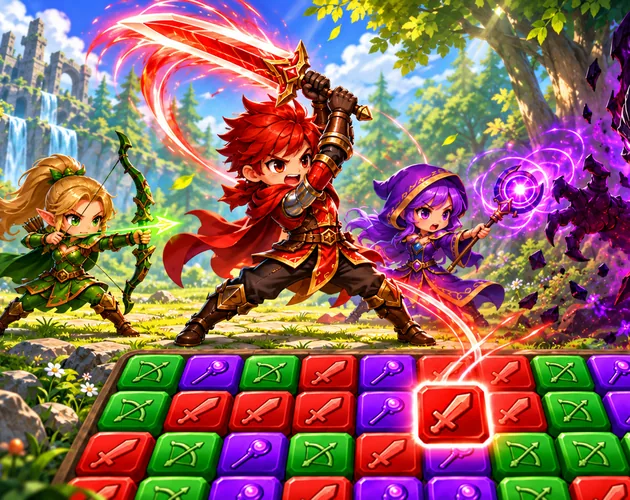
The closest matches on DebutPlay are Impossible Factory, Ding Ding! Boxing Match-3, Strikeline: Quest. They share the same genre, so the controls and the pace carry over.
Something wrong or missing? Tell us. How we test games.