Card game · New game
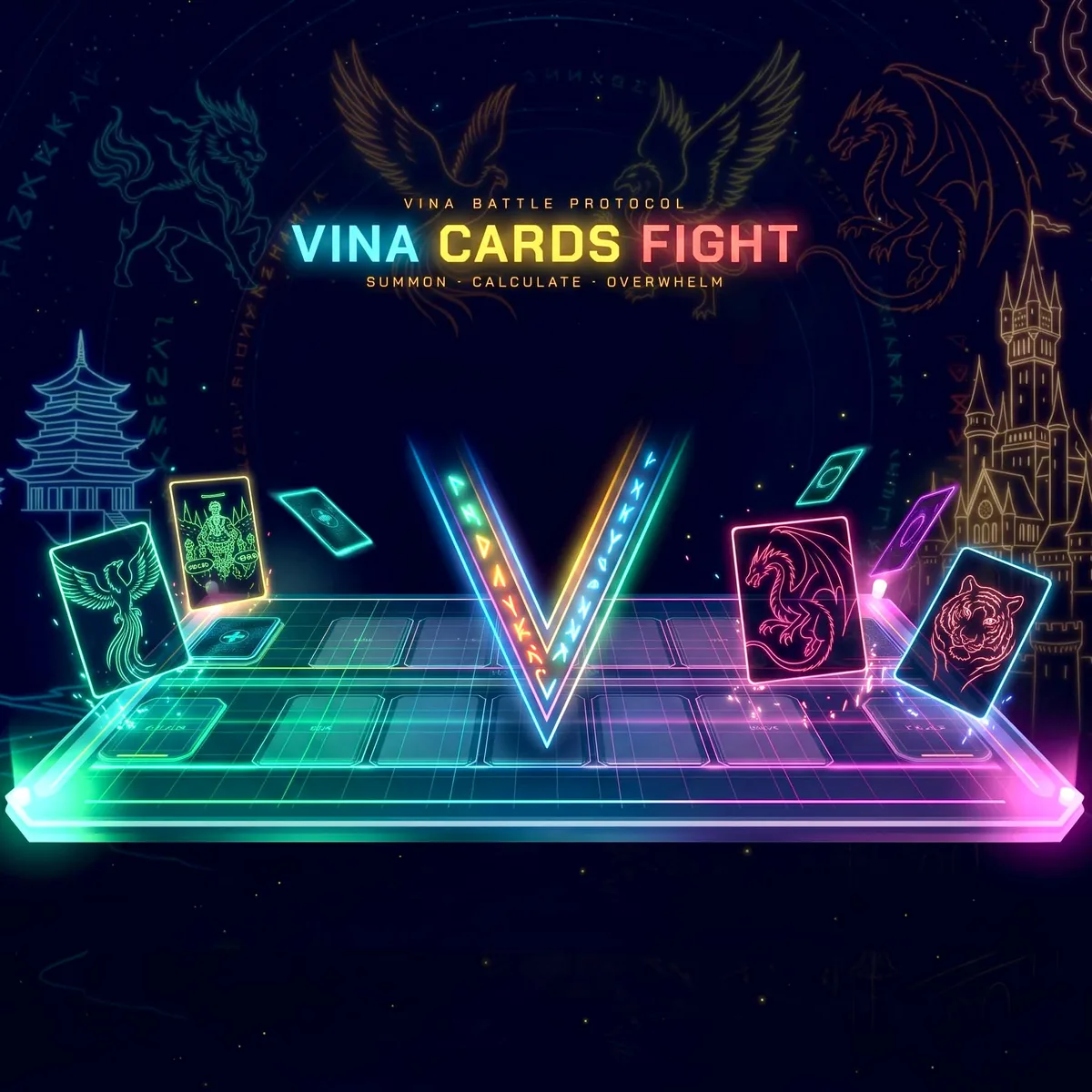
Vina Cards Fight
A free HTML5 card duel about reducing the opponent’s HP to zero while using Shield, monsters, spells, and traps to survive each turn.
#43 this weekAI-assisted: Code, Graphics, Sound, Text
The game runs in this tab. No install, no account.
The short answer
Vina Cards Fight is a free browser card game in development. Each duel asks you to lower the opposing HP before your own runs out, with Shield soaking damage and monsters trading ATK against DEF. Spells, traps, dice buffs, and an escalating Overtime rule keep the match moving. It is worth trying now for a compact turn-based card battle.
What is Vina Cards Fight?
Vina Cards Fight is a free casual card game built with AI by a two-person team and currently in development. It runs as an HTML5 browser title. The core contest is a duel to bring the opposing HP to zero before your own pool is emptied. Shield sits alongside HP as a defensive buffer, so damage can be absorbed before it reaches the main health total.
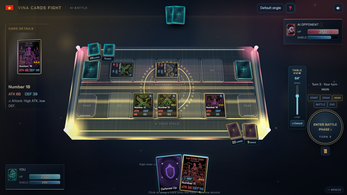
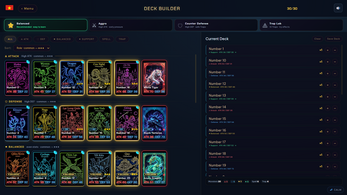
Play revolves around Number Cards that become monsters, Spell Cards that alter the match, and Trap Cards that are set for later. The design keeps the card layer direct: monsters have fixed starting ATK and DEF values, and the four roles are Attack, Defense, Balanced, and Support. There is no elemental system and no chain of linked effects. That makes the appeal easy to grasp: compare stats, use spells and traps at the right moment, and manage two defensive resources while the turn structure pushes toward a finish.
How to play
Each turn moves through five stages: Start, Draw, Main, Battle, and End. In the Start Phase, monsters that already attacked have that status cleared, which makes them available to attack again. The Draw Phase normally gives two cards, one Spell card and one random card; the player who takes the first turn skips that draw on the opening turn. During the Main Phase, a player can summon Number Cards as monsters, cast Spell Cards, and set Trap Cards.
The Battle Phase is where monsters attack enemy monsters, or hit the opponent directly when the opposing field is empty. The End Phase passes control to the other player. The first turn of the whole match has a special restriction: neither player may enter the Battle Phase, so combat begins from the second turn.
Monster stats are fixed at their base ATK and DEF values, but spells, buffs, and dice rolls can change them during play. Combat follows the stat comparison: the higher ATK destroys the lower DEF, a lower ATK loses to the defender, and equal values destroy both. Excess damage from a winning attack can spill into Shield or HP. After several turns, dice rolls can buff a player’s whole field on doubles or debuff it otherwise, and Overtime eventually adds rising HP loss to both players.
Controls
Control in Vina Cards Fight is expressed through card decisions rather than a described action scheme. The choices that matter are summoning Number Cards, casting Spell Cards, setting Trap Cards, and selecting attacks during the Battle Phase. The match is turn-based, so those choices are framed by the Start, Draw, Main, Battle, and End sequence.
The opening turn has no Battle Phase, which means the first set of decisions is about setting up the field and passing control. Later turns open the attack step, where monsters can strike enemy monsters or go directly at Shield and HP if the opposing field is empty.
The card roles also shape control: Attack monsters push damage, Defense monsters hold the line, Balanced monsters cover both sides, and Support monsters bring one automatic effect. Because the combat comparison is ATK against DEF, every attack choice is a read on the visible board.
The game page does not list its controls. Check the in-game tutorial or pause menu for the current scheme.
Tips for your first run
Treat the opening turn as a setup turn. Because neither player can enter the Battle Phase on the first turn of the match, the first move should establish monsters, spells, or traps rather than chase early damage. If you are the first player, remember that the opening draw is skipped; plan around the smaller starting hand. The normal draw gives two cards, one Spell card and one random card, so spell access is part of the turn rhythm.
When the opponent’s field is empty, direct attacks are available, but do not ignore the Shield buffer sitting in front of HP. Fixed base ATK and DEF make stat comparisons reliable, while spells, buffs, and dice can still swing a battle. A doubles roll buffs every monster on that player’s field, while a non-doubles roll applies a debuff, so board-wide stat changes can arrive together. Support monsters have one automatic effect, which makes them worth watching before committing to an attack. Overtime adds fixed HP loss that grows each turn, so a slow board stall becomes dangerous for both players.
- Use the locked first-turn Battle Phase to set up instead of forcing attacks.
- Remember the two-card draw pattern: one Spell card and one random card.
- Attack directly when the enemy field is empty, but judge the Shield buffer first.
- Expect dice turns to change every monster’s ATK or DEF at once.
- Close matches before Overtime HP loss starts climbing each turn.
Content and replayability
Replayability comes from the mix of Number Cards, Spell Cards, Trap Cards, and the four monster roles. Attack cards lean on high ATK, Defense cards lean on high DEF, Balanced cards sit between them, and Support cards carry one short automatic effect. Since the same card always begins with the same base stats, variety does not come from randomizing a card’s starting numbers; it comes from the draw, the order of play, and the timing of spells and traps.
The dice system adds another layer: after a few turns, doubles buff a player’s monsters, while a non-doubles result debuffs them. Overtime then applies fixed HP loss to both players, with the loss increasing each turn, so even a defensive board cannot stall forever. The lack of elemental systems and chained effects keeps matches focused on ATK and DEF comparisons, direct attacks, and resource management. The game is still in development, and it is a free AI-assisted project made by two people, so the current scope should be read as a casual card-duel release rather than a finished commercial package.
Presentation and performance
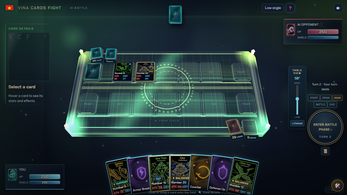
Vina Cards Fight is delivered as an HTML5 browser game, and it is still in development. Its presentation is built around the card-duel information set: Shield and HP totals, monster ATK and DEF values, the four monster roles, and the split between Number, Spell, and Trap cards.
The five-phase turn flow gives the match a steady rhythm, with the Start Phase clearing the attacked status, the Draw Phase adding two cards, the Main Phase opening summons and casts, the Battle Phase resolving attacks, and the End Phase handing over control. Dice turns and Overtime add visible swings in stats and HP, so those moments carry much of the match’s drama.
As a free AI-assisted project from a two-person team, the game has a compact casual frame rather than a large commercial shell. The browser format is the confirmed delivery method, and the game is marked in development. A playable HTML5 frame is part of the launch setup.
Who should play it
Vina Cards Fight suits players who want a compact turn-based card duel with clear stat comparisons and a browser-based format. The appeal is strongest for anyone who enjoys managing two defensive layers, choosing between summoning monsters and setting traps, and timing spells around the Battle Phase. Players who like dice-driven swings will find a board-wide buff or debuff that can change an attack plan.
Players who prefer direct combat will appreciate that ATK and DEF decide battles without an elemental layer or chained effect stack. The Overtime rule also gives defensive players a reason to close the match rather than sit behind Shield and HP. Because the game is free and still in development, it fits a try-now mindset rather than a finished competitive commitment.
It is less suited to anyone looking for a large commercial card game with a deep elemental system, since the design deliberately keeps monster roles and effects simple. The two-person, AI-assisted origin also points to a casual entertainment project.
Screenshots
How we tested it
The build was loaded from games.debutplay.com in a headless Chromium session on ; the canvas started and no request was blocked. The guide was last checked on .
From the developer
The game was created using AI by two people for entertainment purposes only, without any commercial intent. They simply wanted to make a casual card game because they are big fans of card games, and they are also learning programming from scratch. GAME RULES 1. Objective Reduce your opponent's HP to 0 before your own HP reaches 0. Each player has two defensive resources: Shield: Absorbs incoming damage.HP (Health Points): Your main health pool. 2. Turn Structure Each turn consists of five phases: Start → Draw → Main → (Battle) → End Start Phase: All monsters on the field have their "Attacked" status removed, allowing them to attack again this turn.Draw Phase: Draw 2 cards: always 1 Spell card + 1 random card. (The first player does not draw cards on their first turn.)Main Phase: Summon monsters (Number Cards), cast spells (Spell Cards), and set traps (Trap Cards).Battle Phase: Choose monsters to attack enemy monsters, or attack the…
Frequently asked questions
Is Vina Cards Fight free?
Yes. The game is free to play, and it is built as a casual card game rather than a commercial product.
What platforms can run it?
It is an HTML5 browser game.
What are Shield and HP?
Shield absorbs incoming damage, while HP is the main health pool. A duel ends when one player’s HP reaches zero.
How does combat resolve?
An attacker compares ATK with the defender’s DEF. Higher ATK destroys the defender and can spill excess damage to Shield or HP; lower ATK loses the attacker; equal values destroy both. If the opposing field is empty, a direct attack hits Shield or HP.
What happens on the first turn?
Neither player can enter the Battle Phase on the first turn of the match, and the first player skips the opening draw. Combat becomes available from the second turn.
How do dice and Overtime work?
After several turns, both players roll dice. Doubles buff all monsters on that player’s field, while a non-doubles result debuffs them. Later, Overtime makes both players lose a fixed amount of HP each turn, and that loss increases over time.
What games are similar to Vina Cards Fight?
The closest matches on DebutPlay are Moat Mayhem, Runebinder: Chronicles of the Lands Between, Fatebound: War of the Four Suits. They share the same genre, so the controls and the pace carry over.
Something wrong or missing? Tell us. How we test games.