Strategy · New game
Moat Mayhem
Moat Mayhem is a free, single-player real-time card battle where decks of eight clash across two bridges for three minutes.
#21 this weekAI-assisted: Code, Graphics, Text
The game runs in this tab. No install, no account.
The short answer
Moat Mayhem is a free browser card battle for one player. Build an eight-card deck, spend Spark, and send units across two bridges to topple the enemy Keep or hold more towers when the three-minute clock expires. The cartoon fantasy skirmish adds a deck builder, three AI difficulties, leagues, and a fast Double Spark finale, with no accounts or ads.
What is Moat Mayhem?
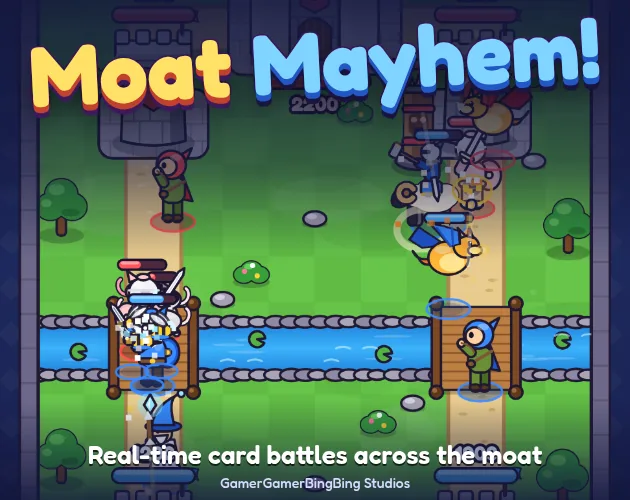
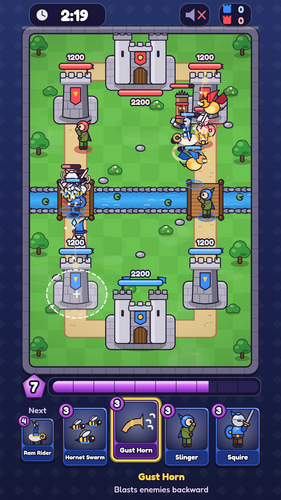
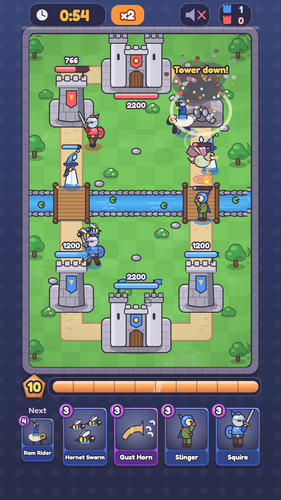
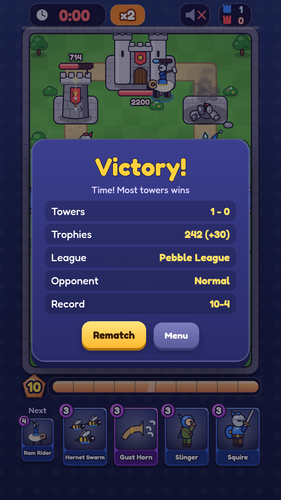
Moat Mayhem is a single-player, real-time card battle built around two cartoon castles, one moat, and two bridges. Each side has a large Keep behind two side towers. A match runs for three minutes, and the goal is to break through, topple towers, and either destroy the enemy Keep for an instant win or hold more towers when the clock expires. Towers matter beyond defense: they also decide the timeout result.
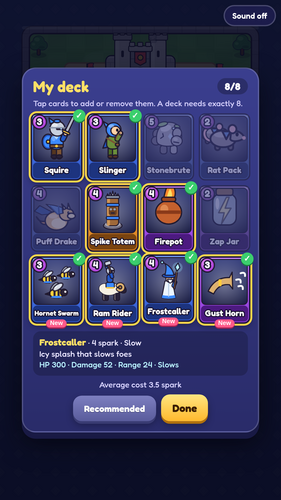
Preparation happens in the deck builder. A deck holds eight cards and a hand holds four; playing one card brings the next into hand. Twelve cards are available, mixing troops, buildings, and spells. The pool includes a Squire, a Slinger, a Stonebrute, a Frostcaller, and a Gust Horn, alongside other choices. Spark is the resource spent to put cards on the field, and it refills over time. The mix of lane pressure, tower defense, and a three-minute limit gives every match a short, sharp shape.
How to play
The battlefield is split by a moat, and two bridges are the only routes across. The two crossings create a constant choice between pressing an attack and covering the other route. Commit pressure to one crossing, keep the other covered, then watch for a chance to answer back. Units cross without further orders and engage whatever stands in their path. Cards cover troops, buildings, and spells. Spark pays for every deployment and refills over time. In the final minute, Double Spark changes the pace and makes big pushes easier to assemble.
A deck has eight cards and a hand has four. Playing a card slides the next one in. To deploy, select a card and choose a spot on your side; a drag to the field also places it. The opponent is an AI that defends, counters what you play, saves for large pushes, and brings its own decks. Easy, Normal, and Hard are available. Victory comes from destroying the enemy Keep for an instant win, or from holding more towers when the three-minute clock runs out.
Controls
On a touch screen, select a card and choose a spot on your side to place it. Dragging a card to the field also deploys it. On desktop, keys 1-4 select a card, and a click on the field places it. Esc cancels. The speaker button at the top right, or the M key, turns sound on and off. If you switch apps, the game auto-pauses; tap to resume.
Deck editing lives on the title screen. Use that screen to switch cards in or out; the count must be eight. Recommended returns the original starter list. The controls are deliberately light, but the three-minute clock rewards quick decisions. On phone, portrait is the intended layout; desktop play is supported as well.
| Input | Action |
|---|---|
| Touch | Select a card, then choose a spot on your side of the field; drag a card to the field to place it. |
| Mouse | Click a card and then the field to deploy it. |
| Keyboard | Keys 1-4 select a card; Esc cancels; M toggles sound. |
| On-screen button | Speaker button at top right toggles sound; tap to resume after an auto-pause. |
| Deck editor | Tap cards on the title screen to switch them in or out; exactly eight are required. |
Tips for your first run
Start with the Recommended deck if the card mix feels unclear. Eight slots is a tight limit, so the deck needs an answer for pushes on either bridge and a way to pressure a tower. Spark refills over time, which makes patience useful before the final minute. Double Spark then arrives and changes what is affordable.
- Send pressure through one bridge while leaving enough defense on the other to stop a counter-push.
- Use the Frostcaller to slow an advance, or the Gust Horn to blast enemies backward when a lane is under pressure.
- The Ram Rider hunts towers, so it can apply pressure to a side tower while another lane is defended.
- Watch the AI's savings. It defends, counters what you play, and saves for big pushes, so a quiet lane can be a setup.
- If the Keep cannot fall, remember the second win condition: hold more towers when the three-minute clock expires.
Content and replayability
The card pool contains twelve options, and a legal deck uses any eight. That leaves room for troop-heavy builds, building-backed defenses, spell answers, or a mix. The deck builder sits on the title screen, and Recommended restores the starter list. Trophies and leagues provide a climb from Mud League up to Legend. The save keeps the player's record and deck on the device, so the next session starts with the same setup.
The AI brings its own decks and has three difficulty levels. It defends, counters what you play, and saves for large pushes, which gives repeated matches different pressure. Two win conditions keep the final seconds tense: an instant Keep crash or a tower lead at timeout. Matches are short by design, and the Double Spark final minute gives each one a clear late-game shift. The 12-card pool sets a clear scope: learn the options, then tune the eight-card mix. The result is a compact single-player package built around experimenting with eight-card combinations and responding to the AI's pushes.
Presentation and performance
The art is crisp, colorful cartoon fantasy with smooth vector graphics and text meant to stay readable. The layout is built for portrait phone play and also works on desktop. Visual feedback includes frosty bursts, swirling gusts, confetti, falling tower pieces, and screen shake. Retro sound effects can be muted.
The game runs in HTML5. Trophies, record, and deck are stored in the browser on the device. No accounts, ads, analytics, or trackers are used, and the game makes no network requests. A speaker button and the M key handle audio. The game auto-pauses when apps are switched and waits for a tap to resume. These choices suit short sessions and keep the focus on the two bridges and the three-minute clock.
Who should play
Moat Mayhem suits players who like real-time card battles, deckbuilding, and tower defense in short single-player matches. The two-lane map asks for quick lane decisions, while the eight-card deck and twelve-card pool keep preparation focused. The three-minute limit and Double Spark finale make it a natural fit for a quick browser break. The cartoon art and readable field help keep the action clear.
The AI has Easy, Normal, and Hard settings, so the same two-bridge map can be approached at different pressure levels. Touch controls and portrait phone play suit commutes or short breaks, while desktop users have keys 1-4 and mouse clicks. It is free to play, with no accounts, ads, or trackers, so sampling does not require a sign-up. An optional two-dollar tip supports the studio.
Screenshots
How we tested it
The build was loaded from games.debutplay.com in a headless Chromium session on ; the canvas started and no request was blocked. The guide was last checked on .
From the developer
Build your deck. Cross the moat. Cause some mayhem. Moat Mayhem is a fast, real-time card battle for one player. Two castles face each other across a moat with two bridges. Each side has two side towers guarding a big Keep. Spend Spark to deploy troops, buildings and spells. Your units march over the bridges on their own and fight whatever they meet. Break through, topple towers and crash the enemy Keep before the 3-minute clock runs out. Features Real-time card battles. Bring a deck of 8 cards with a hand of 4. Play a card and the next one slides in. 12 cards and a deck builder. Pick any 8 from Squire, Slinger, Stonebrute, Rat Pack, Puff Drake, Spike Totem, Firepot, Zap Jar and four more: the flying Hornet Swarm, the tower-hunting Ram Rider, the slowing Frostcaller and the Gust Horn that blasts enemies backward. Crisp, colorful cartoon art. Smooth vector graphics and clear, readable text that look sharp on high-res phone screens. Two…
Frequently asked questions
Is Moat Mayhem free to play?
Yes. Moat Mayhem is free to play. A $2 tip is optional and supports GamerGamerBingBing Studios; no payment is required to play.
How long does one match last?
A match has a three-minute clock. The final minute switches to Double Spark, so the pace rises before the timer ends.
How many cards are in a deck?
A deck uses exactly eight cards, and the hand holds four. The card pool has twelve options, and the title-screen deck builder lets you swap choices in and out. Recommended restores the starter deck.
Can Moat Mayhem be played on a phone?
It plays in portrait on a phone with tap and drag controls, and it also works on desktop. The game runs in HTML5.
Is there multiplayer?
No. Moat Mayhem is a single-player real-time card battle against an AI opponent. The AI can be set to Easy, Normal, or Hard.
How do you win a match?
Crash the enemy Keep for an instant win, or hold more towers when the three-minute clock runs out. The second route matters if a direct breakthrough stalls.
What games are similar to Moat Mayhem?
The closest matches on DebutPlay are Strike Alert, Three Men, Probably Norwegians, Fatebound: War of the Four Suits. They share the same genre, so the controls and the pace carry over.
Something wrong or missing? Tell us. How we test games.