RPG · New game
Bramo
A free browser idle RPG set in a town scarred by the Haar, where trades, player markets, clans and nightly defense shape a long-running medieval fantasy.
#55 this weekAI-assisted: Graphics, Text
The game runs in this tab. No install, no account.
The short answer
Bramo is a free multiplayer idle RPG that runs in a browser and keeps a character working for sixteen hours while away. Pick one of seventeen trades, sell goods to other players, push into six Farlands regions, and join the nightly seawall defense against the Haar.
What is Bramo?
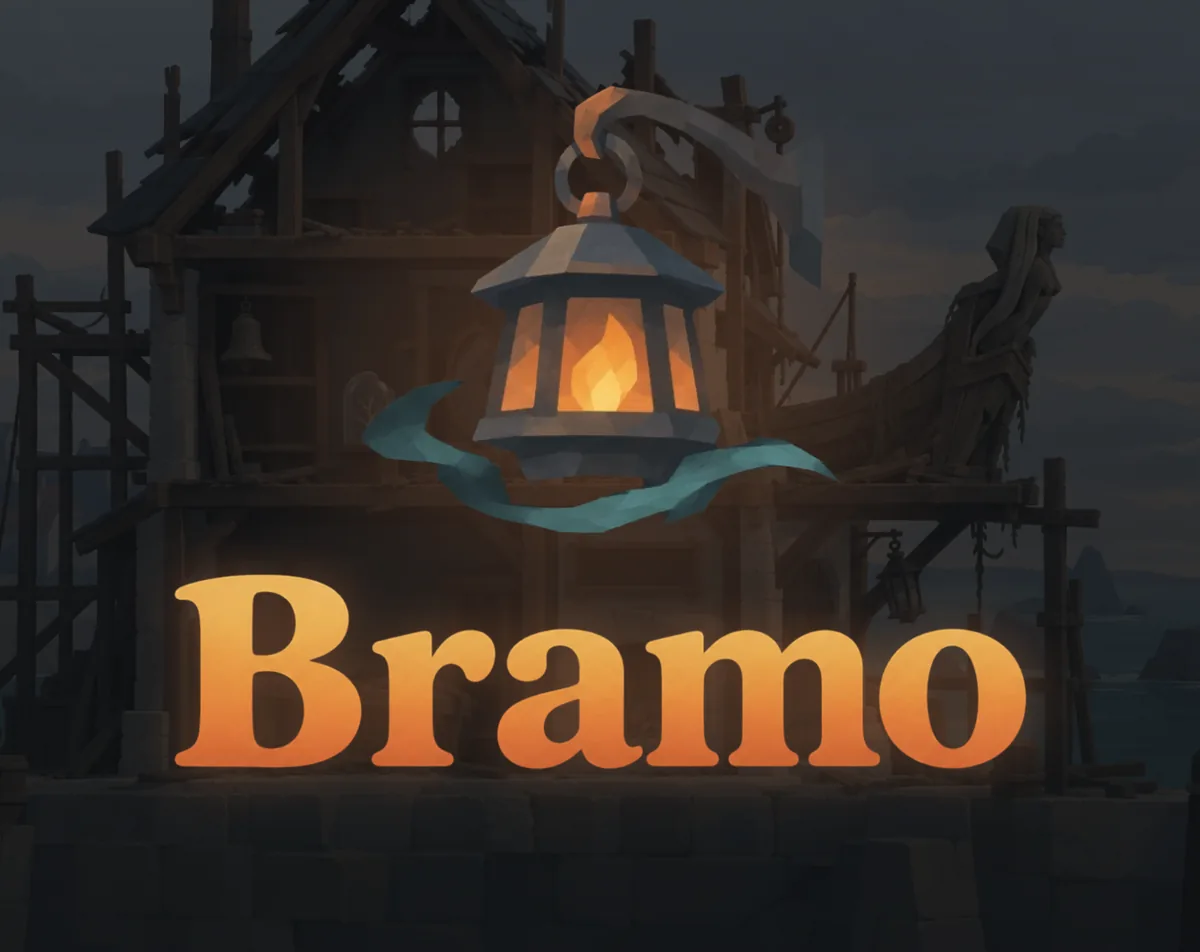
Bramo is a free multiplayer idle role-playing game set in a medieval fantasy town built where a memory-stealing mist called the Haar stopped. The town has a seawall, lanterns, a belfry and plenty of opinions, and every evening the Haar returns to look it over. The game runs in a browser and does not require a download.
A character can be set to work and left for sixteen hours, returning to a full sack with nothing rotted. Play can fit a short break or a full evening with a clan. The project is in development and open as a test, with a planned clean slate when the real opening arrives. The tone is grounded in trades, town rituals and a road that keeps going.
How to play
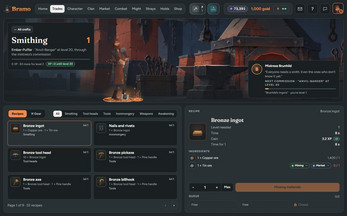
Start by choosing a trade from seventeen options, including mining, fishing, tanning and cooking. Setting work going is the core action: the character continues for sixteen hours while away, and the yield waits. Each trade has a master; Brunhild at the forge issues commissions, and finishing hers at level twenty changes the character's title from Ember-Puffer to Anvil-Banger.
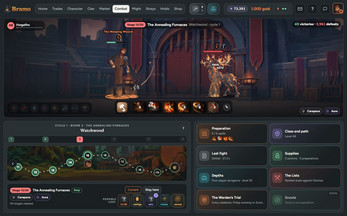
The town does not buy back surplus goods. Instead, players trade with each other through sell orders, buy orders and named prices, while the Counter offers only a few town commissions each day. Beyond the seawall, the road enters the Farlands, which holds six regions with a warden at the end of each. Combat runs automatically, so preparation matters more than clicking to swing.
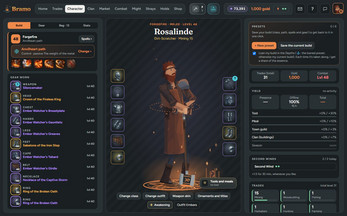
At level thirty, a path opens, followed by spells, gems and gear from the road; class changes remain possible. Progress loops after the last warden, with the road restarting in a harsher form.
Controls
Bramo is decision-driven rather than reflex-driven. Combat proceeds on its own, so attention goes to setting trade work, accepting commissions, pricing buy and sell orders, and preparing gear from the road. A session can be as small as starting a task before leaving, because the character keeps working for sixteen hours.
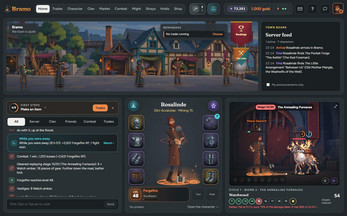
The nightly Haar defense gives the day a fixed rhythm: the belfry rings at a quarter to eight, the mist arrives at eight, and the town holds the seawall until nine. Clan caravans on the Free Roads, fortnight lantern campaigns across seventy-four dark lanterns, Depths runs with three friends, duels on the Lists and weekend boss attempts add reasons to check in. The model rewards planning and timing, not rapid inputs.
The game page does not list its controls. Check the in-game tutorial or pause menu for the current scheme.
Tips for your first run
A first run should protect time rather than chase every system at once. Queue a trade before stepping away, because sixteen hours of work can return a full sack and nothing spoils. Read the commissions from trade masters; the forge path from level twenty is one clear early milestone. Do not expect a town merchant to absorb surplus iron or stew. The player market is where unwanted stock becomes useful, so check buy orders and name a price on sell orders. The Counter is limited to a few commissions a day, not a general dumping ground.
At level thirty, choose a class path with the road's enemies in mind, then test spells, gems and gear; class changes remain open if the fit is wrong. The nightly seawall hour is worth planning around: belfry at a quarter to eight, Haar at eight, hold until nine. Joining a clan early opens a hall, a weekly caravan and group play.
- Set a sixteen-hour trade task before logging off.
- Finish Brunhild's level twenty forge commission to change title.
- Use player sell and buy orders instead of expecting town buyback.
- Hold the seawall from eight to nine when the Haar arrives.
- At level thirty, choose and test a class path; changing later is allowed.
- Feed the twelve strays Fennel talks to, using finds from the road.
Content and replayability
Bramo's long game spreads across trades, markets, clans, strays and a road with no final stop. Seventeen trades feed a player-run economy: forged pickaxes return to mines, cooked stew travels the road, and surplus stock must find another player. The Farlands has six regions, each with a warden; named threats include Old Mother Mangle at the well, the Red Foreman in the Dead Forges and a Notary who signs at high water. Beating the last warden restarts the road in a meaner form.
Twelve strays can be found by their traces, fed with preferred goods and kept as a walking companion or sent wandering to return with finds. Clans build halls, send a caravan on the Free Roads each week, and join a fortnight campaign to light and contest seventy-four dark lanterns. The Depths can be entered with three friends and the Ferryman. Duels on the Lists, a weekly chest, a stubbornness board and a weekend boss with one leaderboard keep repeat play moving.
Presentation and performance
Bramo leans on town fixtures and ritual rather than a generic fantasy backdrop. The Great Haar is a mist off the sea that put out fires and stole names; the town answers with a seawall, lanterns, a belfry and a Counter. The Noticeboard carries updates, the Lists host duels, and an in-game feedback button goes to the maker. The game speaks English and French.
Its HTML5 browser format means play begins without a download, while the open test means things can break, numbers can move and the real opening is planned to wipe progress clean. The nightly event gives the town a visible clock, from the quarter-to-eight bell to the nine o'clock hold. Clan halls, torchlit lantern campaigns and the drowned cellars of the Depths supply the social staging.
Who should play it
Bramo suits players who like idle progression with a strong economy attached. The appeal is not manual combat; it is setting a sixteen-hour trade task, returning to a full sack, and deciding where the goods should go. Crafters and market-minded players get seventeen trades, player-to-player orders and a town Counter with limited demand.
Clan organizers get halls, weekly caravans and a fortnight lantern contest. Road chasers get six Farlands regions, wardens, level-thirty class paths and a loop that restarts harder. Collectors get twelve strays and a mute tower keeper who only speaks to them. Social players get nightly seawall defense, Depths runs with three friends, Lists duels and a weekend boss board. Anyone who wants a finished, stable world should wait; the open test is a build-in-public phase with a planned reset.
Screenshots
How we tested it
The build was loaded from games.debutplay.com in a headless Chromium session on ; the canvas started and no request was blocked. The guide was last checked on .
From the developer
Sit down, sit down. You've come a long way, and you look it. I was six when the Great Haar came in. A mist off the sea, thick as wet wool and salty with it. It put out every fire in the valley, and when it drew back, half of us couldn't remember our own street. Some never got their names back. Bramo was built where it stopped. We've a seawall now, and lanterns, and a great many opinions. And every evening, the Haar still comes up to have a look at us. So. You want to know what there is to do here. Plenty. Let me tell you. Bramo is a free multiplayer idle RPG that runs in your browser, on a computer or a phone. Your character keeps working while you're away. Ten minutes over coffee or a whole evening with your clan: both count. First thing: get yourself a trade. There are seventeen, and the town's short of hands in every one of them. Mining, fishing, tanning, cooking, the lot. Nothing here comes from nowhere: the pickaxe you forge goes…
Frequently asked questions
Is Bramo free?
Yes. It is a free multiplayer idle RPG, and the browser version requires no download.
What should a new player do first?
Choose a trade, start work, and let the character continue for up to sixteen hours. Check master commissions, especially Brunhild's forge line, then use player orders for surplus goods.
Does combat require clicking?
No. Fighting resolves automatically. The player's job is preparation: class path at level thirty, spells, gems, gear from the road, and timing around events.
When is the Haar event?
The belfry rings at a quarter to eight, the Haar arrives at eight, and the town holds the seawall until nine. The event is nightly.
Will progress reset?
The game is in development as an open test. A real opening is planned, and everyone starts again from nothing then.
How many trades and regions are there?
Seventeen trades and six Farlands regions, each ending with a warden. After the last warden, the road restarts in a harsher form.
What games are similar to Bramo?
The closest matches on DebutPlay are Skyvar Idle, Runebinder: Chronicles of the Lands Between, Delve!. They share the same genre, so the controls and the pace carry over.
Something wrong or missing? Tell us. How we test games.