Puzzle · New game
Doodle Bait
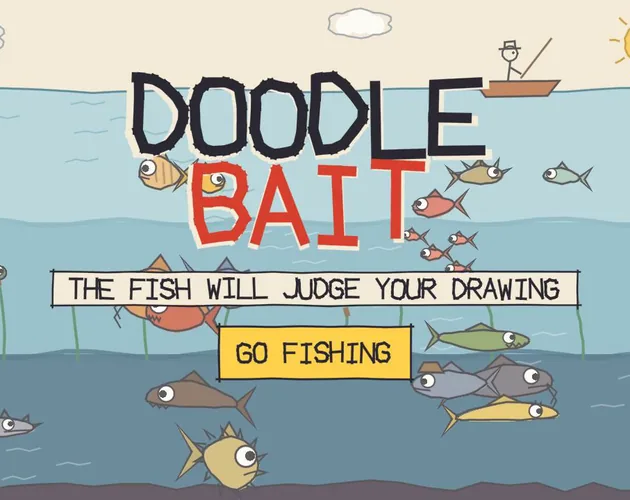
A free browser puzzler that turns a four-crayon scribble into fishing bait, then makes you read the fish's reaction and redraw smarter.
#2 this weekAI-assisted: Unspecified
The game runs in this tab. No install, no account.
The short answer
Doodle Bait is a short puzzle game about drawing bait and learning what pond fish think of it. The doodle's name, its weight and its shape all become clues, and 21 residents plus one very old bottom-dweller give you reasons to keep redrawing. It runs in a browser on desktop or a sideways phone, installs on Android, and a full run takes about half an hour.
What is Doodle Bait?
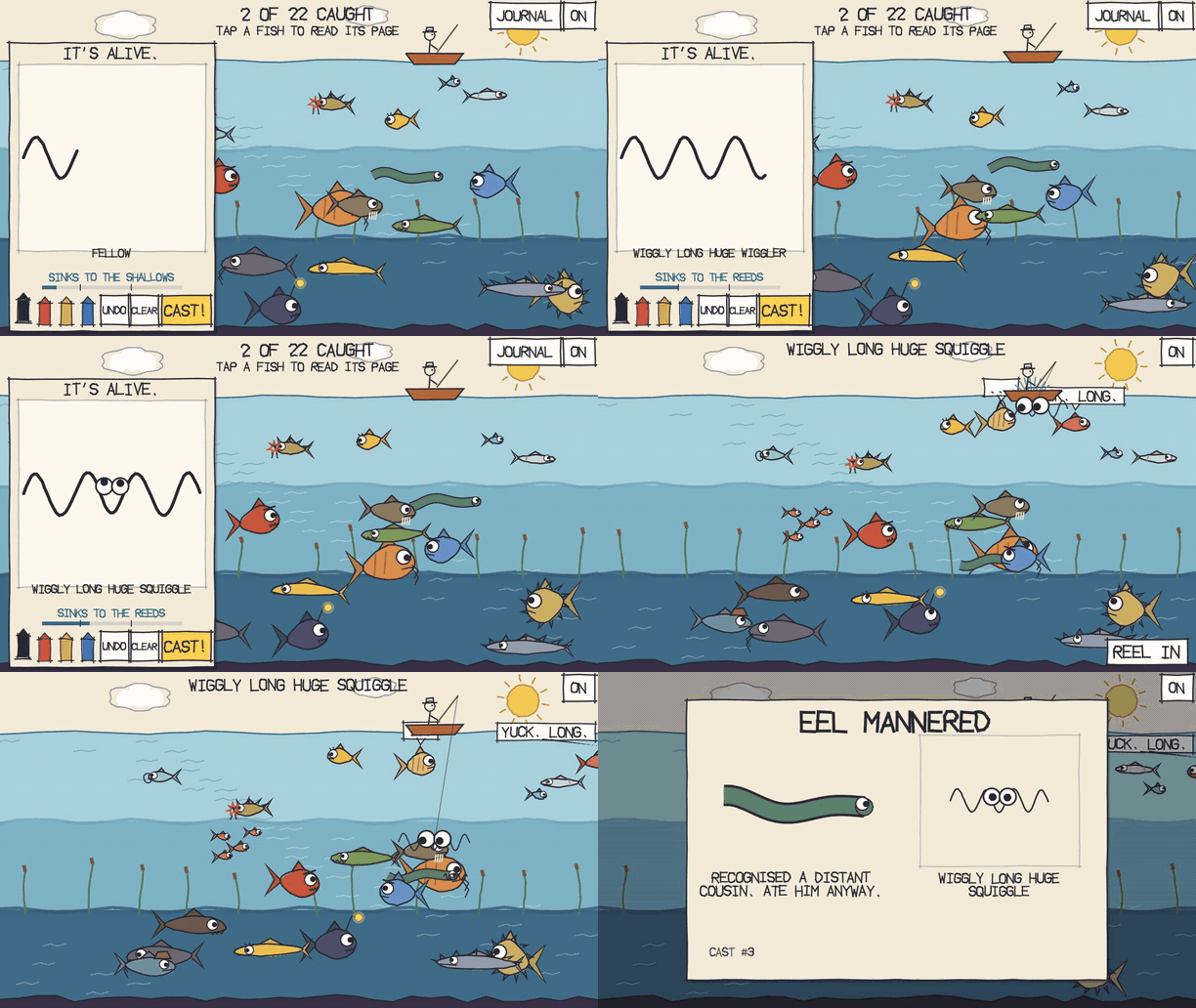
Doodle Bait is a puzzle game where the bait is a drawing you make yourself. You get a sheet and up to four crayons, scribble something, and the pond takes it from there. Every doodle is christened with a name the moment it exists, along the lines of Long Tiny Baguette, and that label matters more than artistry, because the words spell out what the fish perceive when the bait goes in.
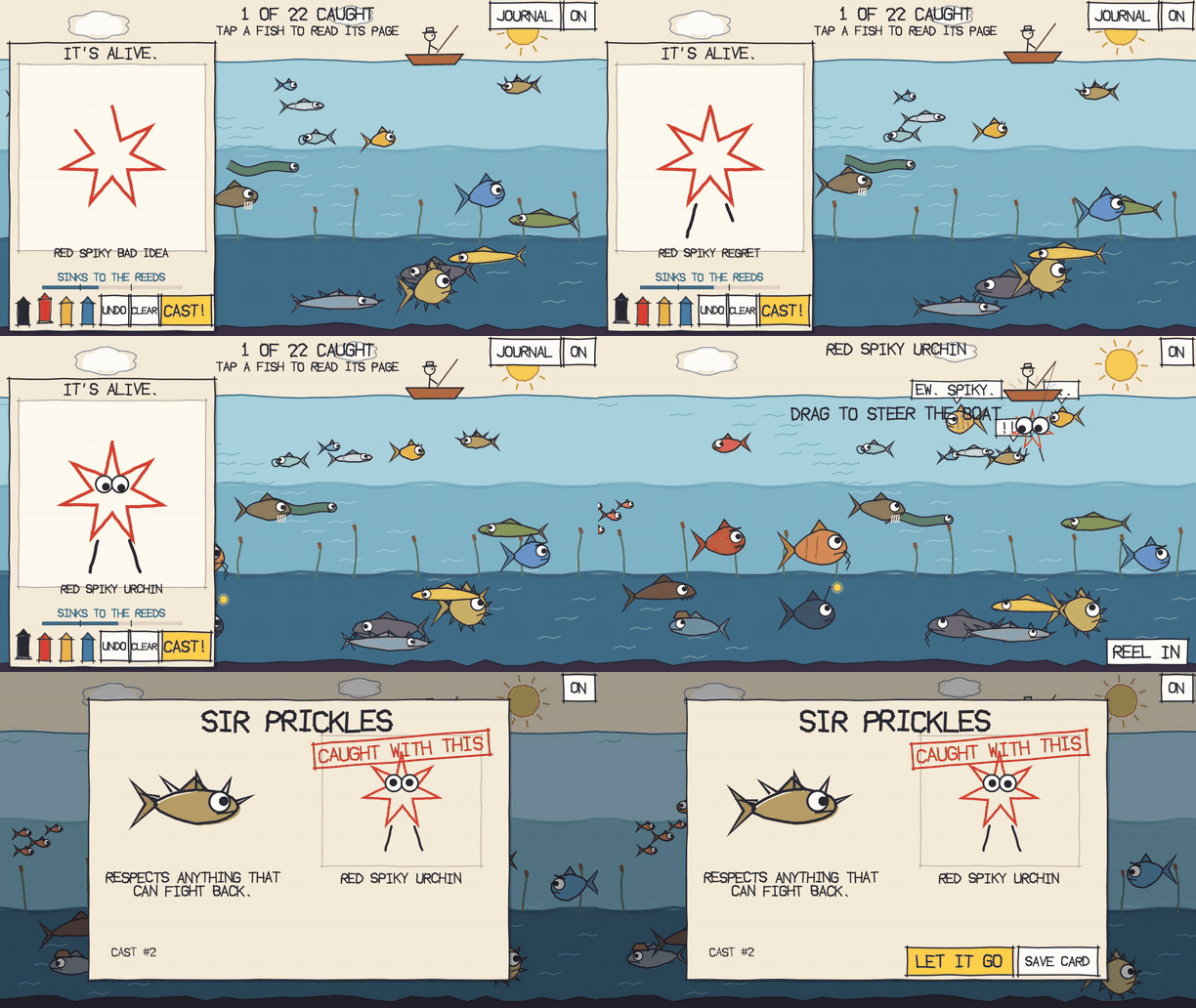
The loop is cast, steer, read, redraw. A boat drifts on the pond and you drag it above whichever fish you fancy, then watch the verdict land. Some residents fire back blunt dismissals of a single quality; others trail off with a hint that something worked and more of it would be welcome. Nothing is timed and nothing can be lost, so the only thing at stake is whether the next idea beats the last.
The pond holds 21 fish with distinct tastes, from the cheerfully undemanding Minnow up through Carp Diem and the Tetra Committee. At the bottom waits the Old One, which remembers every kind of doodle ever cast and expects to be shown something new.
Doodle Bait is free, arrived on 3 November 2026, and runs in a browser on a computer or a phone held sideways, with an Android download alongside.
How to play
Start with the sheet. Draw whatever you like using no more than four crayons, then look at the name the result is given. A doodle named Long Tiny Baguette is announcing that it reads as long and tiny; a name built around spikes is saying the same about its silhouette. Read that name before casting.
Casting drops the doodle into the pond and hands you the boat. Dragging over the water moves you above a fish, and the fish answers. A flat rejection of roundness rules out roundness and nothing else. A trailing question about spikes confirms the spikes landed and asks for more, which is the difference between a dead end and a direction.
Ink is the second dial. A doodle carrying more ink is heavier, and heavier bait sinks deeper, where the residents get stranger. Ink, in other words, decides which part of the pond you are talking to.
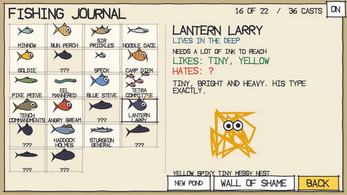
Verdicts accumulate in a journal that logs each fish's likes and dislikes and offers a hint when a problem stalls. The intended rhythm is redraw, recast, learn, repeat.
Controls
Doodle Bait takes touch, mouse and keyboard, though the three do not cover identical ground. Drawing is a drag across the sheet by finger or mouse, and steering is a second drag made in the water itself. The same gesture moves the boat on a phone and on a desktop.
Casting has three routes: tap CAST on a touchscreen, click CAST with a mouse, or press space. Reeling in mirrors that exactly, with a tap, a click or the space bar.
Reading about a fish means tapping or clicking the fish itself, or opening the journal with J. Undo a stroke with the on-screen UNDO button or with Z. Sound toggles from the button in the top right corner or with M.
| Input | Action |
|---|---|
| Touch | Drag on the sheet to draw, tap CAST to cast, drag in the water to steer the boat, tap REEL IN to reel in |
| Mouse | Drag on the sheet to draw, click CAST to cast, drag in the water to steer, click REEL IN to reel in |
| Space | Cast and reel in from the keyboard |
| Tap or click a fish | Read about that fish |
| J | Open the journal on keyboard |
| Z | Undo a stroke |
| M | Toggle sound, also available from the button in the top right corner |
Tips for your first run
The first habit worth building is reading the generated name before casting. It is not decoration; it previews how the fish will read the doodle, and it usually tells you whether the idea is worth the trip.
Change one thing at a time. Because a reaction tends to name a single quality, a redraw that alters shape, length and colour together leaves you guessing which of the three did the work.
Treat ink as depth control. A light doodle fishes the upper pond among milder residents; a heavy one sinks into stranger company. When the fish above are unmoved, more ink is often a better experiment than a full redraw, and the journal's recorded likes and dislikes can point you at which quality to change.
- Read the doodle's name first; it describes what the fish will see.
- Rework one trait per attempt so the reaction points at something specific.
- Take a blunt rejection at face value, because it names a quality to remove.
- Add ink when you want to reach the stranger fish lower in the pond.
- Save the Wall of Shame picture when a particularly silly doodle finally lands.
Content and replayability
The roster runs to 21 fish, each with a preference to work out, plus the Old One at the bottom. Learning those preferences is the content: the journal fills in as you go, and the Old One keeps a memory of every doodle type ever cast, so the last problem is novelty rather than force.
Catching everything takes about 30 minutes. The pond then stays open instead of closing, and every fish will bite again in pursuit of a better trophy, so the endgame is a higher standard applied to the same residents.
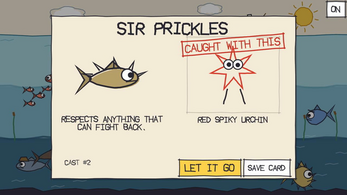
Two collections do the long-term work. Every fish keeps your doodle clamped in its mouth, so the pond gradually fills with your own art and becomes a record of your experiments. The Wall of Shame sets each catch beside the doodle that fooled it and can be saved as a picture to show someone. Progress saves after every catch, so a short session never costs ground.
Presentation and performance
The look is hand-drawn and scrappy in the right way: 2D, cute, and built on the joke of a crayon sketch growing googly eyes before it reaches the water. Everything visible is generated by the game itself, letters included, and the code and art were made with AI assistance.
Audio is credited properly. The music is Pleasant Porridge by Kevin MacLeod under a CC BY 4.0 licence, and the effects come from CC0 packs by artisticdude, rubberduck and Kenney.
An HTML5 build runs in the browser on a computer or on a phone turned sideways, so the first cast needs no install. An Android download exists for players who would rather keep it on the home screen, and sound sits one button away in the top right when the fish start shouting.
Who should play it
Anyone who likes deduction with a notebook open beside them will take to this quickly. The journal, the recorded likes and hates, and the naming system turn each fish into a small logic problem with a visual answer.
It also suits players who cannot draw. Four crayons and a scribble are the whole toolkit, and the pond reacts to shape and heft rather than technique, so a wobbly triangle can be a perfectly good lure.
Sessions are short. Half an hour covers the entire pond, with a save after each catch, which makes it a decent lunch-break game. The tone is comedic rather than competitive: the fish pass judgement on your bait, and the Wall of Shame exists to be shown to other people.
Players chasing reflex-driven fishing, timing challenges or a long progression will not find them here. Casting is a decision rather than a skill check, and the only measure of success is whether the next idea is better than the last.
Screenshots
How we tested it
The build was loaded from games.debutplay.com in a headless Chromium session on ; the canvas started and no request was blocked. The guide was last checked on .
From the developer
Draw anything. It comes alive. The fish will judge it. Doodle Bait is a silly little fishing game where the bait is your own drawing. Scribble something, give it a second to grow googly eyes, drop it in the pond and find out what the locals think of it. How to play Draw anything on the sheet, with up to four crayons Read its name: every doodle gets one, like Red Spiky Regret or Long Tiny Baguette. The words tell you what the fish will see Cast it, and drag to steer the boat over the fish you want Watch them react: EW. ROUND. means no round things. SPIKY... AND? means you are getting warmer Draw again with what you learned. No reels, no timing, no failing: just better and worse ideas More ink makes a heavier doodle, and a heavier doodle sinks deeper. Down there the fish get stranger. What's inside 21 fish with strong opinions, from the Minnow (no standards) to Carp Diem and the Tetra Committee, each with its own taste to work out The…
Frequently asked questions
Is Doodle Bait free to play?
Yes. It carries no price and the browser version needs no purchase, so you can cast a first doodle immediately. An Android download is offered as an alternative to playing in a browser.
How long does it take to finish?
Roughly 30 minutes to catch everything in the pond. The pond stays open afterwards and every fish will bite again, which leaves room to chase better trophies with sharper doodles.
Do you need to be good at drawing?
No. Bait is made with up to four crayons and judged by the name and qualities it carries, so a crude sketch that reads as spiky or long does the job.
Can it be played on a phone?
Yes. The browser build works on a phone held sideways, and there is an Android download for players who prefer an installed version. Touch, mouse and keyboard are all supported.
Does the game save progress?
Progress is saved after every catch, so a session of a few casts still counts and closing the game does not waste the learning you just did.
Is there a timer or a way to fail?
No. There is no timing element and no fail state; a cast produces a reaction and you decide what to do with it. Better ideas and worse ideas are the only outcomes.
What games are similar to Doodle Bait?
The closest matches on DebutPlay are Galileo Base: Forces & Motion in 3D, Bubble Tea Sort: Drink Puzzle, After Hours: The Ashgrove Museum. They share the same genre, so the controls and the pace carry over.
Something wrong or missing? Tell us. How we test games.