Action · New game
Still
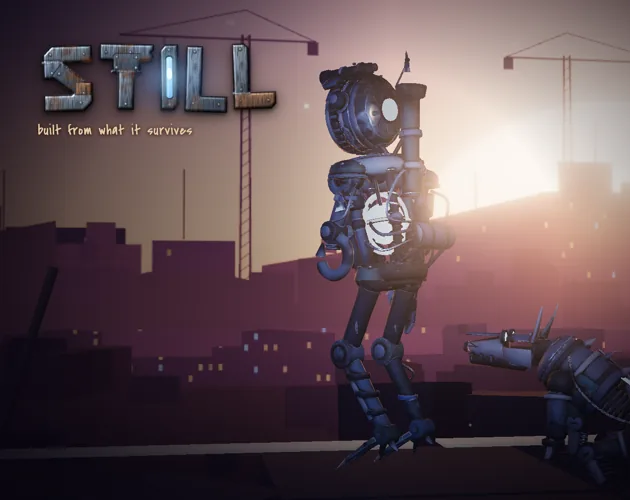
Still is a free browser action roguelike about a scrap-built robot descending nine ruin depths, rebuilding itself from found parts, and hauling scrap home.
#51 this weekAI-assisted: Code, Graphics, Text
The game runs in this tab. No install, no account.
The short answer
Still is a free, in-development browser action roguelike. Guide a scrap robot down nine ruin depths, face three bosses, and return to a workshop with salvage. Instead of leveling up, Still wears found arms, legs, torso, and head parts, each changing how combat works. Runs last about 30 minutes, the game saves between rooms, and play is by touch or keyboard and mouse.
What is Still?
Still is a free browser action roguelike centered on a small robot assembled from scrap. A run sends the robot down through nine depths of ruins, works, and sidings, puts three bosses in the path, and then returns it to a workshop with whatever it carried home. The game is an early build that can be played from start to finish, and its balance and wording are expected to change.
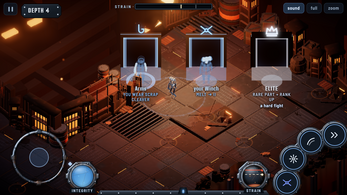
Progression comes from equipment rather than levels. Arms, legs, a torso, and a head each change how the robot fights. A found part can be taken from the floor or melted into a part already worn, and the right pair can turn into something else. The part pool reaches 77, with evolutions and Overdrives as additional systems. Three play styles are available: a Brawler, a Marksman, and a Summoner with a wolf. Strain is the cost of pushing parts too hard; Still slows down and eventually stops.
How to play
Each run follows a downward route. Nine depths of ruins, works, and sidings sit between the start and the return trip, and three boss encounters break up the descent. Combat revolves around the four equipped parts. When a new part appears on the floor, the choice is whether to wear it or melt it into the current setup. That decision shapes the run more than any abstract level gain.
The three play styles change the approach: Brawler, Marksman, and Summoner with a wolf. Part pairings can evolve into something else, so a build is worth testing rather than simply filling every slot. Strain must be managed; overworking parts slows Still and can bring the robot to a stop. Elites, quiet rooms, and run modifiers alter the rhythm of a descent, while a notebook records everything met. Scrap that survives the trip goes into the workshop, where it builds things that stay. The game saves between rooms, so closing the tab and coming back resumes from the last room boundary.
Controls
Touch control uses a left stick to move and round buttons for the equipped parts. The game is designed to play best in landscape and fullscreen, and it was built and tuned on a phone browser. Keyboard and mouse are supported as well. WASD moves Still, the mouse aims, and the four part actions are mapped to left click, right click, Space, and E. R patches, F uses, and Esc pauses. A controls card sits in the pause menu for quick reference.
Because the interface was sized for a phone, a large monitor can make buttons and text feel small. That is a layout issue; keyboard and mouse still work. On touch, the left stick and the round part buttons are the core of play. The landscape, fullscreen recommendation applies to both the intended phone-first presentation and the browser frame.
| Input | Action |
|---|---|
| Touch left stick | Move Still |
| Touch round buttons | Trigger equipped parts |
| WASD | Move Still |
| Mouse | Aim |
| Left click, right click, Space, E | Activate the four equipped parts |
| R | Patch |
| F | Use |
| Esc | Pause |
Tips for your first run
First runs are about reading the descent, not forcing a perfect build. Nine depths and three bosses give room to test part choices, and the workshop keeps whatever scrap comes home. The pause menu has a controls card, which is useful while learning the four part actions on either touch or keyboard.
- Take a new part when it opens a different way to fight; melt it into a worn part when the current build needs reinforcement. Both options are part of the same decision.
- Test pairings. The right pair can evolve into something else, so two parts may be worth wearing together.
- Watch Strain. Pushing parts too hard slows Still and can stop the robot, which is a poor time to discover a build is overextended.
- Use the notebook as a record of what has been met; it gives later runs a reference for Elites and other encounters.
- End a session at a room boundary. The game saves between rooms, so closing the tab does not erase the trip.
Content and replayability
Replayability comes from the descent and the workshop pulling in different directions. Procedural generation varies the ruins, while Elites, quiet rooms, and run modifiers change what a trip contains. Nine depths and three bosses give each run a fixed skeleton, but the parts found along the way determine how that skeleton is fought. Runs are about 30 minutes, which keeps a full descent manageable in a browser tab.
The part pool reaches 77, with equipment for arms, legs, torso, and head, plus evolutions and Overdrives as additional layers. The Brawler, Marksman, and Summoner styles, including the Summoner's wolf, offer different starting points. A notebook of everything met supports long-term familiarity, and scrap brought back to the workshop builds things that stay. The game saves between rooms, so a run can be split across sessions. Since it is in development, balance and wording may shift, but the full start-to-finish path is already present.
Presentation and performance
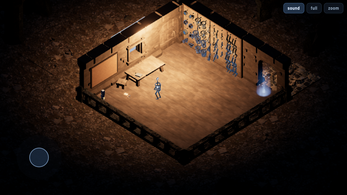
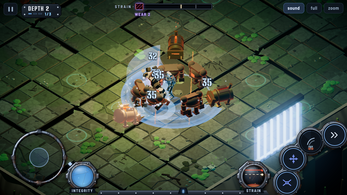
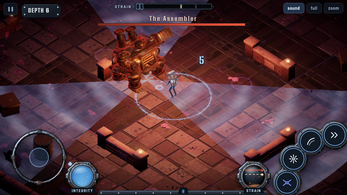
Still is a 3D action roguelike with an isometric, top-down view. It runs in an HTML5 browser frame and is built with three.js. The presentation is phone-first: the layout is sized for a phone, landscape and fullscreen are recommended, and the interface can feel small on a large monitor. Keyboard and mouse work, but the visual scale still follows phone dimensions.
The credit mix is broad. Some 3D pieces come from KayKit by Kay Lousberg under CC0, textures come from ambientCG under CC0, and sounds draw on Kenney CC0 assets plus synth and recordings. Several SIL Open Font License typefaces are used. The robot, boss designs, and remaining world were produced with AI. For a browser build, the practical performance check is the device at hand: a phone-first layout behaves differently on a monitor than on the screen it was tuned for.
Who should play it
Still suits players who want a compact action roguelike in a browser tab and enjoy equipment puzzles more than level bars. The loop is readable: descend through nine depths, face three bosses, manage Strain, and bring scrap back to a workshop that keeps progress. Runs of about 30 minutes and saves between rooms make it easy to fit into short sessions. Touch controls and a phone-first layout make it a natural fit for playing on a phone in landscape and fullscreen.
It is also a good match for tinkerers. The 77-part pool, evolutions, Overdrives, three play styles, and the Summoner's wolf give build-focused players plenty to test. The notebook and run modifiers add reasons to return. Players who need a finished balance pass or a desktop-sized interface should treat it as an early build; the game is playable start to finish, but balance and wording are expected to change. Anyone who wants a free browser roguelike with a clear descent-and-salvage structure has a straightforward reason to click Play.
Screenshots
How we tested it
The build was loaded from games.debutplay.com in a headless Chromium session on ; the canvas started and no request was blocked. The guide was last checked on .
From the developer
Still is a small robot made of scrap. Every run goes down nine depths of ruins, works and sidings, three bosses on the way, and comes back up to a workshop with whatever it brought home. You don't level up. You wear what you find: arms, legs, a torso, a head, each one a different way to fight. Take a part off the floor or melt it into the one you have. Wear the right pair and they turn into something else. Three ways to play: the Brawler, the Marksman, the Summoner (and a wolf).77 parts, evolutions, Overdrives.Strain: push your parts too hard and Still slows down, and stops.Elites, quiet rooms, run modifiers, a notebook of everything you've met.The workshop: scrap you bring home builds things that stay.Runs of about 30 minutes. It saves between rooms; close the tab and come back. Controls Touch: left stick to move, the round buttons for your parts. Plays best in landscape, fullscreen.Keyboard + mouse: WASD to move, mouse to aim, left…
Frequently asked questions
Is Still free?
Yes. Still is free and runs in a browser.
How long does a run take?
A run takes about 30 minutes and covers nine depths, three bosses, and the return to the workshop.
Does Still save progress?
It saves between rooms. Closing the tab and returning continues from that room boundary, and the save stays in the browser on that device.
What controls are supported?
Touch play uses a left stick and round part buttons. Keyboard and mouse use WASD, mouse aim, left click, right click, Space, and E for the four parts, with R to patch, F to use, and Esc to pause.
How many parts and play styles are there?
The part pool reaches 77, with equipment for arms, legs, torso, and head. Three play styles are available: Brawler, Marksman, and Summoner with a wolf.
Is the game finished?
It is in development and is an early build. It is playable from start to finish, but balance and wording are expected to change.
What games are similar to Still?
The closest matches on DebutPlay are HEDGEMAGE, Rift Vigil, Tito Tambaleo: Una fría entre cuatro. They share the same genre, so the controls and the pace carry over.
Something wrong or missing? Tell us. How we test games.