Simulation · New game
YesChef.io
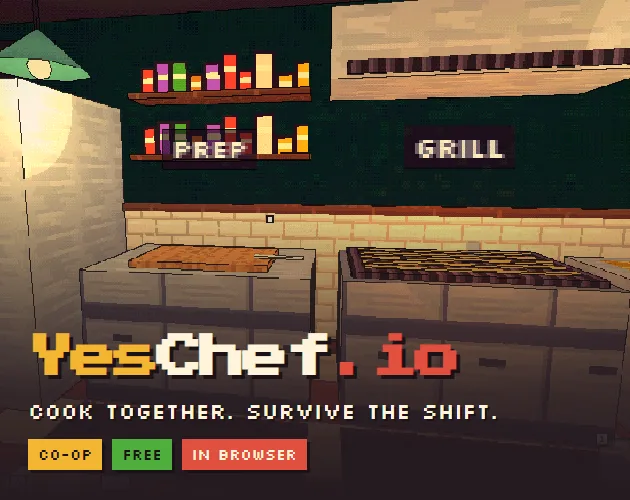
A first-person co-op kitchen sim where prep mini-games, grill timing and a shared dish pit decide whether the dinner rush breaks the line.
#45 this weekAI-assisted: Code
The game runs in this tab. No install, no account.
The short answer
YesChef.io is a browser-based, first-person kitchen game in chunky pixel art, priced at two dollars and still in development. Players fetch ingredients, work prep mini-games, sear on the grill and scrub plates while tickets keep arriving. It suits anyone who wants a co-op cooking scramble in a browser tab without a countdown clock.
What is YesChef.io?
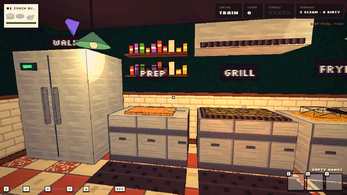
YesChef.io is a co-op, first-person kitchen simulation rendered in chunky pixel art. One apron, one station, one job: players stand where the work needs doing and keep tickets moving. The framing is a dinner rush rather than a countdown, because no clock governs the shift. Tickets arrive until service ends, and nobody can say in advance whether that means ten, twenty or thirty orders. That single change pushes the pressure onto the kitchen line itself — the walk-in fridge, the prep board, the grill, the fryer, the pass and the dish pit — instead of onto a timer.
The game is in development and costs two dollars. It runs as an HTML5 title built for fullscreen play on a computer. Cooking happens alone or alongside other players online, and the kitchen someone picks decides who they cook with. Career progression runs through nine shifts, opening at a Food Truck and passing through Mika's Diner on the way to Le Petit Pixel.
How to play
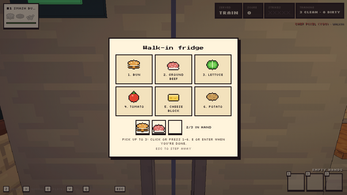
A shift begins with ingredients. The walk-in fridge allows three items per trip, drawn from buns, ground beef, lettuce, tomatoes, cheese, potatoes, onions and chicken, so the first skill is planning a load rather than grabbing at random.
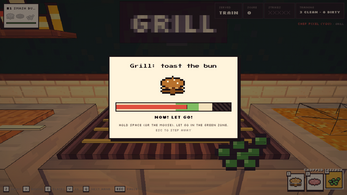
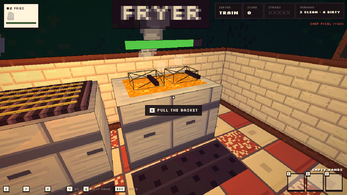
Prep happens on a board that works as a rhythm mini-game: tap each mark as the knife sweeps past, shaping patties, chopping lettuce, slicing cheese and cutting fries. The grill is a hold-and-release job — sear while holding, then let go inside the green zone, because an extra moment burns the food. The fryer basket takes fries, onion rings or crispy chicken, and the pull has to come before the oil scorches the batch.
When everything a ticket needs is ready, one press at the pass sends it out. Plates are the hidden bottleneck: run out of clean ones and orders stall, so somebody has to leave the line and scrub at the dish pit. No clock governs any of this. Tickets keep arriving until the shift is done, and the length of that shift is never known in advance.
Rating is measured by average points per ticket rather than volume, so a fast, clean service beats a sloppy rush.
Controls
Movement is WASD with Shift to sprint. Looking around uses a held mouse button by default, and E operates whatever station is in front of the player. Space covers the mini-games, grouped with the 1 to 4 keys, while Q or the mouse wheel switches between hand slots.
Kitchen call-outs sit on Z, X, C and V, covering lines such as Heard, Behind, plates and 86. Esc pauses: a solo kitchen stops outright, but a multiplayer kitchen keeps cooking without the paused player, which is worth knowing before stepping away mid-rush.
Settings are unusually generous for a browser game. Any key can be rebound, and looking can be set to hold-to-look, follow-the-mouse or mouse lock. Graphics quality is adjustable as well, which matters for older machines trying to hold a stable line during a crowded rush.
The intended setup is fullscreen on a computer. The first load can take up to a minute while the game server wakes up, so patience on that initial launch is worthwhile rather than a sign of trouble.
| Input | Action |
|---|---|
| WASD | Walk |
| Shift | Sprint |
| Mouse (held button) | Look around |
| E | Use a station |
| Space and 1 to 4 | Mini-game inputs |
| Q or mouse wheel | Switch hand slots |
| Z, X, C, V | Kitchen call-outs such as Heard, Behind, plates and 86 |
| Esc | Pause; solo kitchens halt while multiplayer kitchens keep cooking |
Tips for your first run
The opening shift is about learning the geography of the kitchen, not setting a speed record. Most early failures come from walking rather than cooking, and from a plate stack that nobody watched. A few habits that pay off immediately:
- Take the full three items from the walk-in fridge every trip; the return walk costs more than a slight over-fetch.
- Watch the knife itself on the prep board rather than the marks alone; the rhythm comes from the sweep.
- Release the grill the instant the food sits in the green zone, since holding a beat longer burns the item.
- Pull the fryer basket early rather than late; a scorched batch wastes everything in it.
- Keep one person near the dish pit once tickets stack, because clean plates running dry stalls every order on the rail.
- Use the Z, X, C and V call-outs to flag plates and 86 items instead of trying to out-shout the kitchen.
- Chase clean tickets rather than fast ones — the star rating reads average points per ticket.
Content and replayability
Career mode is the spine: nine shifts that move from a Food Truck through Mika's Diner to Le Petit Pixel. Each stop brings its own goals and its own recipes, so the ingredient spread and the ticket mix shift as the kitchens grow more ambitious.
Around that sit challenges, one of them a fresh daily, plus quests that feed XP and coins. Those rewards point at cosmetics and upgrades: aprons, hats, kitchen decor, and equipment perks with genuine mechanical weight. The Sheet Tray opens a fourth hand slot, and the Cast-Iron Plancha adds a piece of cooking hardware to the line.
Online co-op is where most players will settle. Picking a kitchen drops someone in with whoever is already cooking there, and position defines the job, so the person on the grill is not also running the dish pit. Because shifts have no fixed length, sessions stretch or shorten depending on how the line holds up, and a kitchen that communicates can absorb far more tickets than one that does not.
Presentation and performance
The look is chunky pixel art seen from first person, a deliberate match for a low-friction browser format and a readable way to show grill zones, knife marks and the ticket rail without clutter. The information that matters — the green sear window, the sweep of the knife — is signalled visually rather than buried in menus.
Performance is mostly a matter of setup. The game is HTML5, built for fullscreen play on a computer, and graphics quality is adjustable for machines that struggle during a busy service. The first load can take up to a minute while the server wakes up, which is worth planning around rather than clicking through in a hurry.
Because no clock runs the shift, the pace comes entirely from the ticket queue and the state of the kitchen. The screen stays busy without a countdown overlay taking up room, and multiplayer kitchens keep running when one player pauses, so the line can change shape while a menu is open.
Who should play it
YesChef.io is aimed at players who enjoy co-op work simulators and want the coordination without a timer hanging over every decision. The absence of a clock rewards a line that talks — the Z, X, C and V call-outs exist for exactly that — and punishes a kitchen where nobody watches the plate stack.
Solo play works, and a shift still functions as a one-person scramble between fridge, board, grill, fryer, pass and dish pit. The design leans on division of labour, though, so the game is at its best with other people trading stations as tickets pile up.
Browser players who want something to open in a tab and run in fullscreen on a computer are the core audience, and the two-dollar price makes it an easy experiment. Anyone who needs a hard end point or a fixed order count will find the open-ended shift structure uncomfortable, because service finishes when the tickets stop and not before.
Screenshots
How we tested it
The build was loaded from games.debutplay.com in a headless Chromium session on ; the canvas started and no request was blocked. The guide was last checked on .
From the developer
YesChef.io is a co-op, first-person kitchen game in chunky pixel art. Grab your apron, jump on the line with friends (or solo), and cook your way through a dinner rush. There's no clock: tickets keep coming until your shift is done, and nobody knows if that's after 10, 20 or 30 orders. How a shift works Walk-in fridge: grab up to 3 ingredients in one trip: buns, ground beef, lettuce, tomatoes, cheese, potatoes, onions and chicken. Prep board: a rhythm mini-game. Tap on each mark as the knife sweeps to shape patties, chop lettuce, slice cheese and cut fries. Grill: hold to sear and let go in the green zone. Too long and it burns. Fryer: drop the basket for fries, onion rings or crispy chicken, then pull it before it scorches. Pass: one press sends everything a ticket needs. Dish pit: run out of clean plates and orders stall, so someone has to scrub. Features Online co-op: pick a kitchen and cook with whoever's there. Where you stand is…
Frequently asked questions
How much does YesChef.io cost?
It is priced at two dollars and is currently in development. It runs in a browser as an HTML5 game rather than as a standalone download.
Can YesChef.io be played solo?
Yes. A shift works as a one-person scramble between the fridge, prep board, grill, fryer, pass and dish pit, though station-swapping with other players is the intended shape.
Is there a time limit on a shift?
No clock runs the shift. Tickets keep arriving until service finishes, and the total is unknown beforehand — it could be ten orders, twenty or thirty.
What do the star ratings measure?
Stars reflect average points per ticket, so serving accurately and cleanly matters more than pushing volume through the pass at speed.
What happens when clean plates run out?
Orders stall until someone scrubs at the dish pit. The plate stack is the quiet bottleneck of every kitchen, which is why it pays to assign it early.
How long does the first load take?
It can take up to a minute while the game server wakes up. Playing in fullscreen on a computer is the intended setup.
What games are similar to YesChef.io?
The closest matches on DebutPlay are Maré de Azar (Demo), I’m the Ticket Gate, Warm Water. They share the same genre, so the controls and the pace carry over.
Something wrong or missing? Tell us. How we test games.