Adventure · New game
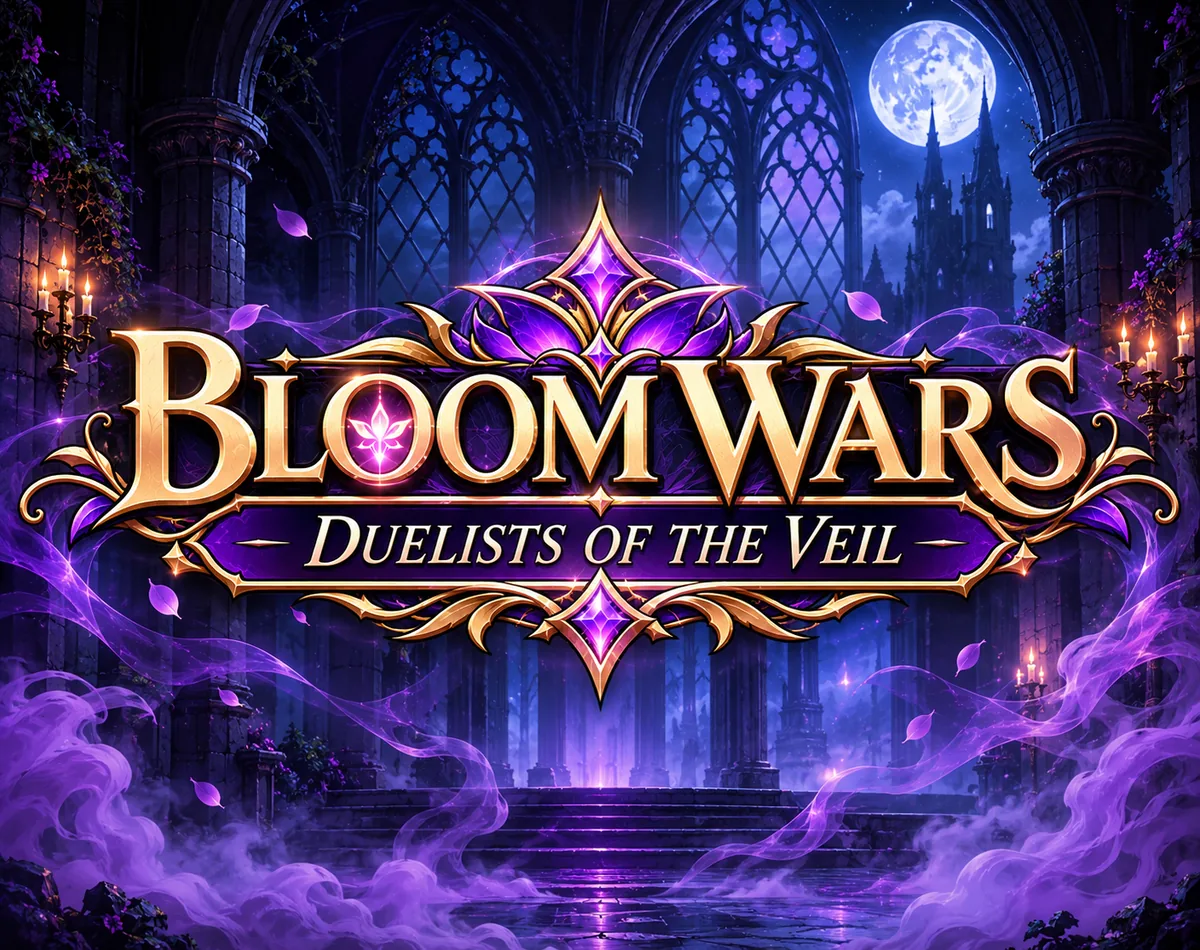
Bloom Wars: Duelists of the Veil
A top-down role-playing adventure built around a complete trading card game, where a card nobody owns appears on a pillow and the game starts leaking into Seedblossom's streets.
#67 this weekAI-assisted: Code, Graphics, Text
The game runs in this tab. No install, no account.
The short answer
Bloom Wars: Duelists of the Veil is a top-down RPG adventure wrapped around a full trading card game set in Seedblossom, a city of card shops, cafés and parks. Build a deck from the 250-plus card First Bloom set, beat six Keepers in order and open the road to the Veil. It is free, playable in a browser and in active development.
What is Bloom Wars: Duelists of the Veil?
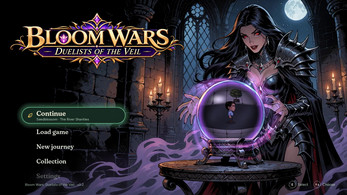
Seedblossom runs on a trading card game called Bloom Wars: The Veil. The character you control spends evenings and paychecks on boosters for it, the way everyone in the city does, until a card that belongs to nobody turns up on a pillow and the game begins leaking into the streets. That is the premise of Duelists of the Veil: a top-down role-playing adventure where the card game is the spine of the whole thing rather than a side attraction.
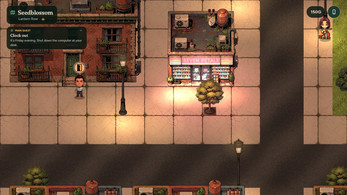
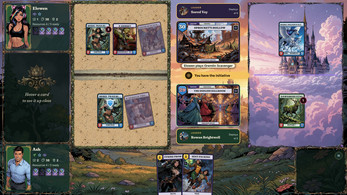
Two games share one set of rules. On the streets there are six districts joined by roads, each with its own card shop, plus cafés, parks and a home base of your own. Inside a duel those streets fall away and the rules open into a full trading card game with leaders, Anchors, two battlefields, resources and initiative.
The tone starts warm and slice-of-life with a goofy streak — a best friend who keeps a running tally of his losses, a streamer whose chat is full of goblins, a slime in the park, a queen in a hooded cloak that fools nobody — then grows into urban fantasy with genuine stakes. Nobody gets gored; in the Dreaming, losing means being sent back.
How to play
Every duel is fought to break an opponent's Anchor. Your units are split across two battlefields: the Waking World, where soldiers, knights, golems and war-beasts fight, and the Dreaming, where pegasi, shadow-stalkers and iron-scaled dragons live. Reducing the opposing Anchor to zero wins the duel, so the game is as much about defending that target as pushing damage through.
Turns are taken one action at a time rather than as a single lumped phase, which keeps both players reacting to each other. Initiative is the twist: claiming it means surrendering the rest of your current phase in exchange for acting first in the next one. That trade is the core tension of every match and it rewards planning a phase ahead.
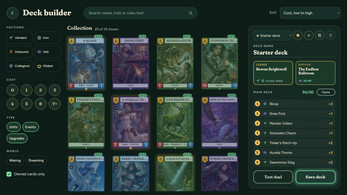
Cards come from boosters. First Bloom, the base set, holds more than 250 cards, all illustrated, with every ability scripted and tested. The deck builder lets you assemble any list you can imagine, and your choice of leader and Anchor decides which of the six factions — Verdant Covenant, Iron Syndicate, Unbound, Somnial Veil, Astral Collegium and Gilded Court — your deck plays cheaply.
Out in the city, progress runs through the Keeper circuit. Each of the six districts has a card shop, and each shop's Keeper holds a ring. Beat them in order and the road to the next district opens up.
Controls
Duelists of the Veil supports keyboard and mouse or an Xbox-layout gamepad, so the adventure and the duels can be played either way. A Steam Controller works through Steam Input. The prologue's duel is built as a tutorial and walks through everything, and inside every duel the actions currently available to you glow green, so there is no need to memorise a rulebook before the first match.
Because the game runs as an HTML5 build as well as a Windows title, the browser version is the quickest route from clicking play to sitting down at a card table in Seedblossom.
| Input | Action |
|---|---|
| Keyboard and mouse | Explore Seedblossom and play duels |
| Xbox-layout gamepad | Explore Seedblossom and play duels |
| Steam Controller | Play through Steam Input |
Tips for your first run
The opening duel is a teaching tool rather than a challenge, so take the time to read the green-highlighted options instead of clicking through them. Learn initiative early: giving up the remainder of a phase to move first next phase is often the difference between a unit surviving and an Anchor taking damage. Keep your leader and Anchor in mind while buying boosters, since they set which factions you can deploy cheaply, and resist the urge to spread across all six.
On the streets, the Keeper circuit is a gate rather than a suggestion — each Keeper is harder than the last, and the next district only opens once the current ring is won.
- Finish the prologue duel properly; it explains the entire ruleset once and never again.
- Claim initiative when the next phase matters more than the rest of this one.
- Pick a leader and Anchor that share a faction before chasing rares in boosters.
- Take the six Keepers in order — each one guards the road to a new district.
- Check the phone regularly for contacts, quests and saves while travelling the roads between districts.
Content and replayability
The card side alone is substantial: a base set of more than 250 illustrated cards, boosters to open, rares to chase and a deck builder with no prescribed lists. Six factions with distinct identities, plus keyword abilities such as Sentinel, Ambush, Raid and Overwhelm, give deck construction real texture, and the leader-and-Anchor economy means the same collection plays differently depending on which pair you commit to.
Opponents are built to feel individual. Each rival AI runs its own deck and its own style, from aggressive lists to controlling ones, so a Keeper fight is not a stat check. Between Keepers there are wild beasts, trainers and side duels to pick up along the roads, and a cast that includes a dream-visiting woman, a hooded queen and a park slime.
The current build carries the prologue and all four acts, with six Keepers, the Gilded Court's lieutenants, wild beasts and trainers available to fight. Art, balance and polish are still being worked on, so expect numbers and presentation to shift.
Presentation and performance
Visually the game is 2D and top-down, with Seedblossom laid out as walkable districts connected by roads rather than a menu of locations. The card table is the other half of the look: every card in First Bloom carries its own illustration, and battlefield identity is split cleanly between the Waking World's soldiers and golems and the Dreaming's pegasi and iron-scaled dragons.
The writing leans into the contrast between cosy city life and the creeping strangeness of the Veil, and the no-gore rule keeps defeat in the Dreaming abstract — you are sent back rather than killed. As an in-development title with an HTML5 build, it is best treated as a living thing: content is playable end to end, but art, balance and polish are explicitly still in motion.
Who should play it
This is for players who want a trading card game with an actual world around it — people who enjoy opening boosters, tuning a deck around a leader and Anchor, and playing matches where initiative and two battlefields create real decisions. It suits anyone who likes top-down exploration with shops, cafés, parks and a phone full of contacts as much as the duels themselves.
It also fits players who bounce off grim card games. The tone is warm and funny before it turns strange, defeat never means blood, and the prologue teaches the rules through play rather than a manual. If what you want is a finished, frozen metagame, this is not that yet — it is in active development with balance and art still moving. If you want a free, browser-playable adventure where the card game is the point, start with the prologue.
Screenshots
How we tested it
The build was loaded from games.debutplay.com in a headless Chromium session on ; the canvas started and no request was blocked. The guide was last checked on .
From the developer
Bloom Wars: Duelists of the Veil is a top-down RPG adventure built around a full trading card game. You spend your evenings and your paychecks on Bloom Wars: The Veil, the card game everyone in Seedblossom plays. Then a card you don't own turns up on your pillow, and the game starts leaking into the city. Walk the streets. Open packs. Build a deck. Duel your way to the Veil. The card game Bloom Wars: The Veil is a complete trading card game: leaders, Anchors, two battlefields, resources and initiative. Open boosters, chase rares and build any deck you can imagine. Units fight in the Waking World — soldiers, knights, golems and war-beasts — or in the Dreaming, where pegasi, shadow-stalkers and iron-scaled dragons live. Players take turns one action at a time, and claiming the initiative means giving up the rest of the phase to act first in the next. Bring the opposing Anchor to zero and the duel is yours. First Bloom, the base set, has…
Frequently asked questions
Is Bloom Wars: Duelists of the Veil free?
Yes. It costs nothing to pick up, and it runs in a browser through an HTML5 build as well as on Windows.
What platforms can it be played on?
An HTML5 build playable in a frame, and Windows. No other platforms are listed for the game.
Can it be played with a controller?
Yes. Keyboard and mouse, an Xbox-layout gamepad, or a Steam Controller through Steam Input all work.
How many cards are in the game?
The First Bloom base set contains more than 250 cards. Each one is illustrated and every ability is scripted and tested.
Is the game finished?
No. It is in active development: the prologue and all four acts are playable, with six Keepers, the Gilded Court's lieutenants, wild beasts and trainers, but art, balance and polish are still improving.
Do you need trading card game experience?
No. The prologue's duel walks through the rules, and during every duel the options available to you glow green.
What games are similar to Bloom Wars: Duelists of the Veil?
The closest matches on DebutPlay are Living Dioramas, Alchademics:Abyssal Realm, MOURNSEAM. They share the same genre, so the controls and the pace carry over.
Something wrong or missing? Tell us. How we test games.