Visual novel · New game
Kabedon
A free twenty-minute mystery set in a snowy Morioka apartment, where a nightly wall-banging complaint sends you back through two weeks of small domestic clues.
#1 this weekAI-assisted: Code, Graphics, Text
The game runs in this tab. No install, no account.
The short answer
Kabedon is a free browser visual novel about a thin-walled apartment in winter Morioka, where the neighbours' two-in-the-morning noise complaint turns out to point somewhere unexpected. Expect a twenty-minute read, a prologue plus four chapters, six endings, three hands-on investigative moves and a notebook of thirteen culture notes, playable in English or Japanese.
What is Kabedon?
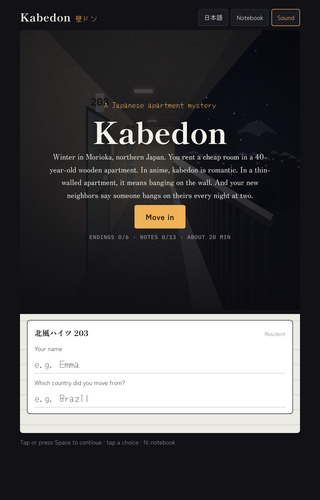
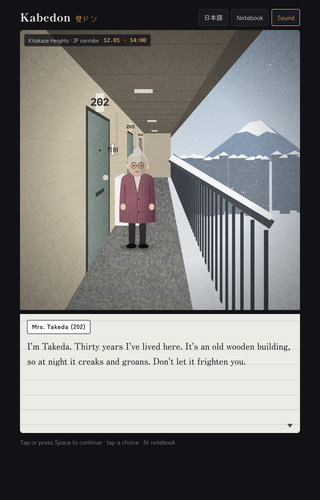
Kabedon is a short mystery visual novel that runs about twenty minutes and costs nothing to play. It opens in December in Morioka, a snowy city in northern Japan, two weeks after you take room 203 in Kitakaze Heights, a forty-year-old wooden apartment block heated by kerosene and built with walls you can hear straight through.
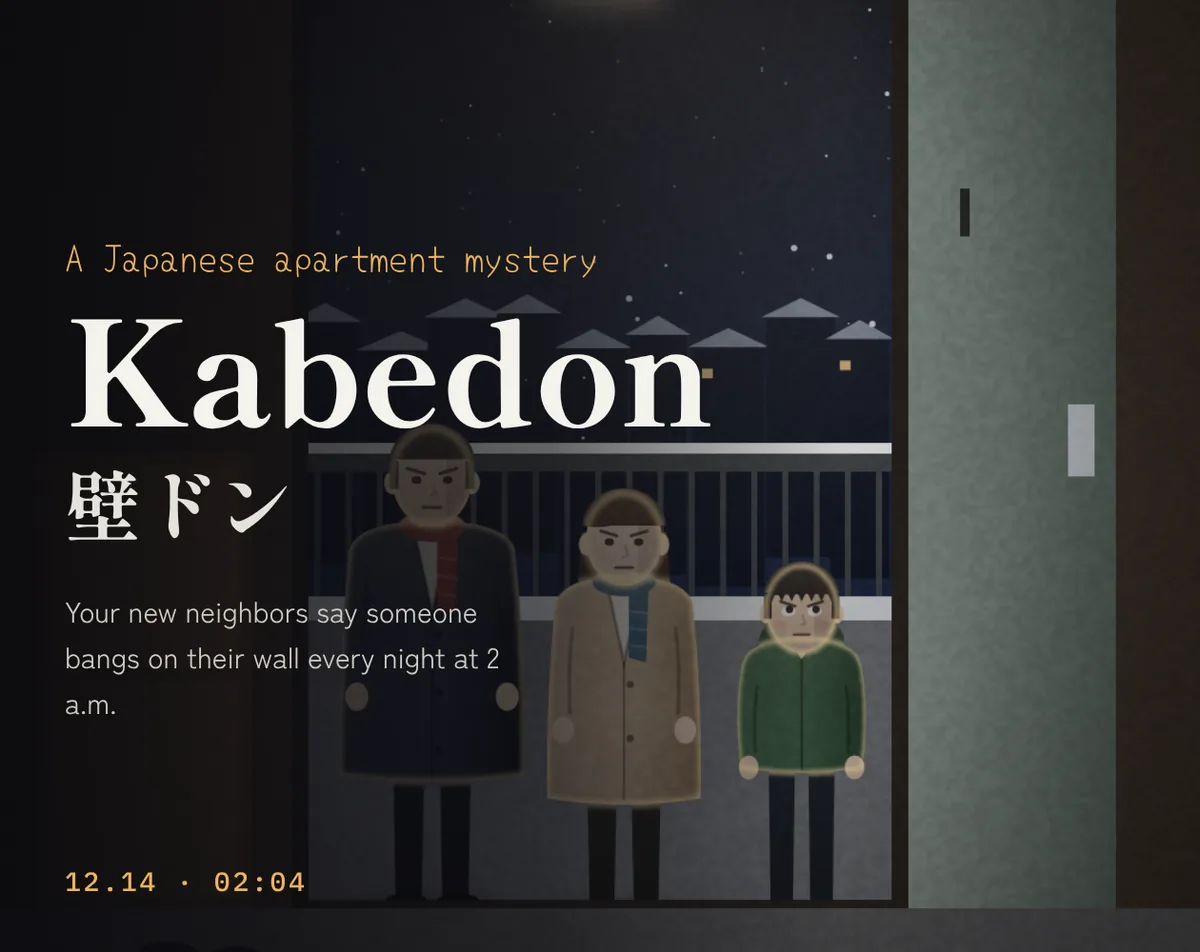
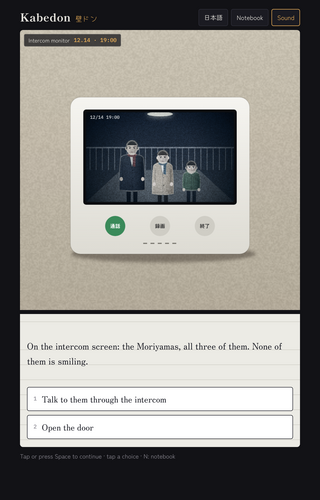
The trouble starts when the family next door turns up at your door with a complaint and a recording. Someone has been hammering on the wall at two every night, and the only room on the far side of that wall belongs to you. It is not you, so the game sends you back over the fortnight since you arrived to work out who has been knocking.
The title carries both meanings. In anime, kabedon is the romantic move of pinning someone against a wall; the older and much less romantic sense is thumping a neighbour's wall to shut them up. This story is built on the second. It is told across a prologue and four chapters, holds six endings, and keeps a notebook that gathers thirteen culture notes as you go.
How to play
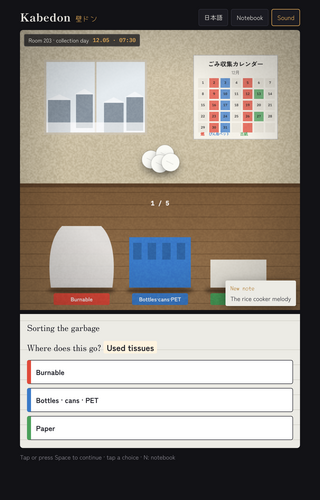
Most of the runtime is spent reading and choosing, but the investigation itself is refreshingly physical. Three actions anchor the detective work: play back the recording the neighbours brought, knock on the walls yourself, and dig through the garbage. Each one feeds details back into the central question of who was making the noise.
Memory does the rest of the work. To make sense of the complaint, you revisit the small, ordinary moments of the past two weeks: the day you moved in, a room that was oddly warm one morning, a kerosene tank that had run dry, and rice that kept disappearing from the kitchen. These domestic oddities are the actual evidence, and the game treats them as seriously as the recording.
A run ends at one of six endings, so what you notice and what you choose both matter. The notebook fills with thirteen culture notes covering the moving-in greeting, garbage sorting, kerosene heaters, the circulating notice board, and the closet with its little cupboard. English and Japanese can be swapped at any point, mid-scene included.
Controls
Input is deliberately minimal, which suits a story that wants you reading rather than fiddling. Tap the screen or press Space to move the dialogue forward. When a choice appears, either tap the option you want or press the matching number key, anywhere from 1 to 9. Press N whenever you want to open the notebook and reread the culture notes you have picked up.
The layout is built for a phone held upright, and the same build plays on a PC as well. That means the whole thing is a browser game: no separate client, just the HTML5 frame and the text. Nothing in the control scheme asks for precision timing or reflexes, so a slow, careful read is entirely viable.
| Input | Action |
|---|---|
| Tap | Advance the dialogue or select a choice on screen |
| Space | Continue the story |
| Number keys 1–9 | Pick a numbered choice |
| N | Open the notebook |
Tips for your first run
Play slowly and treat the mundane details as clues rather than flavour. The room that was warm in the morning, the empty heater tank and the vanishing rice are all planted for a reason, and they are much easier to connect if you have not rushed past them. The three investigative actions are worth using the moment they appear, because the recording, the walls and the garbage each give a different angle on the same noise.
The culture notes are not just background colour. Conventions like the moving-in greeting, the rules for sorting garbage, the kerosene heater and the circulating notice board shape how the building works, and knowing them makes the neighbours' behaviour easier to read. If you have any Japanese, the language toggle lets you compare the original text against the translation at any point in the story.
- Use all three investigative moves: the recording, the walls and the garbage.
- Reread the notebook regularly; the culture notes explain how the building functions.
- Treat small domestic oddities, such as the empty kerosene tank, as evidence.
- Remember the timer: about twenty minutes per run, with six endings to reach.
- Switch to Japanese at any time if you want to read the original wording.
Content and replayability
With six endings packed into a story that takes roughly twenty minutes, Kabedon is built to be replayed rather than lingered over. A prologue followed by four chapters gives the branching a clean shape, and a single sitting can comfortably cover one route while leaving several others unseen. Each pass is short enough that going back for a different outcome costs very little.
The notebook adds a second reason to return. Thirteen culture notes can be gathered across your reading, covering the practical rituals of Japanese apartment life: greeting the neighbours on move-in day, sorting rubbish correctly, running a kerosene heater, reading the circulating notice board, and understanding what the closet's small cupboard is for. Players who want a full notebook will need to explore rather than mainline the mystery.
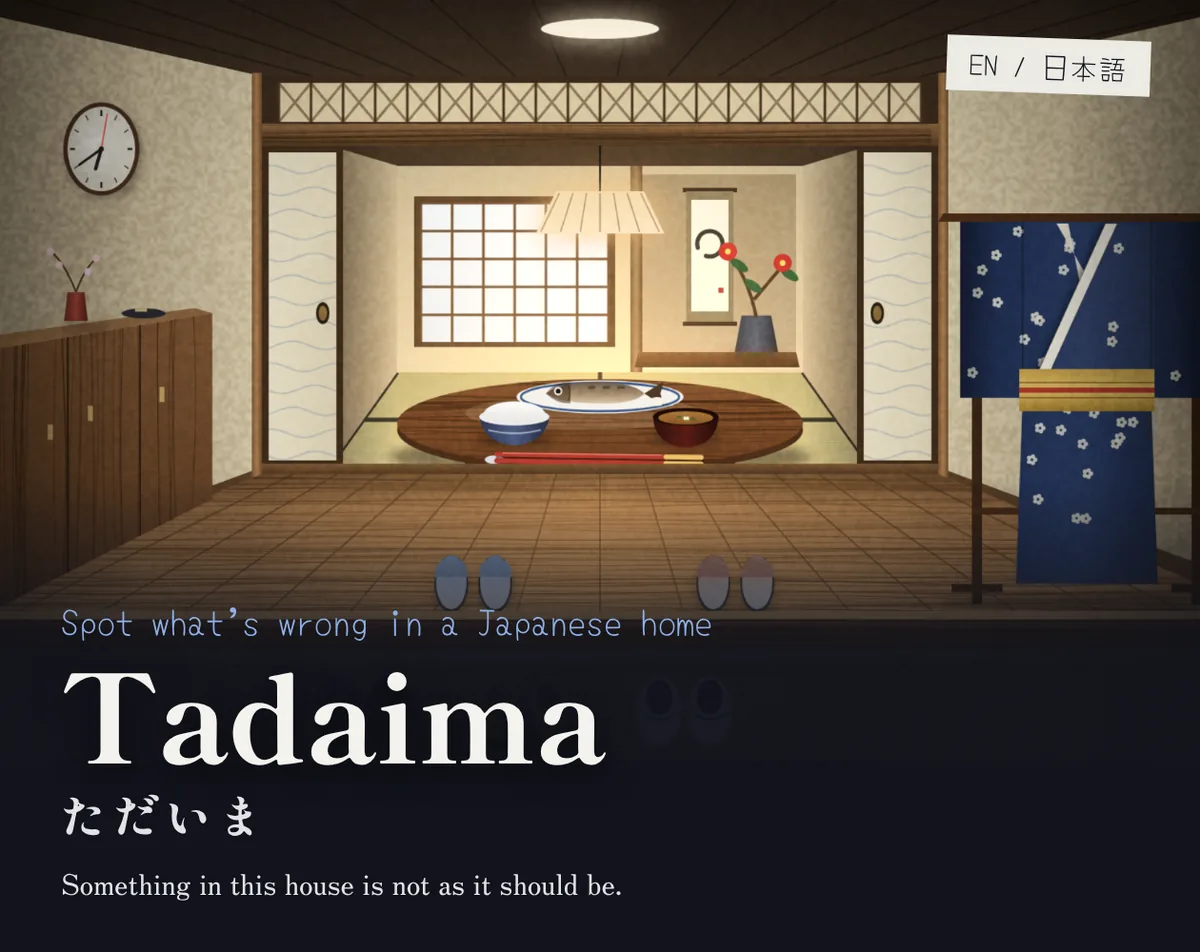
The English and Japanese scripts sit side by side, so a second run in the other language is a genuine option rather than a gimmick. The game also belongs to a wider set of everyday-Japan mysteries: Desk No. 31 is set in a Japanese high school, Last Train to Kaerazu deals in train folklore, and Tadaima is an anomaly game in a traditional home. Each stands alone, but they share a fascination with ordinary places hiding something.
Presentation and performance
The setting does most of the atmospheric work. Snowy December in Morioka, a forty-year-old wooden apartment building, kerosene heating, and walls thin enough that a neighbour's two-in-the-morning knocking carries straight through. That combination of cold outside and audible inside is what makes the central complaint feel plausible rather than contrived.
Illustrations accompany the story, and the game is candid about how it was made: the writing, code and artwork were produced with the help of generative AI, specifically Claude. It was made in Hokkaido and inspired by a real noise complaint that someone shared on social media. All of the characters are fictional, however grounded the building may feel.
Technically this is a browser release built in HTML5. It is designed for a phone held upright and also plays on a desktop PC, so a session can move between the two without changing what you are reading. The language toggle between English and Japanese works at any time, and the whole experience fits inside a twenty-minute sitting.
Who should play it
Kabedon suits anyone who likes a mystery that resolves through observation rather than action. There is no combat, no timer pressure and no inventory management: the tools are a recording, a wall to knock on, a bag of garbage and your own memory of the past two weeks. Readers who enjoy picking apart small inconsistencies in domestic life will find plenty to chew on.
It is also a good fit for players curious about everyday Japanese apartment living. The thirteen culture notes turn the moving-in greeting, garbage sorting, kerosene heaters and the building's notice board into things you actually use rather than trivia you skim. Anyone studying Japanese can read the same story in either language and compare.
Fans of cozy horror and short, story-rich visual novels are the obvious audience, particularly commuters and phone players, since the layout assumes an upright handset and the whole story lasts about as long as a bus ride. People after a long, systems-heavy game should look elsewhere. Six endings and a notebook reward the kind of player who replays a twenty-minute story to see what changes.
Screenshots
How we tested it
The build was loaded from games.debutplay.com in a headless Chromium session on ; the canvas started and no request was blocked. The guide was last checked on .
From the developer
“Someone bangs on our wall every night at two. And the only thing on the other side is your room.” It is December in Morioka, a snowy city in northern Japan. Two weeks ago you moved into room 203 of Kitakaze Heights, a forty-year-old wooden apartment with kerosene heating and walls you can hear through. Tonight the family next door is at your door with a complaint, and a recording. It isn't you. So you think back over the last two weeks: the day you moved in, the warm room in the morning, the empty heater tank, the rice that keeps disappearing… and you start to work out who has been knocking. Kabedon is a short mystery (about 20 minutes) about everyday life in an old Japanese apartment. In anime, kabedon is a romantic move. Its original meaning is much less romantic: banging on the wall at a noisy neighbor. Features A story in a prologue and four chapters, with 6 endings Investigate for yourself: listen to the recording, knock on the…
Frequently asked questions
Is Kabedon free to play?
Yes. It is a free browser release, with no purchase needed to read the story, work through the four chapters and reach any of the six endings.
How long does it take to finish?
Around twenty minutes for a single playthrough. Because there are six endings across a prologue and four chapters, seeing everything takes longer than one sitting.
How many endings are there?
Six. The story is divided into a prologue and four chapters, and the endings branch from the investigation and the choices you make along the way.
What devices can run it?
It is an HTML5 browser game built for a phone held upright, and it plays on PC as well. No other platforms are part of this release.
Can it be played in Japanese?
Yes. English and Japanese can be switched at any point, including partway through a scene, so the same story is readable in either language.
What does the title mean?
Kabedon usually refers to a romantic anime gesture of pinning someone against a wall. Its older meaning is blunter: banging on a wall to silence a noisy neighbour, which is the sense the story uses.
What games are similar to Kabedon?
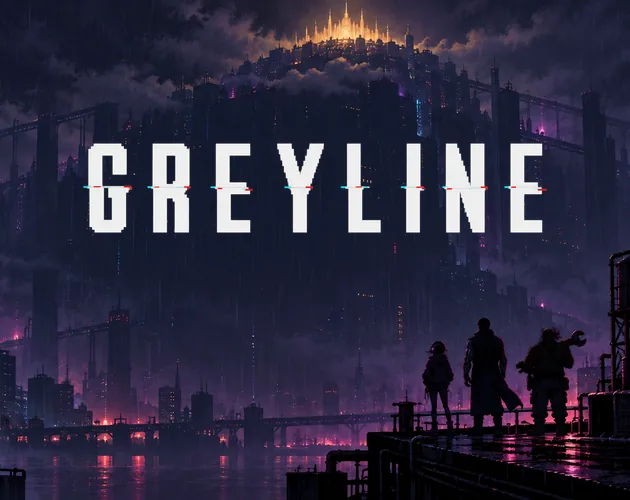
The closest matches on DebutPlay are Before You Wake, Greyline, Layer8Problem. They share the same genre, so the controls and the pace carry over.
Something wrong or missing? Tell us. How we test games.